Ancient Egyptian jewelry was more than a fashion statement; it played a significant role in the afterlife. Many pieces were created specifically for the dead, to be worn in the afterlife. These ornate creations bridged the earthly and the divine. Each gemstone and gold thread was woven with purpose, serving as talismans of protection, symbols of power, and bridges to eternity. The heartscarab, for instance, was heavy with symbolism, guiding a soul through the treacherous journey beyond this life. These artifacts speak volumes about the skilled craftsmen who created them and the lives they touched.
Symbolism and Significance
Ancient Egyptian jewelry carries layers of beliefs, hopes, and sacred protections woven into every piece. Each amulet and ornament tells a story. The symbolism embedded within these treasures is profound, reflecting a civilization’s collective psyche and spiritual aspirations.

Heartscarabs, those small yet significant artifacts placed on mummies, were talismans, wielding the power to protect the heart in the pivotal ‘Weighing of the Heart Ceremony.’ This ritual determined one’s fate in the afterlife, and the heartscarab’s presence was crucial.
In ancient Egypt, jewelry wasn’t chosen lightly. Every piece served a purpose, handpicked based on individual needs, wealth, and the desire for protection. These adornments transcended the mundane, becoming conduits for healing, fortune, and safeguarding one’s journey into the unknown. Funerary jewelry, laden with symbolic meanings, guided the deceased through the afterlife.
In their glittering splendor, these pieces of jewelry reveal a civilization deeply attuned to the metaphysical, intertwining daily life with the divine, and making the invisible forces of protection, healing, and luck tangibly visible.
Common Materials Used
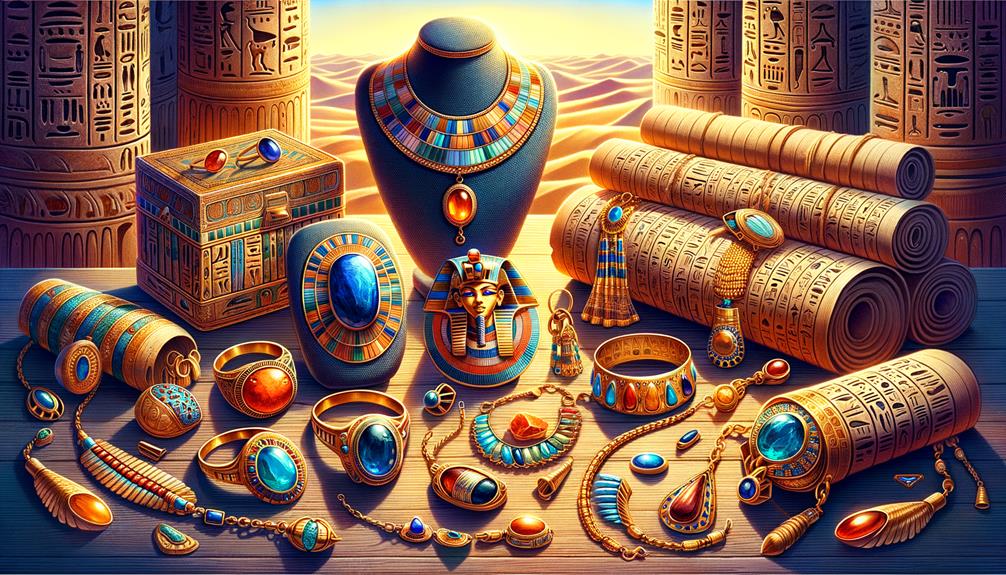
In their pursuit of capturing the essence of life, ancient Egyptians carefully chose materials like gold, silver, and vibrant gemstones to craft their jewelry. These materials, in their purest forms, were thought to tap into the eternal power of the gods. Gold, with its enigmatic glow, seemed to embody the sun’s eternal flame, while silver mirrored the calm, peaceful light of the moon.
The gemstones they used were striking: lapis lazuli, carnelian, turquoise. Each stone, with its unique hue, added layers of meaning and beauty to their creations. Faience and glass, though more humble, shimmered with an almost magical allure, their colors as vivid as any precious stone.
The materials used in Ancient Egyptian Jewelry weren’t limited to the rare and exquisite. Enamel, ceramic, and even wood found their place in the intricate designs. The Egyptians’ ability to transform the ordinary into the extraordinary showed their skill. Marble and various types of stone were incorporated, grounding the ethereal beauty of their accessories in the earth they revered. The meticulous craftsmanship of these materials speaks to their deep connection to the divine.
Jewelry-Making Techniques
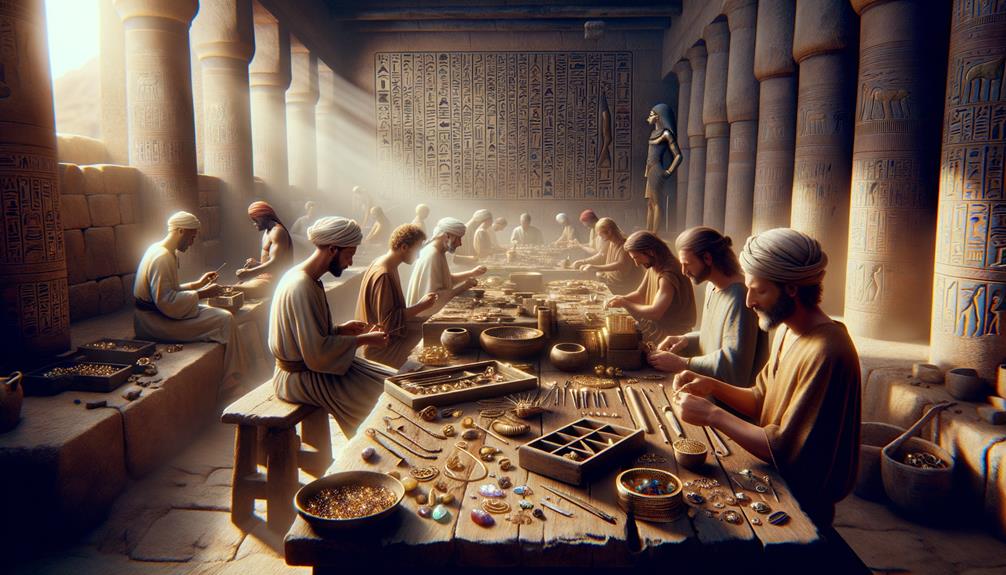
Skilled craftsmen worked with precision, shaping gold, precious stones, and enamel into intricate designs. These materials held more than just beauty; they conveyed stories and symbols. Each piece combined intricate designs with profound meaning, a mark of their artistry.
Materials and Resources Used
With skilled hands, Egyptian artisans transformed raw gold and vibrant gemstones into breathtaking works of art, each piece echoing the splendor of their civilization. They expertly harnessed the brilliance of materials like gold, silver, and precious stones, creating jewelry that was beautiful and deeply symbolic.
Their creations show careful choice of lapis lazuli, turquoise, amethyst, and carnelian, each stone imbued with meaning and purpose. Their mastery of filigree, granulation, and cloisonné techniques brought these elements to life, making every piece a narrative of their world.
Gold, a symbol of the sun, eternal and divine, was a key material. Carnelian represented protection, energy, and vitality, while lapis lazuli embodied the heavens, truth, and wisdom.
In their skilled hands, these materials transformed into necklaces with strict symmetry, headpieces that spoke of gods, and rings bearing the weight of identity. The interplay between the resplendent hues and the precise metalwork went beyond art; it reflected the ancient pursuit of beauty. This ancient art continues to inspire, reminding us that even in innovation, we draw from the rich heritage of history.
Crafting Tools Employed
The tools and techniques that brought these masterpieces to life were intricate. The Egyptian craftsmen, with their saws, drills, chisels, and hammers, transformed raw elements into finery that still fascinates us today. Each piece reflects their precision and skill, showing a world where art and craftsmanship intertwined.
The techniques used were as varied as they were intricate. Filigree and granulation created delicate, lace-like patterns; cloisonné added vibrant color through enameled cells; repoussé brought forth raised designs from malleable metal. Molds and casting allowed for the replication of designs, ensuring consistency and beauty in every piece. Engraving tools etched stories and symbols into the jewelry, each line a whisper from the past.
| Tool | Technique |
|---|---|
| Saws | Cutting |
| Drills | Hollowing |
| Chisels | Shaping |
| Hammers | Forming |
| Molds | Casting |
| Engraving tools | Detailing |
In the hands of these ancient artisans, the ordinary became extraordinary. The tools and techniques employed in Egyptian jewelry-making were methods of creation and expressions of innovation and artistry that continue to inspire and awe.
Symbolism and Designs
Ancient Egyptian jewelry tells tales of protection, power, and divine connection, showcasing the artisans’ unparalleled skill. Each piece weaves complex narratives through intricate filigree and granulation techniques. The Egyptians’ mastery of cloisonné allowed them to create vibrant, detailed works that echoed their beliefs and values.
Symbolism in their designs was meaningful rather than merely ornamental. The scarab beetle, embodying rebirth and regeneration, adorned countless amulets and rings. The lotus flower, a symbol of purity and creation, bloomed in necklaces and bracelets. Deities, depicted in gold and precious stones, offered protection and power to their wearers.
- Scarabs: Represented rebirth and protection.
- Lotus Flowers: Symbolized purity and creation.
- Deities: Embodied divine power and protection.
The symmetry in these designs mirrored the Egyptians’ belief in balance and harmony, both in life and the afterlife. Gold, lapis lazuli, turquoise, and carnelian were meticulously chosen for their symbolic significance, creating pieces that were as meaningful as they were stunning. The ancient craftsmen’s techniques continue to inspire, reflecting a timeless elegance that resonates even in our modern age.
Types of Adornments
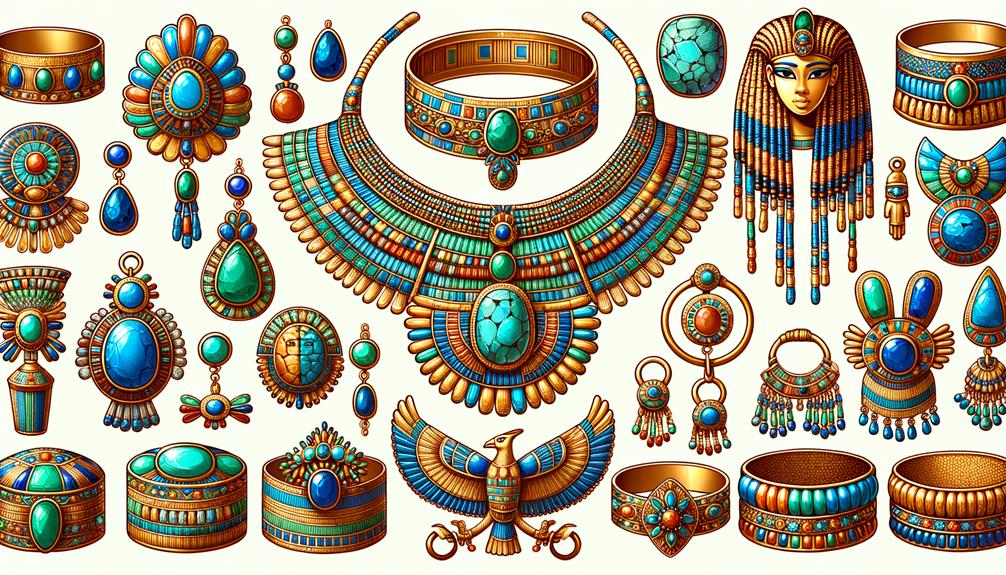
In the ancient Egyptian world, adornments like rings, earrings, and amulets held profound significance. A priest such as Sienamun might carefully place a sea carnelian ring on his finger, the deep red hue reminiscent of the setting sun over the Nile. Each piece of jewelry, crafted from gold, silver, or vibrant glass beads, told a story.
Rings, often inscribed with hieroglyphs, symbolized eternal life and power. Earrings, sometimes adorned with precious stones, caught the light, reflecting the wearer’s status. Intricately designed bracelets and necklaces wrapped around wrists and necks, each bead and charm a mark of the artisans’ skill and the wearer’s significance.
Faience, with its lustrous glaze, transformed simple objects into treasures. These adornments accompanied the dead, ensuring safe passage and protection in the afterlife. The ancient Egyptians believed that wearing such pieces could ward off evil, invoking the gods’ favor.
In every glint and shadow, these adornments reveal stories of a civilization’s ingenuity, pursuit of beauty, and connection to the divine.
Role of Amulets
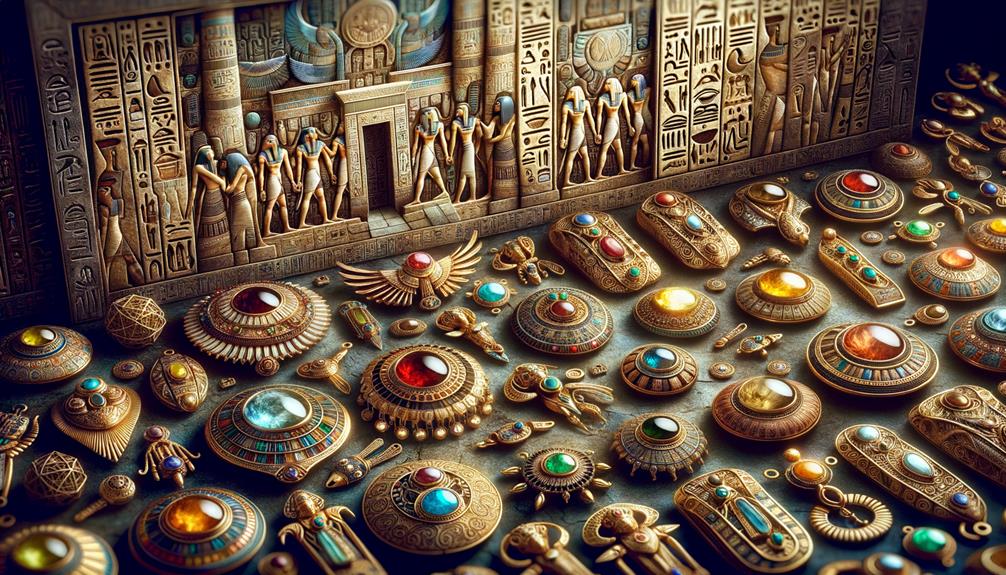
The ancient Egyptians attributed mystical power to their amulets. These spiritual symbols, crafted with meticulous detail, were vital parts of daily and ritualistic life rather than mere ornaments. In every bead and inscription, there’s a story of faith, hope, and a quest for protection.
Spiritual Protection Symbols
In ancient Egyptian jewelry, amulets were more than decorative trinkets. They were powerful symbols of spiritual protection, worn on the neck, wrists, fingers, and ankles to ward off malevolent forces and attract good fortune. Each piece was imbued with profound meaning, blending the material and metaphysical.
Heartscarabs, for example, were placed over the heart of the deceased, safeguarding it in the afterlife.
Amulets often featured inscriptions from the Book of the Dead, ensuring protection during judgment. They were strategically worn across different body parts to maximize their protective aura. This jewelry even extended its symbolism beyond life, guiding and protecting souls in the hereafter.
These ancient tokens blend art and spiritual purpose. The ancients believed these small objects wielded immense power, showing their profound connection with the divine and the eternal.
Materials and Craftsmanship
Crafting these amulets required not just skill but a deep understanding of the materials that carried both earthly beauty and divine significance. Artisans of ancient Egypt combined gold and semi-precious stones to create objects that were vessels of protection, healing, and fortune rather than mere adornments.
Meticulous hands selected each piece of gold, each carnelian or lapis lazuli, knowing that these materials would adorn the body and also shield the soul. The heartscarabs, particular favorites, were crafted to rest over the heart of the deceased, inscribed with holy incantations from the Book of the Dead. These inscriptions, like Spell 30B, secured the heart’s purity during the ‘Weighing of the Heart Ceremony,’ a vital moment in the journey to the afterlife.
Each amulet reflected the wearer’s individual beliefs, preferences, and social status. The symbolism was paramount, turning gold into a symbol of divine power and semi-precious stones into channels of mystical energy. In these pieces lies art joined to a profound connection between the material and the metaphysical, a blend of earthly and divine that continues to inspire.
Everyday and Ritual Use
In the daily lives of ancient Egyptians, amulets served practical roles beyond decoration. These small objects were meticulously crafted and strategically used to protect, heal, and guide individuals through life’s mysteries.
Amulets were carefully selected, each with a specific purpose and meaning. For instance:
- Heart Scarabs were placed over the deceased’s heart to safeguard the soul in the afterlife.
- The Eye of Horus symbolized protection and health, and was worn to ward off evil.
- The Ankh represented eternal life, and was carried to guarantee a prosperous journey beyond.
Every amulet reflected the Egyptians’ beliefs, silently praying for divine intervention in their daily lives. They adorned bodies, resting against the skin, acting as conduits for celestial energies. Whether worn for everyday protection or during rituals to invoke divine favor, these amulets were intimate companions.
In funerary practices, amulets played a paramount role, guiding souls through the underworld’s labyrinth. Each piece, chosen with care, reflected individual aspirations and social status, bridging the temporal with the eternal. To the ancient Egyptians, amulets were sacred links to the cosmos rather than just jewelry.
Jewelry in Daily Life
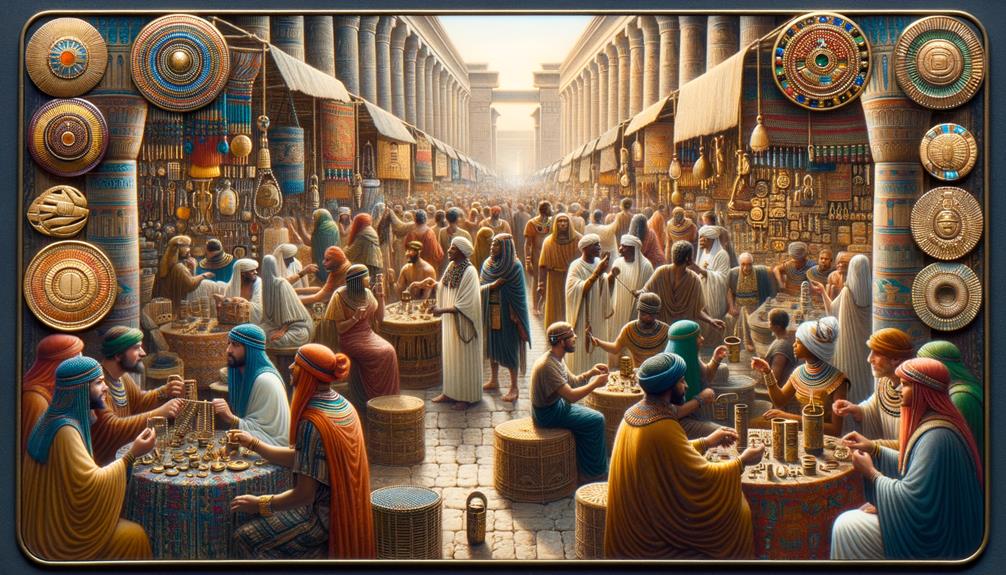
In ancient Egypt, jewelry was a way of life rather than just a fashion statement. Every piece told a story of daily life, belief, and protection. Ancient wall paintings show the vibrant colors, the sparkle of gold, and the intricate designs that adorned everyday people’s wrists, necks, and ankles. Pharaoh Tutankhamun, whose tomb held a fortune of riches, followed this tradition, though his regalia was truly fit for a king.
Jewelry served as a language of symbols, conveying messages of protection against illness and evil. Farmers wore amulets, hoping for bountiful harvests, while artisans crafted elegant adornments from semi-precious stones and glass beads. Each piece, whether simple or elaborate, reflected the wearer’s status, beliefs, and daily aspirations.
The ancient Egyptians believed their jewelry possessed magical properties. A necklace of turquoise was a shield, a prayer, a charm rather than just an accessory. Rings and bangles softly jingled, each one a silent promise of good fortune. In their daily lives, jewelry blended art and magic, becoming an integral part of their identity and a timeless reflection of their innovative spirit.
Royal and Noble Jewelry
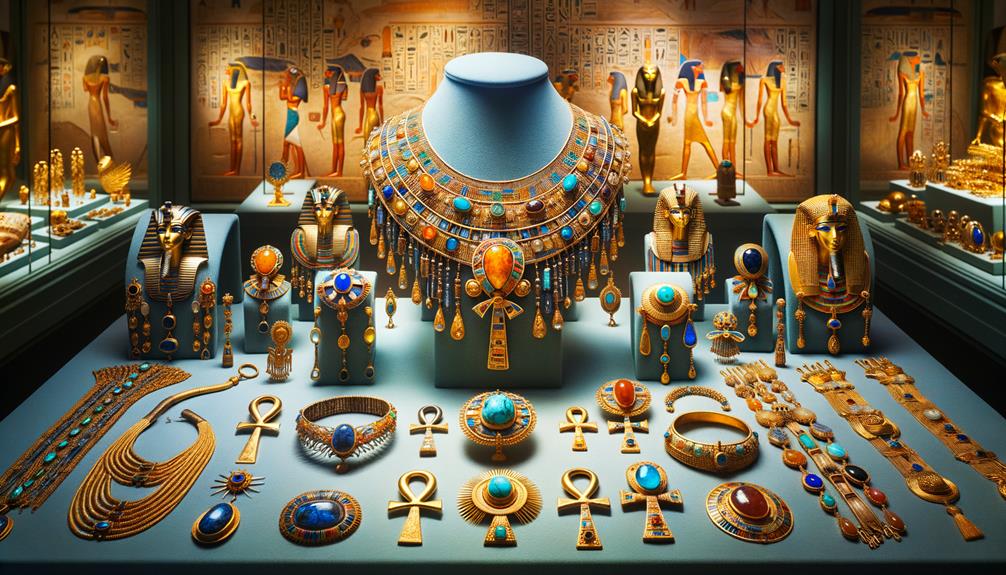
While everyday Egyptians adorned themselves with symbols of protection and belief, the jewelry of royalty and nobility radiated unparalleled opulence and divine significance. Gold, lapis lazuli, and turquoise were meticulously crafted into wearable art that marked those who wore them.
Pharaohs and nobles didn’t just wear jewelry; they embodied the divine through intricate collars, diadems, and pectorals. These pieces were symbols of power, divine protection, and cosmic harmony rather than mere adornments. Each piece held a whisper of the gods, making the wearer an earthly manifestation of celestial order.
- Hieroglyphic Inscriptions: Detailed carvings that told stories of divine authority.
- Depictions of Deities: Sculpted images that connected the wearer to the pantheon of gods.
- Symbols of Power: Emblems that signified the wearer’s high status and role in maintaining balance.
This jewelry was a reflection of the ancient Egyptians’ belief in the interconnectedness of the mortal and the divine, not just a display of wealth. Through gold and precious stones, they forged connections that transcended the earthly domain, creating a legacy of beauty and power that still captivates us today.
Preservation and Legacy
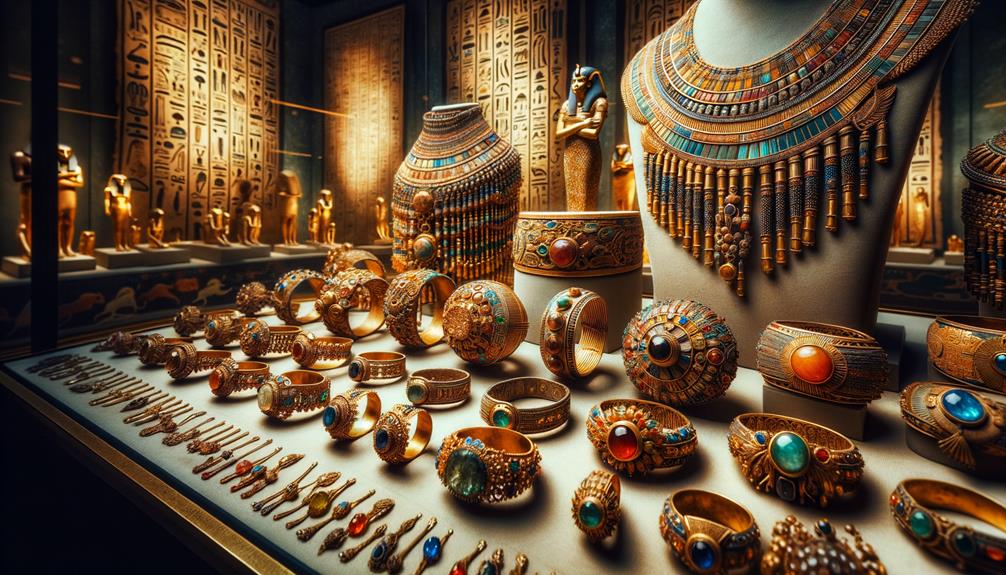
The timeless beauty of ancient Egyptian jewelry owes much to preservation efforts that have allowed us to glimpse the artistry and symbolism that thrived millennia ago. Tombs have acted as time capsules, safeguarding these treasures. The intricate details and exquisite materials remain intact, telling stories of a civilization that revered both beauty and meaning.
| Aspect | Significance |
|---|---|
| Craftsmanship | Reveals skill and artistry |
| Symbolism | Reflects cultural and religious beliefs |
| Material Use | Highlights the value of resources like gold and gems |
| Influence on Modern | Inspires contemporary jewelry design |
Displays such as the one at the Metropolitan Museum of Art showcase Egyptian jewelry. Each piece dazzles the eye and shows the ancient Egyptians’ profound connection to their deities and the afterlife. The ‘weighing of the heart’ motif, for instance, encapsulates their belief in moral integrity and judgment after death.
Preservation is about more than maintaining physical objects; it’s about keeping the legacy alive. Through these efforts, we connect past and present, allowing the artistic, technical, and symbolic richness of ancient Egypt to continue influencing modern innovation.
Frequently Asked Questions
What Kind of Jewelry Did Ancient Egyptians Wear?
Ancient Egyptians adorned themselves in gold and gemstones, each piece telling a story through scarabs, lotus flowers, and divine symbols. Their jewelry was a cultural, social, and spiritual expression rather than mere decoration.
What Jewelry Is Famous in Egypt?
Egyptian jewelry, with its vibrant turquoise and lapis lazuli, captures the essence of time itself. The iconic scarabs, symbolic Eyes of Horus, and cartouches tell ancient stories through modern eyes.
What Clothes and Accessories Did They Wear in Ancient Egypt?
Ancient Egyptian attire featured lightweight linen garments that flowed freely. The Egyptians adorned themselves in symbolic jewelry, crowning their heads with intricate headdresses that exuded an air of mystique and refinement, blending elegance with mysticism in a timeless style.
What Is the Oldest Egyptian Jewelry?
The oldest Egyptian jewelry, dating back to around 4000 BCE, was crafted from simple materials like shells and stones. Those humble beginnings gave birth to an enduring legacy of intricate beauty and symbolism.