Ancient Mesopotamian fashion grew from humble beginnings into intricate, ornate garments. The people of Mesopotamia worked with wool and linen, adding texture with tufts and fringes. Men often wore flounced skirts, while women draped themselves in long, tufted shawls. The Sumerian kaunakes, varying in length, served as a status symbol. Wealthy men’s tunics featured intricate embroidery, and women’s ciceris boasted vibrant, naturally dyed patterns. Accessories crafted from precious metals signaled affluence and power. Every piece of clothing or accessory served a practical purpose, and it also conveyed social status, wealth, and even divine favor.
Early Mesopotamian Garments
In early Mesopotamia, people started with simple loincloths made from sheepskin, which eventually gave way to more sophisticated fabrics like woven wool and linen adorned with tufts and fringes. The shift from these basic garments to intricate designs reflects a significant change in Mesopotamian fashion. For both men and women, clothing was an expression of their social status and identity, not merely a matter of utility.

The Sumerians were among the first to innovate, introducing the kaunakes, a distinctive garment that varied in length based on class. The upper class wore ankle-length versions, while the lower class wore knee-length ones. Men typically opted for flounced skirts, emphasizing a layered, textured appearance. Women, on the other hand, draped themselves in long, tufted shawls that added elegance and sophistication to their attire.
These ancient garments served practical purposes, and they also became a means of self-expression. The addition of accessories like jewelry, pendants, rings, earrings, and bracelets further highlighted the importance of adornment in early Mesopotamian society. These early Mesopotamian garments paint a vivid picture of a culture deeply invested in the art of dress and personal presentation.
Textile Materials and Techniques
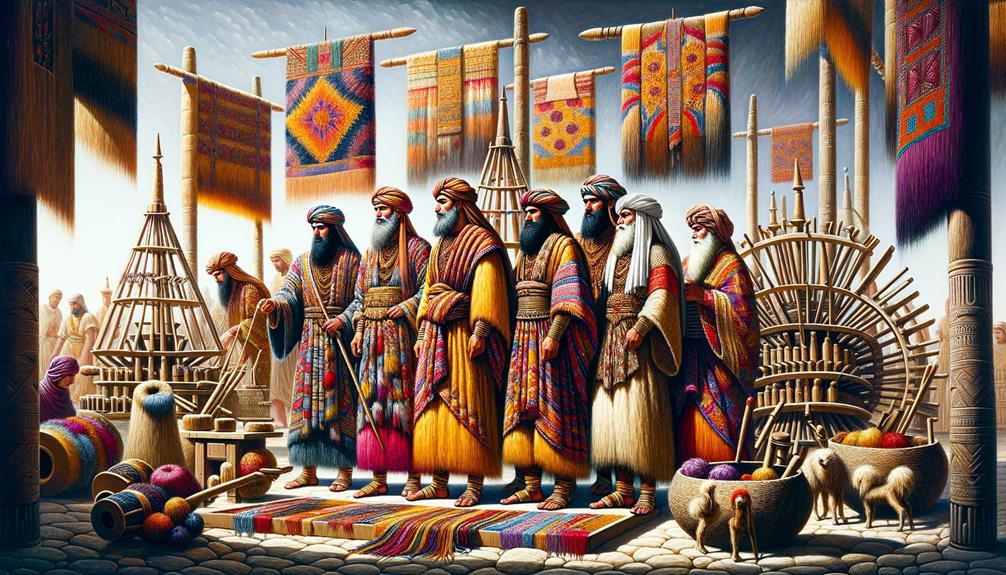
The intricate garments of early Mesopotamia show the sophisticated textile materials and techniques that brought these pieces to life. The shift from simple animal hides to advanced woven fabrics marked a significant leap in textile innovations. Mesopotamians primarily used wool and linen, and the development of these materials showcased their ingenuity.
Wool and linen were the primary fabrics, with wool being more prevalent due to the abundance of sheep.
Techniques like weaving and tufted effects added texture and depth to fabrics, making garments both functional and decorative.
Crafted from felted wool and leather, elaborate cloaks showed the skilled craftsmanship of Mesopotamian artisans.
Intricate golden jewelry complemented these textiles, highlighting the mastery of materials in Mesopotamian fashion.
The detailed woven fabrics and elaborate cloaks demonstrated a practical approach to clothing and a deep appreciation for artistry and technique. Skilled craftsmanship was evident in every piece, from the tufted effects that added dimension to fabrics to the high-quality metalworking that adorned these garments. Mesopotamian fashion was truly ahead of its time, blending practicality with innovation.
Men’s Clothing Styles
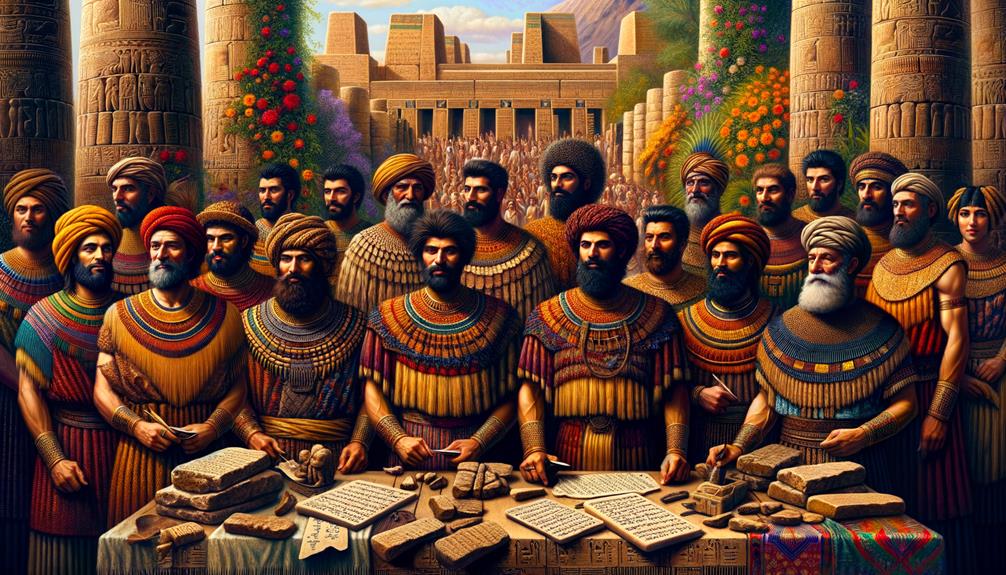
Ancient Mesopotamian men used their clothing to convey their social status. The intricate patterns, belts, and fringes on their tunics and kilts were not just decorative. They told a story about the wearer’s role in society. As they transitioned from animal hides to woven wool and linen garments, their clothing styles underwent a significant transformation.
Tunics and Kilts
In ancient Mesopotamia, men’s fashion centered around two essential garments: tunics and kilts. These staples of the male wardrobe were practical, and they also conveyed social status and identity. Made from wool or linen, tunics were designed for ease of movement, making them perfect for the Mesopotamian climate. The intricate embroidery and patterns on these tunics added an air of sophistication and luxury.
Wealthy men distinguished themselves by adorning their tunics with elaborate embroidery, high-quality fabrics, and jewelry. They also wore kaunakes, a type of kilt made from tufted wool, which varied in length according to social status. The longer the kilt, the higher the social standing.
The kaunakes was a distinctive feature of Mesopotamian fashion, often worn by men of higher social status. The texture and pattern of the kaunakes indicated the wearer’s position within the social hierarchy, making it a clear marker of distinction. The combination of tunics and kilts showcased the innovative spirit of Mesopotamian fashion, blending functionality with aesthetic appeal.
Decorative Accessories
The intricacies of Mesopotamian men’s fashion make it clear how significant decorative accessories were in conveying wealth and social standing. These accessories were powerful symbols of a person’s place within society, and they were more than merely aesthetically pleasing. Necklaces, often crafted from gold and silver and adorned with intricate pendants, showcased a man’s affluence and refined taste. Rings and earrings, embedded with precious stones, added a touch of elegance and signified sophistication and cultural refinement.
Bracelets, worn on both wrists, added another layer of sophistication to a man’s attire. Each piece was meticulously designed, reflecting the exceptional artistic skills of Mesopotamian craftsmen. Ornamented belts served a dual purpose. They were practical for securing garments, and they provided a canvas for artistic expression, often featuring elaborate designs and gemstones.
Cylinder seals, worn on cords around the neck, exemplified the perfect blend of functionality and decoration. These seals were essential for authenticating documents, and their intricate carvings and materials made them striking accessories. In every piece, from the simplest earrings to the most elaborate belts, Mesopotamian men’s clothing styles revealed a deep appreciation for both form and function, setting a precedent for future fashion innovations.
Women’s Fashion Elements
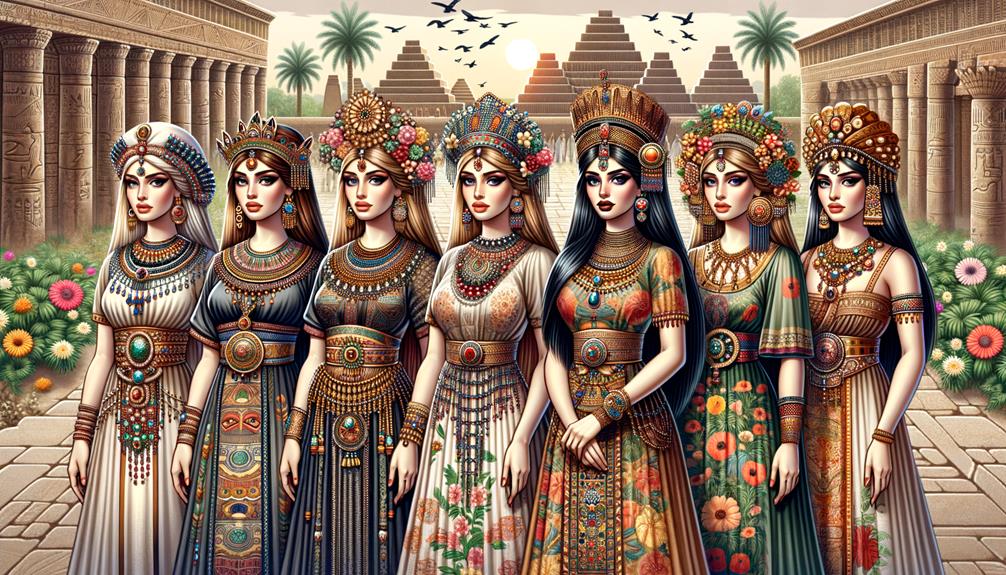
In ancient Mesopotamia, women’s fashion took the form of long, flowing robes called ciceris, crafted from natural fibers like wool and linen. These garments were an art form, and they were more than just clothing. Women’s clothing in Mesopotamia was meticulously draped, exuding elegance and sophistication. The ciceris were often adorned with intricate patterns and vibrant colors, making each piece a visual delight.
The attention to detail was truly impressive. Mesopotamian women’s fashion was defined by several key elements:
Natural fibers like wool and linen were the primary materials, chosen for their durability and comfort.
Intricate patterns, ranging from geometric shapes to elaborate motifs, showcased the weaver’s skill.
Dyes made from natural sources produced a spectrum of hues, from deep reds to striking blues.
The way these robes were draped added a sense of movement and grace, enhancing the wearer’s presence.
These elements make it clear that Mesopotamian women’s fashion was about expressing identity and status as much as it was about aesthetics. The combination of natural fibers, intricate patterns, and vibrant colors created a unique and innovative style that still inspires today.
Symbolism in Attire
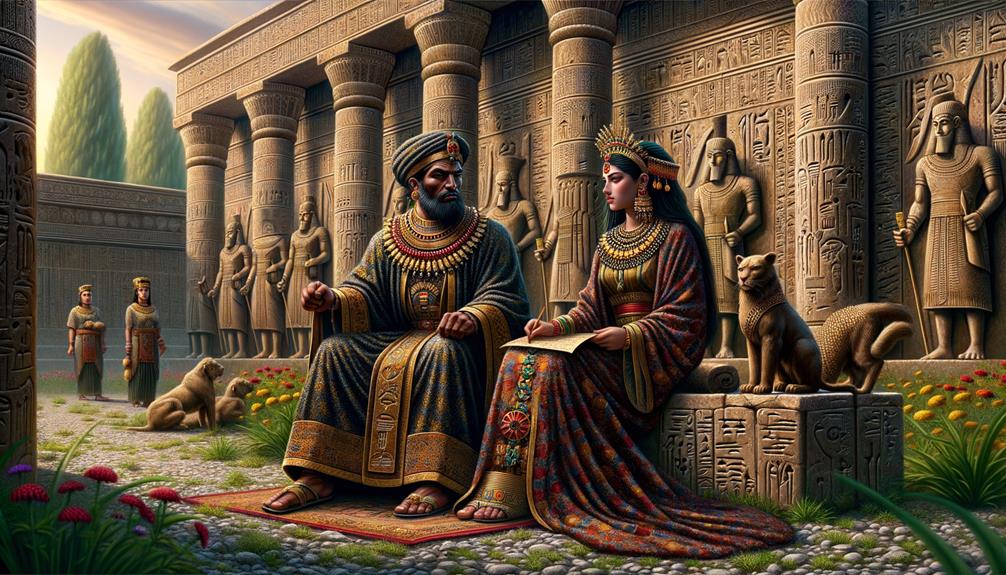
Clothing in ancient Mesopotamia was a visual representation of one’s social status, profession, and religious beliefs, and it was more than just a necessity. Each garment worn conveyed a message about the wearer’s place in society.
The choice of colors, patterns, and styles in Mesopotamian attire held significant symbolic meaning. The elite wore vibrant colors, such as deep blues and rich reds, which were difficult to produce and therefore signified wealth and power. In contrast, common people wore simpler, more muted tones. Patterns, too, carried meaning. Intricate designs were reserved for the higher classes, each motif carefully selected to reflect status and role.
| Aspect | Symbolism |
|---|---|
| Colors | Wealth, power, social status |
| Patterns | Social hierarchy, profession |
| Priestly Attire | Religious authority, purity |
| Royal Robes | Kingship, divine favor |
Religious beliefs were also reflected in the attire. Priests wore specific garments during rituals, often in white or gold, symbolizing purity and a divine connection. The attention to these details highlights how clothing was a form of identity and expression in the ancient world, and it was more than simply fabric.
Accessories and Adornments
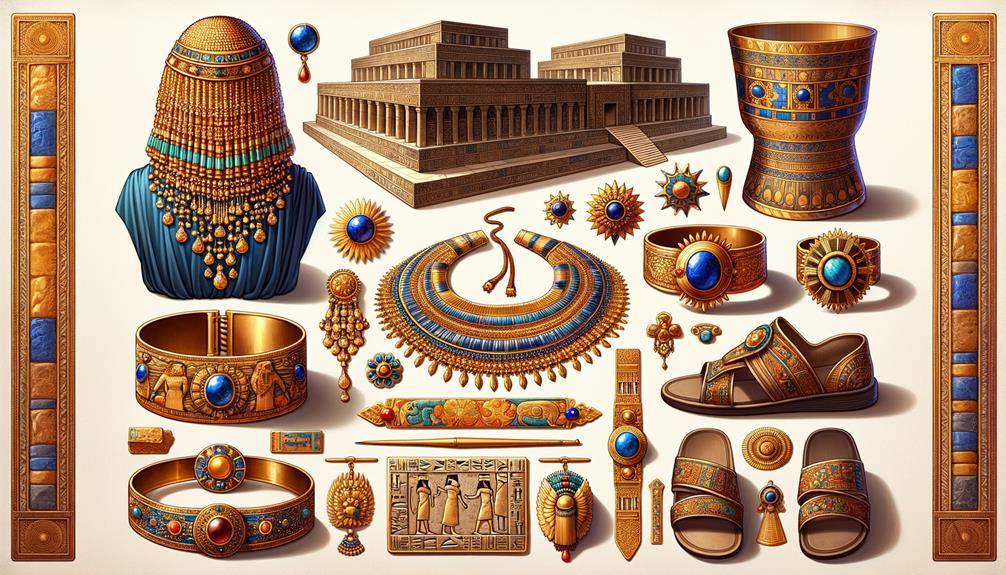
Accessories and adornments in ancient Mesopotamia conveyed social status, wealth, and personal style, and they were more than just decorative items. The intricate craftsmanship of jewelry pieces spoke volumes about the wearer’s position in society. Both men and women wore various accessories to enhance their attire and showcase their status.
The array of adornments reflects the ingenuity and appreciation for beauty in ancient Mesopotamia. The types of accessories that were prevalent include:
- Necklaces and Pendants: Crafted from precious metals and adorned with gemstones, these pieces were statement items that drew attention.
- Rings and Earrings: Often made of gold and silver, these items were worn by both genders to signify wealth and social status.
- Bracelets: These were symbols of power and influence as well as decoration.
- Headgear: Ornamented with jewels, these pieces added a regal touch to the wearer’s ensemble.
These accessories were a means of communicating one’s place in the social hierarchy and expressing personal style. The use of precious metals and gemstones in Mesopotamian jewelry highlights a sophisticated sense of aesthetics and an innovative spirit that continues to inspire.
Frequently Asked Questions
What Did Early Mesopotamians Invent?
Early Mesopotamians pioneered textile production, creating innovative fabrics like wool and linen. They developed vibrant dyes for bright garments and crafted the kaunakes, a unique fabric. Their leatherworking skills led to the creation of distinctive accessories, including caps.
What Did the Mesopotamians Make Their Clothes?
Mesopotamians crafted their clothing from natural fibers like wool and linen, using innovative techniques such as felting and weaving to create intricate patterns and vibrant colors. They adorned their garments with jewelry, belts, and headdresses, showcasing their creativity and flair for style.
What Did the Mesopotamians Contribute to Architecture?
Mesopotamians made significant contributions to architecture, introducing innovative city planning and constructing impressive ziggurats. Their temples, palaces, and fortifications showcased advanced engineering skills that influenced the development of architecture in subsequent civilizations.
What Type of Jewelry Did People Especially Like to Wear in Mesopotamia?
In ancient Mesopotamia, people cherished wearing intricate jewelry, often adorned with gemstones like carnelian, lapis lazuli, and agate. Their necklaces, pendants, rings, earrings, and bracelets showcased their rich cultural heritage.