In the Roman Empire, fashion was an intriguing mix of social standing and artistry. The striking contrast between simplicity and opulence is striking. Emperors like Marcus Aurelius would auction off gold-embroidered silk robes, flaunting the empire’s wealth. Meanwhile, weaving was a meticulous craft in Roman homes, often performed by women and later slaves. The toga and stola symbolized citizenship and marital status, respectively, and they were more than simply garments. The prestigious Tyrian purple dye, extracted from sea snails, added a layer of complexity to Roman attire. These clothes told the story of their wearers, and they did not just dress bodies.
Imperial Wardrobe
The grandeur of the Roman Empire is evident in the opulence and meticulous craftsmanship of the imperial wardrobe. The emperors’ garments symbolized power and grandeur, and they were more than simply clothes. Emperor Marcus Aurelius, known for his philosophical leanings, once organized an auction at the Forum of Trajan, selling gold-embroidered silk robes among other imperial heirlooms. These robes, shimmering with intricate designs, showcased the empire’s wealth and the artistry of its textile craftsmen.

The thesaurus, a treasure house within the imperial palace, played a vital role in maintaining the imperial jewelry and state robes. Each piece, from the emperor’s regalia to the empress’s adornments, was carefully cataloged and preserved. In stark contrast, Emperor Augustus preferred simplicity, often donning homespun woolen cloth woven by his own family. This choice symbolized a return to traditional values amidst the empire’s growing opulence.
The evolution of the imperial wardrobe reflects a delicate balance between luxury and tradition. While Augustus embraced humble homespun cloth, later emperors reveled in the splendor of silk and gold. The imperial wardrobe, in its diverse forms, speaks to the rich cultural heritage of ancient Rome.
Weaving Practices
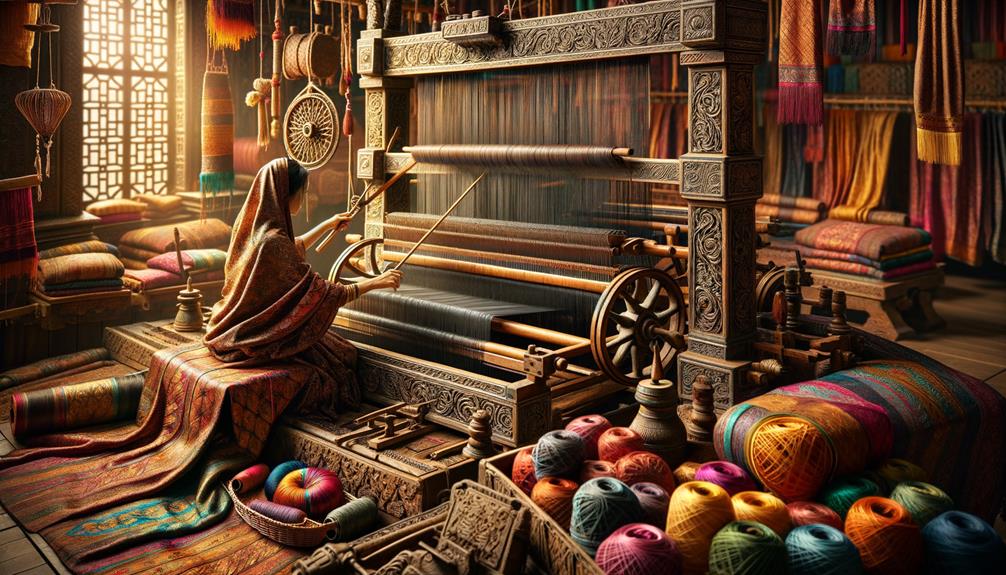
In ancient Roman homes, weaving was a meticulously observed craft, with dedicated rooms designed to optimize natural light and space for the weavers. The Roman architect Vitruvius even provided guidance on how to best illuminate these spaces. The looms, typically around four feet wide, were set up in these rooms or sometimes even in the reception halls, indicating the importance of weaving within daily life.
Initially, weaving was a home production activity, carried out by the women of the household. Over time, however, this craft shifted to slaves or ceased altogether in many homes. Fabrics created in these settings were sent to fullers for washing and shearing, and dyers were employed to bring color to the textiles in ancient Rome.
Here is a deeper look at the process:
| Step | Role | Purpose |
|---|---|---|
| Weaving | Women/Slaves | Creating the fabric |
| Fulling | Fullers | Washing and shearing |
| Dyeing | Dyers | Coloring the textiles |
Roman weaving practices blended meticulous home production with specialized craftsmanship, reflecting the innovation and societal structure of ancient Rome.
Garment Types
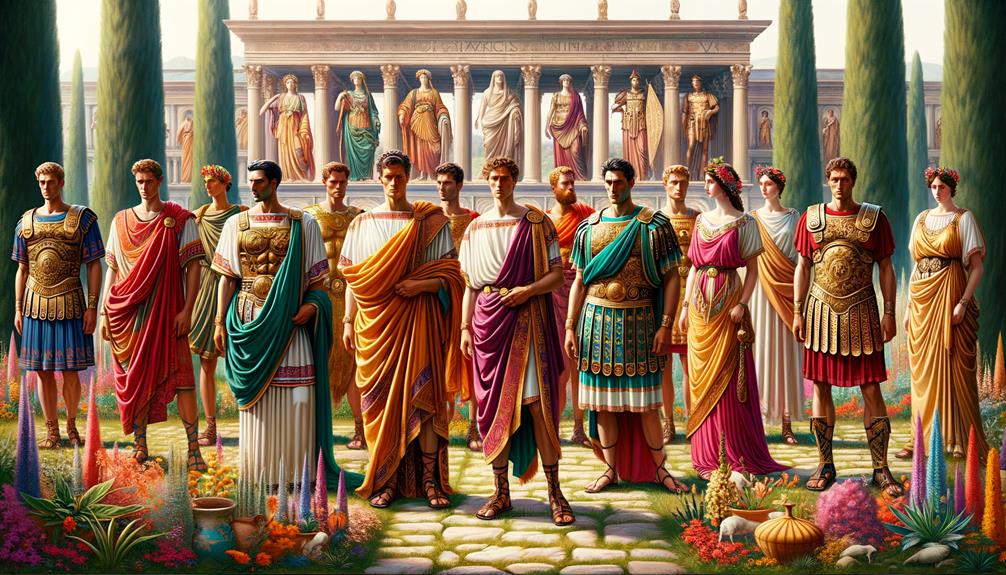
Roman fashion was deeply rooted in the societal norms and status symbols of the time. The stola and toga, for instance, served as clear indicators of a person’s place in society. The stola, worn by Roman women, particularly wives and Vestal virgins, symbolized marital status. This long, pleated, sleeveless robe often featured a purple border, resonating with the esteemed Tyrian purple of the elite. Vestal virgins, revered priestesses, donned this garment, likely in white with purple accents, blending purity with prestige.
The Roman toga, on the other hand, was exclusively a male garment. Wearing the toga signified Roman citizenship, with variations like the purple toga denoting higher ranks. Senators and high officials showcased broad purple stripes, while those of equestrian rank had more modest adornments.
Interestingly, Roman fashion drew inspiration from ancient Greek attire but evolved its distinctive symbols. Women also wore tunics, but these were often layered under the stola, creating a complex yet harmonious ensemble. Each fold and color thread wove together the fabric of Roman society’s hierarchy and identity.
Dyeing Techniques
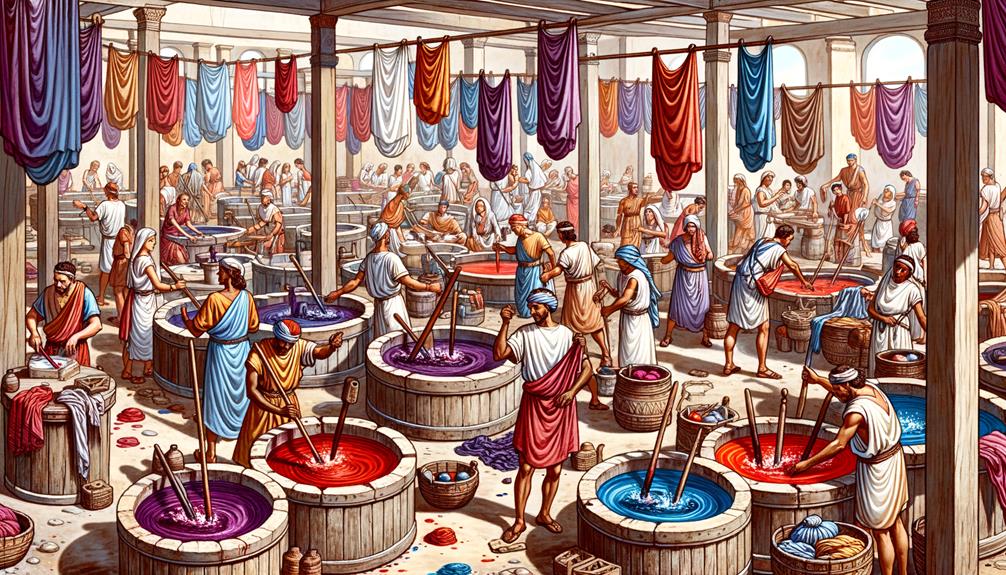
The ancient Romans’ mastery of natural dyes, derived from plants, minerals, and animals, is remarkable. They transformed their textiles into vibrant works of art using a range of techniques. One of the most prestigious dyes was Tyrian purple, extracted painstakingly from sea snails. This hue symbolized power and status, reserved for the togas of Roman elites.
The process of dyeing fabrics was intricate. Romans used mordants like alum and even urine to fix colors onto fabrics, ensuring they wouldn’t fade easily. Techniques like dip-dyeing, tie-dyeing, and batik allowed for striking patterns and added intricacy to their designs.
These ancient methods influenced later European textile traditions. The Romans’ innovative approach to creating lasting, vibrant colors from natural dyes left a lasting legacy. Their meticulous craftsmanship adorned their clothing and paved the way for centuries of textile artistry, making their influence undeniable.
Social Significance
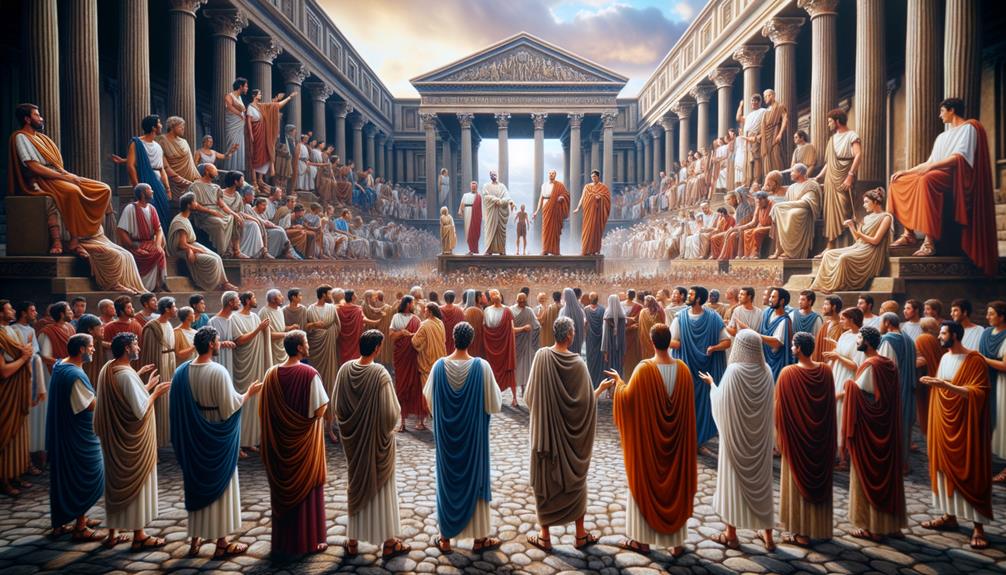
In ancient Rome, clothing was a visual representation of one’s social standing and identity, and it was more than just a necessity. The toga and stola, in particular, held significant importance in Roman society.
The toga, a privilege reserved for Roman citizens, instantly conveyed one’s status within the social hierarchy. Only a select few could don the toga, making it an exclusive symbol of citizenship. In contrast, the stola, worn by married women and Vestal priestesses, indicated marital status and devotion. The matronal stola featured varied colors, while the Vestal virgins‘ stola likely featured white fabric with a purple border, symbolizing purity and sacred duty.
In ancient Rome, a woman’s attire, particularly the stola, was deeply connected to her social status and marital standing. The stola became a reflection of a woman’s place in society. Meanwhile, women wearing the toga was frowned upon, carrying negative connotations in literature and society.
Ultimately, Roman clothing defined one’s social identity and status in the intricate fabric of Roman life, and it did not just cover the body.
Frequently Asked Questions
What Did the Romans Wear for Fashion?
Romans followed a thoughtful approach to dressing. Women wore elegant stolae, which reflected their social status, while men wore togas. The fabrics they chose, often linen, wool, or silk, also conveyed their wealth and social standing.
What Was the Importance of Fashion in Rome?
Fashion in ancient Rome conveyed social standing, power, and citizenship, and it was not just about aesthetics. Every garment and accessory meticulously signaled an individual’s position within the complex social hierarchy.
What Style Did the Ancient Romans Wear?
The ancient Romans had a distinct sense of style. They donned togas and stolae, which showcased their social standing and moral character. Their attention to detail and creative ways of expressing their identity are worth admiring.
How to Dress Like Ancient Roman?
Start with a simple, undyed wool tunic, then carefully drape a toga over it, paying attention to the color and style. Next, add a signet ring and choose a hairstyle inspired by ancient Roman leaders like Nero or Hadrian.