The elegance and practicality of ancient Greek fashion, particularly its use of drapery, are striking. Beautiful garments were crafted from single pieces of cloth, like the peplos and chiton, which were folded and pinned to accentuate the body’s natural curves. The himation, worn over other clothing, added a touch of sophistication and versatility. Clothing wasn’t just functional; it conveyed social status, modesty, and even divinity through intricate folds and fabrics. A closer look at this artistry reveals a great deal about the cultural values and innovations of the time. There is still much to uncover about these extraordinary sartorial choices.
Origins of Greek Drapery
The origins of Greek drapery in fashion date back to the artistic innovations seen in classical and Hellenistic Greek art. Ancient Greek artists skillfully manipulated fabric to convey a sense of movement and elegance. They didn’t just depict clothing; they captured the essence of the human form beneath it. In ancient Greece, both men and women wore garments made from a single piece of cloth, carefully draped to prioritize both comfort and aesthetics.

In ancient Greek dress, the fabric flows naturally, accentuating the body’s contours and the wearer’s posture. This wasn’t a casual choice; it was a deliberate artistic decision. The wet-drapery technique, where fabric appears to cling to the body, highlights the intersection of art and fashion. The fabric itself tells a story, hinting at both physical and ethereal qualities.
In modern fashion design, these principles remain influential. Designers today draw inspiration from how ancient Greeks expertly draped fabric, creating garments that exude timeless elegance. The precision and thoughtfulness of ancient Greek art continue to shape how fabric is perceived and innovated, making it a perpetual source of inspiration.
The Peplos

Among the many garments of ancient Greece, the Peplos stands out for its simplicity and cultural significance. This classic Greek garment, worn by women, is captivating in its straightforward design and profound affirmation. Made from a single piece of wool, the Peplos was a large, rectangular piece of cloth that was artfully draped around the body.
Women in ancient Greece would carefully pin and fold this fabric, ensuring it reached down to their ankles, creating an elegant silhouette. The Peplos wasn’t just about aesthetics; it held deep cultural importance. Often worn during religious ceremonies and festivals, this garment symbolized modesty and femininity, reflecting the values and traditions of the time.
How the Peplos evolved over time, becoming more intricate and decorative, is worth noting. This evolution mirrors the societal changes and shifts in fashion preferences, illustrating how a single piece of fabric could adapt to new trends while maintaining its essential essence. The Peplos shows the ingenuity and cultural richness of ancient Greek women’s attire, reminding us that even the simplest designs can carry significant meaning.
The Chiton
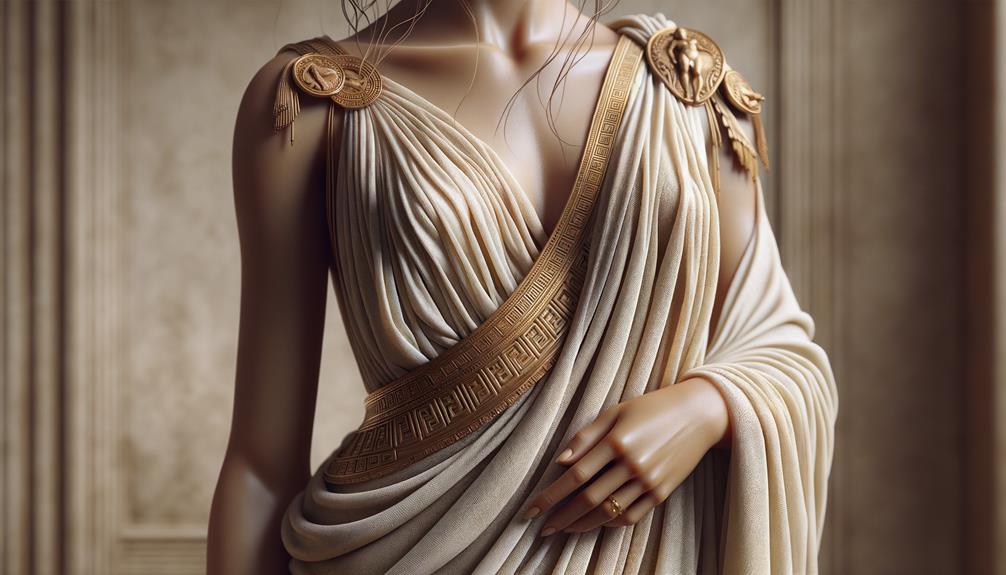
While the Peplos showcased simplicity and cultural depth, the Chiton is notable for its intricate design and evolving style. This ancient Greek garment, worn by both men and women, was made from a single rectangle of cloth, and existed in two principal forms, the Doric and the Ionic, which developed into a fashion statement of Classical Greece. Men favored longer Chitons, but over time, they shifted to shorter styles, reflecting practicality and changing aesthetics.
Of particular interest is how the fabric was sewn and draped diagonally over one shoulder, creating a fluid silhouette that seemed to come alive in Greek Art. The Chiton wasn’t just functional; by the 4th century BCE, it became a canvas for vibrant colors and intricate designs. This elaborate decoration hinted at the garment’s Eastern origins and luxurious appeal, as suggested by the Semitic root of the word.
The Chiton’s versatility and adaptability allowed it to remain a staple throughout various Greek periods. Its ability to evolve into different lengths and styles speaks to an innovative spirit that resonates even today. Observing how it was worn, the sophisticated craftsmanship and cultural significance this garment holds are clear in the history of ancient Greek fashion.
The Himation

The Himation, a staple of ancient Greek attire, is defined by its elegant simplicity and versatility. This draped garment, a rectangular piece of fabric, was a marvel of ancient Greek ingenuity. Typically worn as a cloak over the chiton, it added a layer of sophistication and practicality to the ensemble.
Of interest is how the Himation could be draped over one or both shoulders. Both men and women wore it, each adopting unique styles that reflected personal and societal norms. Made mainly from wool, the fabric’s texture and weight provided both warmth and modesty, essential in various social settings.
The Himation’s adaptability was striking. As a cloak, it could serve multiple purposes, from shielding the wearer from the elements to acting as an impromptu blanket or even a status symbol. The precision with which it was draped allowed for a range of expressions, from informal to dignified, depending on how one chose to wear it.
In essence, the Himation was more than just a garment; it made a statement. Its presence in ancient Greek fashion offers a glimpse into the ingenuity of clothing design, where form and function harmoniously coexisted.
Symbolism in Clothing
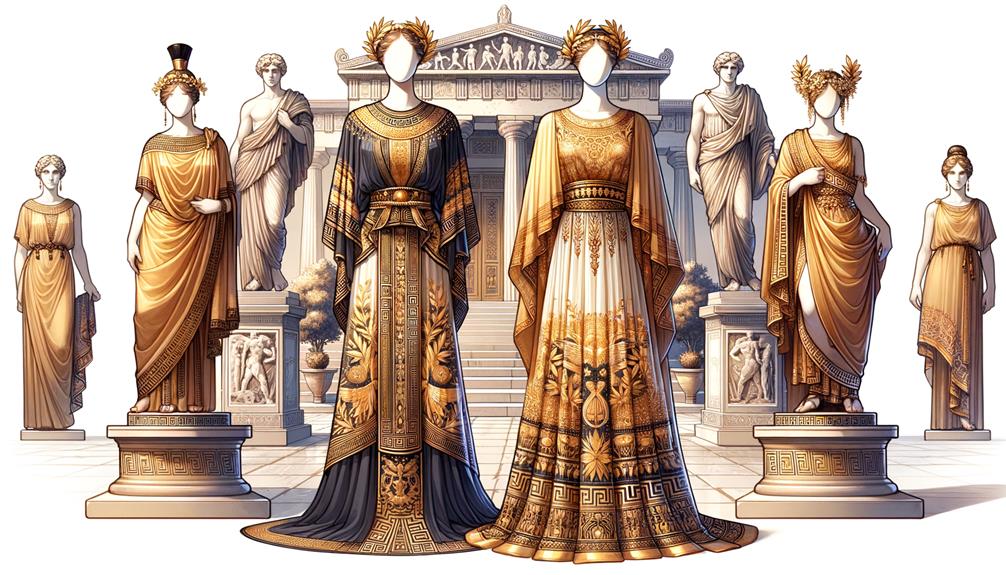
Clothing in ancient Greek art was more than just aesthetically pleasing. It was a powerful symbol of social status, gender roles, and cultural values. Examining the intricacies of drapery, fabric folding and movement convey much more than mere style. The way garments flowed and moved depicted natural grace and elegance, essential in highlighting the wearer’s power and sophistication.
In ancient Greece, clothing played a significant role in defining societal norms. For example, the elaborate drapery often seen on statues of gods and goddesses was not merely for show; it was a clear marker of their elevated status. Similarly, warriors and statesmen were depicted with specific drapery styles to denote their importance and influence.
Several points stand out:
- Elaborate drapery signified divinity and heroism.
- Simpler clothing indicated humility or servitude.
- Specific styles defined gender roles and societal norms.
The ancient Greeks used fabric draping not just to adorn but to communicate profound cultural values. This interplay of clothing and symbolism offers a glimpse into their world, revealing how deeply intertwined their fashion was with their identity and societal structures.
Frequently Asked Questions
What Were the Ancient Greek Drapes?
Ancient Greek drapes, like the chiton and himation, were crafted with flowing fabric and intricate folds. These garments symbolized more than just clothing; they embodied the culture’s deep appreciation for beauty and artistic expression.
What Is the Drapery in Ancient Greek Sculpture?
Ancient Greek sculptors managed to capture the fluidity of fabric in stone with remarkable skill. The intricate folds and lifelike flow of the drapery reveal their exceptional technique and innovative approach.
What Is the History of Draping in Greece?
The history of draping in Greece evolved from simple, functional garments to symbols of sophistication and elegance. The Greeks’ innovative fabric manipulation allowed for versatile styles, leaving a lasting impact on fashion.
What Kind of Fabric Did They Wear in Ancient Greece?
In ancient Greece, people wore fabrics made from linen and wool, often dyed in vibrant colors and adorned with intricate designs. Both men and women favored these materials for their everyday clothing, including tunics and cloaks.