The rich history of ancient Indian textiles is marked by timeless elegance. These fabrics went far beyond clothing: they told stories of craftsmanship and cultural richness. From the delicate silks of Varanasi to the durable cottons of Gujarat, the diversity in materials and techniques is remarkable. The profound symbolism and intricate artistry embedded in each piece reveal much about the societies that made them.
Early Textile Techniques
The early textile techniques of ancient India show the ingenuity and skill of the Indus Valley Civilization‘s craftsmen. The intricate work of these ancient artisans, as seen in the archaeological finds at Mohenjo-Daro, reveals a sophisticated understanding of textile production. The fine cotton spinning speaks to their mastery of the spinning wheel, an innovation that greatly impacted fabric creation.
Vedic texts contain references to weaving terminologies that point to a rich tradition of textile artistry. In the later Vedic period, a broader range of materials came into use, with silk and wool becoming integral to ancient Indian textiles. The meticulous regulations detailed in the Arthashastra for distributing skins, wools, and silks to spinners and weavers highlight a society deeply invested in its textile craft.
The fabrics mentioned in the Mahabharata and Ramayana paint a vivid picture of the cultural significance of textiles in ancient India. These early techniques did not simply clothe a civilization; they wove the very fabric of its identity, blending innovation with tradition in a fine display of human ingenuity.
Materials and Dyeing
The vibrant colors and intricate patterns of ancient Indian textiles show exceptional skill on the part of the artisans. India’s rich textile heritage is deeply rooted in the use of diverse materials like cotton, silk, and wool, each offering unique textures and strengths.
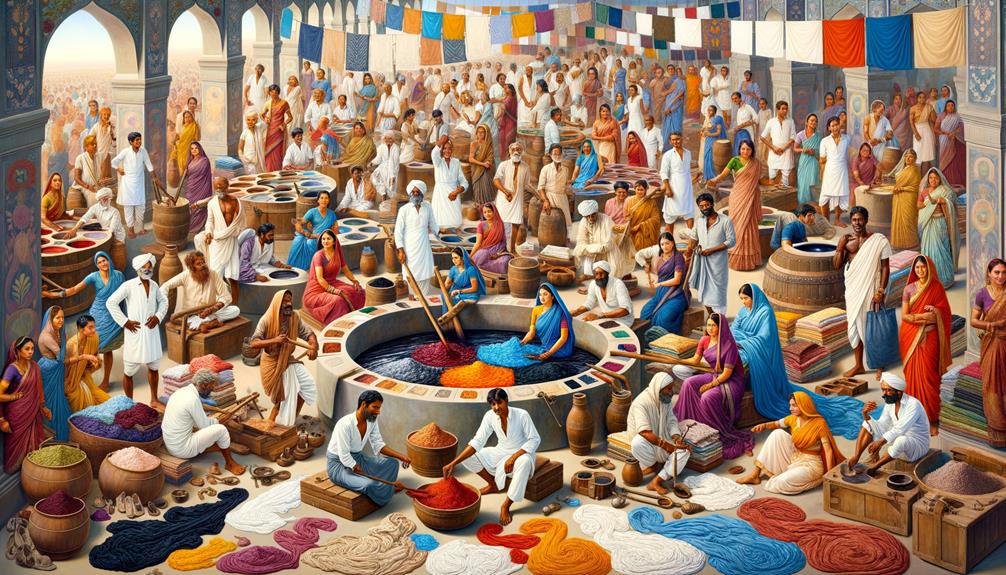
Natural dyes, derived from plants and minerals, transformed these raw materials into works of art. The red hues extracted from the madder plant and the shades of blue from indigo plants created a spectrum of colors that still impress today.
Central to this dyeing process were mordants like alum and iron. These substances ensured that dyes bonded effectively to the fibers, resulting in long-lasting, brilliant colors. Techniques like resist dyeing and batik further embellished the textiles, as artisans meticulously applied wax or clay to create intricate patterns before immersing the fabric in dye baths. The art of painting with mordants added another layer of complexity and beauty to these textiles.
With each piece, ancient Indian artisans demonstrated a profound understanding of their materials and an innovative spirit that continues to shape modern textile design.
Weaving Traditions
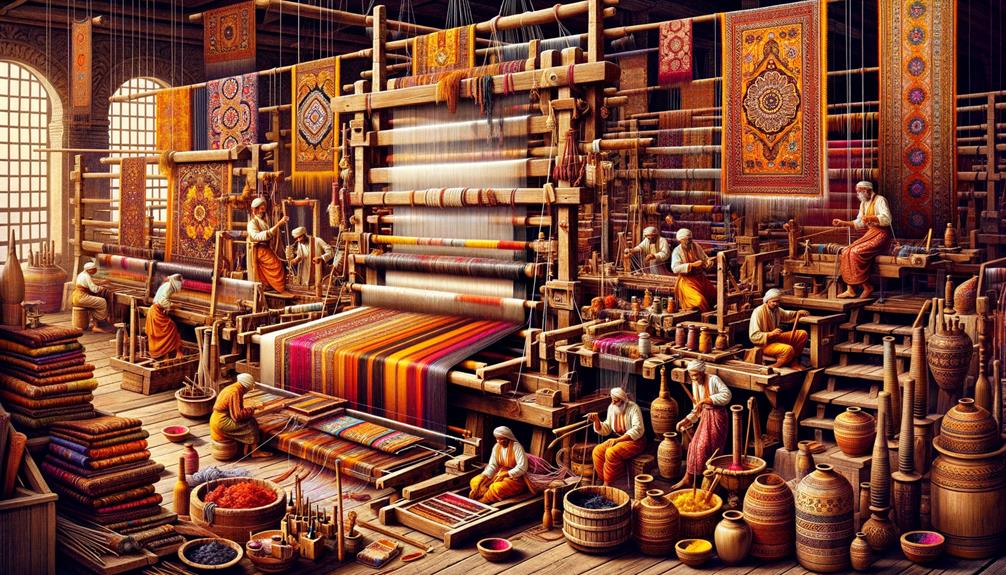
The vibrant hues and intricate patterns born from ancient dyeing techniques rest on remarkable weaving traditions that brought these textiles to life. India’s rich textile heritage dates back to prehistoric times, with precision and artfulness woven into every fabric.
In the heart of the Indus Valley civilization, early textile manufacturing flourished with both cotton and wool. These raw materials were spun into sophisticated fabrics, showing an impressive command of the craft. Vedic texts, rich in weaving terminologies, highlight the prevalence of silk and wool during the later Vedic period, underscoring the cultural significance of these fabrics.
The Arthashastra, an ancient treatise, reveals the meticulous regulation of material distribution to spinners and weavers, emphasizing the economic and societal importance of textile manufacturing. Fabrics like linen, cotton, wool, and silk went beyond mere function; they often featured precious stones and gold embellishments, reflecting the aesthetic and innovative spirit of ancient Indian weavers. Through these traditions, ancient Indian textiles continue to weave their legacy into the modern fabric of the world.
Regional Clothing Styles
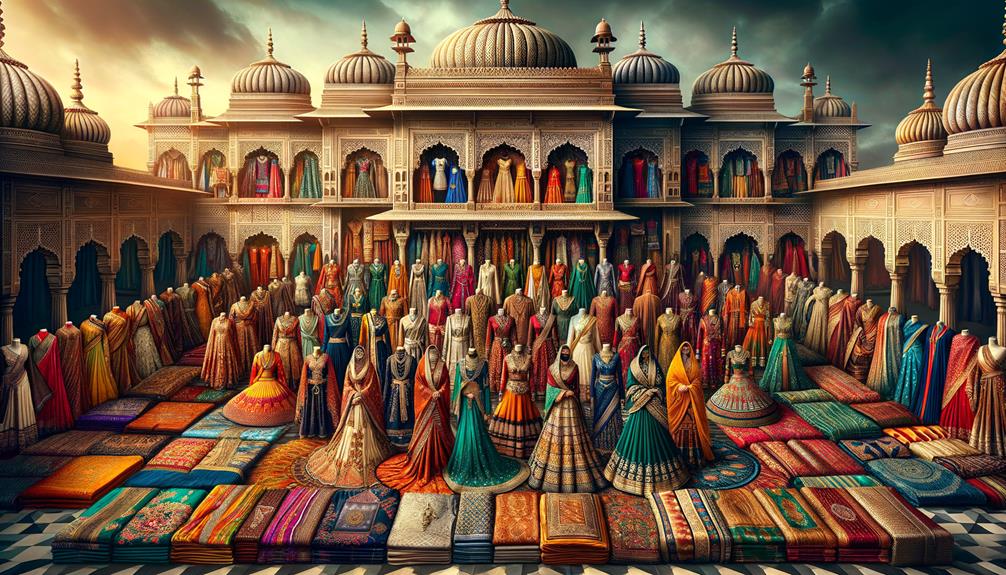
Ancient India’s regional clothing styles show remarkable diversity. Each region’s attire tells a unique story, reflecting a rich and varied cultural heritage. From the layered elegance of Northern Indian garments to the intricate draping techniques of the South, every piece reflects the country’s cultural history. The incorporation of Western elements into traditional garments also speaks to India’s ability to adapt and innovate.
Northern Indian Attire
The rich cultural heritage of Northern India produced a diverse array of clothing styles. The garments, often short and snug, reflect the region’s aesthetic preferences and the practicalities dictated by its climate.
The intricate sculptures from the Mauryan and Kushana periods showcase the elegance of fabrics draping the figures. These ancient textiles say a great deal about the craftsmanship and artistry of that era. Historical texts, such as those from Kalidas, provide further insight into the details. Parvati’s fine cloth adorned with a goose pattern shows the sophistication of these garments. The Chinese pilgrim Xuanzang’s 7th-century CE accounts offer a vivid picture of the attire worn by both men and women, capturing a snapshot of daily life and ceremonial occasions.
The simple yet culturally rich robes worn by the Sramanas, as part of their ascetic lifestyle, add another layer to the narrative of Northern Indian attire, blending simplicity with cultural depth.
Southern Draping Techniques
The unique draping techniques and vibrant textile traditions that define Southern India’s sartorial landscape contrast with the intricate tapestries of Northern India. The dhoti, veshti, and mundu are expressions of cultural heritage rather than simple articles of clothing, with each fold and pleat telling a story of time-honored craftsmanship.
The Chalukyas of Vatapi and Badami have left a lasting impact on South Indian clothing styles, evident in the elaborate jewelry and vibrant colors that adorn traditional garments. The veshti, a staple in the region, comes in various forms, reflecting both the simplicity and complexity of Indian textiles. These draping techniques, rooted in tradition, have taken in modern fashion elements, creating a fusion that feels both timeless and innovative.
The mundu, with its elegant drape, offers a glimpse into the subtleties of South India’s aesthetic sensibilities. Modern adaptations, such as the sherwani, further show the blend of heritage and modernity. These traditions retain an enduring beauty and adaptability.
Western Traditional Garments
Western India’s traditional garments reflect a deep connection to history and cultural identity through a wide range of regional styles. Each piece of clothing tells a story, woven with threads of ancient traditions and modern influences. The fusion of textiles and garments from different eras and regions, particularly from South India, adds a layer of complexity and beauty to the attire.
Four notable aspects of these regional clothing styles stand out:
- Veshti Variations: In South India, the veshti is a quintessential garment, its elegance and simplicity reflecting regional pride and heritage.
- Sherwani Evolution: The Sherwani, a fusion garment, blends traditional and contemporary elements, influenced by diverse cultures.
- Jewelry Embellishment: Unique jewelry pieces complement the traditional attire, adding a touch of opulence and cultural significance.
- Western Influences: Modern Indian men often incorporate Western clothing elements into their traditional attire, creating a unique and contemporary look.
In Western India, the garments serve as a bridge between the past and the present, reflecting the region’s deep cultural heritage. Each thread, each fabric, and each style speaks of an enduring legacy and a forward-looking embrace of innovation.
Textiles in Trade
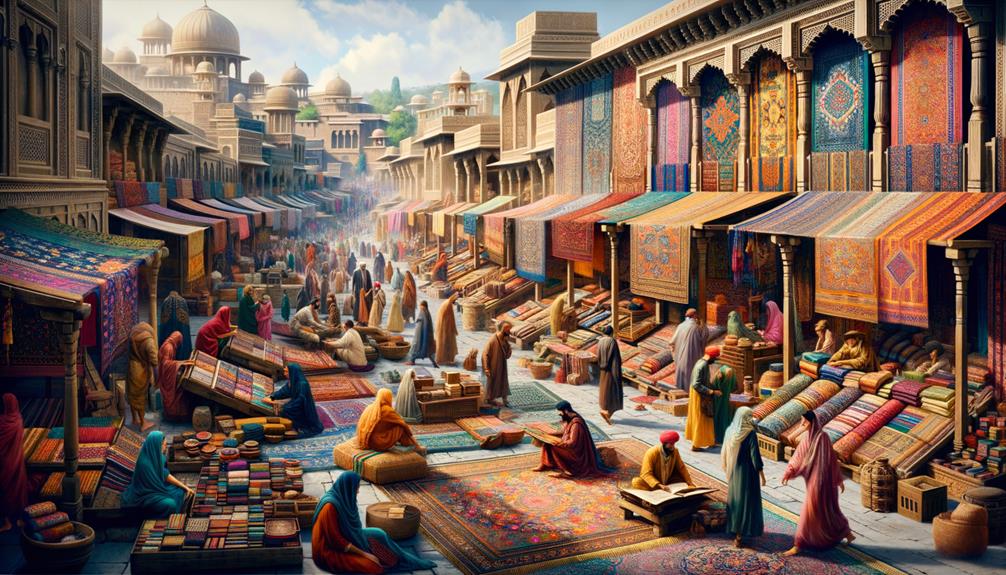
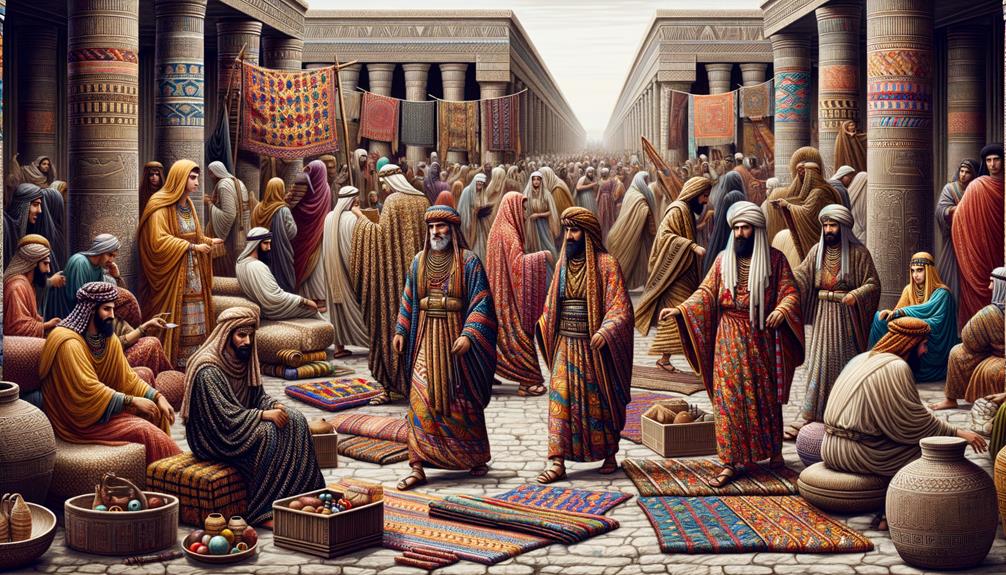
The ancient trade routes reveal the profound impact Indian textiles had on global commerce. Caravans traversing the Silk Road carried exquisite saris, shawls, and carpets, whose unparalleled beauty and fineness made them coveted treasures in distant markets. The significant contributions of Southern and North India to this vibrant trade connected continents, shaping cross-cultural interactions and leaving a lasting legacy.
Trade Routes Influence
Indian textiles have long been a coveted treasure in international trade, captivating merchants and consumers alike with their intricate designs and unmatched quality. The allure of silk saris and vibrant cotton prints transcended borders, making India’s fabrics a prized possession in global commerce.
The bustling activity at the Gujarat port of Barygaza shows how Indian textiles slotted into global commerce. This port served as a vital conduit, channeling the nation’s finest textiles to distant shores. The influence of these trade routes can be seen through several key points:
- Wide Appeal: Indian textiles reached China and Southeast Asia as early as the 13th century, showcasing their broad appeal.
- European Demand: The allure of Indian fabrics led European countries like France and England to impose bans, fearing the overwhelming popularity might disrupt their local markets.
- Diverse Products: Beyond saris and cotton prints, the export list included shawls and carpets, illustrating the diversity of Indian craftsmanship.
- Timeless Charm: Even today, these textiles remain highly valued and sought after, proving their enduring charm.
Indian textiles were cultural ambassadors that connected distant worlds rather than simple commodities.
Silk Road Exchange
The Silk Road was a vibrant hub where Indian textiles made their mark on the markets of Central Asia, the Middle East, and Europe. This trade route served as a rich cultural exchange rather than just a conduit for goods. Indian textiles, renowned for their quality and craftsmanship, were among the most coveted items. Silk, with its lustrous sheen, intricate patterns, and luxurious feel, became a symbol of opulence and sophistication, sought after by merchants and nobles alike.
The role of Indian textiles in the Silk Road exchange reveals real innovation in these fabrics. Cotton and wool, though simpler than silk, held their own appeal, offering comfort and versatility. The trade route itself became a living museum of Indian artistry, as techniques and designs made their way across continents, influencing and being influenced in return.
The Silk Road exchange was more than commerce; it was a narrative of connectivity, where Indian textiles transcended boundaries and left a lasting impact on global history.
Exported Textile Varieties
India’s textiles have long been renowned for their exceptional craftsmanship, captivating traders and connoisseurs alike. The allure of Indian fabrics transcended geographical boundaries and time, leaving a lasting legacy despite trade restrictions.
The reach of these ancient Indian textiles was broad. Several points stand out:
- Roman importation of Indian textiles: The Romans’ insatiable desire for these luxuries led to a significant drain of gold from Rome to India.
- Textile producing centers: Flourishing hubs like the port of Barygaza in Gujarat facilitated the export of fine Indian textiles worldwide.
- Exported textile varieties: Saris, shawls, and carpets were among the highly coveted items, each telling a unique story of Indian craftsmanship.
- Far-reaching trade routes: As early as the 13th century, Indian textiles found their way to China and Southeast Asia, solidifying their status as global commodities.
The textile industry’s resilience, thriving even in the face of European bans, shows the indomitable spirit of India’s artisans. Each fabric, an embodiment of intricate artistry, carried the legacy of a rich cultural heritage that continues to fascinate the world.
Modern Influences
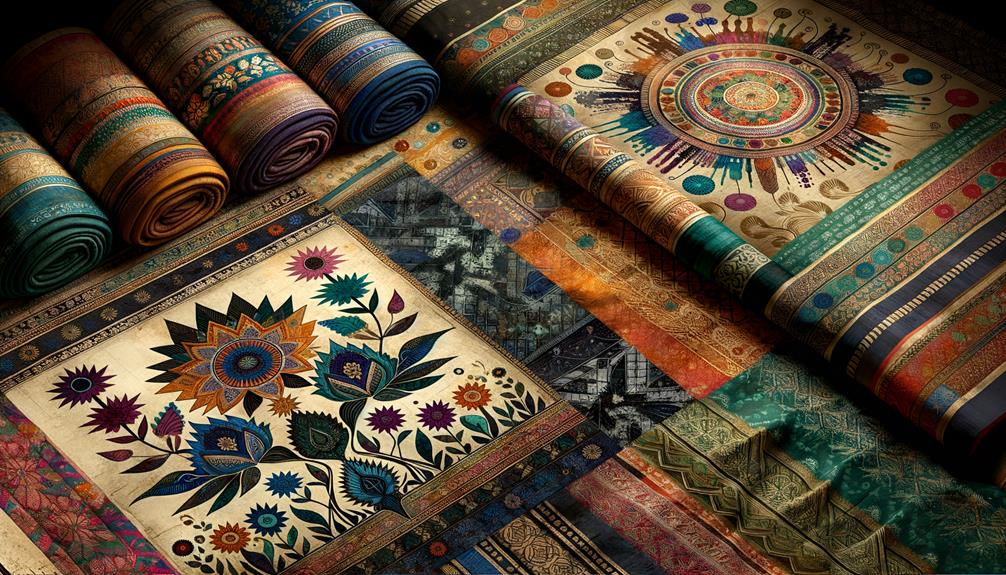
In the changing landscape of Indian textiles, a blend of traditional craftsmanship and modern design principles is reshaping the industry. The fusion of age-old techniques with contemporary styles captures the essence of India’s rich heritage while embracing the dynamism of the fashion world. Globalization has played a significant role in adapting Indian textiles to urban environments and in their success in international markets.
Fashion designers are at the forefront of this transformation, exploring innovative concepts that make traditional textiles relevant in the modern era. The timeless Khadi cloth and the iconic sari, for instance, are being reimagined to resonate with younger generations. These contemporary designs honor the past and also cater to the evolving tastes of a global audience.
The collaboration between traditional artisans and urban designers is another notable development. This partnership is shaping the future of Indian textile production, blending authenticity with innovation, and creating textiles that tell a story of continuity and change.
Frequently Asked Questions
What Was the Textile of Ancient India?
Ancient India’s textiles showed mastery of cotton, silk, and wool. Each thread was woven with precision and skill, creating fabrics that have stood the test of time and influenced global craftsmanship.
What Clothes Did Ancient India Wear?
Ancient India was clothed in saris, dhotis, and regal robes. Each garment, woven from cotton, silk, or wool, reflected the wearer’s social standing and cultural identity, turning everyday attire into a living work of art.
What Is India’s Traditional Textile?
India’s traditional textiles, including cotton, silk, and wool, reflect the country’s rich cultural heritage. These fabrics boast vibrant patterns and intricate craftsmanship, reflecting a deep history.
What Is the Most Important Cloth That Was Created in India?
The most exquisite cloth to come out of India is undoubtedly mulmul, remarkable for its extraordinary delicacy and beauty. This fine textile reflects centuries of ingenious craftsmanship, blending tradition with modern sophistication and global appeal.