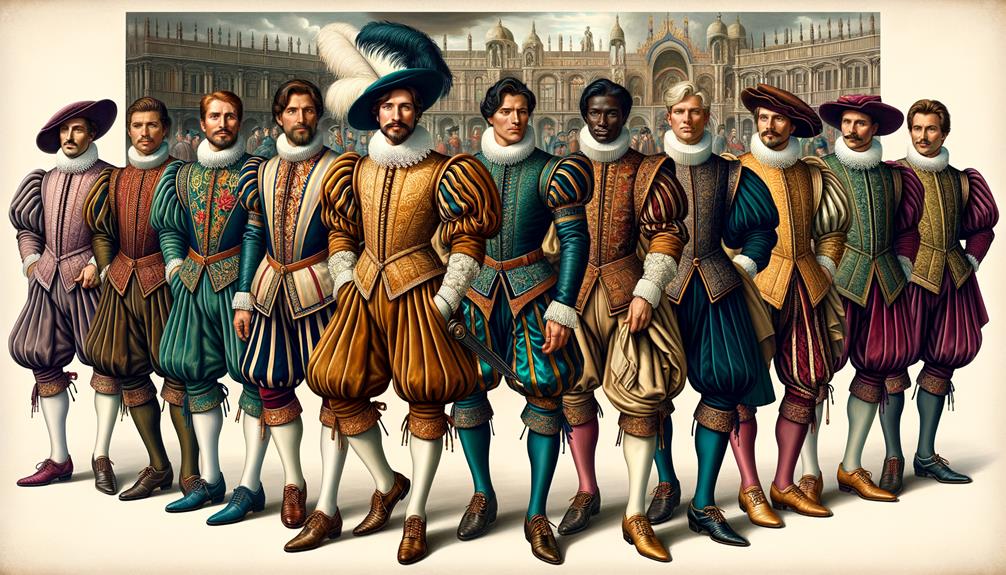
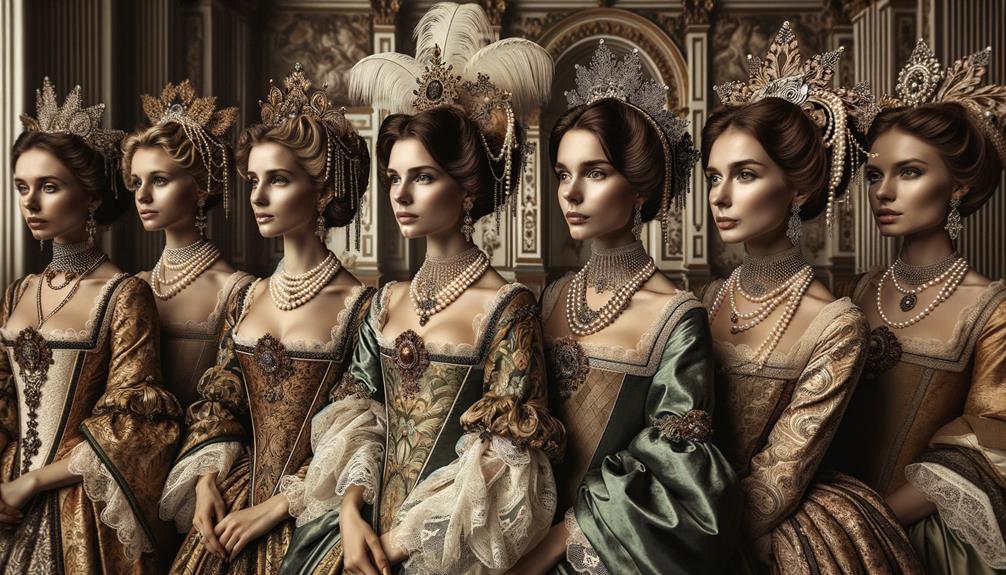
The rich fabrics of the Renaissance were never purely decorative. Textiles reflected social standing at every level of society. Practical and elegant, wool was a staple for all classes. Linen’s quality varied by social status, while silk’s mesmerizing sheen epitomized luxury, reserved for the affluent. Velvet’s opulent texture clothed the aristocracy, symbolizing wealth and refinement. Satin’s shiny, smooth finish was a status symbol, and brocade, often featuring metallic threads, added depth to noble attire. Taffeta’s crisp texture and vibrant colors adorned intricate gowns, completing the picture of Renaissance fashion. The nuances of these fabrics reveal a great deal about the era’s social hierarchy.
Common Fabrics
Among the fabrics that defined the Renaissance, wool stands out as a versatile staple for everyday clothing. It was a fabric for the people, balancing practicality and modest elegance. Whether worn by merchants or nobles, wool’s adaptability made it indispensable. The coarse texture of a well-worn woolen doublet provided warmth and durability in the unpredictable European climate.
Linen brings to mind finely woven undergarments and casual shirts. The quality of linen varied greatly, depending on social standing. A noblewoman’s undergarment, crafted from the finest, softest weave, differed vastly from a peasant’s rougher, more practical garment. This disparity in fabric quality reflected the social hierarchy of the era.
Silk, though less common, epitomized luxury. Reserved for the affluent, it adorned the most formal attire. The shimmering, delicate threads of silk conveyed the wearer’s wealth and status, creating an aura of opulence and exclusivity. In a world where fabric conveyed identity, these common materials painted a vivid picture of Renaissance life.
Silk
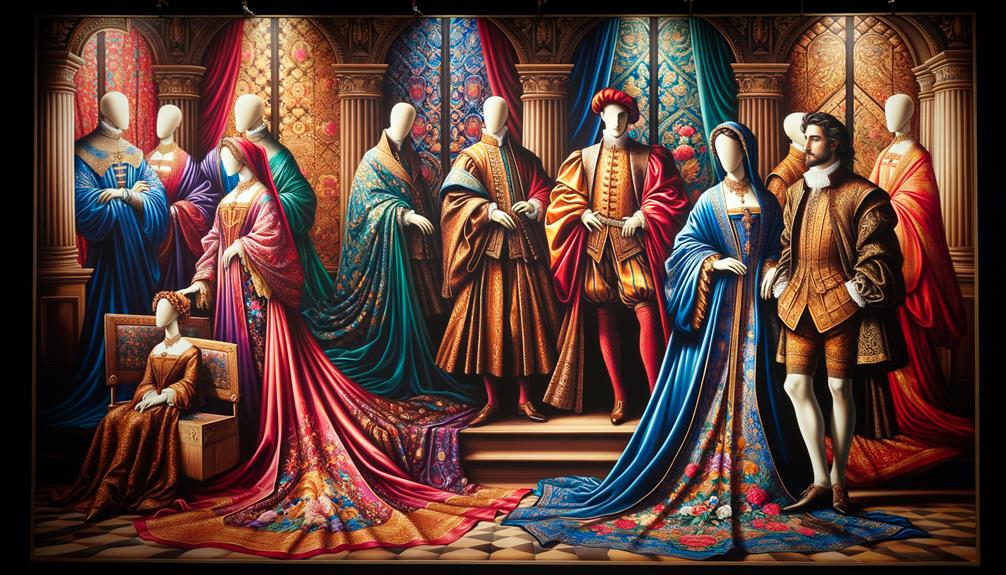
Silk, with its mesmerizing sheen and luxurious texture, dominated the Renaissance fashion scene, offering a striking contrast to more practical fabrics like wool and linen. Silk reshaped the fashion landscape of the time. Reserved for the elite, silk epitomized luxury, adorning gowns, doublets, and accessories with an air of opulence. The variety within silk fabrics, including brocade, satin, and especially silk taffeta, allowed for an impressive range of formal wear.
The rich textures and substantial feel of these fabrics explain why they were so prized. Silk taffeta, in particular, was a favorite for its crisp structure and ability to hold its shape, making it ideal for the elaborate silhouettes of Renaissance attire. The breathability and durability of silk velvet added another layer of sophistication, while heavier satin provided a versatile option that could be tailored to various garments.
Silk damask and jacquard were often used to embellish petticoats and edges, enhancing the visual allure of Renaissance gowns. The meticulous craftsmanship and intricate patterns of these fabrics speak to the era’s dedication to elegance and refinement.
Velvet
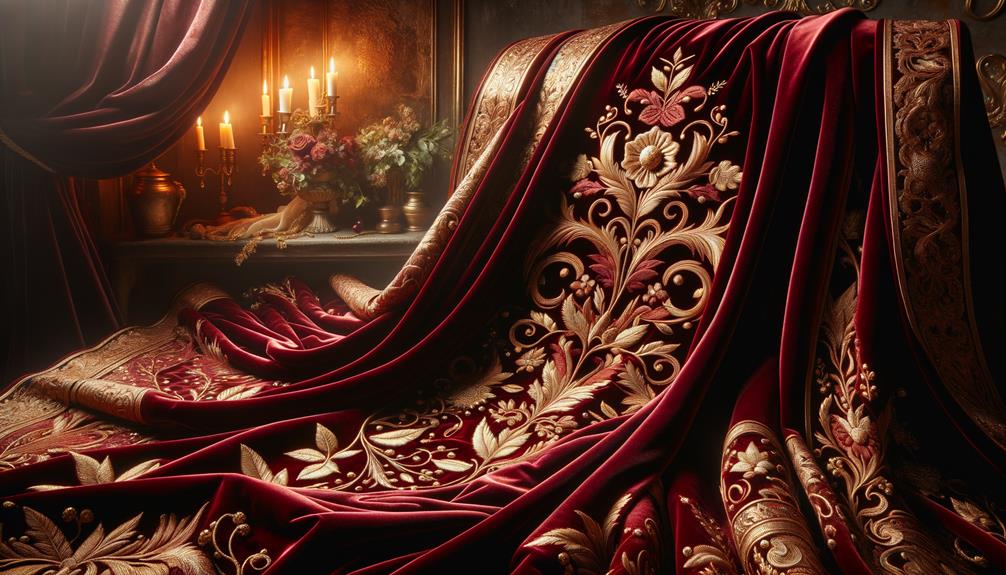
Velvet, with its luxurious feel and rich colors, anchors the lavish world of Renaissance fashion. This fabric, a staple among the aristocracy, adorned many gowns and doublets, exuding elegance and refinement. The tactile experience of velvet, whether made from silk or cotton, adds a sensory richness to any garment, making it a favorite among those seeking to embody the grandeur of the era.
Cotton velvet has its own practicality and charm. Unlike its silk counterpart, cotton velvet offers breathability and durability, essential for those recreating historical costumes without sacrificing comfort. Its dense pile and soft touch create an inviting texture that is both luxurious and accessible.
However, authenticity demands attention to detail. Modern stretch velvet and velour lack the historical accuracy of true Renaissance attire. Cotton velvet, by contrast, can blend historical fidelity with modern practicality. Velvet stands out among Renaissance fabrics as a symbol of wealth and refinement, its legacy woven into the fabric of history.
Satin
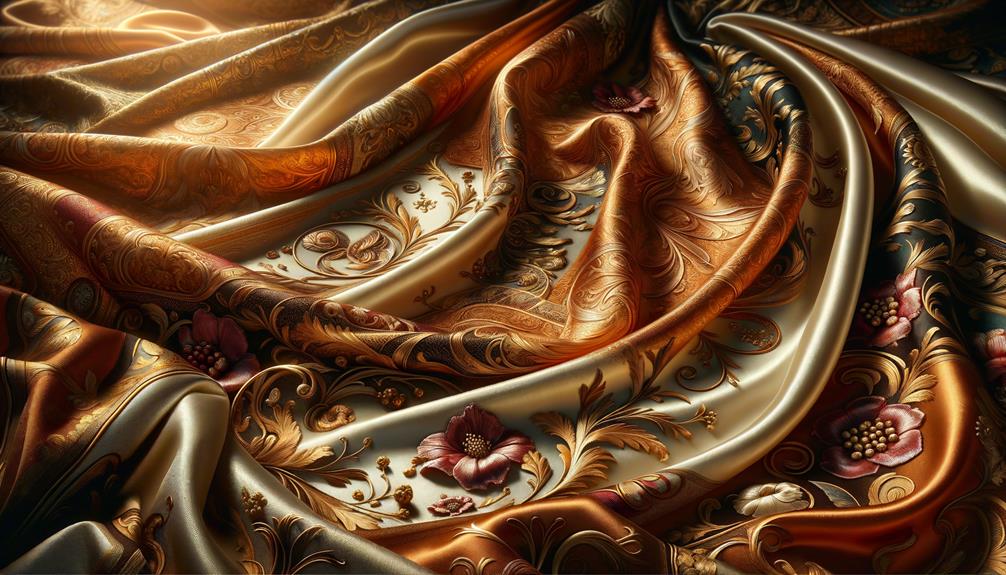
Satin’s luxurious, shiny, and smooth finish rivaled silk in Renaissance times. This fabric was not just about looks; its heavier varieties provided the durability needed for period garb. Satin’s rich colors and varied textures added an unmatched richness to gowns and doublets, making them truly stand out.
Luxurious Silk Alternative
The garments of Renaissance nobility show how satin’s lustrous sheen and substantial weight added elegance and durability to period attire. While silk was the textile of choice for the elite, satin emerged as a luxurious alternative, offering a similar opulence. The heavier satin fabrics were favored for their resilience and ability to maintain the structural integrity of elaborate gowns and doublets.
When recreating historical costumes, selecting substantial silk satin is crucial for authenticity. Satin provides a richness that mirrors the grandeur of Renaissance fashion. Its dense weave adds a tangible weight to the garments, making them drape elegantly, and increases their longevity, ensuring the attire remains impeccable over time.
Satin’s appeal to the nobility and upper class was not just about aesthetics; it was a reflection of status and wealth. The fabric’s ability to catch and reflect light gave it a unique, almost ethereal quality that was highly prized. This characteristic made satin an indispensable element in the wardrobes of those who wished to convey power and sophistication through their clothing choices.
Shiny, Smooth Finish
The appeal of satin lies in its lustrous, smooth finish, which transforms even the simplest garments into works of art. Satin played a pivotal role in shaping the era’s fashion. Unlike other fabrics, satin’s unique sheen and substantial weight gave it a distinct presence, making it a favorite among the style-conscious.
Heavier varieties of satin were favored for their durability. This choice ensured that garments looked exquisite and also stood the test of time. Satin was often used to line clothing, adding an extra layer of luxury that was both felt and seen. The richness and elegance it bestowed upon Renaissance gowns and doublets are easy to imagine.
Consider the following characteristics that made satin indispensable:
- Lustrous finish: Instantly eye-catching and luxurious.
- Smooth texture: Provided comfort and a refined look.
- Durability: Heavier satin ensured longevity.
- Versatility: Ideal for both outer garments and linings.
- Elegance: Improved the overall look of any attire.
In every stitch and fold, satin encapsulated the innovation and opulence of Renaissance fashion.
Taffeta
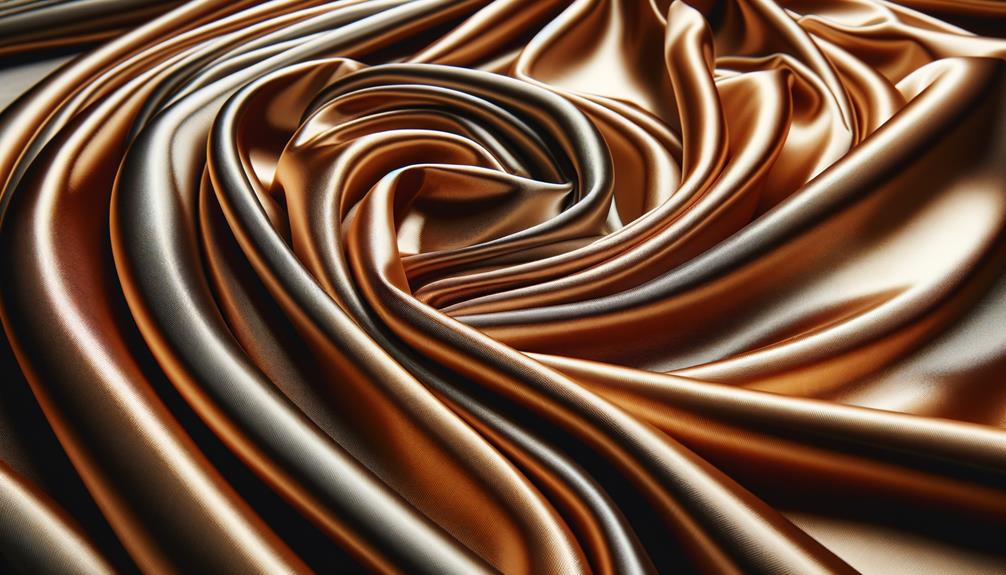
Taffeta’s crisp texture and lustrous sheen immediately evoke images of opulent Renaissance gowns. This luxurious fabric originated in the 16th century and was a favorite for petticoats and intricate edging, adding a rich, elegant touch to attire. Today, both silk and synthetic versions capture that historic charm, making taffeta a versatile choice for creating authentic period costumes and modern reinterpretations alike.
Origin and History
Persia’s rich history gave us taffeta, a luxurious fabric known for its crisp texture and luminous sheen. Its origins trace an intricate journey. The term derives from the Persian word taf tah, referring to the silk or linen cloth it was woven from. Taffeta is first documented in Europe in the 14th century, and its production reached France at Lyon in the 17th century. It quickly became a favorite among European nobility.
Silk taffeta was particularly coveted. Its lustrous finish made it a staple for gowns, doublets, and intricate trims. The Renaissance court prized the way it turned simple garments into symbols of status and wealth.
- Originated in Persia
- First documented in Europe in the 14th century
- Derived from a Persian term for silk or linen cloth
- Popular for Renaissance gowns and doublets
- Favored by nobility for its luxurious sheen
Taffeta’s historical path made it synonymous with elegance. From Persian looms to European courts, the fabric shows how innovation in textile craftsmanship endured. Each rustle of silk taffeta marks cross-cultural influence and lasting beauty.
Texture and Feel
Taffeta’s crisp, smooth texture produces a soft rustling sound as it moves. This silk fabric speaks of the skill of its weavers.
The unique firmness of taffeta allows it to hold its shape perfectly, making it ideal for creating garments with intricate pleats and dramatic folds, a hallmark of Renaissance fashion. Whether it’s a flowing gown or a structured doublet, taffeta drapes beautifully, showing its versatility and timeless appeal.
Available in a rich palette of colors, both plain and patterned, taffeta offers many possibilities for design. The way it catches the light adds depth, turning each piece of clothing into a work of art. Its luxurious feel is a direct reflection of its silk origins and its historical significance as a fabric of choice for the Renaissance elite.
Popular Uses
Taffeta found its place in opulent gowns and doublets across Renaissance fashion, as well as in the subtle elegance of petticoats, linings, and intricate decorative elements. This crisp, smooth fabric, with its distinctive rustling sound, added grandeur to noble attire. The luxurious sheen of taffeta, woven with silk fibers, made it indispensable for formal occasions and courtly garments.
Renaissance clothing used taffeta to accentuate the richness of an outfit. The purpose went beyond opulence: it created a sensory experience, from the visual splendor to the tactile pleasure.
Taffeta played a significant role in various aspects of Renaissance fashion:
Petticoats benefited from the smooth texture of taffeta, adding volume and elegance beneath gowns.
Linings made from taffeta provided a luxurious feel against the skin, enhancing the overall garment.
Decorative elements like ribbons, rosettes, and trims crafted from taffeta added intricate details.
Formal attire showcased the lustrous appearance of taffeta, making it perfect for courtly events.
In contrast to printed cotton fabric, which offered vibrant patterns, taffeta brought a sophisticated sheen.
In essence, taffeta was more than just fabric; it was an integral part of Renaissance fashion, contrasting beautifully with printed cotton fabrics and adding a distinct layer of texture to the era.
Brocade
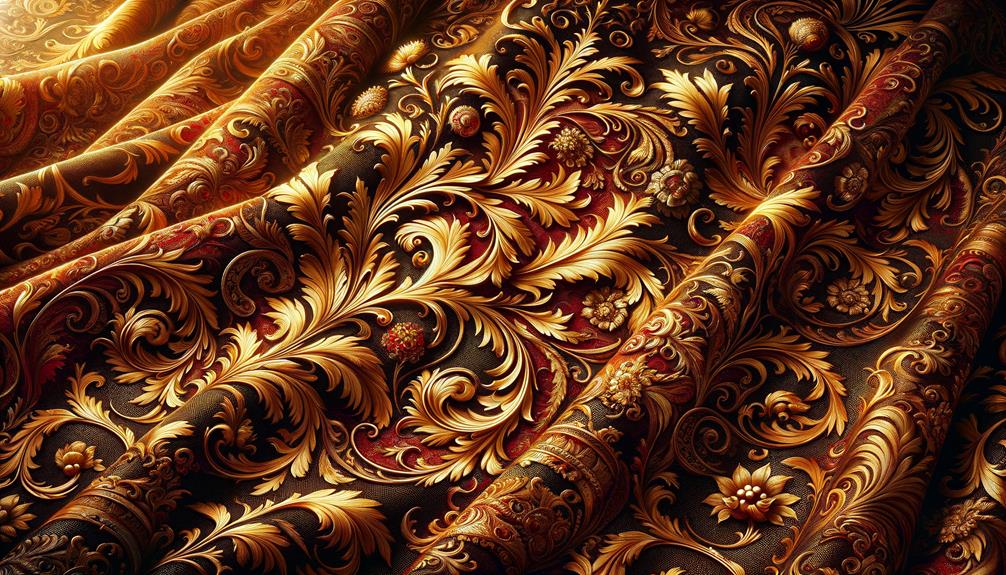
Brocade, with its luxurious feel and intricate woven patterns, evokes the opulence of the Renaissance era. The fabric’s raised designs, often created using metallic threads, give it a rich, sumptuous look that was favored by the nobility. Renaissance gowns and doublets were adorned with floral motifs, geometric shapes, and elaborate scenes from nature, each telling a story through its texture and color.
The variety in brocade’s colors and textures adds a depth and elegance to Renaissance costumes that is hard to replicate. The interplay of light on the metallic threads creates a dynamic visual experience, making each garment a work of art.
Brocade fabrics showcase meticulous craftsmanship and innovative techniques used to create such complexity. It is no wonder brocade was a staple among the Renaissance elite. This fabric represented wealth and also showcased the wearer’s taste for refined, artistic expressions.
Here are the key features that make brocade truly special:
| Feature | Details |
|---|---|
| Design | Raised, intricate patterns |
| Materials | Often includes metallic threads |
| Common Uses | Gowns, doublets, formal garments |
These characteristics, combined with the fabric’s luxurious feel, made brocade a staple in Renaissance fashion.
Linen
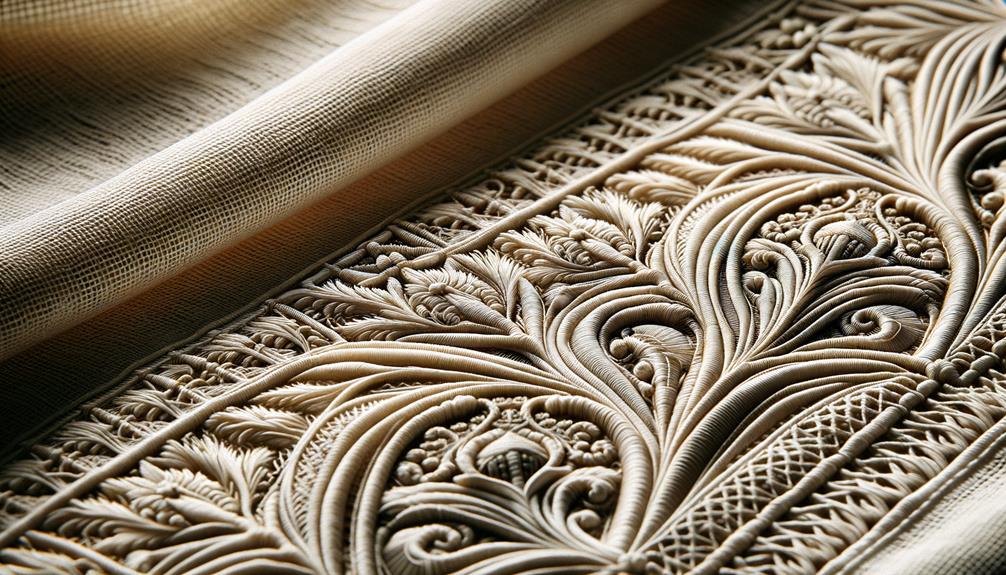
Linen’s understated charm makes it a quiet hero in Renaissance clothing, providing a comfortable and breathable foundation for various garments. Despite its humble appearance, linen fabric played a vital role in the wardrobes of the era. Whether in smocks, chemises, or linings, its ability to soften with each wash made it indispensable.
Social hierarchy is visible in linen’s weave. The nobility wore finer, more delicate versions, while the lower classes wore rougher weaves, subtly reinforcing their status without a word. This differentiation in linen fabric quality was as much a part of Renaissance life as the grandiose silks and brocades.
- Comfort and breathability: Ideal for undergarments like smocks and chemises.
- Wash and wear: Softens with each wash, enhancing comfort over time.
- Weave variations: Reflects social strata, from nobility to commoners.
- Solid colors preferred: Ensures period authenticity in costumes.
- Historical significance: Integral for achieving an authentic Renaissance look.
Linen’s continuing use in historical costuming speaks to its versatility and accuracy. It bridges the gap between past and present, showing that simplicity can be effective design.
Frequently Asked Questions
What Fabrics Were Used in the Renaissance?
During the Renaissance, clothing was primarily made from three main fabrics: wool, linen, and silk. Wool was the go-to fabric for everyday attire, while linen was used for undergarments due to its breathability and comfort. On the other hand, silk and velvet were luxurious fabrics reserved for the nobility, adding an air of elegance and sophistication to their attire.
What Fabrics Were Used in the 1600s?
In the 1600s, fabrics played distinct roles in people’s lives. Wool provided warmth, linen offered breathability, silk and velvet symbolized luxury, and cotton served practical purposes. Each fabric had its unique appeal and purpose.
How Were Clothes Made in the 16TH Century?
In the 16th century, clothes were carefully crafted by hand. Tailors and seamstresses used techniques like backstitching and whipstitching to ensure their garments would last. They took precise measurements to create custom-fitted clothes from natural fabrics. The craftsmanship is truly impressive.
What Did Females Wear During the Renaissance?
The attire of women during the Renaissance was intricate. The elaborate gowns, layered skirts, and ornately embroidered bodices showcased the era’s opulence. The nobility donned luxurious silks and velvets, while the lower classes wore simpler, more practical garments made of wool or linen, reflecting the social hierarchy of the time.