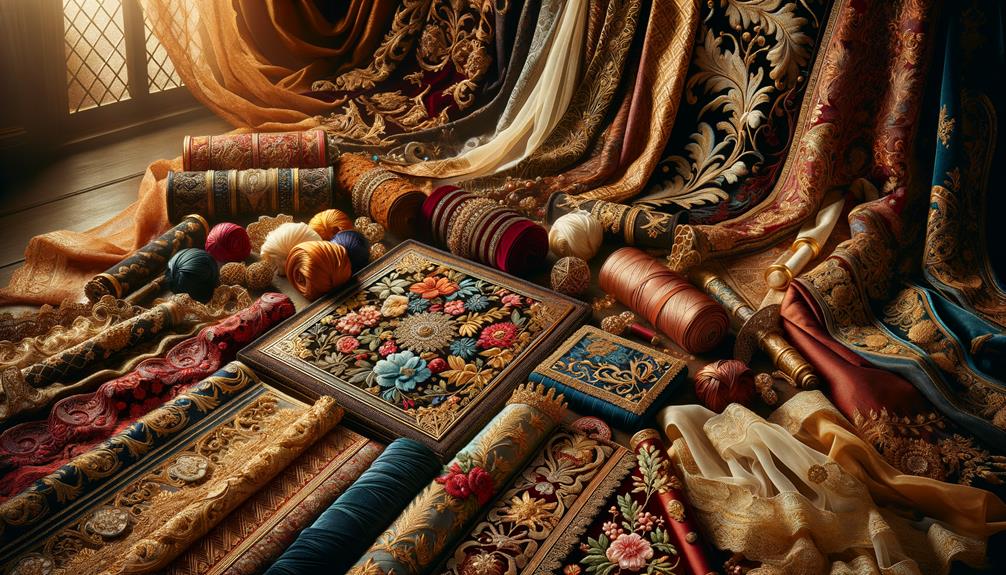
Renaissance women’s fashion reveals an intricate social hierarchy woven into every thread. Fabrics like silk and velvet served as status symbols, while slashed sleeves and intricate embroidery added a touch of flair. The layering of garments was crucial, creating a sense of volume and showcasing the wearer’s social standing. Only the elite could afford deep reds, purples, and other vibrant hues, thanks to strict sumptuary laws. Artisans invested painstaking effort into crafting each piece, blending historical inspirations with their own innovations. Accessories like lace collars and headdresses added the perfect finishing touches to these elegant ensembles. There is a rich story waiting to be uncovered.
Influence of Social Status
In Renaissance society, a woman’s clothing was a clear indicator of her social status. The fabrics used told a story about one’s place in the social hierarchy. The wealthy elite wore luxurious fabrics like silk, velvet, and brocade, with intricate embroidery and layers that showcased their affluence. Slashed sleeves added an extra touch of opulence to their garments.

The colors they chose were equally revealing. Rich hues like purple and deep reds signified elite status, thanks to sumptuary laws that restricted these colors to the upper echelons. These laws ensured that clothing remained a clear indicator of social class. In contrast, the lower classes wore muted, natural tones, with simpler fabrics reflecting their more modest means.
These distinctions in dress created a visual map of society. The wealthy elite’s elaborate attire and vibrant colors stood in stark contrast to the plain, practical clothing of the lower classes. This shows how fashion serves as both a personal expression and a societal marker. Even today, echoes of Renaissance fashion trends can be seen, subtly nodding to an era where what you wore truly defined who you were.
Luxurious Fabrics
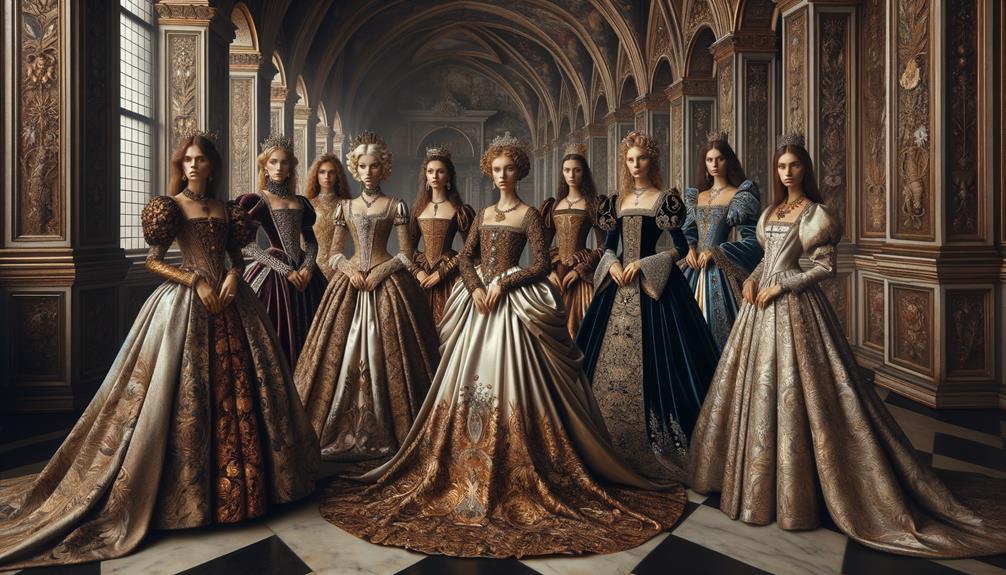
During the Renaissance, a woman’s social status played a significant role in shaping her fashion choices. However, the type of fabric used was equally important in showcasing wealth and position. Silk, velvet, and brocade were not just any textiles; they were symbols of opulence and exclusivity.
Wealthy noblewomen wore gowns made from these expensive materials, with each thread telling a story of affluence. Rich silks, imported at great cost, were prized for their smooth texture and shimmering appearance. Velvet added depth and a tactile luxury, symbolizing the wearer’s elite status. Brocade, with its intricate patterns woven into the fabric, represented both wealth and artistry.
| Fabric | Texture | Symbolism |
|---|---|---|
| Silk | Smooth, shimmering | Opulence |
| Velvet | Deep, tactile luxury | Elite status |
| Brocade | Intricate patterns | Wealth and artistry |
These luxurious fabrics were not accessible to everyone. The distinction between classes was clear: common folk wore muted, natural tones, while the wealthy elite wore bright hues like purple and deep reds. This was more than fashion; it was a visual representation of societal structure, a silent but powerful declaration of one’s place in the world.
Intricate Embellishments
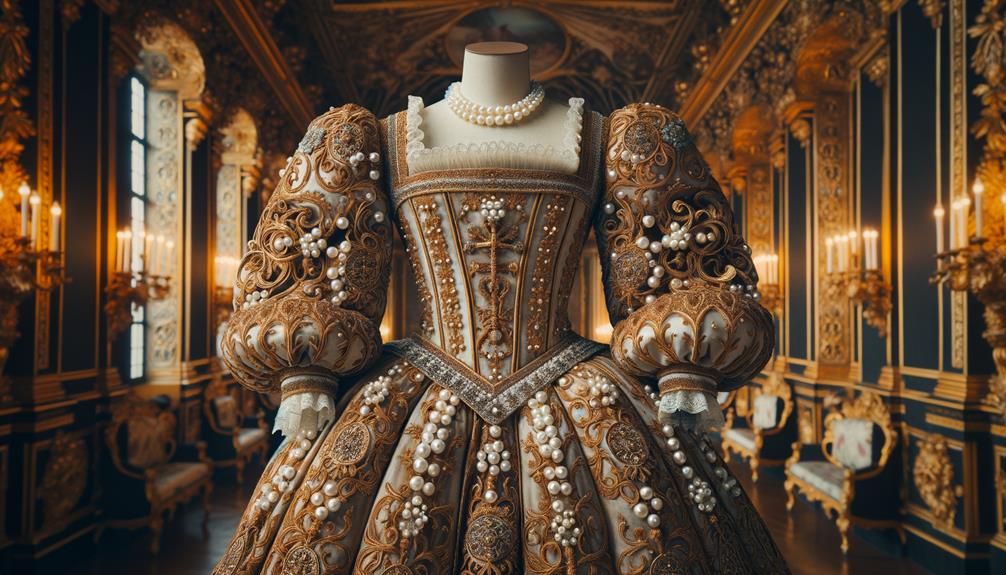
Renaissance gowns were renowned for their intricate embellishments, which conveyed the wearer’s social standing and craftsmanship. Each piece was a masterpiece of rich fabrics like silk, velvet, and brocade, lifted by elaborate embroidery, meticulous beadwork, and lace trimmings. These intricate designs spoke directly to the wearer’s wealth and refinement.
The embellishments on these gowns featured delicate floral motifs, stitched with metallic threads and adorned with pearls and jewels. The beadwork added texture and depth, transforming simple dresses into opulent works of art. The way each floral motif intertwined with the fabric, creating a narrative of elegance and sophistication, is truly captivating.
Lace trimmings often framed the edges, providing a subtle contrast to the heavier materials. The slashed sleeves, revealing contrasting fabrics underneath, added a layer of complexity, drawing the eye to this unexpected yet harmonious element. These intricate designs showcase the skill and creativity of the artisans.
The past’s attention to detail is a reminder that true artistry lies in the intricate embellishments that lift the ordinary into the extraordinary.
Layered Garments
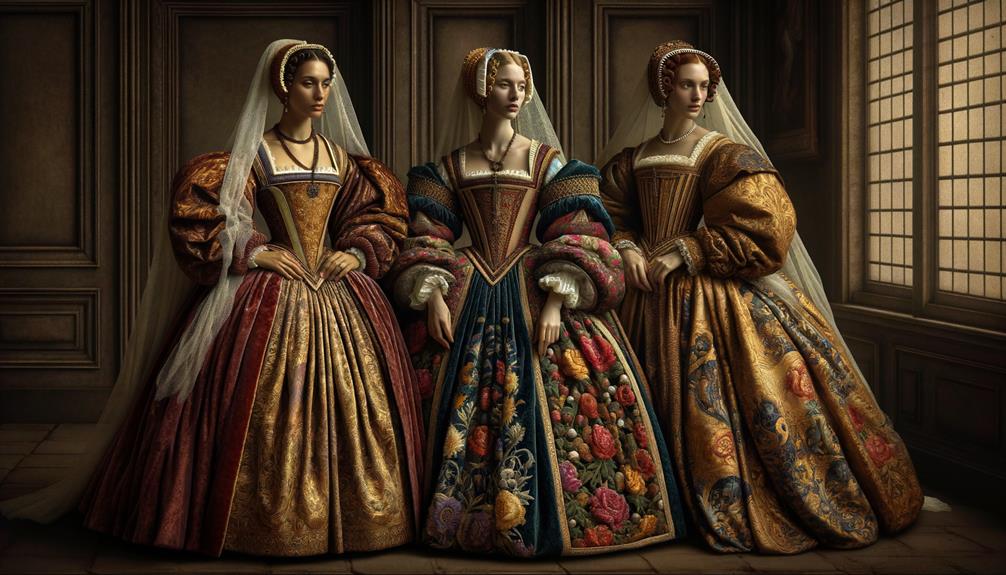
Just as intricate embellishments added opulence, the layered garments of Renaissance women’s fashion created a sense of depth and complexity. The interplay of these layers is striking. Each garment, from chemises to bodices, skirts, and overgowns, was not merely an aesthetic choice but a strategic one.
Chemises, often the innermost layer, served as a foundation, providing comfort and acting as a barrier between the body and other fabrics. The bodice, structured and form-fitting, added definition, while the skirts provided volume and movement. Overgowns, with their opulent fabrics and elaborate designs, completed the ensemble, showcasing the wearer’s status and taste.
Layered garments allowed for versatility, adapting to weather changes and social settings. Each layer could be adjusted, removed, or added based on the need, making the ensemble both practical and dynamic. This complexity in Renaissance women’s fashion is worth noting. It’s a blend of functionality and artistry that speaks to a time when clothing was a canvas for personal expression and societal norms.
In today’s world, where simplicity is often valued, these layered garments are a reminder that sometimes, complexity is the ultimate sophistication. They show the ingenuity and creativity of Renaissance women, who used fashion to convey their individuality and status.
Popular Colors
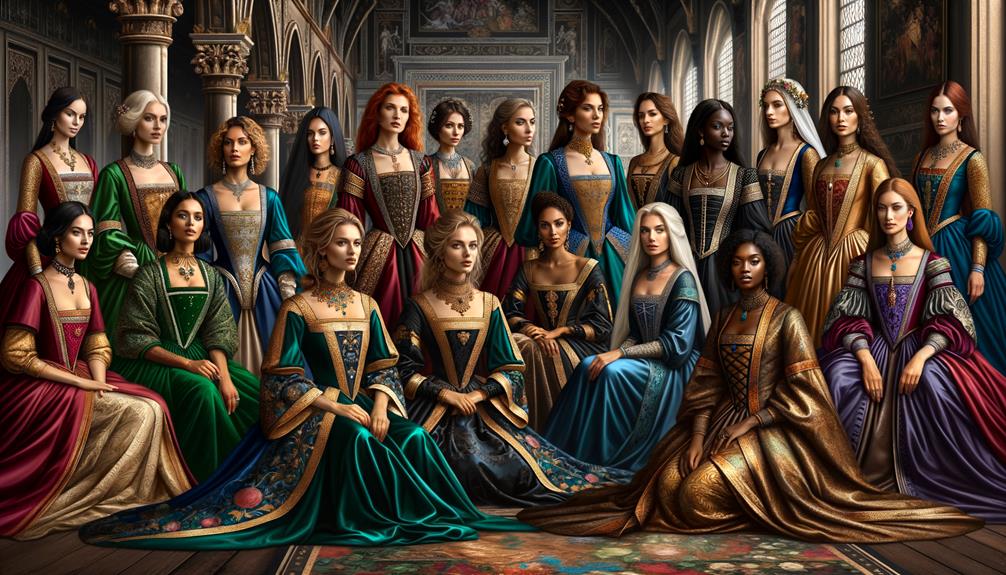
Rich jewel tones ruled Renaissance women’s fashion, conveying wealth and status. Deep purples, vibrant blues, and emerald greens were more than colors; they told a story about the wearer’s social standing. Each hue was a status symbol. Wealthy women opted for luxurious fabrics dyed in shades like crimson red and royal blue to showcase their position.
These colors were a luxury only the elite could afford. The process to achieve such vivid hues was costly, making them exclusive. Bright and bold tones like gold, scarlet, and sapphire were often reserved for special occasions, further emphasizing affluence.
| Color | Symbolism | Occasion |
|---|---|---|
| Crimson Red | Wealth, Power | Special Events |
| Royal Blue | Nobility, Status | Daily Wear |
| Emerald Green | Prosperity, Elegance | Special Events |
| Deep Purple | Royalty, Wealth | Daily Wear |
| Forest Green | Earthiness, Status | Common Wear |
| Gold | Affluence, Luxury | Special Events |
| Scarlet | Boldness, Wealth | Special Events |
In contrast, the lower classes favored earthy tones like browns and muted yellows. These natural dyes were more accessible, making them the fabric choices for everyday wear. Colors in Renaissance women’s fashion were more than aesthetics; they were a visual representation of one’s social status and identity.
Contemporary Inspirations
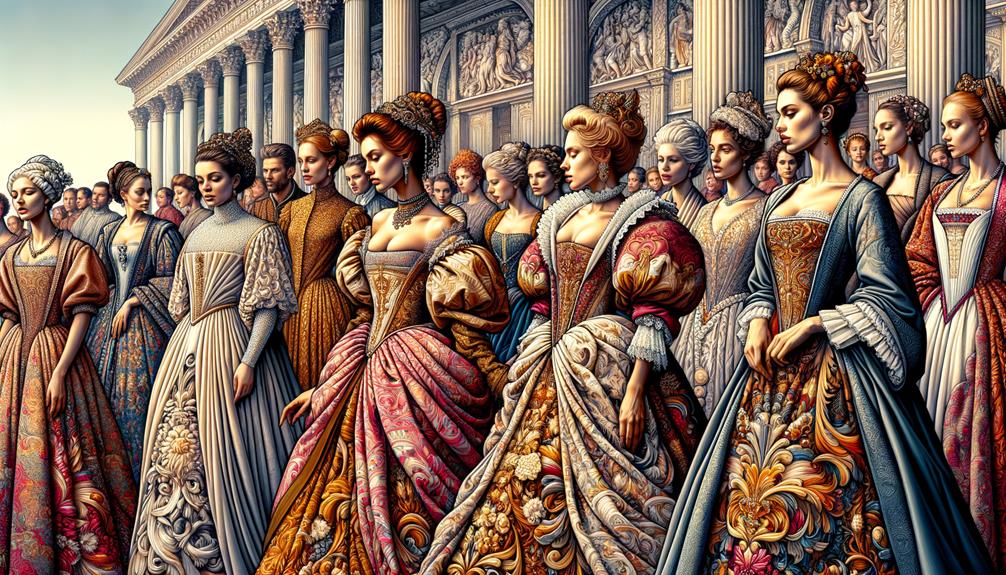
Drawing inspiration from the past, modern fashion blends elements of Renaissance women’s attire with contemporary styles. Corset tops and flowing skirts evoke the opulence of that era. Designers often take cues from Renaissance trends, crafting pieces that merge historical elegance with modern flair.
Poet blouses and tie-up corsets are more than nostalgic nods; they represent a fusion of old-world charm and modern sensibilities. Babydoll dresses, with their soft silhouettes, hark back to the Renaissance, yet feel entirely current. Luxurious textiles like silk, velvet, and brocade, once reserved for the elite, now adorn runways and wardrobes, bringing a touch of historical luxury into everyday wear.
Intricate beadwork and embroidery, hallmarks of Renaissance women’s fashion, find new life in today’s designs. Layered garments and slashed sleeves, once practical and decorative, become bold fashion statements. Rich, vibrant hues, reminiscent of those reserved for Renaissance nobility, saturate contemporary collections, reflecting a blend of past and present.
Observing these trends, it’s clear that modern designers do more than replicate the past; they reinterpret it, creating innovative pieces that honor Renaissance inspirations while pushing the boundaries of contemporary fashion.
Craftsmanship and Artisans
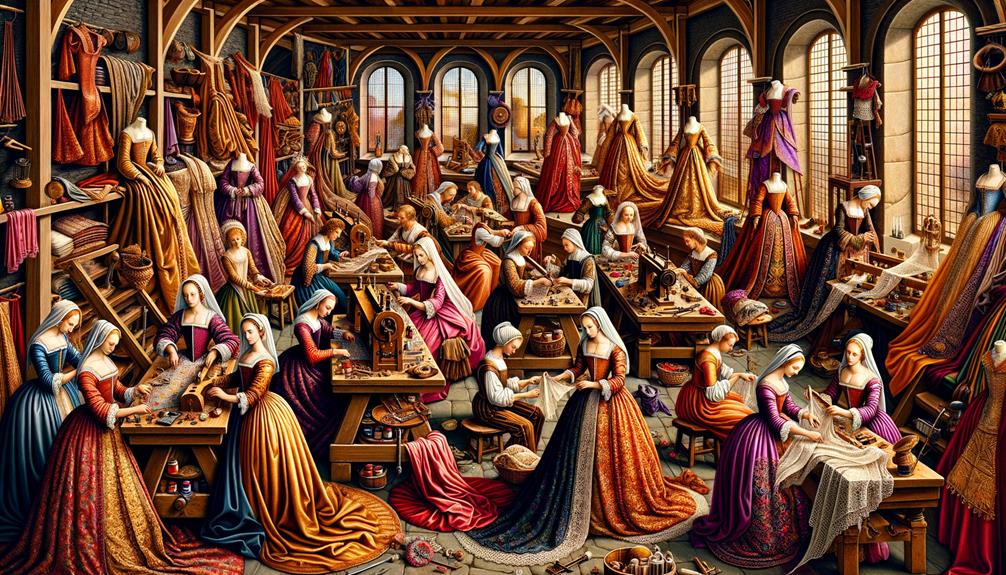
Amid the opulence of Renaissance fashion, skilled artisans brought garments to life with meticulous craftsmanship. These masters of their trade were visionaries, each stitch and each bead a mark of their dedication and precision.
The expertise that went into embroidery and embellishments is remarkable. Artisans’ hands moved deftly over luxurious fabrics, often spending countless hours perfecting intricate designs. Tailors and seamstresses didn’t just sew; they sculpted fabric into forms that flattered and celebrated the human figure. The delicate stitching told stories of elegance and opulence.
Accessories like lace collars, cuffs, and headdresses weren’t mere add-ons but pivotal elements. Craftsmanship extended beyond clothing, incorporating the skills of jewelers and embroiderers. These artisans created pieces that were as much about art as they were about fashion.
The Renaissance period was defined by a collaboration of talents, each artisan contributing to a greater vision. In their work lies a dedication to beauty and a pursuit of perfection. The luxurious fabrics and rich colors of the era’s garments speak to a time when fashion was as much about individual artistry as it was about collective innovation.
Frequently Asked Questions
What Did Females Wear During the Renaissance?
During the Renaissance, women wore full-length dresses made of luxurious fabrics like silk and velvet, adorned with intricate beadwork and lace. A steel corset cinched at the waist, while accessories like pearl necklaces and headdresses added a touch of elegance.
How to Dress Like a Renaissance Woman?
To dress like a Renaissance woman, choose a flowing, empire-waist gown in rich, sunset-inspired hues. Add intricate jewelry and a headdress, shaping the silhouette with a corset. This blend of history and elegance creates a striking look.
What Were the Trends of the Renaissance?
Renaissance fashion was all about opulence and intricate details. Luxurious fabrics, meticulous embroidery, and extravagant headdresses defined the era. Accessories like gloves and fans added a touch of elegance to the overall look. The attention to detail in fashion during this time was truly a masterpiece.
What Were the Features of Renaissance Fashion?
Renaissance fashion was a study in contrasts, blending opulence with structure. Full, lavish dresses featured intricate lace and embroidery, yet were tempered by tightly cinched waists. Luxurious fabrics like silk and velvet were status symbols, while accessories like ornate headdresses added an air of elegance, reflecting the societal values of beauty and status.