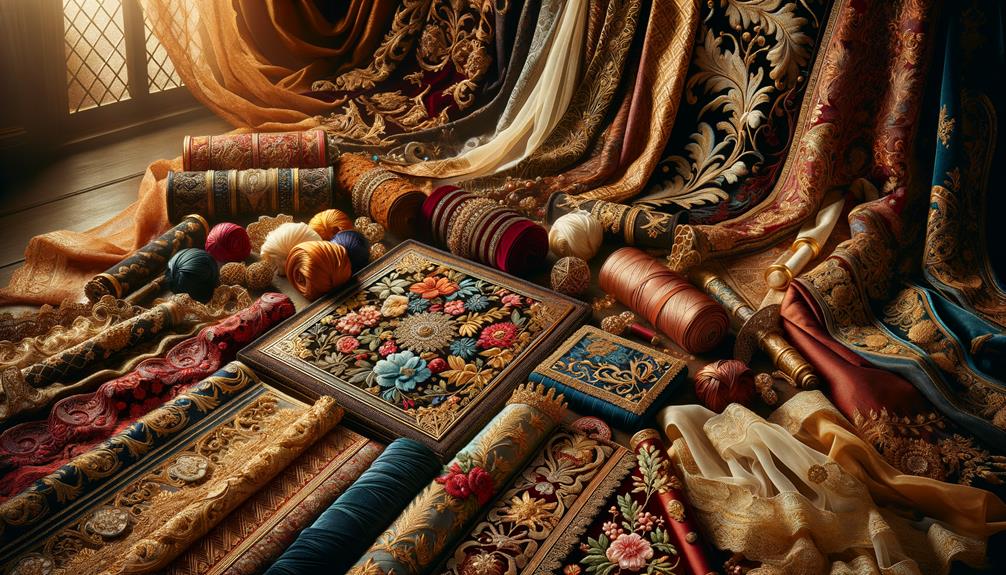
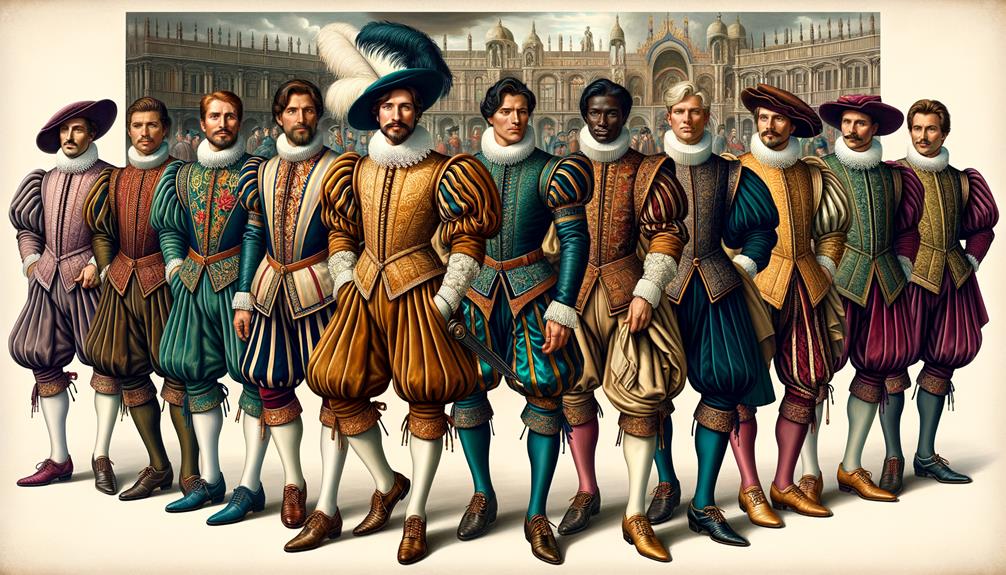
Modern fashion draws on Renaissance opulence and craftsmanship in ways that are easy to trace. Designers use luxurious fabrics like silk and velvet, often featuring intricate embroidery inspired by nature and mythology. The dramatic silhouettes combined tailored bodices and stiffened bodices with farthingales, which narrowed the torso and widened the hips into a conical outline rather than a rounded hourglass. Puffed sleeves add an air of elegance and grandeur, blending historical flair with contemporary design. High-end fashion often incorporates sumptuous textures like brocade and damask, making bold statements. Even accessories, from elaborate headdresses to intricate jewelry, reflect Renaissance influences, turning outfits into artistic expressions. The meeting of tradition and innovation continues to shape the world of fashion.
Renaissance Textiles and Patterns
Renaissance textiles were renowned for their sumptuous fabrics like silk and velvet, epitomizing an era of opulence and intricate craftsmanship. The sheer elegance of these materials was widely admired. The rich, vibrant colors achieved through innovative dyeing techniques said a great deal about the wearer’s status and wealth.

The intricate embroidery that adorned these textiles was never merely decoration. It reflected the skill and patience of Renaissance artisans. Each stitch contributed to a narrative whole, often drawing inspiration from nature and mythology. The patterns were elaborate, yet each element had a purpose, a reason for being part of the design.
During this period, textile patterns were a marvel in themselves. They showcased elaborate motifs that seemed to breathe life into the fabric. The use of brocades and damasks added layers of texture and depth, making each garment a statement of luxury and refinement.
Their influence on modern fashion is easy to see. Today’s designers often draw from this history, infusing contemporary pieces with that same sense of opulence and detailed craftsmanship. The legacy of Renaissance textiles continues to inspire and innovate.
Silhouettes and Exaggeration
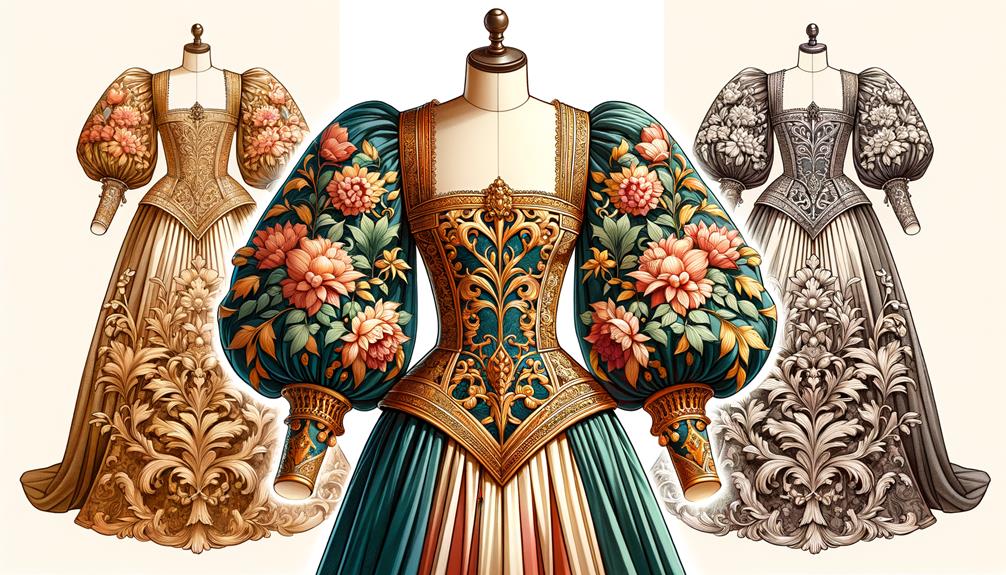
Modern fashion still shows echoes of the Renaissance in dramatic waistlines and voluminous sleeves. Corsetry may have evolved, but it still shapes silhouettes today. These elements resurface by blending history with contemporary style.
Dramatic Waistlines Evolution
Today’s fashion scene echoes the Renaissance’s fascination with dramatic waistlines and exaggerated silhouettes. The narrow-waisted silhouette established by Renaissance corsetry and farthingales still influences contemporary fashion. Designers reimagine this classic shape using modern fabrics and technologies to create structured yet comfortable garments that accentuate a cinched waist.
Pleated skirts and tailored bodices evoke the same sense of drama as their Renaissance predecessors. Fashion houses like Gucci draw on iconic Renaissance art, blending hyperrealism and surrealism in their collections. Their 2018 campaign, which reimagined famous artworks with models dressed in Gucci, sparked a global trend for Renaissance-inspired styles.
The emphasis on silhouette and figure exaggeration is more than a nod to the past. It reflects our enduring fascination with form and structure. The dramatic waistline remains a symbol of elegance and strength, evolving yet staying true to its roots. In a world where innovation meets tradition, the influence of Renaissance fashion on modern clothing is both profound and unmistakable. Fashion, it seems, never truly forgets its history.
Voluminous Sleeves Revival
The revival of voluminous sleeves in fashion reflects an ongoing love for dramatic, exaggerated silhouettes. Puffed sleeves have made their way back from Renaissance fashion into today’s clothing, blending tradition with modernity.
Designers are reimagining Renaissance-style silhouettes, emphasizing bold proportions. Puffed sleeves, once a hallmark of Renaissance fashion, now strut down runways and dominate high-street styles, showcasing a bold, expressive aesthetic.
Contemporary designs incorporate these voluminous sleeves in ways that create a striking visual impact. Gucci’s 2018 collection, inspired by Renaissance art, illustrates this blend of classic and modern styles, featuring dramatic sleeve designs. The puffed sleeves add grandeur and exude timeless elegance.
This trend shows how the global fascination with Renaissance-inspired clothing has grown. It reflects a collective desire for both innovation and continuity. The voluminous sleeves revival is more than a trend; it is a bridge connecting past artistry with present-day creativity, allowing Renaissance fashion to be appreciated in a modern context.
Corsetry’s Modern Impact
Corsetry’s modern impact on silhouettes and exaggeration is equally captivating. Designers today reimagine the structural beauty of corsets, crafting pieces that enhance silhouettes and add a dramatic flair. The narrow-waisted, elongated silhouette established by Renaissance corsetry and farthingales is still echoed in today
Gucci’s 2018 collection showcased this blend of historical influences and contemporary design, merging hyperrealism with surrealism inspired by Renaissance art. This campaign sparked a worldwide trend, and the emphasis on exaggerated figures and structured forms evolved from Renaissance to modern fashion, revealing an enduring fascination with the structured silhouette of the period.
In modern fashion, corsets are more versatile, often worn over shirts or dresses, transforming traditional attire into bold statements. This intersection of past and present in these designs offers innovation, making us rethink the boundaries of conventional clothing. This modern interpretation of corsetry doesn’t just reshape bodies; it reshapes perceptions, pushing the boundaries of what fashion can achieve. It’s clear that the legacy of Renaissance corsetry continues to inspire and redefine contemporary style.
Influence on Haute Couture
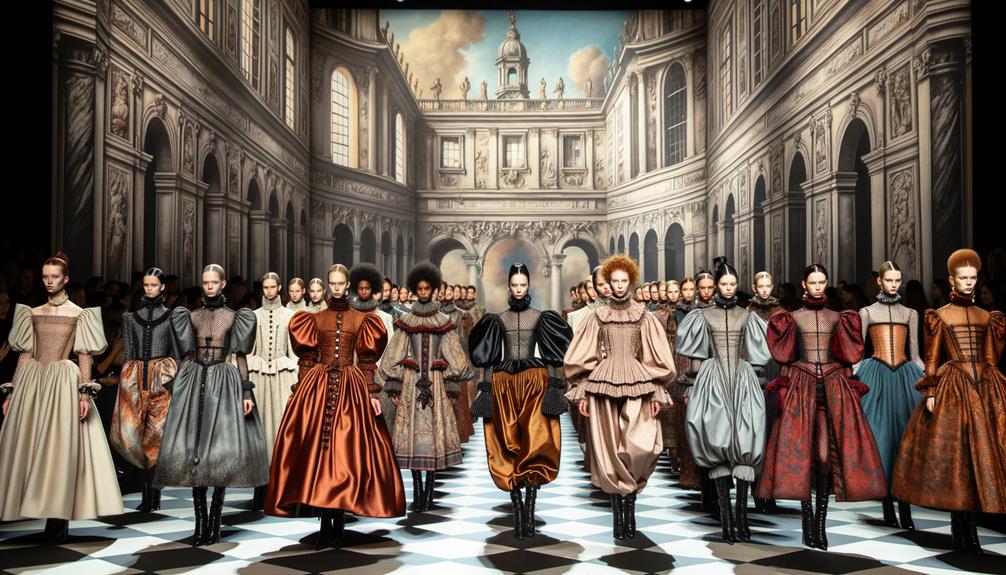
The opulence of Renaissance fashion is alive in modern haute couture, in luxurious fabrics and dramatic silhouettes. Designers have used rich textures and intricate embroidery openly, blending historical elements with bold, modern designs.
Luxurious Fabrics Revival
Luxury fabrics from the Renaissance era have made a comeback on modern haute couture runways, showcasing a renewed appreciation for historical opulence. Designers like Valentino and Dolce & Gabbana have reintroduced sumptuous fabrics like silk and velvet in their collections, creating a connection between the past and present. These rich textiles, once favored by Renaissance nobility, now adorn the silhouettes of contemporary high fashion.
Walking through a fashion show today, you can’t help but notice the intricate embroidery and opulent materials reminiscent of a bygone era. Brocade and damask, rich in texture and history, are making a bold statement. The revival of these fabrics isn’t just about aesthetics; it’s a nod to the craftsmanship that defined Renaissance artistry.
Alexander McQueen’s collections are particularly striking, blending Renaissance opulence with modern design through the use of velvet and satin. These textiles evoke a sense of timelessness, making it clear that the appreciation for such luxurious fabrics transcends centuries.
In haute couture, the embrace of Renaissance fabrics showcases an enduring love for meticulous artistry and luxurious materials, reminding us that innovation often involves looking to the past for inspiration.
Dramatic Silhouettes Inspiration
Designers are revisiting the dramatic silhouettes of Renaissance fashion to craft striking haute couture collections. They’re drawn to the opulent, voluminous skirts and puffed sleeves that once defined an era of luxury. On runways like Paris Fashion Week, these Renaissance-inspired elements are reimagined for today’s audience. Valentino and Dolce & Gabbana are prime examples, blending historical opulence with contemporary luxury.
The exaggerated shapes and proportions, such as bell-shaped farthingales and structured bodices, create a grandeur that is both theatrical and avant-garde. These dramatic silhouettes push the boundaries of traditional fashion design, inviting a reconsideration of what modern elegance can be. Haute couture thrives on innovation, and the Renaissance provides a rich source of inspiration.
These designs connect past and present, showing how history informs the future of fashion. The dramatic silhouettes of the Renaissance are not mere replicas but reinterpretations, contextualized within today’s aesthetic sensibilities. They invite a return to the grandeur and extravagance of the age while also pushing the boundaries of haute couture. It is a dialogue between eras, woven into fabric and form.
Modern Interpretations
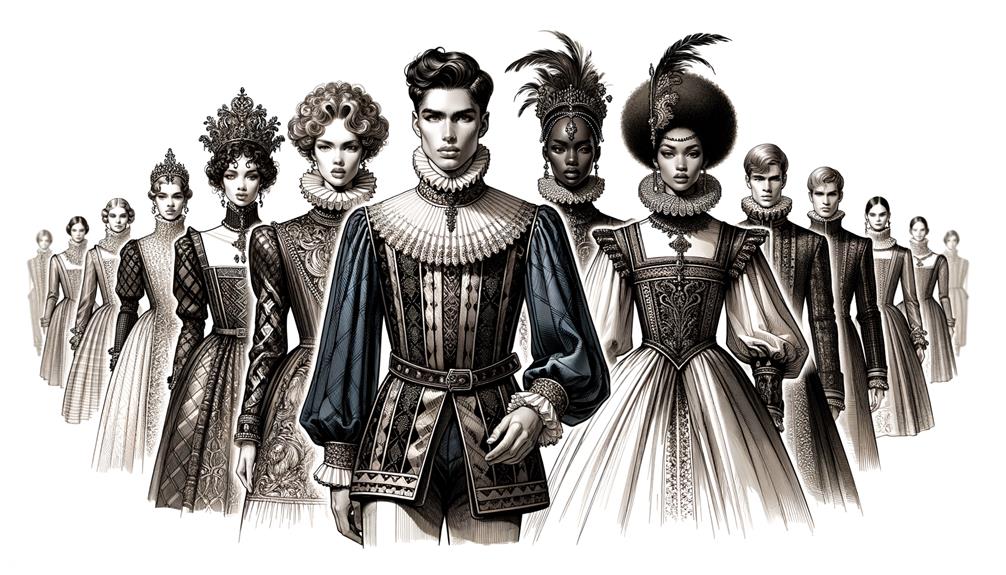
Echoing the opulence of the past, modern fashion revives Renaissance elements like corsets and puffed sleeves with a modern twist. This Renaissance influence on modern clothing captures a blend of historical richness and contemporary innovation. Fashion and art intersect, with today’s designers drawing from trends of the era to create pieces that feel both timeless and fresh.
Take Gucci’s 2018 collection, for instance. The fashion house masterfully merged hyperrealism with surrealism, inspired by iconic Renaissance art. The campaign reimagined famous artworks, dressing characters in avant-garde Gucci attire. This creative homage sparked a global trend, bringing Renaissance-inspired styles back into the spotlight.
The structured silhouette of the period, with its stiffened bodice and wide skirt, still influences modern dress. Renaissance tailoring shaped the waist and hip line through boning and farthingales rather than through a rounded hourglass form. Modern interpretations, however, offer comfort and flexibility, marrying aesthetic appeal with practicality.
Digital fashion is also revolutionizing this space. Virtual clothing for online avatars enables sustainable practices and innovative marketing. By integrating Renaissance aesthetics into digital spaces, designers push the boundaries of what’s possible, crafting a new era of fashion that’s as inventive as it is respectful of the past.
Revival of Accessories
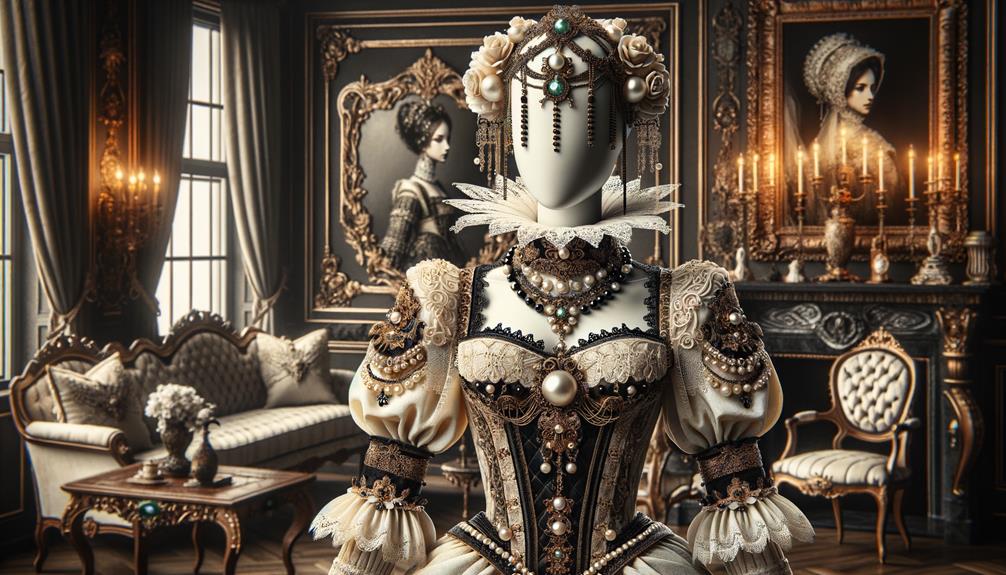
Renaissance-inspired accessories are making a stylish comeback in modern fashion. Today’s trends feature intricate jewelry and embellished gloves that echo the opulence of the Renaissance era. These accessories add a distinctive flair to contemporary outfits, blending elegance with a touch of historical charm.
The resurgence of hats, such as berets for men and elaborate headdresses for women, is particularly intriguing. These pieces are not simply nostalgic nods. They add layers of sophistication and timelessness to modern fashion. Accessories can reflect personal style and historical influences at the same time.
Incorporating these Renaissance-inspired accessories allows individuals to showcase wealth and status, much like in the historical period. The modern fashion scene, with its eclectic mix of old and new, provides a perfect canvas for these luxurious adornments. They transform simple outfits into statements of creativity and heritage.
Legacy in Contemporary Fashion
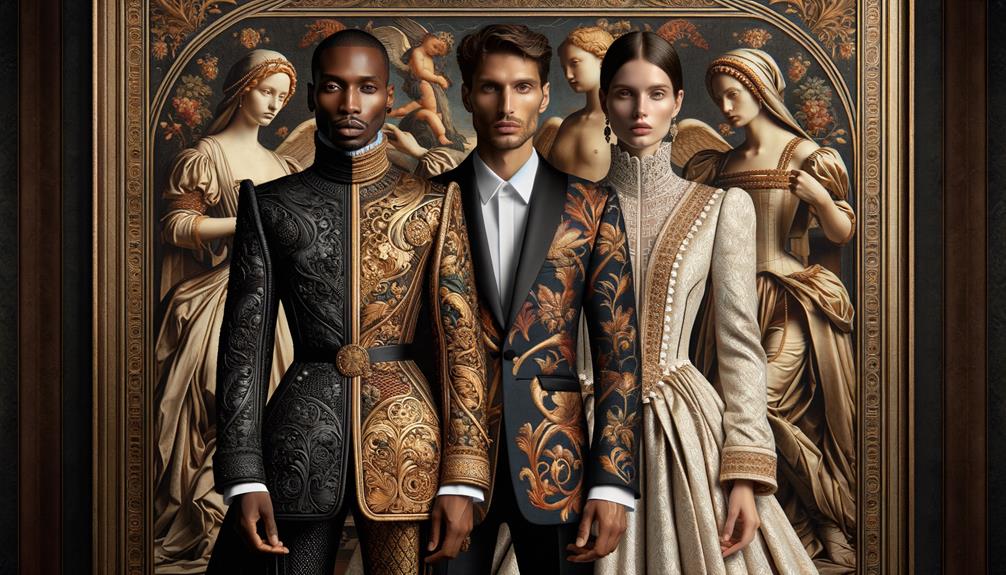
The Renaissance’s lasting impact on modern fashion is undeniable, with trends like corsets, puffed sleeves, and pleated skirts making a comeback. These elements reflect the Renaissance period’s emphasis on silhouette and artistic expression, which continue to shape the history of fashion.
Looking at modern collections, it is clear that designers like Gucci draw heavily from Renaissance art. Their 2018 collection was a masterful blend of hyperrealism and surrealism, reimagining iconic artworks with models dressed in contemporary Gucci attire. This campaign sparked a global trend of incorporating Renaissance styles into modern wardrobes.
It is evident that the Renaissance period’s focus on figure exaggeration has left a lasting mark. The corset, once a symbol of the idealized female form, has returned, albeit in a more liberated context. Puffed sleeves and pleated skirts further emphasize sculptural, dynamic shapes that echo the grandeur of Renaissance artistry.
Italian fashion houses like Bulgari and Prada also pay homage to Renaissance artists like Michelangelo and Leonardo Da Vinci. Their designs reflect a deep appreciation for the era’s extravagant, meticulous approach to fashion.
Frequently Asked Questions
How Has the Renaissance Influenced the Modern World?
The Renaissance sparked a passion for innovation and creativity, influencing the modern world in profound ways. Its impact can be seen in art, science, and our ongoing pursuit of personal freedom and expression, reflecting a timeless quest for excellence.
How Was the Renaissance a Turning Point for the Fashion Industry?
The Renaissance era sparked a fashion revolution. Textile production expanded sharply during this period, though precise figures are difficult to pin down. It marked a significant turning point, fostering individuality and creativity that reshaped the industry and continues to influence modern styles.
When Thinking of Renaissance Fashion, How Did Clothing Reflect Social Status?
In the Renaissance, clothing was a status symbol, with luxurious fabrics and intricate details showcasing one’s social standing. The wealthy flaunted their riches through silk, velvet, and elaborate embroidery. The more extravagant the material and craftsmanship, the higher the person’s social status was reflected.
How Did the Harlem Renaissance Influence Fashion Today?
The Harlem Renaissance’s influence on fashion is undeniable. It can be seen in the bold prints, vibrant colors, and unique textures that celebrate African aesthetics and natural hair, reflecting cultural pride and innovation.