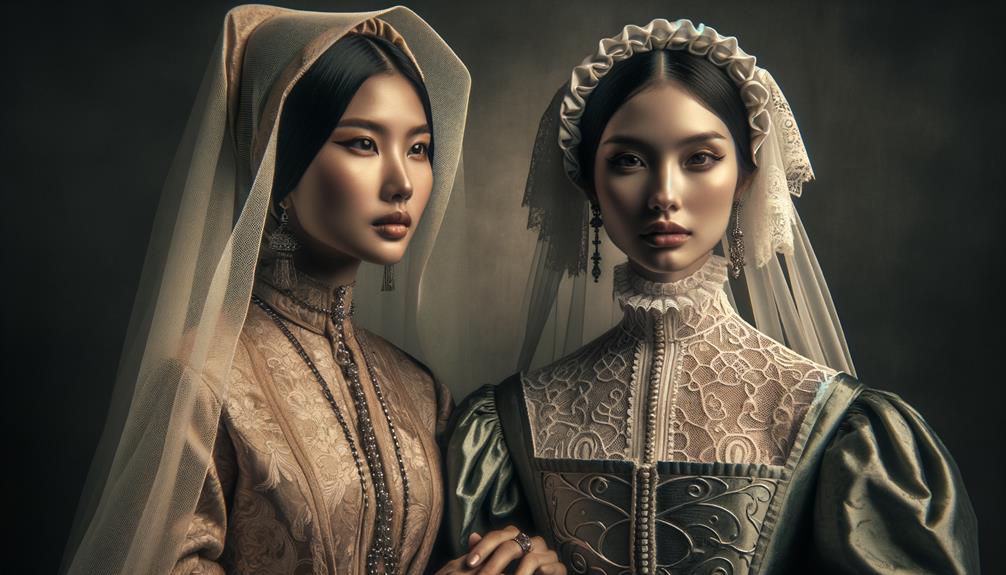
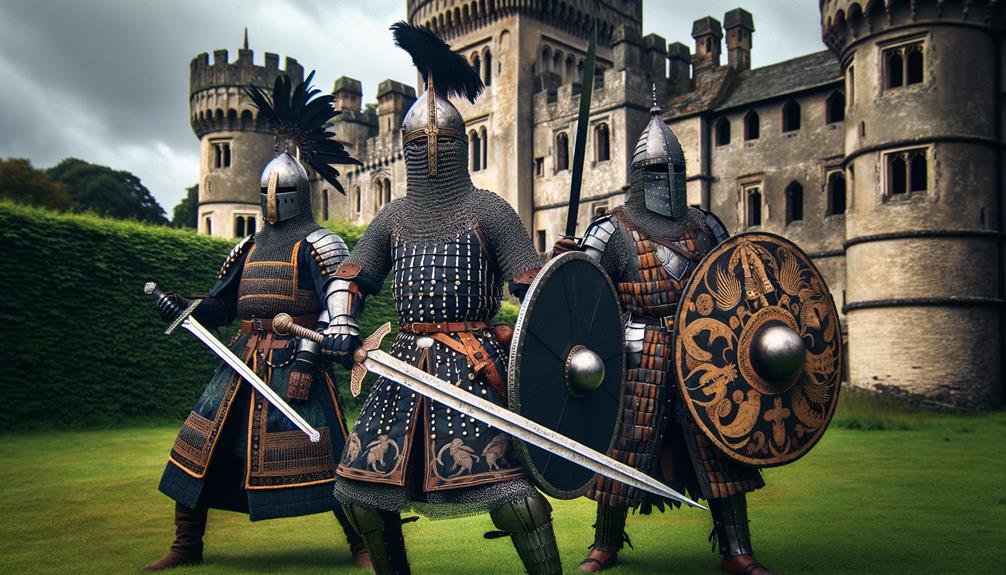
Medieval European fashion featured intricate layers and rich fabrics that reflect the era’s cultural and social complexities. Everyday wear consisted of practical linen and wool, but the wealthy showcased their status with silk and fur. Women’s clothing evolved from Roman styles to tunics and long coats adorned with brooches, showcasing regional flair. Men’s attire ranged from noblemen’s luxurious garments to peasants’ rugged clothing. The details in clothing revealed one’s status, with courtiers in elaborate outfits and monks in simple robes. Even harsh climates shaped regional styles, each piece a reflection of the era’s diverse influences.
Early Medieval Dress
early medieval dress from 400 AD to 1100 AD reflects the blending of Roman and barbarian influences. The styles worn by women particularly stand out, revealing much about the cultural shifts of the time. Early medieval European women’s clothing shifted from the long-sleeved tunics inherited from Roman traditions to more complex layered outfits, hinting at societal changes and the merging of cultures.

Women’s clothing offered a visual narrative of their status and identity. Initially, Anglo-Saxon women favored a distinctive tubular dress fastened with brooches, a clear departure from Roman simplicity. With the spread of Christianity, continental styles began to influence local fashion. The presence or absence of oval brooches in graves often indicated a woman’s social or marital status, serving as a silent record of her life story.
The blending of Roman and barbarian elements created a distinctive style that reflected broader societal shifts. Each layer and each brooch was a stitch in the evolving fabric of early medieval Europe, intertwining practicality with the burgeoning complexity of social norms.
Fabrics and Materials
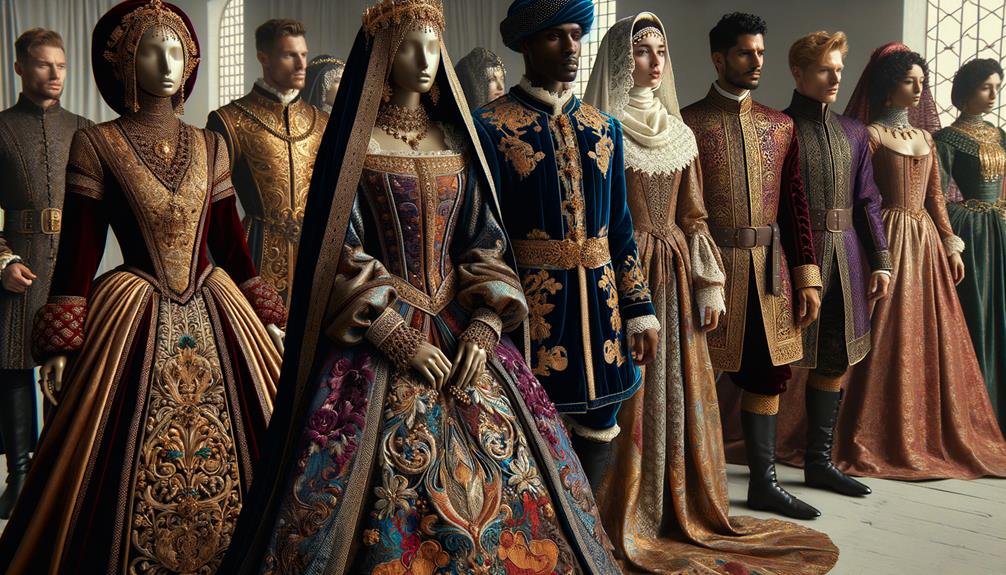
The fabrics and materials used in medieval European fashion reveal the intersection of practicality, wealth, and social status. Each fabric choice told a powerful story. For the majority, linen and wool dominated everyday wear, providing warmth and comfort in the harsh European climates. These natural fibers were durable and served as practical options for the masses.
Silk, on the other hand, was the ultimate symbol of luxury. Imported from distant lands, silk garments were reserved for the elite, their lustrous textures and rich hues unmistakable signs of affluence. The feel of silk against the skin was itself a clear indicator of one’s social standing.
Colors also played a significant role in medieval fashion. Pastel shades, achieved with more affordable dyes, were common among the lower classes. In contrast, the wealthy showcased vibrant, rich hues that were costly and labor-intensive to produce. Fur, often used to line cloaks and hoods, provided additional warmth and also underscored the wearer’s wealth.
In essence, medieval clothing was a complex language of social signaling, woven into every thread and fiber, rather than simply covering the body.
Men’s Attire
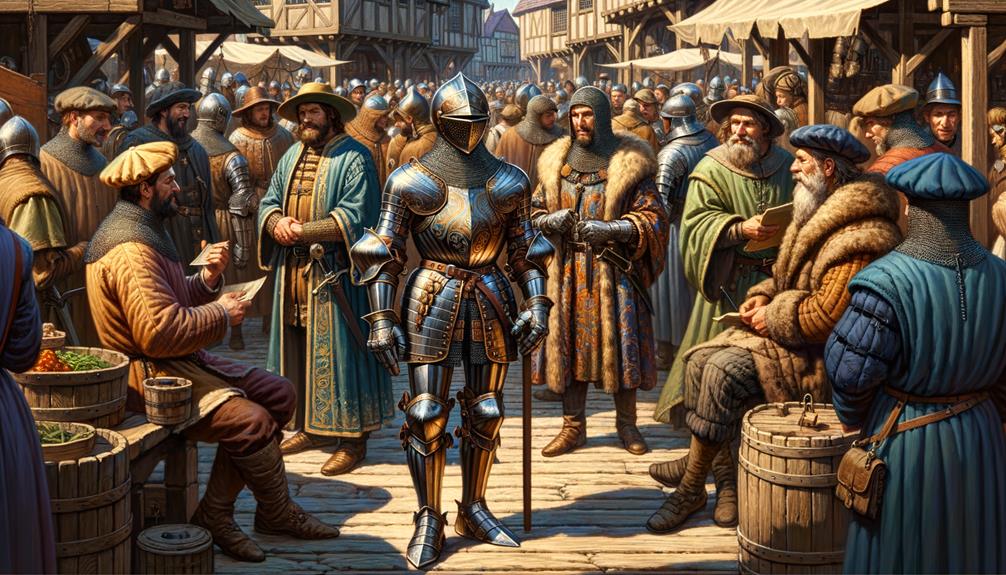
Men’s attire in medieval Europe shows a stark contrast between the luxurious fabrics worn by noblemen and the practical, sturdy clothes of peasants. The richly adorned cloaks and tunics of the elite stood in sharp contrast to the simpler, functional wear of everyday folk. Even on the battlefield, the styles varied greatly, with armor reflecting both social status and practical necessity.
Noblemen’s Luxurious Fabrics
In medieval Europe, nobility’s attire was the epitome of luxury, thanks to the meticulous selection of fabrics like silk, velvet, and brocade. Each fabric told a story of wealth and status. Silk, in particular, was a symbol of opulence. Imported from Byzantium or the Middle East, its value lay in the material itself and in the long journey it took to reach European wardrobes. The rich dyes and shimmering quality of silk were reserved for the elite, thanks to sumptuary laws that restricted its use to maintain class distinctions.
The tactile pleasure of velvet was reserved for noblemen. Its soft texture and deep, luxurious colors would have felt like a second skin, a tangible symbol of affluence. Velvet went beyond comfort; it was a statement of power. Wearing it was akin to announcing one’s place in the social hierarchy in a whisper that echoed through grand halls.
Brocade, woven with intricate patterns and metallic threads, was perhaps the most visually striking. Each garment was a canvas, an art piece that told stories of opulence. The metallic threads shimmered under candlelight, transforming the nobleman into a living, breathing embodiment of wealth. This intricate fabric was highly prized, further confirming the wearer’s high status.
Peasant Daily Wear
The rough feel of linen against the skin stood in sharp contrast to the luxurious fabrics worn by nobility. Peasant men wore practical, earth-toned tunics as they went about their daily chores. These medieval garments, typically knee-length and belted, were built for functionality, designed to withstand the rigors of manual labor.
The simplicity of peasant attire reflects a lifestyle grounded in necessity. Tunics, made from coarse linen or wool, offered durability and ease of movement. The muted, undyed fabrics hinted at their humble origins and the limited resources available to the lower classes. Braies, akin to medieval underwear, and hose completed their basic ensemble, ensuring modesty and additional warmth.
Footwear for peasant men was equally practical. Basic shoes, crafted from simple leather, provided protection against the elements without the elaborate embellishments seen in noble footwear. These shoes were often handmade, reflecting a self-sufficient way of life.
While the clothing of noblemen dazzled with opulence, peasant attire spoke to resilience and practicality. The medieval tunics worn by these men were symbols of a life lived through sheer necessity, a stark contrast to the finery of the upper echelons.
Military Armor Styles
Military armor in medieval Europe showed skilled craftsmanship and technological advancement. The evolution from chain mail to plate armor marked a significant improvement in personal protection on the battlefield.
Chain mail, with its intricate interlocking rings, provided flexible and reliable defense against slashing weapons. However, as weaponry advanced, the need for more solid protection grew. By the 14th century, plate armor became the preferred choice, offering superior defense against swords, arrows, and blunt force.
Armor was highly personalized. Knights showcased their heraldic symbols, turning their gear into a canvas of identity and allegiance. Helmets, ranging from simple iron caps to elaborate visored designs, played a vital role in safeguarding the head while allowing visibility and breathability.
The construction of armor varied significantly based on region and affluence. Wealthier knights could afford intricately designed and highly protective suits, while common soldiers wore simpler versions. This disparity in armor underscored the social hierarchies of the time, while also highlighting the relentless pursuit of innovation in personal defense.
Women’s Clothing
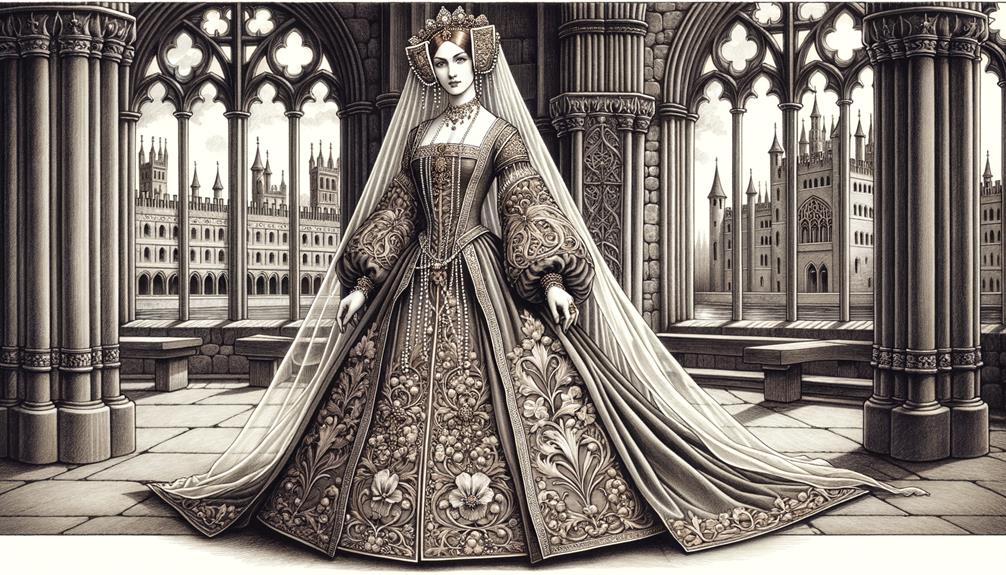
In medieval Europe, women’s clothing was a reflection of their social and marital status. Long-sleeved tunics and layered garments adorned them, with intricate brooches and regional influences telling a story. Artists like Rogier van der Weyden captured the elegance of married women’s layered outfits. His paintings often depicted married women adorned with multiple brooches, signaling their status and region.
During the Anglo-Saxon period, women wore distinctive tubular dresses, but after the widespread conversion to Christianity, they shifted to more continental styles. The influence of Roman fashion was evident in areas like Italy and South-Western France, where women wore garments inspired by classical silhouettes. Cities such as Cologne also showcased these Roman-inspired designs, blending traditional and contemporary elements.
In the southern and western regions of France, the Visigothic Kingdom of Toulouse left its mark on women’s dress. The long coats and tunics fastened by brooches were functional and also a statement of cultural identity. These garments, rich in detail and layered complexity, tell a story of evolving styles influenced by religious and cultural shifts, a narrative woven into the very fabric of medieval European society.
Professional Garments
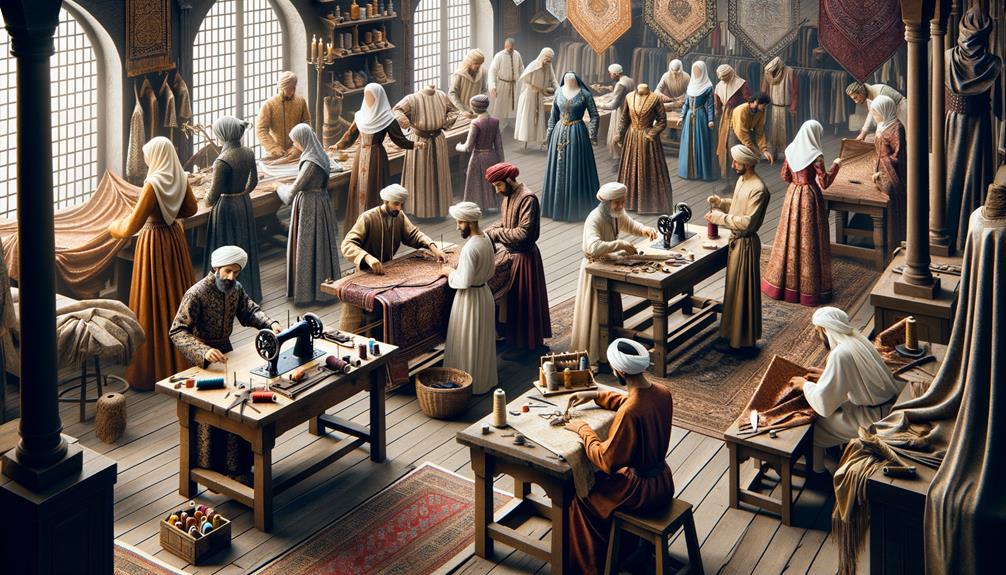
The vibrant illustrations in medieval European manuscripts reveal a great deal about the social hierarchy of the time. These visual records show the meticulous attention to detail in the attire worn by individuals, which silently yet powerfully conveyed their profession and social standing.
Courtiers, for example, wore elaborate and impractical clothing designed to showcase their wealth and status. Their garments, made from luxurious fabrics and adorned with intricate patterns, said much about their high position within society. Illuminated manuscripts frequently highlight these sartorial choices, showcasing the courtiers’ penchant for flamboyant attire that set them apart from other social roles.
In stark contrast, monks wore simple, humble robes that reflected their vows of poverty and devotion. Doctors wore practical yet distinguishable outfits, often marked by scholarly robes that conveyed their learned status. Knights, on the other hand, were depicted in armor, a stark reminder of their martial responsibilities.
These garments were a visual language that instantly conveyed an individual’s place within the social hierarchy, not just clothing. The 1463 law restricting revealing clothing to the upper classes only cemented the importance of dress in maintaining social order.
Regional Variations
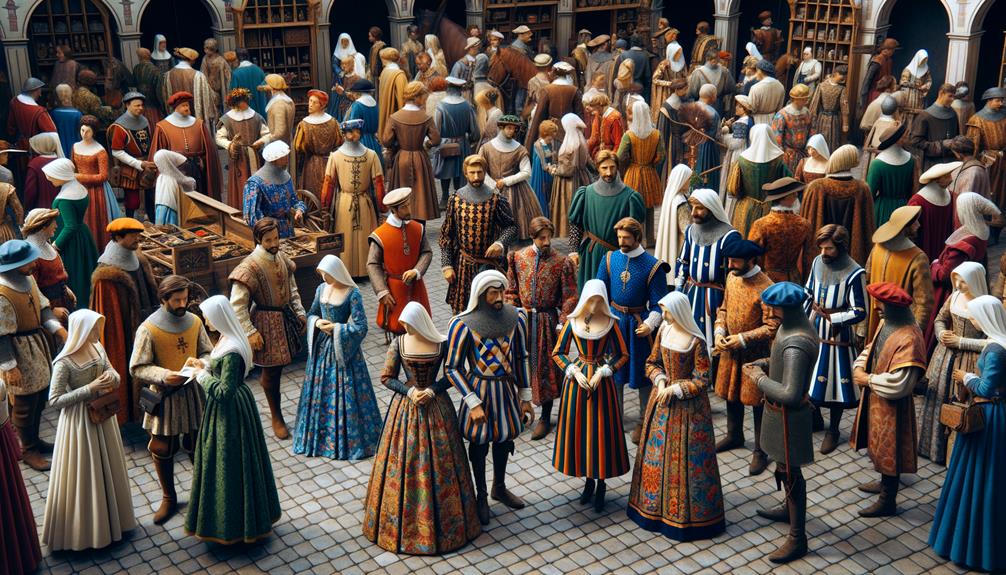
Regional variations in medieval European fashion show how much geography and culture influenced these styles. In the north, heavier fabrics were a must to combat the harsh climate, while in the south, lighter textiles were preferred, thanks to Mediterranean trade. The eastern regions, with their rich artistic traditions and interactions with neighboring cultures, added intricate embellishments to their garments.
Northern European Garments
Northern European garments reveal an array of clothing styles shaped by regional influences from Scandinavia, Germany, and England. Tunics, made from wool or linen, were a staple in these regions, worn by both men and women. In Scandinavia, Norse men paired tunics with trousers, while women wore apron dresses over long-sleeved underdresses. These practical garments were designed to combat the harsh climate.
Germanic tribes developed their own distinct style, with men and women wearing layered tunics, trousers, and cloaks fastened with decorative brooches. These brooches showcased their craftsmanship and artistic expression. In England, Anglo-Saxon women wore long, layered tunics adorned with ornate brooches, reflecting a unique blend of Roman and Continental styles.
A regional comparison of key garments highlights these differences:
| Region | Key Garments |
|---|---|
| Scandinavia | Wool/linen tunics, apron dresses, trousers |
| Germany | Layered tunics, trousers, decorative brooches |
| England | Long tunics, layered garments, ornate brooches |
The regional variations in Northern European fashion demonstrate the cultural diversity and historical influences that shaped these styles. Each region’s unique blend of practicality and intricate details offers a glimpse into the past, reflecting the geographical and climatic conditions that shaped daily life.
Southern Textile Influences
While Northern European garments prioritized practicality and resilience, Southern European fashion revelled in opulence, drawing inspiration from intricate Byzantine and Islamic textile influences. The medieval period saw regions like Italy and Spain emerge as melting pots of textile artistry.
Byzantine silk was highly prized, its intricate patterns and luxurious feel making it a coveted commodity among Southern European nobility. These fabrics symbolized status and wealth rather than being merely beautiful. The elaborate embroidery and meticulous craftsmanship invested in each piece were considerable.
Islamic textiles introduced a vibrant colour palette and rich materials, further enriching the Southern European flair for opulence. Nobility adorned themselves with these imported silks and elaborate embroidery, creating a unique fusion of styles. This confluence of influences led to:
- Richly patterned silk garments: Byzantine weavers excelled in creating detailed motifs.
- Vividly colored fabrics: Islamic textiles brought a bold and luxurious palette.
- Elaborate embroidery: Combining techniques from both traditions, Southern European fashion epitomized grandeur and sophistication.
This unique blend is what makes medieval Southern European fashion so compelling.
Eastern Embellishment Styles
Eastern embellishment styles had a profound impact on medieval European fashion, introducing a blend of opulent embroidery and intricate patterns that varied regionally. Byzantine-style turbans and wimples, with their exotic appeal, became symbols of high status and sophistication in Europe. These items were fabric and were often embellished with metal threads, adding a luxurious shimmer that caught the eye.
Regional variations in these styles were particularly noticeable in centers like Italy, South-Western France, Cologne, and the Visigothic Kingdom of Toulouse. Each region embraced the Eastern influence in unique ways. For instance, Italian garments often featured rich fabrics and elaborate embroidery, reflecting their love for luxury. In South-Western France, veils were transformed into winglike shapes using wire frameworks, an elegant nod to Eastern-inspired design.
The intricate patterns common in Eastern textiles found a new home in European fashion, where they added an exotic flair. The Visigoths of Toulouse, for instance, integrated these patterns into their clothing, creating a unique fusion of Eastern and Western aesthetics. This blending of cultures went beyond decorating the fabric; it told a story of interconnected worlds, woven together through trade and influence.
Frequently Asked Questions
What Was Fashion Like in Medieval Europe?
Fashion in medieval Europe evolved slowly from simple linen and wool garments to tailored pieces that accentuated the human form. By the 14th century, regional styles and rich Byzantine fabrics added real variety.
What Did Rich People Wear in Medieval Europe?
Nobles in medieval Europe spared no expense when it came to their wardrobe. They spent heavily on luxurious fabrics like silk, velvet, and brocade, often embellished with precious jewels and fur. Their opulent attire was a deliberate display of wealth, strictly governed by sumptuary laws that regulated the social hierarchy of fashion.
What Is Medieval Clothing Called?
Medieval clothing is all about the details. Tunics, hose, coifs, surcoats, and gowns were each carefully crafted to reflect utility and also a sense of identity, status, and even innovation.
What Did Medieval Ladies Wear?
Medieval ladies wore elegant, layered garments, each one more intricate than the last. They adorned themselves with sparkling brooches, adding an air of mystery and nobility to their appearance.