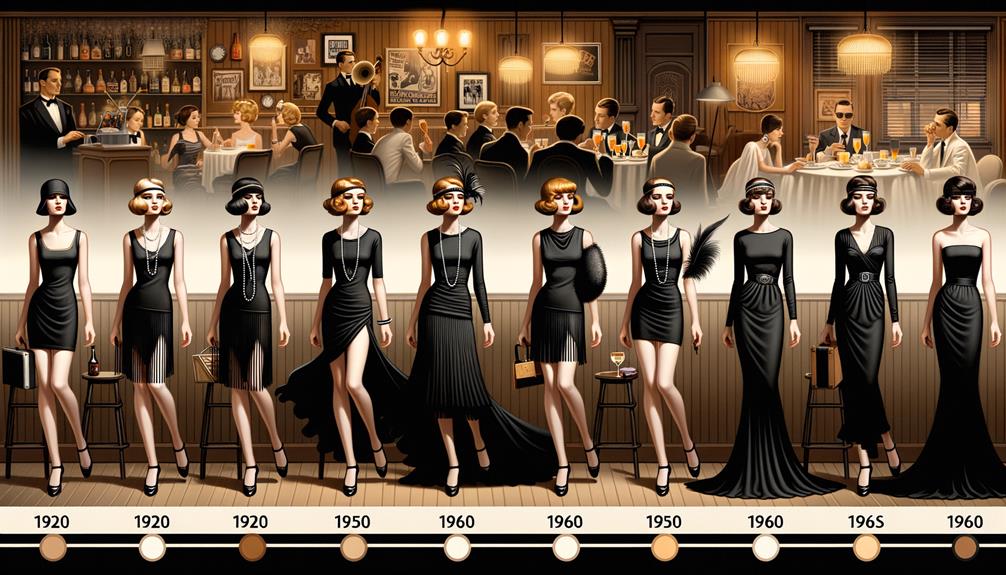
The flapper style is the defining expression of 1920s fashion, capturing the essence of female empowerment and rebellion. Women, with their loose, sleeveless dresses adorned with beads and feathers, broke free from traditional constraints. Icons like Zelda Fitzgerald and Josephine Baker revolutionized fashion and culture, exuding confidence and independence. The media amplified their daring style, which resonated with post-World War I societal shifts. Though criticized for its bold nature, flapper fashion has left a lasting legacy, influencing modern trends and marking a pivotal moment in women’s liberation. This iconic style reshaped the decade and beyond.
Women’s Independence
The 1920s marked a significant turning point in women’s independence, largely driven by the newfound economic opportunities and societal changes that followed World War I. Young women began to challenge societal constraints during this period. With the right to vote granted by the 19th Amendment in 1920, women felt more empowered than ever to take control of their lives. This era was not just about political rights; it was a cultural revolution.

Economic opportunities flourished post-World War I, offering women higher wages and more jobs. This financial freedom was a key factor in the rise of the flapper, a symbol of youthful rebellion and independence. Flappers openly defied traditional norms through fashion, behavior, and attitude. Their bobbed hair and shorter skirts were not just style statements but declarations of autonomy.
The flappers embodied a break from the past, where societal constraints had long dictated a woman’s place. Now, with more economic leeway, young women explored new freedoms, from entering the workforce to enjoying the convenience of Henry Ford’s mass-produced cars. These changes transformed the landscape of women’s fashion and independence, painting a vivid picture of an era that celebrated innovation and self-expression.
Iconic Flapper Dress
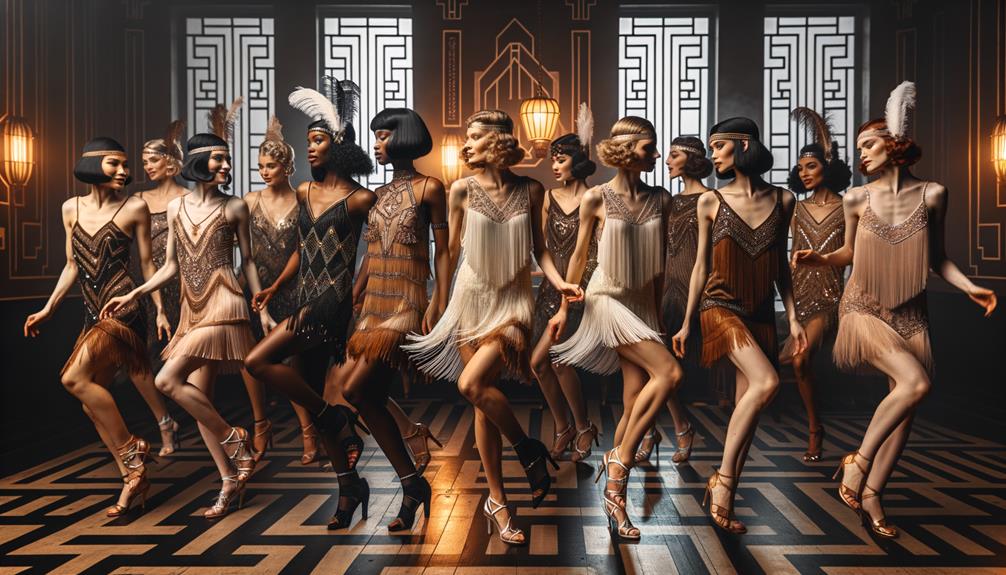
The Flapper dress embodied a transformative period in women’s fashion and empowerment, symbolizing a bold statement of freedom and rebellion as women embraced their newfound independence. These dresses, hanging straight on the body with their sleeveless and loose designs, allowed for an unprecedented freedom of movement. This marked a departure from the restrictive fashion of previous eras, signifying empowerment and a youthful, rebellious spirit.
Crafted from light fabrics like silk and embellished with intricate details such as beads, sequins, and feathers, Flapper dresses exuded a glamorous and eye-catching allure that aligned with the innovative spirit of the 1920s. Designers like Edward Molyneux played a crucial role in shaping this fashion revolution by creating dresses that became essential pieces among elite social circles and actresses like Greta Garbo.
Beyond being a mere fashion statement, the Flapper dress represented a declaration of body confidence and a departure from traditional dress norms. The way these dresses revolutionized women’s fashion embodied the era’s dynamic shift towards self-expression and autonomy. The Flapper dress was more than just iconic: it became a symbol of a transformative era in women’s fashion and empowerment.
Influential Flappers
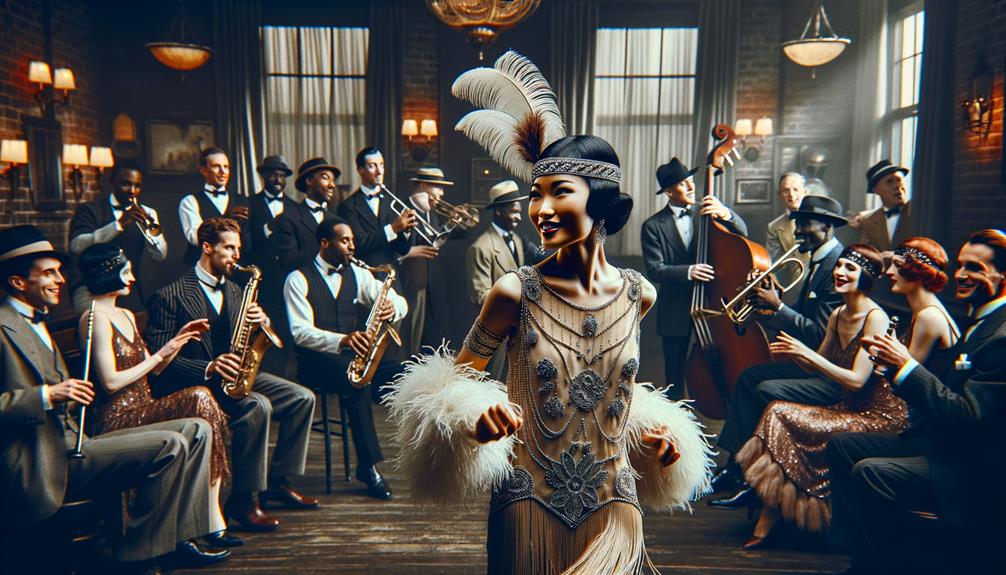
Women like Zelda Fitzgerald and Louise Brooks embodied the era’s spirit of rebellion and glamour. Zelda, with her daring style and fearless attitude, was not just F. Scott Fitzgerald‘s muse; she was a symbol of the flapper’s daring independence. Louise Brooks, an iconic silent film star, captured the flapper aesthetic with her sleek bobbed hair and stunning outfits. Her roles on screen immortalized the rebellious spirit of the decade.
Josephine Baker’s impact as an African-American dancer, singer, and actress in Paris was profound. She broke down racial barriers and captivated audiences with her vibrant performances, becoming a global flapper icon. Clara Bow, the ‘It Girl‘ of the 1920s, brought the flapper image to the silver screen, making it accessible and aspirational. Her magnetic presence and fashion sense transformed her into a style icon.
Tallulah Bankhead, known for her striking looks and fearless demeanor, embodied the flapper lifestyle both on and off stage. Each of these women, with their bold choices and unapologetic attitudes, encapsulated the essence of the 1920s flapper revolution.
Flappers in Media
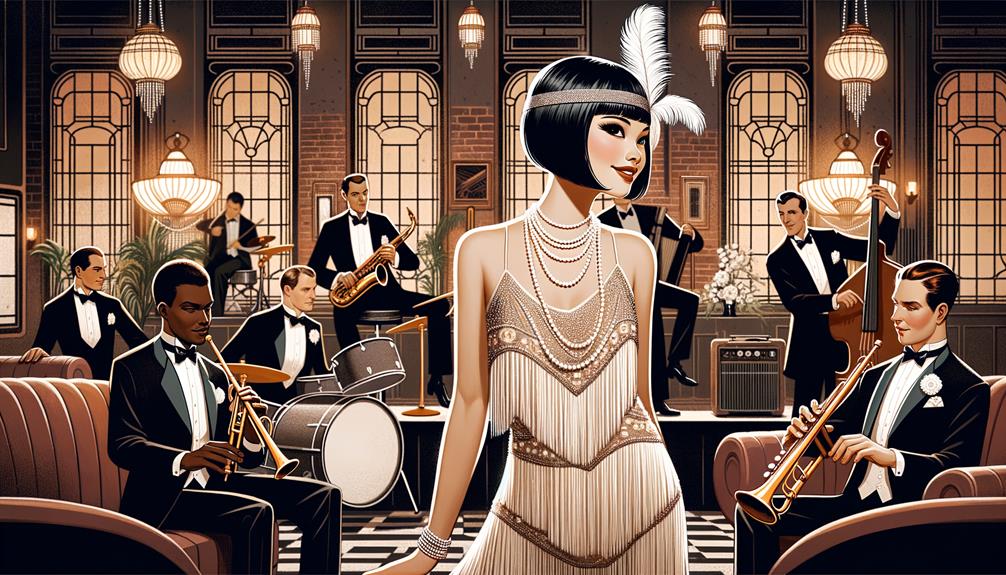
Flappers in media embodied the post-World War I shift in societal norms, captivating audiences with their bold fashion, carefree attitudes, and undeniable charm. The flapper dresses and the liberated female characters they clothed were more than a demonstration: they were a revolution.
Films like ‘Gentlemen Prefer Blondes’ brought flapper fashion into the spotlight, while screen icons like Clara Bow, famously dubbed the ‘It Girl,’ epitomized the allure of this new, audacious woman. Fashion houses led by trailblazers like Coco Chanel and Elsa Schiaparelli embraced and propelled this movement. Chanel’s simplistic yet chic designs and Schiaparelli’s avant-garde approach redefined women’s fashion, making flapper dresses a symbol of modernity and freedom.
Advertising, too, evolved, targeting women with disposable incomes. Helen Lansdowne Resor, a pioneer in marketing to women, cleverly incorporated flapper style and sex appeal in her campaigns, reinforcing the flapper’s image as a symbol of independence and sophistication.
Through books, films, and advertising, the flapper became an icon of innovation, demonstrating the transformative power of fashion and media in shaping societal narratives.
Criticism and Legacy
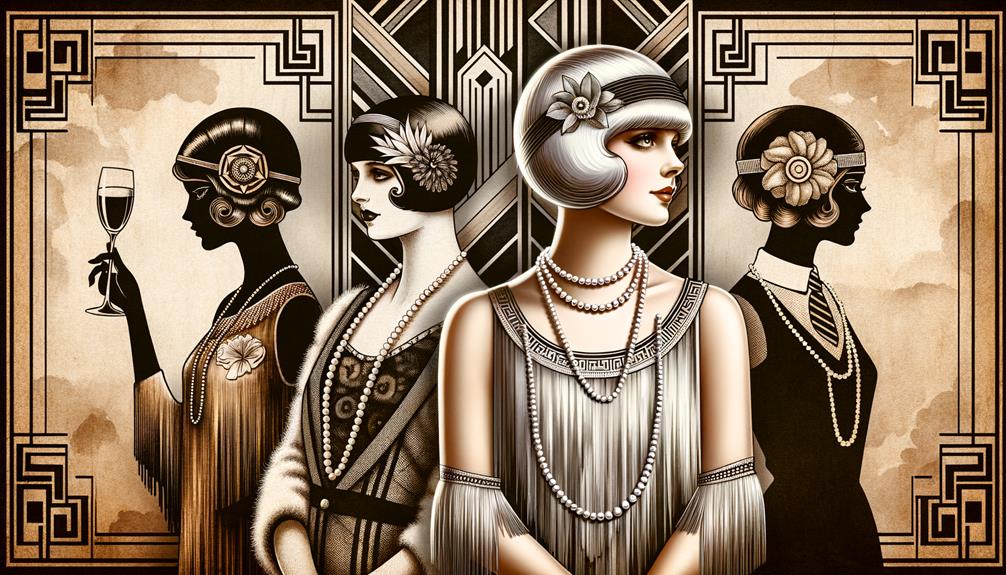
Many critics viewed the flapper style as provocatively daring, pushing boundaries too far for comfort. They saw the rebellious spirit of flappers as a direct challenge to traditional gender expectations, with short skirts and bobbed hair symbolizing a radical departure from accepted norms. Despite the backlash, the flapper’s legacy endures, celebrated for its bold fashion choices and profound societal impact.
The evolution of modern women’s attire makes it clear that flapper fashion laid the groundwork for contemporary trends. The daring hemlines and relaxed silhouettes challenged the rigid, constrictive styles of the past, promoting a sense of freedom and self-expression. The flapper’s embrace of androgynous looks and active lifestyles defied conventional roles, paving the way for the empowered, independent woman.
Today, flapper-inspired designs resurface in retro-themed collections, which shows their lasting influence. These styles continue to symbolize female empowerment and independence, resonating with those who appreciate the blending of historical and modern aesthetics. The societal impact of the flapper era is undeniable, as it reshaped gender expectations and continues to inspire innovation in fashion. The rebellious spirit of the flapper lives on, a reminder of the power of fashion as a force for change.
Frequently Asked Questions
What Was Flapper Fashion in 1920s?
Flapper fashion of the 1920s embodied a perfect blend of elegance and defiance. Those sleek, sleeveless dresses with dropped waistlines, typically knee-length, and bold accessories exuded a sense of rebellion, reshaping societal norms and embracing newfound freedom.
What Did the Flapper Represent in 1920S Culture?
In the 1920s, the flapper embodied a radical cultural shift. By embracing modernity, independence, and rebellion, she broke free from societal norms. She symbolized liberation, redefining women’s roles and attitudes for generations to come.
What Characterized the Flappers of the 1920s?
By the mid-1920s, bobbed hair was so widespread that it is often described as a mass fashion change, and newspaper columnists tracked it as a public controversy. Flappers defied norms with their short hair, bold makeup, and daring public behavior, embodying freedom and change.
What Are the Defining Features of Flappers?
Flapper style centered on short, fashionable haircuts, bold makeup, and dresses that fell just above the knee. These women prized freedom over tradition, often accessorizing with headbands and bangles, and boldly challenged societal norms with their independent spirit.