The medieval military uniforms tell stories that are rarely spoken aloud. Each piece of chain mail and every ornate crest whispers secrets of bravery and heritage, transcending mere protection to embody status and identity. The English, clad in red and white, the French in blue and white, and the flamboyant German Landsknechte each had their own visual language. The real fascination lies in how these uniforms evolved alongside technological advancements and societal shifts, reflecting a deeper narrative of power and prestige. What stories and innovations lie hidden beneath the layers of steel and cloth?
Evolution of Medieval Uniforms
The evolution of medieval uniforms ran from simple tunics and chain mail to intricate plate armor and heraldic surcoats that defined an era. The Middle Ages were a time of relentless innovation, where each layer of metal and stitch of fabric told a story of adaptation and resilience.

The shift from chain mail to plate armor redefined the battlefield. Chain mail, with its interlocking rings, offered flexibility but lacked the sturdy protection required against increasingly sophisticated weapons. Plate armor was a marvel of medieval craftsmanship. Each piece was meticulously crafted, providing unparalleled defense while also serving as a canvas for heraldic artistry.
Knights, the epitome of chivalry and martial prowess, wore these armors as much for intimidation as for protection. The gleam of plate armor under a sunlit sky must have been a breathtaking sight, a confirmation of the wearer’s status and rank. Symbols of hierarchy were etched into every helmet and shield, turning warriors into walking emblems of their lineage. This evolution was deeply symbolic of an era’s identity, not merely functional.
Regional Variations
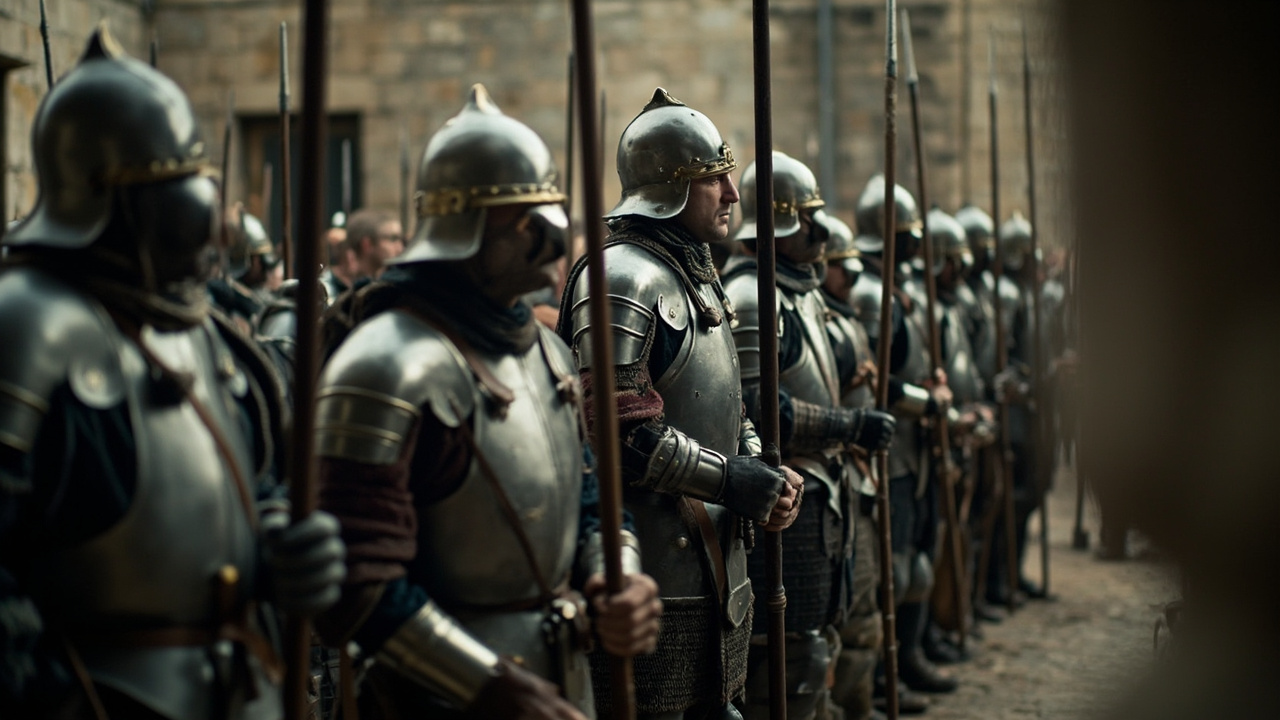
The stunning artistry of plate armor is matched by the regional nuances that made each medieval army’s uniform a unique reflection of cultural pride and identity. Each region infused its own aesthetic sensibilities into the fabric and color of its military attire. The English, for example, often wore uniforms of red and white, a striking palette that echoed their national heraldry and symbolized valor and purity.
In contrast, the French armies favored blue and white hues, their uniforms reflecting the azure fields and silver fleurs-de-lis of their regal banners. This chromatic choice went beyond decoration; it was a symbol of their sovereign legacy and territorial pride.
Meanwhile, the German Landsknechte, those renowned mercenary soldiers, revelled in flamboyance with their colorful and intricate designs. Their attire was a riot of hues, each stitch and pattern a declaration of their fierce independence and martial prowess.
The Prussian army, which emerged later, would carry forward this tradition of distinctiveness with its own iterations of the red coat, a harbinger of the disciplined and formidable force they would become. In each thread and color, these uniforms whispered the stories of their lands and people.
Armor and Protection
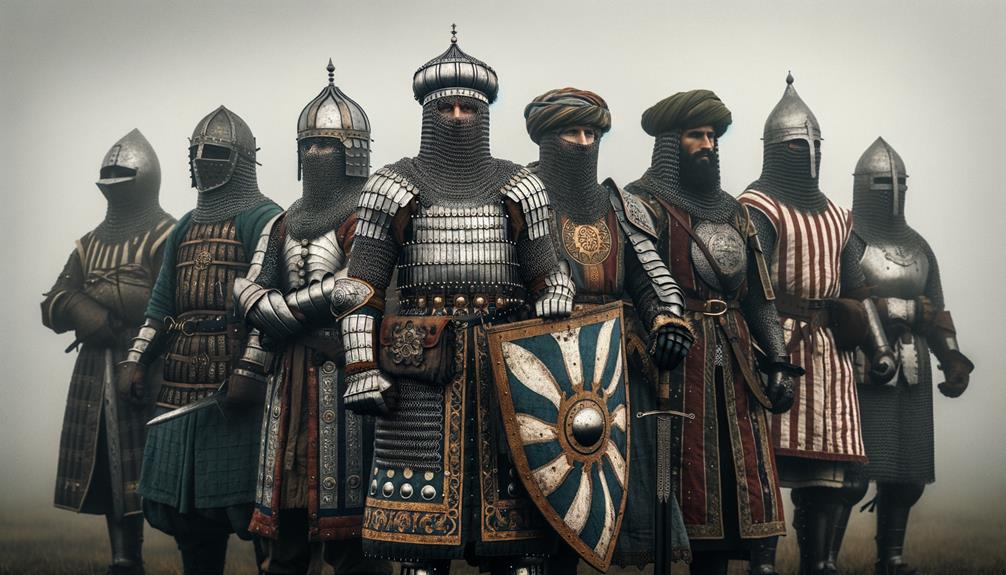
Contemplating the evolution of medieval armor reveals the ingenuity and craftsmanship that transformed metal into life-saving masterpieces. The delicate balance between form and function resulted in innovations that protected warriors while showcasing exceptional craftsmanship.
Body armor, ranging from intricate chain mail to imposing plate armor, enveloped soldiers in a protective cocoon. Knights, the epitome of medieval chivalry, wore meticulously designed full suits of armor to shield themselves from the brutality of battle. The armor’s brilliance lay as much in its adaptability and artistry as in its protective properties.
Helmets, crucial in safeguarding the head and face, underwent significant transformations to enhance protection. From simple conical designs to elaborate visored helmets, these vital pieces evolved to cover more vulnerable areas over time. The complexity and innovation of medieval armor can be illustrated by the following:
- Chain mail provides flexibility and defense through interlocking metal rings.
- Plate armor offers superior protection with solid metal plates.
- Shields provide an additional layer of defense, deflecting blows and projectiles.
- Gambesons, padded garments worn beneath armor, cushion impacts.
In this intricate dance of steel and skill, medieval body armor and helmets stand as testaments to human ingenuity and the relentless pursuit of protection and perfection.
Symbols of Status
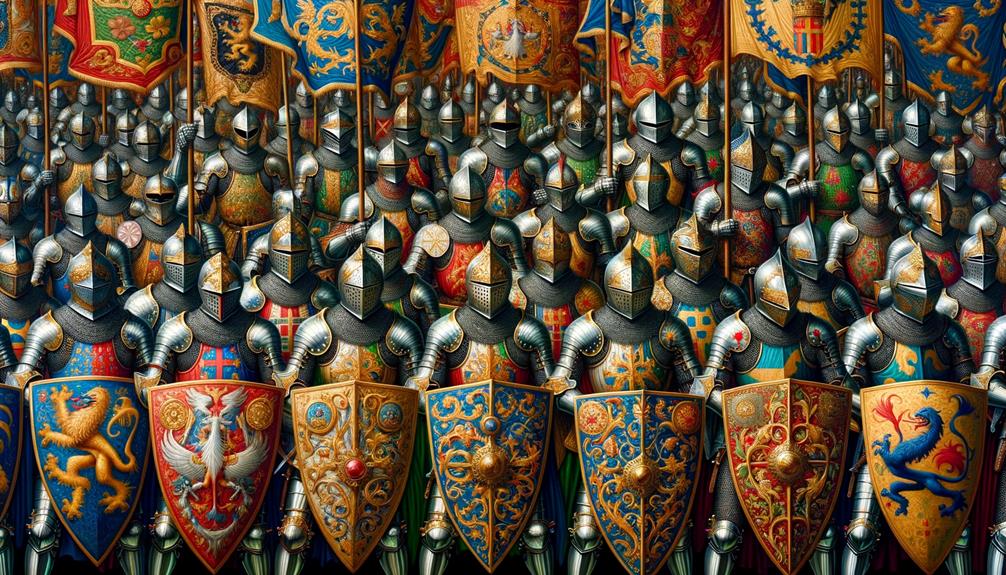
In the midst of medieval warfare, armor became a canvas for warriors to showcase their status and allegiance. Each piece of military attire, from intricately crafted breastplates to ornate embroidery, told a story of valor and lineage. Heraldic emblems on shields and surcoats were powerful symbols of loyalty and heritage, not simply decoration.
Knights and nobles wore finely crafted armor, distinguishing them from common soldiers. Their attire marked their prestigious status, with gold and silver threads glinting in the sunlight. Religious symbols, like crosses, added a sense of divine purpose to their gear, proclaiming their devotion to a sacred cause.
Even the smallest accessories, such as ornate belts or gilded spurs, reflected a warrior’s rank. These details, though seemingly minor, wove together a rich picture of power and prestige. In the heat of battle, military uniforms were the very essence of identity and status, not just protection.
Influence of Technology
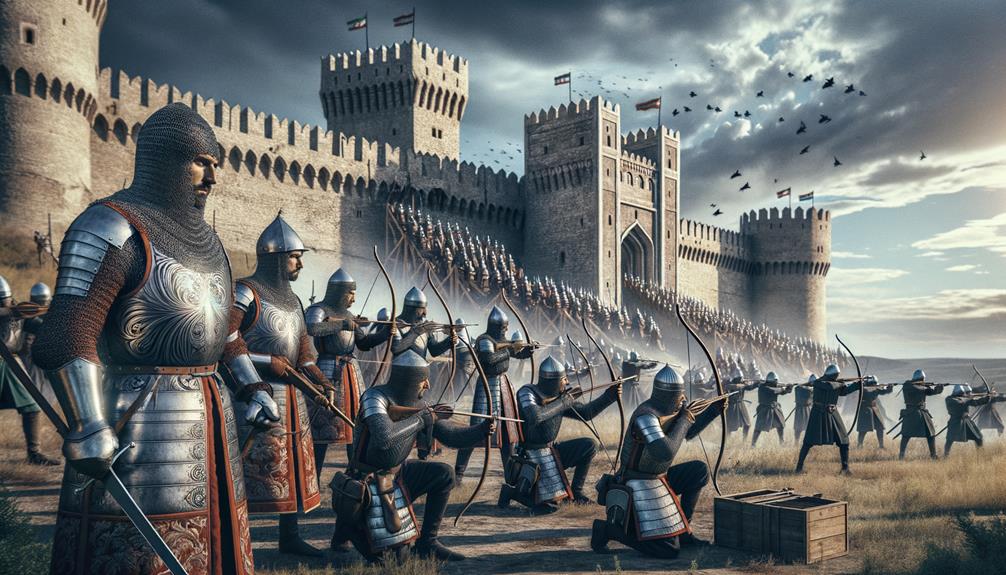
The medieval period witnessed a significant transformation in military uniforms, driven by the relentless pace of technological advancements. This evolution was a necessary response to the increasingly lethal weaponry and the harsh realities of the battlefield, not merely a matter of aesthetics.
Several key innovations had a profound impact on military attire:
- Longbows and Crossbows: These powerful ranged weapons coexisted with mail for centuries, and mail remained standard armour well into the 15th century.
- Polearms: The rise of these weapons necessitated changes in armor design, prioritizing increased mobility and defensive capabilities.
- Firearms: The advent of black powder and early modern firearms in the late Middle Ages forced soldiers to reevaluate armor, striking a balance between protection and agility.
- Shields: Shields evolved from round to kite shapes, providing better defense against the diverse array of threats on the battlefield.
These changes show that necessity and innovation were intertwined. The arming doublet, for example, significantly enhanced armor’s protective capabilities, showcasing the era’s ingenuity. Technological advancements did more than alter the battlefield; they redefined the very fabric of medieval warfare.
Frequently Asked Questions
Did Medieval Armies Wear Uniforms?
In the chaos of medieval battle, soldiers’ attire was a jumble of personal choices and heraldic symbols. There was no uniformity; each warrior’s garb reflected their social standing, wealth, and region, creating a vibrant, unstandardized mix.
When Did Armies Start Wearing Uniforms?
Standardized military attire emerged in the 17th century. Uniforms became a practical and symbolic way to turn chaotic legions into organized forces, fostering loyalty and discipline in the art of war.
How Colorful Were Medieval Armies?
The vibrancy of medieval armies is striking. Their uniforms, a kaleidoscope of colors and patterns, would have created a stunning spectacle on the battlefield, blending functionality with the artistry of heraldry and symbolic pageantry.
Were Uniforms Common in Medieval Armies?
Did medieval armies have uniforms? Not initially, they wore a mix of mail, cloth and leather. Over time, distinctive markings’s vision of a unified force became a reality with the introduction of blue coats featuring buff facings, a powerful symbol of their unity and determination.