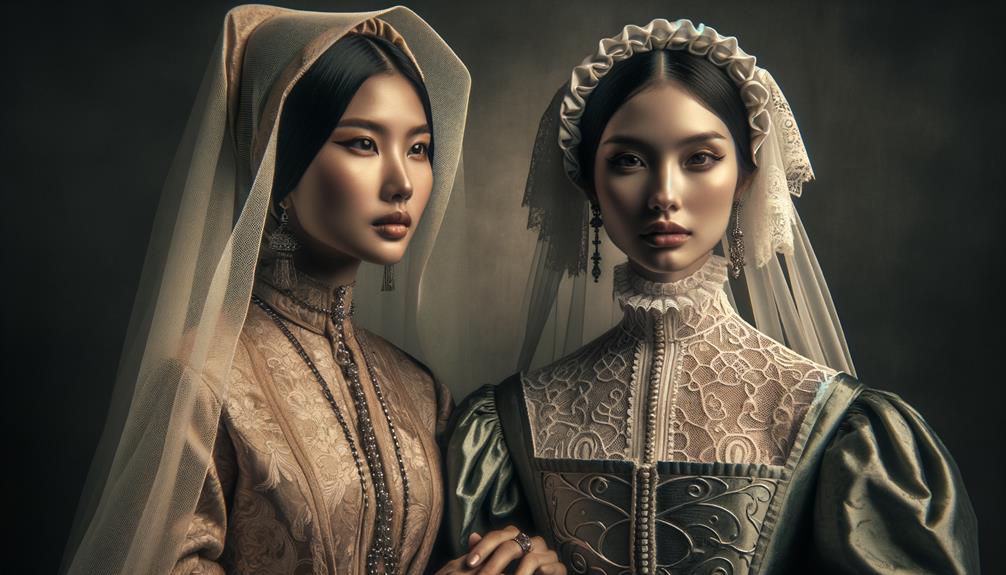
Mourning customs in the medieval period were closely tied to societal norms and religious beliefs. When someone passed away, mourners would wear dark-colored wool garments, a practice that signified grief and respect. These garments embodied a collective sense of loss and solemnity. They went beyond mere tradition. The choice of fabric and color mirrored the era’s cultural and emotional landscapes, which raises questions about how these practices evolved and what they revealed about medieval society’s relationship with death and mourning.
Historical Context
During the medieval era, mourning attire was deeply rooted in the societal and religious fabric of the time. Mourning attire served as a powerful expression of sorrow and respect. Royals and nobility often wore dark colors, with black wool clothing and hoods signifying their grief. This was a reflection of mourning customs that carried immense symbolic weight, and not simply a matter of fashion.

Mourning attire for women was designed to convey modesty and sorrow. Veils, mantles, and dark-colored gowns made of heavy fabrics like wool became the norm. These somber garments were a manifestation of deep respect for the deceased and a visual representation of the mourner’s inner sorrow, and they were more than simply clothing.
Religious beliefs played a significant role in these customs. Death was seen through a spiritual lens, and the symbolic clothing choices mirrored the solemnity expected in the face of loss. The somber tones and heavy materials were a stark contrast to daily attire, emphasizing the gravity of mourning. Understanding these customs sheds light on how deeply intertwined clothing choices are with cultural and emotional landscapes.
Symbolism of Colors
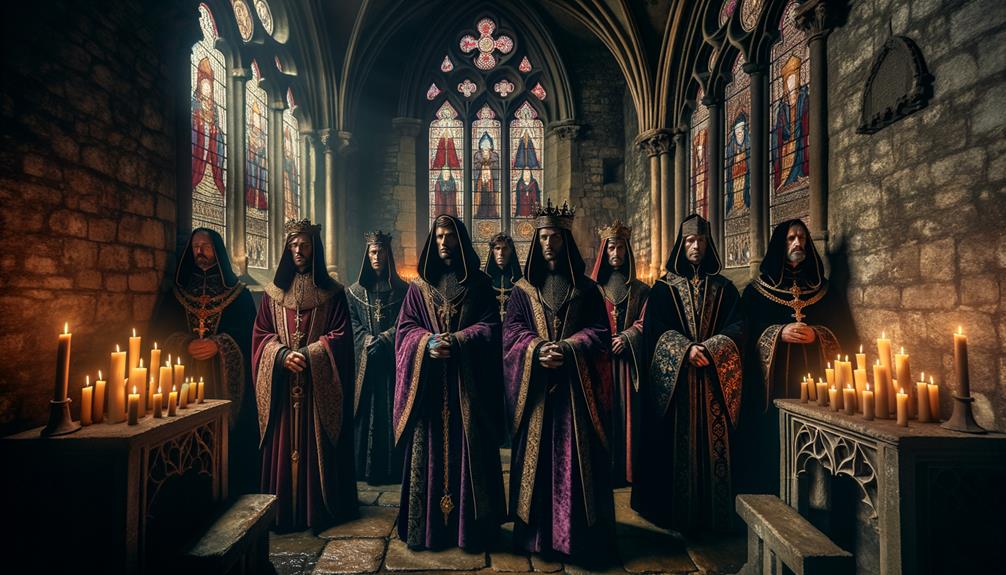
The symbolism of colors in medieval mourning attire says a great deal about societal values and emotions. Black, the most universally recognized mourning color, symbolized grief and loss, enveloping the wearer in a somber aura reflective of their sorrow. However, medieval mourning attire was more nuanced than just black.
White garments, symbolizing purity and innocence, were worn to convey the untainted spirit of the deceased, particularly in the case of children and virgins. The use of red in mourning attire may seem surprising, but during the medieval period, it symbolized love and passion, serving as a poignant reminder of the deep affection felt for the departed.
Blue, representing loyalty and faithfulness, visually proved the enduring bonds between the living and the dead. Meanwhile, green, although less common, symbolized hope and renewal, suggesting a belief in the cyclical nature of life and death. Each color in medieval mourning attire carried profound meanings, reflecting a society rich in symbolism and deeply connected to the emotional spectrum of human experience.
Types of Mourning Garments
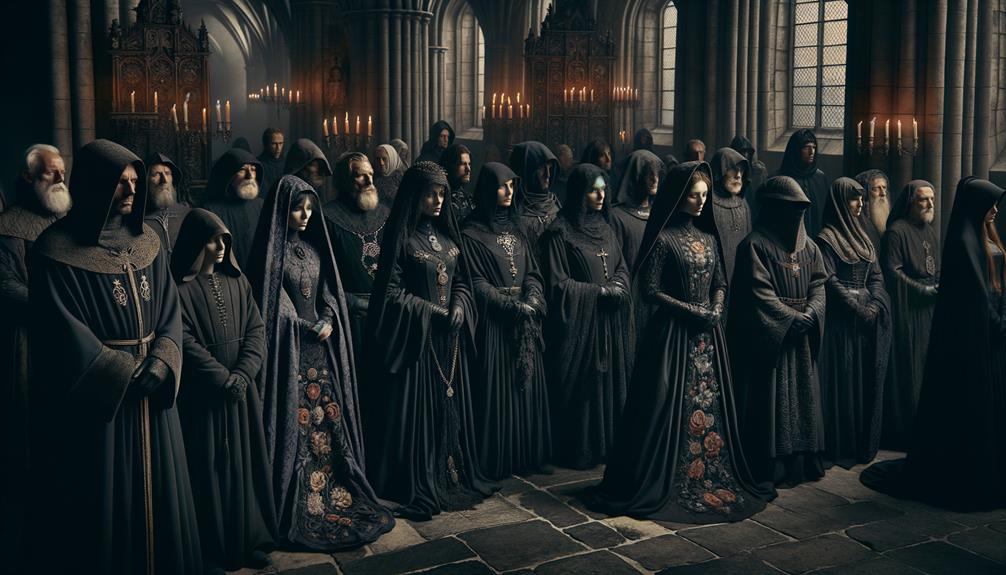
The diverse types of mourning garments in medieval times reveal much about the period’s cultural practices and the deep respect held for the deceased. Clothing became a canvas for grief. The mourning dress, particularly for women, often featured black as the dominant color, a somber hue that mirrored the sorrow of death.
In ancient Rome, the Toga pulla, a dark woolen garment, was worn during mourning. This tradition evolved throughout the medieval period, where black attire became synonymous with aristocracy and royalty in mourning. These customs were initially restricted to the elite and spread more widely over the following centuries, shaping later approaches to mourning wear.
Specific instructions on what to wear during periods of mourning were meticulously followed, reflecting a society deeply entrenched in ritual and respect for the deceased. These garments, from simple dark robes to elaborate black dresses, were symbols of collective grief and reverence, and not simply clothing. The evolution of these customs offers a window into the medieval psyche and its relationship with death.
Social and Cultural Influences
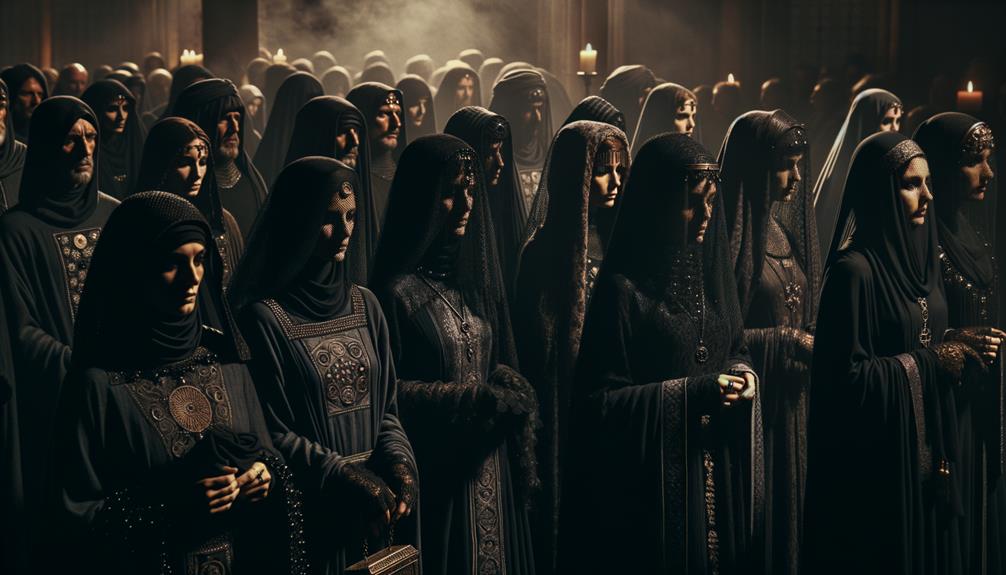
Social and cultural influences shaped the rituals surrounding death and remembrance. In Medieval Europe, mourning attire was deeply intertwined with a person’s societal status and religious beliefs. The attire was not uniform. It varied widely in somber colors like gray and violet, not just black, reflecting the diverse regional variations.
For nobles and clergy, mourning clothing was distinct, often elaborate, serving as a symbol of respect for the deceased. These specific garments and accessories were meticulously chosen, embodying the societal role and the mourning periods prescribed by tradition. The stark differences in mourning attire across social classes highlighted how deeply embedded these customs were in the social fabric.
The mourning periods dictated and the type of attire worn, not just the duration of grief, subtly underscoring the connection between social norms and personal loss. These customs, while somber, showed a society’s respect for the dead and its collective way of coping with grief, illustrating a richly layered cultural practice.
Evolution of Mourning Practices
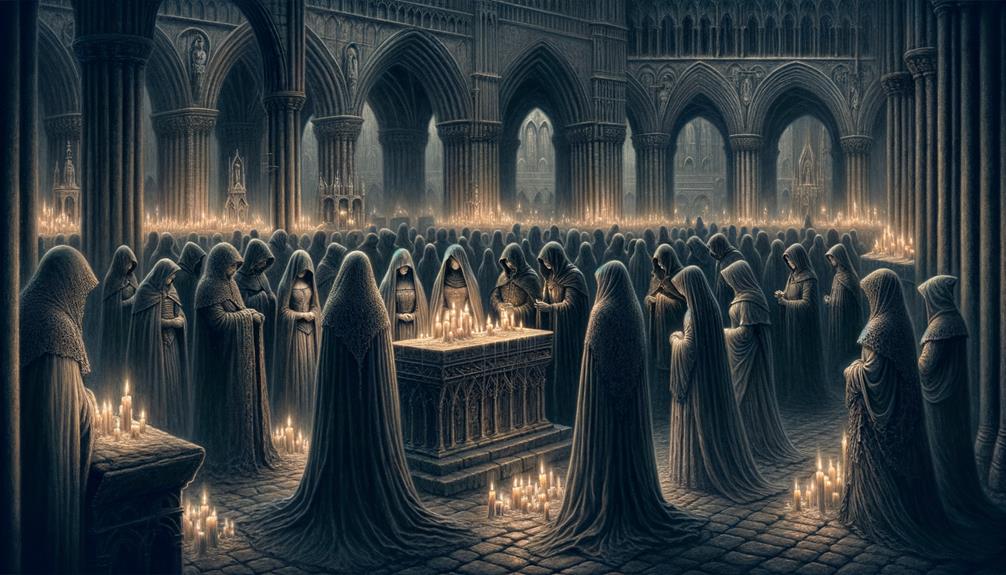
Epidemics and religious shifts shaped the evolution of mourning practices, transforming simple rituals into elaborate displays of grief. During the Middle Ages, mourning practices were deeply intertwined with the ever-present threat of death from plagues and a strong Catholic influence, which dictated that mourners wear black attire as a symbol of mourning. In those medieval times, mourners donned dark-colored wool garments, echoing the Roman Toga pulla, to signify their sorrow.
The Renaissance period ushered in a new era of formalized mourning attire, particularly among royalty and nobility. This shift was about codifying grief into a structured, almost performative art, and not simply about clothing. The nobility’s adoption of distinct mourning attire set the stage for future traditions, emphasizing solemnity and respect for the departed.
Frequently Asked Questions
What Is the Traditional Mourning Garb?
Traditional mourning garb focuses on simplicity and somberness. Dark colors dominate the attire, evoking a profound sense of loss. The starkness of mourning clothing reflects the gravity of the occasion, conveying respect and reverence for the deceased.
What Are the Stages of Mourning Clothes?
The stages of mourning clothes run from deep mourning, draped in black, to light mourning, where subdued colors like lilac and gray are introduced. This gradual shift mirrors a slow return to the vibrancy and beauty of life.
What Do You Wear to a Medieval Funeral?
For a medieval funeral, the darkest, plainest clothes free of any flashy decorations were worn. The aim is to show respect and seriousness, reflecting the gravity of losing someone dear.
What Fabric Was Used for Mourning Clothes?
Wool and silk were the go-to choices for mourning clothes. Wool’s dark, somber appearance contrasted with silk’s understated elegance, making both fitting for expressing grief in a unique way.