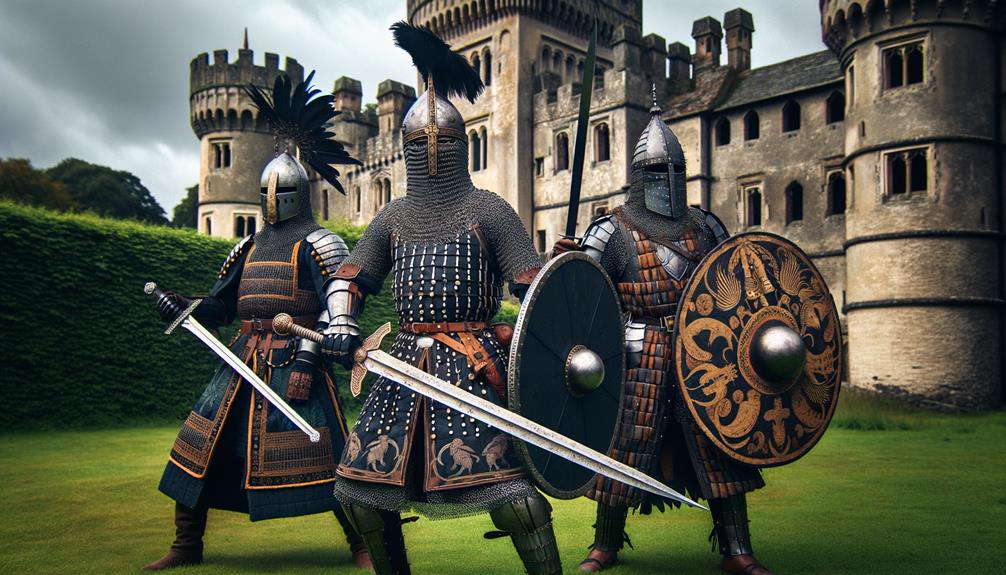
The evolution of medieval armor shows how necessity drives innovation. From the early days of chainmail, offering flexible but limited protection, to the sophisticated plate armor that gradually emerged, each development tells a story of adaptation and survival. The coat of plates, blending metal sheets with chainmail, marked a significant leap in defensive strategy. The most striking advances came in articulation and hardened steel. But why did these intricate designs ultimately fade away? The answer lies in the impact of a surprising technological shift.
Chainmail: Early Protection
Chainmail, first invented in Iron Age Central Europe, marked a significant leap forward in personal protection on the battlefield. This early mail, initially crafted from bronze and later iron, became a cornerstone of military defense. The intricate interlocking rings provided a flexible yet formidable barrier against slashing and piercing attacks.

During the height of the Roman Empire, chainmail‘s effectiveness was widely recognized. Roman auxiliary troops and cavalry units adopted it, seeing its balance of protection and mobility. Unlike cumbersome plate armor, chainmail required less labor to produce, which made it more accessible to a broader range of soldiers. As the Roman Empire expanded, equipping vast numbers of troops with mail became feasible because it was easy to manufacture.
Wealthy lords of the era made sure their retainers were outfitted with chainmail, showing both status and a dedication to their protection. In contrast, ordinary levies had to make do with linen, wool, and wooden shields. As chainmail design evolved, influenced by Roman patterns and later innovations, it remained a demonstration of the ingenuity of early armorers. The enduring legacy of chainmail is a vivid reminder of human innovation in the face of conflict.
The Coat of Plates

As medieval warfare intensified, the coat of plates emerged as a pivotal innovation in personal armor, combining metal plates with chainmail to offer unparalleled protection. The ingenuity of this creation marks a significant milestone in the evolution of medieval armor.
Skilled armorers crafted the coat of plates by attaching metal plates to a sturdy fabric or leather base. This innovative design gave better defense against both cutting and blunt force attacks than traditional chainmail. Looking at these pieces, their durability and flexibility stand out, reflecting the armorers’ skill and dedication to a warrior’s survivability on the battlefield.
During the late Middle Ages, as combat strategies and weaponry advanced, the coat of plates gained popularity. It represented a meaningful step towards the sophisticated plate armor that would eventually dominate. The combination of materials and techniques in this armor shows medieval ingenuity and the determined pursuit of better protection.
The coat of plates, blending chainmail and metal plates, represents a significant chapter in the evolution of medieval armor, bridging the gap to full plate armor.
Advancements in Plate Armour

The advancements in plate armour transformed battlefield survivability through improved material strength. Attention shifted to articulation, allowing knights to move more freely with joints that bent and flexed. This combination of strength and mobility marked a significant leap forward in defensive technology.
Improved Material Strength
The major advance in plate armor’s material strength, achieved through innovations in hardened steel, marked a substantial leap in medieval combat protection. Metallurgy transformed the battlefield. Hardened steel plates provided unmatched protection, their strength a formidable barrier against piercing and slashing attacks.
Consider the ingenuity involved in taking steel, a metal already known for its durability, and refining it to create something tougher. The process of hardening steel allowed for the creation of thinner yet stronger plates. These plates were not merely strong; they were resistant to deformation and penetration, essential qualities for armor intended to withstand the brutal realities of medieval warfare.
These innovations did more than enhance protection: they redefined what was possible in armor design. The strength of these materials meant that knights and soldiers could move with greater confidence, knowing their armor provided thorough protection. This transformed the nature of combat, making each warrior a near-invincible force on the battlefield. The leap in material strength changed the era’s approach to defense and survivability.
Articulation and Mobility
The brilliance of medieval armor lies in its intricate articulation, which allowed knights to move with remarkable agility. The joint design in plate armor enabled outstanding mobility. Articulated plates, meticulously crafted to overlap at the elbows, knees, and other critical joints, provided needed flexibility. This setup meant a knight could bend and twist without compromising protection.
The integration of hinges and straps was a crucial part of this design. These elements worked together, offering a range of motion that mattered in the heat of battle. Picture a knight wielding a sword or spear, the armor moving in step with each strike or block. The balance between protection and freedom of movement was carefully achieved.
As well as combat on foot, this advanced articulation allowed knights to ride their horses with ease, keeping control and maneuverability. The way these plates moved together shows the innovation of the time. Articulation in plate armor went beyond survival; it was about excelling in the intricacies of medieval warfare. The blend of protection and mobility defined a new era of knightly prowess.
Impact of Firearms

Firearms revolutionized the battlefield, making medieval armor largely obsolete. The penetrating power of firearms rendered even the sturdiest plate armor ineffective. This led to a rapid decline in the use of traditional armor. Soldiers and knights, once reliant on their armor, found themselves vulnerable against this new technology. Firearms marked a turning point, exposing the limitations of medieval armor and requiring innovative defensive strategies.
The production cost of high-quality armor rose steeply, contributing to its decline. As firearms became more prevalent, only a few could afford armor, relegating it to ceremonial use. Military tactics had to adapt; armies could no longer rely on armor alone. Attention shifted towards mobility and strategic positioning to counter the lethal efficiency of firearms.
This shift shows that the advent of firearms changed the tools of warfare and with them the entire approach. The battlefield became a place of rapid adaptation, where traditional plate armor was outdated and new forms of protection and strategy were urgently needed.
Armour in Popular Culture

In popular culture, medieval armor captures the imagination. Films such as ‘Braveheart,’ ‘Excalibur,’ and ‘Kingdom of Heaven’ transport audiences to eras where full plate armor and mail shirts were symbols of valor and prestige as much as protection. The portrayal of medieval knights, clad in meticulously recreated armor, evokes a sense of chivalry and heroism that continues to move viewers.
Video games such as ‘Dark Souls,’ ‘The Witcher,’ and ‘Assassin’s Creed’ push the boundaries of design, blending historical accuracy with creative flair. They feature armor that mirrors historical designs while adding fantastical elements that heighten their appeal. The influence of medieval armor extends to fantasy franchises like ‘Game of Thrones’ and ‘The Lord of the Rings,’ where armor becomes a defining trait of various factions and characters.
Historical reenactments and medieval fairs bring the texture and weight of medieval armor to life, letting enthusiasts experience the past directly. At cosplay events, participants often recreate intricate armor sets, drawing on the artistry and spirit depicted in the Bayeux Tapestry and other medieval artworks.
Craftsmanship and Legacy

The intricate craftsmanship of medieval armor shows the artisans’ exceptional skill and leaves a legacy that continues to fascinate. Studying a piece of plate armor, the attention to detail and the artistry that went into its creation are striking. Each curve, engraving, and rivet served both a functional and aesthetic purpose, blending engineering and art.
Medieval armor has left a lasting legacy that remains evident today:
- Movies and Video Games: Modern entertainment often draws on the iconic imagery of full plate armor, bringing the past into vivid, animated life.
- Historical Reenactments: Enthusiasts meticulously recreate and wear medieval armor, honoring the craftsmanship of centuries past.
- Museums and Collections: Armor pieces are preserved and displayed, allowing their intricate designs and historical significance to be appreciated.
- Fashion and Design: Elements of medieval armor influence contemporary fashion and product design, showing its enduring appeal.
Despite the decline of armor through the rise of firearms and rising production costs, its craftsmanship continues to inspire innovation. The artistry of medieval armor remains a lasting demonstration of human ingenuity and creativity.
Frequently Asked Questions
How Did Medieval Armour Change Over Time?
Medieval armour underwent a significant transformation, evolving from simple chainmail to intricate plate armour. Each innovation, from coats of plates to brigandines, reflected a determined pursuit of better protection.
What Did Medieval Armor Actually Look Like?
Medieval armor ranged from the intricate chainmail mesh to the later, more refined plate armor with its artistic flourishes. Each piece shows the skill of the craftsmen who made them, blending form and function in an inventive design.
What Happened to All the Medieval Armor?
Most medieval armor was repurposed or melted down, though some pieces are now museum treasures. Armor once worn by a knight may now be a historical relic.
What Was Early Armor Like in Medieval Times?
Early medieval armor was primarily chainmail, which consisted of interlocked metal rings. Conical helmets were also common. As armor evolved, innovations such as the coat of plates appeared, combining chainmail with metal plates for significantly better protection.