Aprons: Functional Medieval Clothing
The intricate embroidery on a noblewoman’s apron starkly contrasts with the rough, utilitarian fabric of a peasant’s, yet both serve a vital purpose in medieval life. These simple garments, often overlooked, reveal a great deal about the era’s social and occupational hierarchies. Made from durable linen, aprons were essential tools, crafted to withstand the rigors of daily labor. These functional pieces also became subtle indicators of one’s place in society.
Historical Significance
These simple, functional garments played a vital role in daily life. More than pieces of fabric, they were indispensable tools for both men and women. They protected clothing from wear and tear, which was crucial when garments were precious and labor-intensive to produce.

Aprons transcended gender roles, with designs tailored to specific occupations rather than the wearer’s gender. A blacksmith’s apron and a cook’s apron were each made to meet the demands of that work. This practical approach says a lot about the medieval mindset: pragmatism took precedence over style.
The variations in length and design of medieval aprons also reveal a great deal about their users. A longer apron might have been worn by someone engaged in less physically demanding tasks, while shorter aprons allowed for greater mobility. The occasional decorative touches, like red stitching or smocking, added a touch of individuality to an otherwise purely functional item. Medieval aprons combined utility and subtle personal expression.
Materials and Craftsmanship
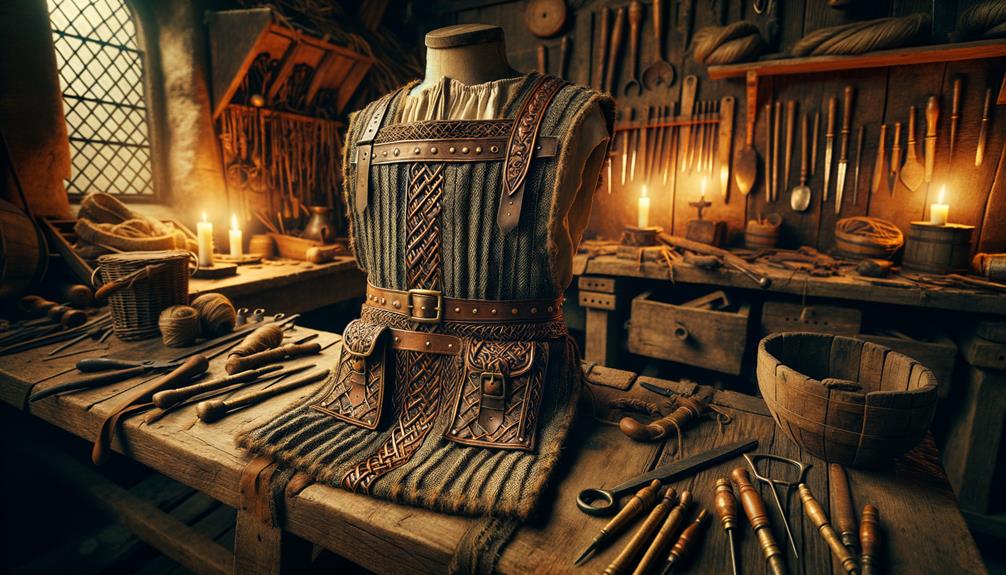
The materials and craftsmanship of medieval aprons favored practicality and durability. Made from linen, a fabric renowned for its resilience and ease of cleaning, these aprons were built to last. The natural strength and ability of linen to withstand frequent washing made it the perfect choice for medieval artisans, homemakers, and workers.
The craftsmanship behind these aprons was functional and straightforward. Stitching was simple and strong, prioritizing durability over decorative appeal. While some aprons featured minimal decorative needlework, these instances were rare and hinted at a subtle appreciation for aesthetics even in the most practical items.
Examining the design, these aprons were meticulously crafted to serve a single purpose: protecting the clothing of medieval workers. Their materials and construction show an era that valued functionality and durability above all else. They remain a reminder that simplicity and practical design are still essential.
Functional Uses
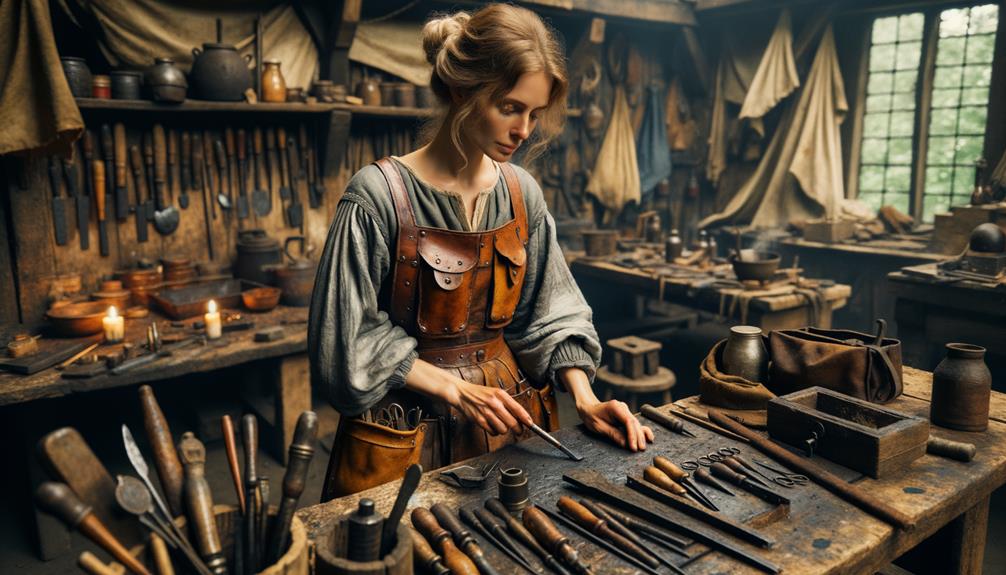
Medieval aprons were highly practical. They protected clothes from stains, carried tools, and signified the wearer’s occupation. These everyday garments served a dual purpose of function and identity.
Protecting Garments From Stains
Protecting garments from stains was a significant role medieval aprons played. In the medieval world, clothing wasn’t just a fashion statement; it was a valuable investment. Garments were painstakingly crafted and cherished, so the practical apron became an essential buffer against the wear and tear of daily life.
Crafted from simple cotton fabric, these aprons were both practical and efficient. They were gathered in the upper area, providing ample coverage. Work in the kitchen, tending the hearth, or crafting was all shielded from splashes of broth, smudges of soot, and errant threads of yarn. The natural white and brown colors might seem plain, but they were perfect for concealing everyday grime.
Caring for these aprons was simple yet important. A gentle wash at 40°C kept them in good condition, ready for the next day’s work. A simple piece of medieval clothing like this helped preserve the integrity of the garments underneath, letting wearers concentrate on their tasks without worry.
Carrying Essential Tools
For someone going about daily tasks in medieval life, the apron functioned as an indispensable toolbelt, its pockets filled with everything from sturdy keys to finely honed knives. It wasn’t just a piece of fabric; it was a meticulously designed accessory that made work more efficient. Each pocket and pouch was a repository of essential tools, ready at a moment’s notice.
Crafting, blacksmithing, and even simple homemaking demanded quick access to various implements. The practical design of the apron allowed its wearer to carry everything needed without searching for tools. The weight of a well-balanced knife or the cool metallic touch of a key was reassuring, a sign of the apron’s utility.
These aprons were protective garments and the medieval equivalent of a modern multi-tool. Keeping tools close at hand turned mundane tasks into efficient ones. In an era where efficiency was crucial, the medieval apron stood as a symbol of ingenuity and practicality. This simple yet innovative garment played a significant role in daily medieval life, making tasks manageable.
Symbolizing Occupational Roles
Medieval aprons, with their practical design, clearly marked the wearer’s occupation and skillset, turning simple fabric into a badge of a trade. Something so utilitarian could encapsulate a wearer’s role so completely. Aprons were protective layers and silent communicators of a person’s daily life and responsibilities.
By examining medieval aprons, we can see how their functionality was customized to specific trades:
- Artisans: Blacksmiths and carpenters wore sturdy leather aprons to shield against sparks and debris.
- Homemakers: Simple linen aprons protected garments from the daily grind of cooking and cleaning.
- Farmers: Heavy-duty aprons safeguarded against the grime of tilling soil and tending livestock.
Each apron was an extension of the wearer, a record of their daily toil. The design reflected necessity over aesthetics, yet it spoke volumes about the societal value placed on various occupations. The apron, in its humble form, emphasized the dignity of work and the pride in one’s craft. Medieval aprons were symbols of the wearer’s dedication and expertise, essential in a world where one’s role was often defined by their contributions.
The apron is a powerful symbol, highlighting the importance of one’s occupation and the value placed on their work. This simple garment conveys a great deal about a person’s identity and role in society.
Social Class Variations
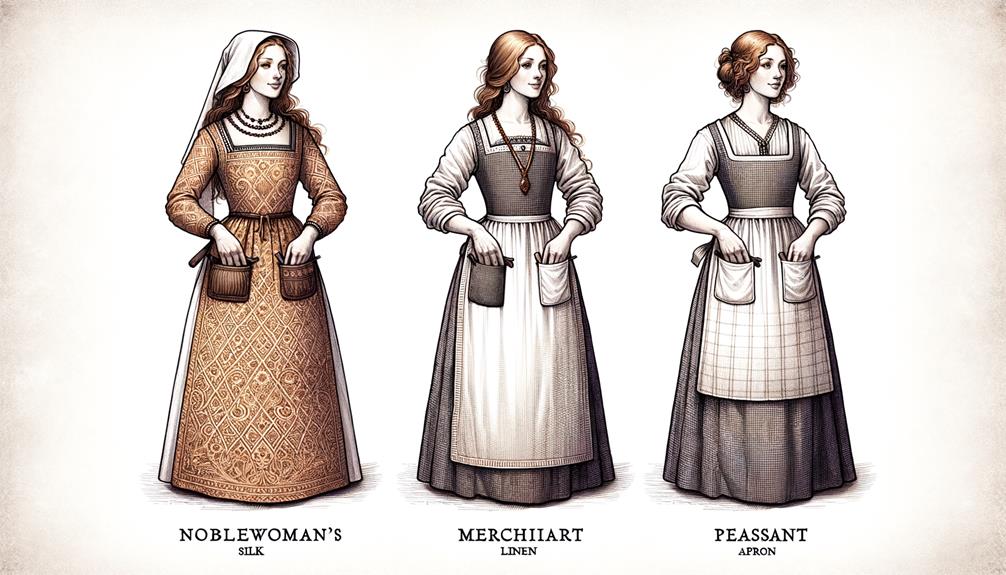
The aprons worn by noblewomen in medieval times were often adorned with intricate needlework and fine linen, which reflected their high social standing. In stark contrast, the aprons of peasants were plain, made from rough fabrics like wool or cotton, and designed purely for practical use. Even a simple garment like this could highlight the stark differences between the social classes.
Noblewomen’s Decorative Aprons
In medieval times, aprons were primarily functional, but noblewomen sometimes adorned theirs with intricate needlework and vibrant colors. These decorative aprons stood out in a world where practicality often took precedence over aesthetics, hinting at the hidden layers of medieval dress.
English manuscripts reveal that some noblewomen’s aprons featured red needlework or decorative stitching, adding a touch of elegance and personal expression. Smocking, a traditional 14th-century English technique, was occasionally employed, showcasing the skill and creativity of those who crafted these garments. These embellishments were about beauty and also signified status and wealth, setting noblewomen apart in a subtle yet impactful way.
Intricate Needlework: Evidence of red needlework and decorative stitching.
Smocking Technique: Traditional 14th-century English smocking used.
Color Variations: Occasional use of colored aprons like brown, black, or green.
These rare decorative aprons raise questions about the noblewomen who wore them. Each stitch and color choice tells a story of a bygone era, where even the simplest garment could become a canvas for artistic expression.
Peasant Practical Designs
Peasant aprons, with their unassuming simplicity, offer a stark contrast to the ornate versions worn by noblewomen, reflecting the harsh realities and practical needs of everyday medieval life. Their simplicity shows real ingenuity. Made from simple cotton fabric, these aprons were the workhorses of medieval attire, serving to protect the wearer’s outer clothing from the rigors of labor-intensive tasks.
The design itself reflects functional elegance. The gathered upper area, often seen in natural white or brown hues, shows the peasant’s need for practicality over decoration. The fact that these aprons could be easily washed and maintained, matching the relentless cycle of work and wear that defined peasant life, is a mark of their practicality.
These aprons show a quiet resilience. They embody a form of medieval ingenuity that prioritizes function, showing how necessity can shape and refine the tools of daily life.
Decorative Elements
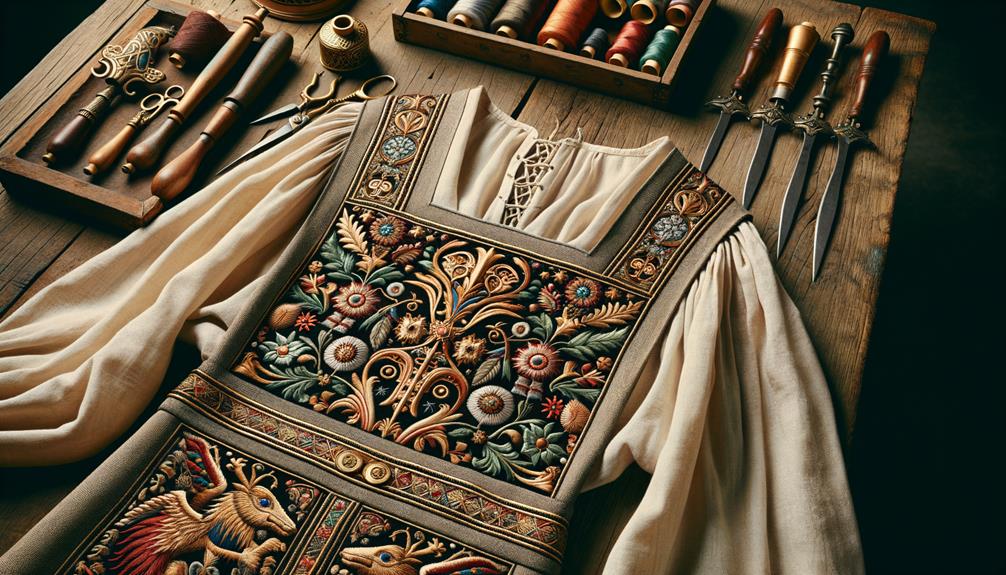
While medieval aprons were primarily practical and plain, occasional glimpses of decorative needlework in English manuscripts reveal a tension between utility and artistry. These rare instances of embellishment provide a unique perspective on the otherwise utilitarian century apron, suggesting that even in an era dominated by function, there was room for a touch of creativity.
Despite the dominance of white or unbleached linen, some aprons did feature delicate stitching or subtle patterns. These small touches, often in brown, black, or green, added character without compromising the apron’s primary role. Even the most functional items can carry an element of beauty.
A few notable decorative elements stand out:
- Embroidered edges: Simple yet elegant, adding a personal touch.
- Subtle patterns: Often geometric or floral, reflecting the wearer’s taste or status.
- Contrasting colors: Rare but striking, these aprons used darker hues to highlight craftsmanship.
These details, though minute, underscore a medieval world where even the most mundane objects could be canvases for artistic expression. They reflect human ingenuity and the lasting pursuit of beauty in everyday life.
Modern Reenactments

Modern reenactments show a deep appreciation for the practicality and heritage of medieval aprons through careful attention to historical accuracy. At Renaissance fairs and other historical events, participants take part by wearing aprons made from linen, typically in white or natural hues, mirroring their medieval counterparts.
Reenactors use these aprons as functional garments rather than mere costumes. Whether cooking, crafting, or performing other period-specific tasks, the aprons provide essential protection and utility. Some enthusiasts even consult historical records to experiment with colored aprons, adding a rare yet historically inspired touch to their attire.
| Material | Color |
|---|---|
| Linen | White |
| Linen | Natural |
| Linen | Light Blue |
| Linen | Pale Green |
| Linen | Soft Brown |
Historical reenactment groups make it possible to see the ingenuity behind medieval clothing directly. The practical design of aprons, combined with rigorous historical research, makes these reenactments educational and enriching. By drawing on the past, we can appreciate ancient craftsmanship in a modern context.
Frequently Asked Questions
What Were Medieval Aprons Made Of?
Medieval aprons were mostly made from linen, often natural fine flax or a cotton-flax blend. Occasionally, they were dyed in earthy tones like brown, black, or green, adding a touch of subtle uniqueness.
What Is the Function of the Apron?
The apron protects clothing from spills and stains. It acts as a shield, keeping the wearer’s attire clean and letting them focus on their work without worrying about making a mess.
What Does the Apron Symbolize?
The apron symbolizes a strong connection to the past, reflecting the practical skills and craftsmanship of medieval artisans. The fact that many people wore aprons, whatever their trade, shows how widely the garment was used and how thoroughly practicality was woven into tradition and labor.
When Were Aprons First Used?
Aprons date back to the Middle Ages. Initially, they served to protect clothing during tasks, combining practicality and understated innovation.