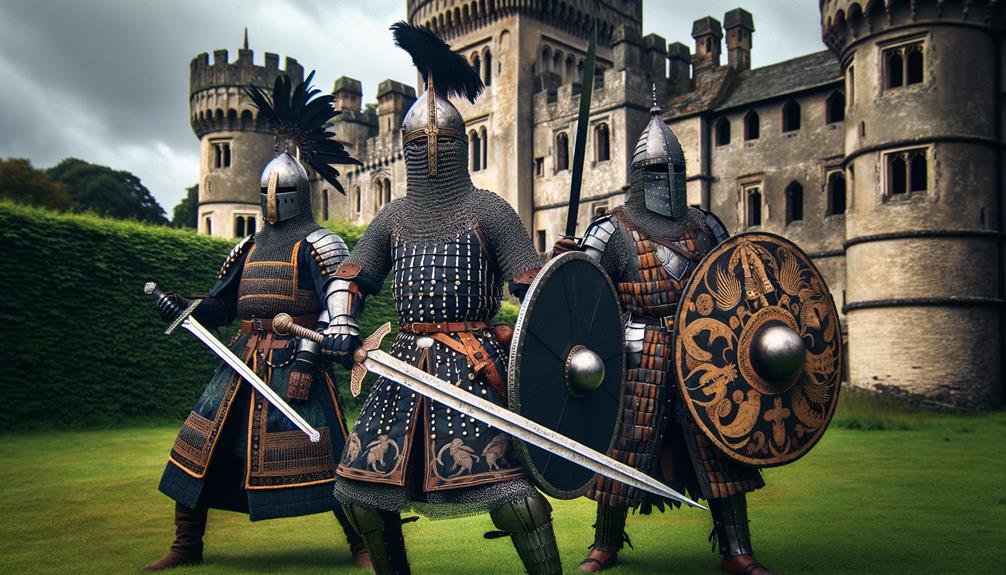
Something as simple as mittens reveals a great deal about a society’s ingenuity and social hierarchy. These hand coverings, crafted from leather, wool, and even steel, served a dual purpose: they provided warmth and conveyed social status. Peasants wore padded mittens to protect their hands while laboring, while knights donned intricate gauntlets in battle. Each pair tells a story about its wearer, reflecting the craftsmanship and cultural norms of the time. These mittens bridged the gap between function and artistry in ways that still reward study.
Historical Significance
The historical significance of medieval mittens lies in their multifunctional role, providing warmth, protection, and utility across various social classes. The resourcefulness and adaptability of these hand coverings is evident at every level of society. From the humble padded mittens worn by peasants to the elaborate armor gauntlets of knights, each design served a unique purpose.

Consider the intricacy of finger gloves crafted for precision in falconry, allowing nobles to handle their prized birds with finesse. Similarly, the durable construction of blacksmiths’ mittens protected their hands from scorching heat and sharp metals. Whether woven, felted, or embroidered, every pair of mittens reflected the medieval craftsperson’s skill and ingenuity.
In battle, armor gauntlets were not just defensive gear; they were symbols of status and craftsmanship. The evolution from simple mittens to articulated finger gloves marked a significant advancement in protective wear. These gauntlets shielded hands from blows while also allowing knights better grip and control over their weapons.
Medieval mittens, thus, reflect a clear blend of functionality and artistry, embodying the spirit of an era where innovation was driven by necessity and survival.
Materials Used
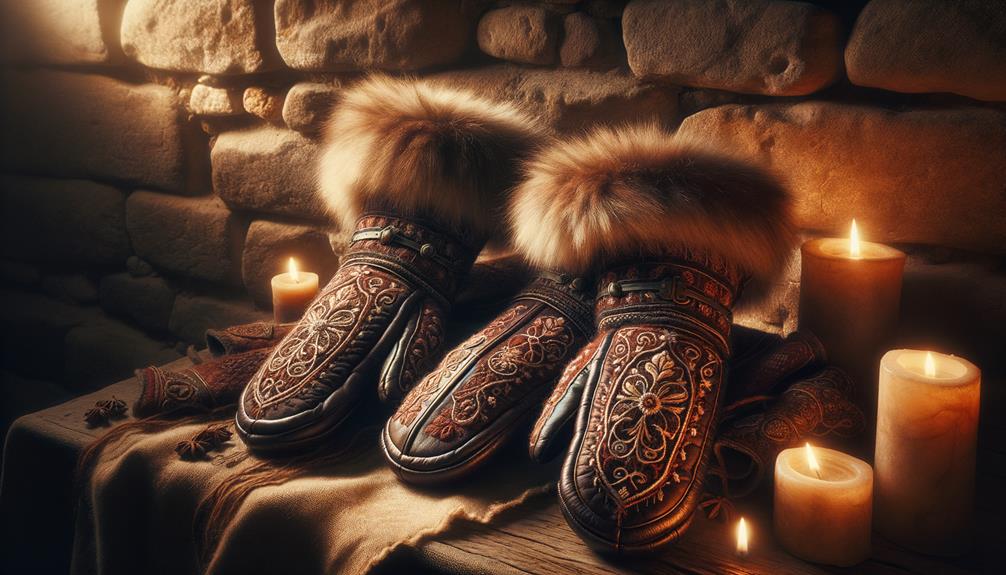
Materials used in medieval mittens varied widely, reflecting the ingenuity and resourcefulness of the era’s craftsmen.
Leather, wool, and steel plate were among the primary materials, each chosen for specific purposes and functionalities. Leather mittens, often crafted from lambskin or cow leather, provided a durable and flexible solution for various tasks, from blacksmithing to falconry. Their resilience made them ideal for both protection and dexterity.
Wool was another popular choice, prized for its warmth and availability. Wool mittens, often knitted or felted, offered excellent insulation against the cold, essential for surviving harsh winters. The natural properties of wool, including its ability to retain warmth even when wet, made it indispensable.
Steel plate mittens, on the other hand, were designed for combat and heavy labor. These mittens incorporated iron mail, lamellar, and segmented designs to protect warriors’ hands in battle. The integration of steel plate with other materials ensured both flexibility and solid protection.
Here’s a brief comparison of these materials:
| Material | Characteristics | Common Uses |
|---|---|---|
| Leather | Durable, flexible | Blacksmithing, falconry |
| Wool | Warm, insulating | Winter protection |
| Steel Plate | Durable, protective | Combat, heavy labor |
Each material brought its own unique strengths, reflecting the innovative spirit of medieval artisans.
Design and Craftsmanship
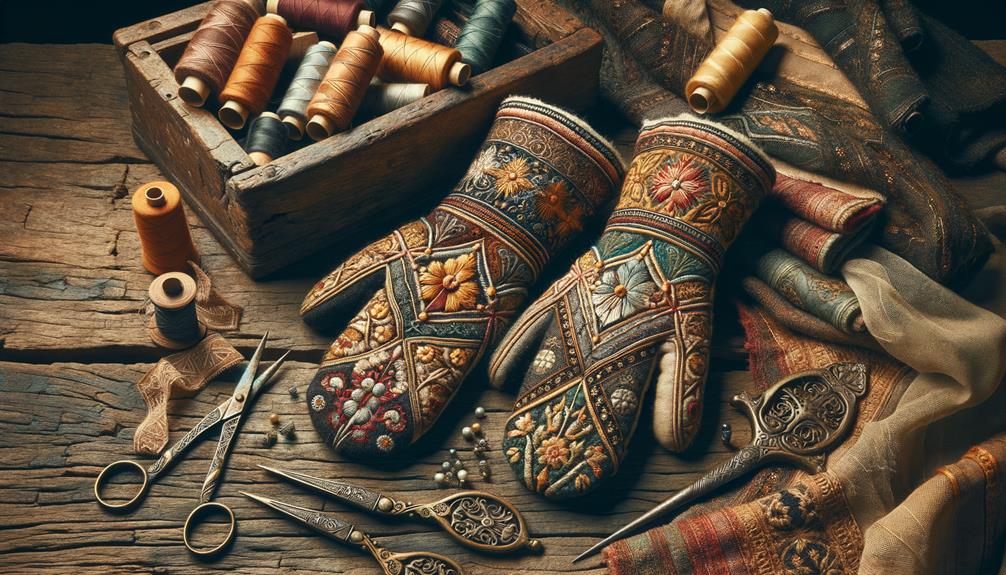
Craftsmen poured their skill into creating medieval mittens, blending form and function to meet the diverse needs of their wearers. Every pair embodied remarkable craftsmanship, balancing aesthetics with practicality. The customized fit was paramount, guaranteeing each mitten conformed perfectly to the wearer’s hand, enhancing both comfort and usability.
The construction techniques reveal a meticulous process:
- Material Selection: Craftsmen chose materials like leather, fur, wool, and metal for their specific protective qualities. Each material was strategically used to maximize insulation and durability.
- Detailed Design: Features like insulating pads, articulated thumbs, and extended wrist coverage were thoughtfully incorporated. These elements were not for show; they served to protect and facilitate movement.
- Precision Sewing: Thick threads ensured longevity, while sewn-on lace provided secure fastening. Each stitch was deliberate, contributing to the overall integrity of the mitten.
The craftsmanship in medieval mittens went beyond function; it was an art form that showed the ingenuity and dedication of the artisans. Makers respected historical accuracy, creating distinct designs for the right and left hands, and often reused materials to enhance practicality. The result was a blend of tradition and innovation that met the wearer’s needs with unusual precision.
Varieties and Styles
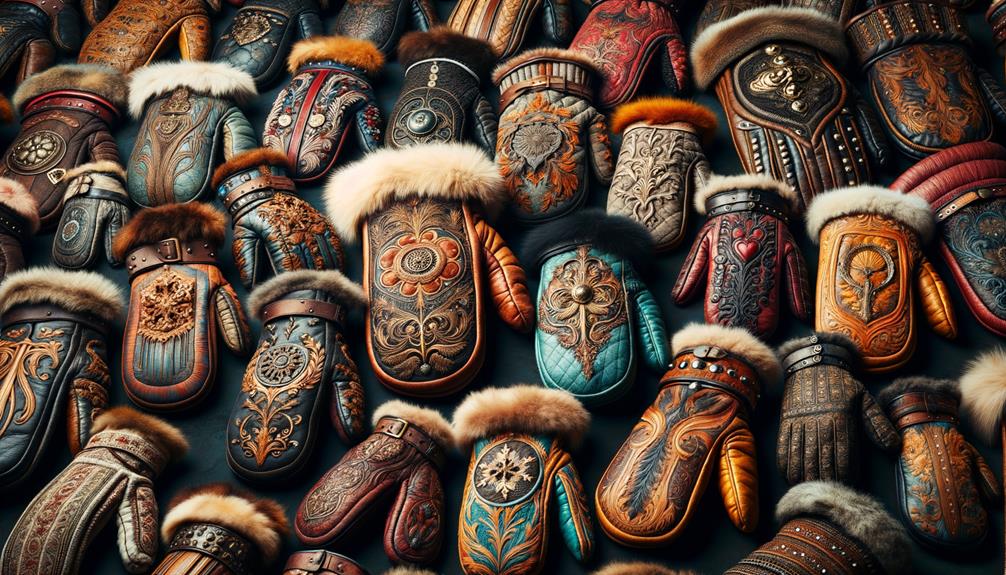
The varieties and styles of medieval mittens reflect a wide range of cultural and practical influences that shaped their design across different regions and social classes. From the rugged landscapes of Iceland to the cities of Germany, mittens were crafted from materials like leather, wool, and fur, each customized to meet specific needs.
Construction techniques varied widely, with some mittens sewn from woven fabrics, while others incorporated intricate metal hand protection such as mail and lamellar for knights and warriors. In armor, mittens evolved into specialized gloves, featuring articulated thumb designs that allowed for better grip and dexterity.
Padded mittens offered additional protection for blacksmiths working with searing heat and heavy tools. Meanwhile, more delicate versions served nobles engaged in falconry, their elegance and functionality reflecting both status and utility. The diversity in mitten styles extended beyond physical construction. Each design encapsulated the essence of its user’s daily life, whether it was the rough, padded mittens of a German peasant or the finely crafted leather gloves of a Caucasian noble.
These hand coverings were more than accessories; they were indispensable tools, woven into everyday life across the medieval world.
Cultural Impact
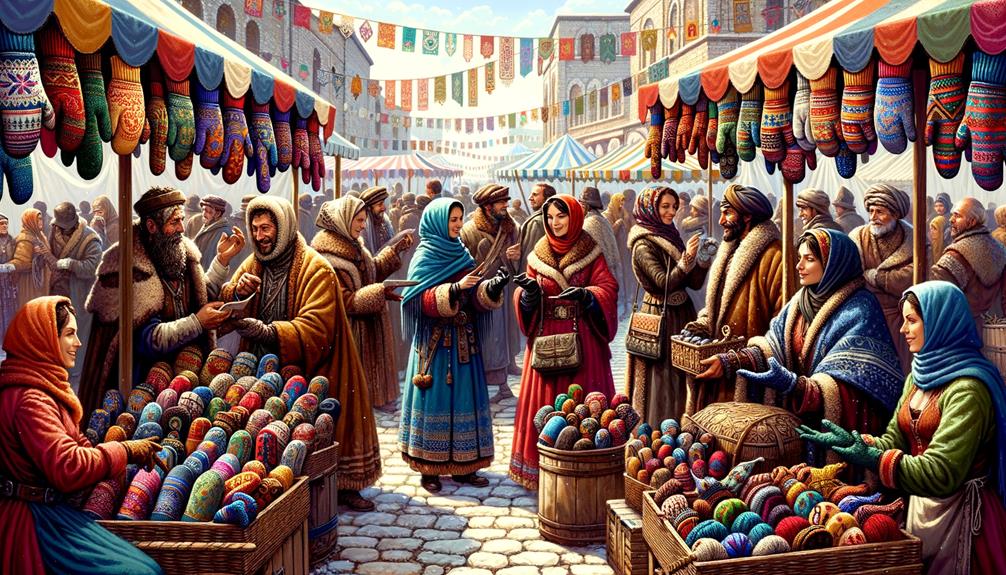
Medieval mittens were more than practical necessities; they were cultural artifacts that reflected the identities, traditions, and social hierarchies of their time. From the calloused hands of peasants and commoners to the armored gauntlets of knights and nobles, these hand coverings served as silent narrators of societal roles and daily lives.
The cultural impact of mittens was profound:
Mittens were a symbol of status, with knights and nobles wearing intricately decorated leather or metal mittens to display their wealth and power. For peasants and commoners, mittens made from felt or wool were essential for survival, providing warmth during harsh winters and safeguarding hands during laborious tasks like blacksmithing or farming.
Regional variations in mittens also revealed the cultural character of medieval Europe. In Germany, lambskin mittens were popular, while in Norway, naalbound mittens were the norm. In the Caucasus, fur-lined mittens were the preferred choice. These regional differences showcased the diverse cultural heritage of medieval Europe.
The discovery of mittens in archaeological sites from Iceland to New York offers a tactile connection to the past. These simple objects carry profound cultural significance, bridging the gap between the mundane and the extraordinary.
Frequently Asked Questions
Did They Have Gloves in Medieval Times?
In medieval times, people did wear gloves. In fact, leather gloves were so prized that they were often used as symbols of favor or high status. This shows how even everyday items carried significant meaning back then.
What Is the Difference Between Mittens and Mitts?
Mittens keep the fingers together, providing strong warmth. In contrast, mitts expose the fingers, giving the wearer the dexterity needed for intricate tasks. The difference comes down to a balance between warm insulation and functional mobility.
How Effective Were Gauntlets?
Gauntlets were highly effective, offering strong hand protection during medieval battles. Their design allowed for flexibility while shielding against slashing swords and harsh environmental conditions. Medieval artisans blended functionality with meticulous craftsmanship in them.
Why Are They Called Mittens?
They’re called mittens because the term originates from the French word ‘mitaine.’ This name reflects their design, which prioritizes warmth by grouping fingers together for shared heat.