The clothing worn by pregnant women in medieval times managed to balance practicality with elegance. Loose gowns and high-waisted bodices were staples, and it is the choice of fabrics that tells the story: wool, linen, and silk each speak to warmth, breathability, or luxury. The contrast between the opulent fabrics of the nobility and the coarse materials of the peasants is equally striking. Most telling, though, is the symbolism woven into these garments, hinting at deeper societal values around nurturing and fertility.
Common Garments
In medieval times, maternity wear was designed with practicality and comfort in mind. Loose gowns with laced bodices and roomy skirts adapted easily to the changing shapes of expectant mothers. These simple yet thoughtful designs provided both comfort and elegance for pregnant women. The high waistlines of the gowns allowed for the expanding belly without compromising style. Laced bodices, with customizable center panels, offered the flexibility needed during this transformative period.

These garments show an innovation born out of necessity. Maternity clothing back then was not just functional; it was designed to accommodate and celebrate the pregnant form. Specific maternity garments, like petticoats that tied at both sides, could be easily adjusted as the body grew. These adjustments ensured that the clothing remained practical and supportive throughout the pregnancy.
Corsets or bodices worn over the belly, without constricting it, provided necessary support while still allowing for movement and comfort. The minimalist designs of medieval maternity wear highlight a keen understanding of practicality and adaptability. These garments catered remarkably well to the needs of pregnant women, even centuries ago.
Fabric and Materials
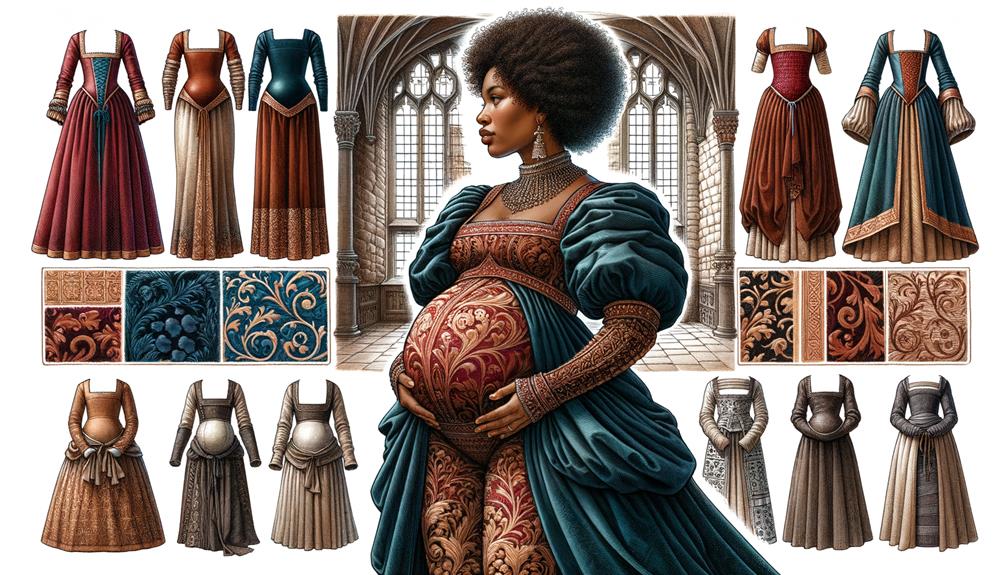
Selecting the right fabric was crucial in medieval maternity wear, as natural materials like wool, linen, and silk provided the necessary comfort and breathability for expectant mothers. Each of these fabrics, with its own unique properties, played a vital role in accommodating a woman’s changing body.
Wool, with its natural warmth and elasticity, was a popular choice, especially among commoners. Its ability to stretch subtly accommodated the growing belly, while still providing much-needed warmth. Linen, cool and breathable, was perfect for the warmer months, ensuring that expectant mothers stayed comfortable even in heat. Silk, a luxury reserved for the wealthy, added an element of sophistication and elegance. Its smooth texture and natural sheen made it a status symbol as much as a practical choice.
The materials were not just functional; they were often adorned with intricate embroidery and decorative stitching, transforming simple fabrics into works of art. Skilled tailoring techniques allowed these garments to be both flattering and comfortable. Accessories like belts and sashes were more than decorative, since they adjusted the fit, ensuring that medieval maternity wear was as adaptable as it was beautiful.
Styles and Adaptations
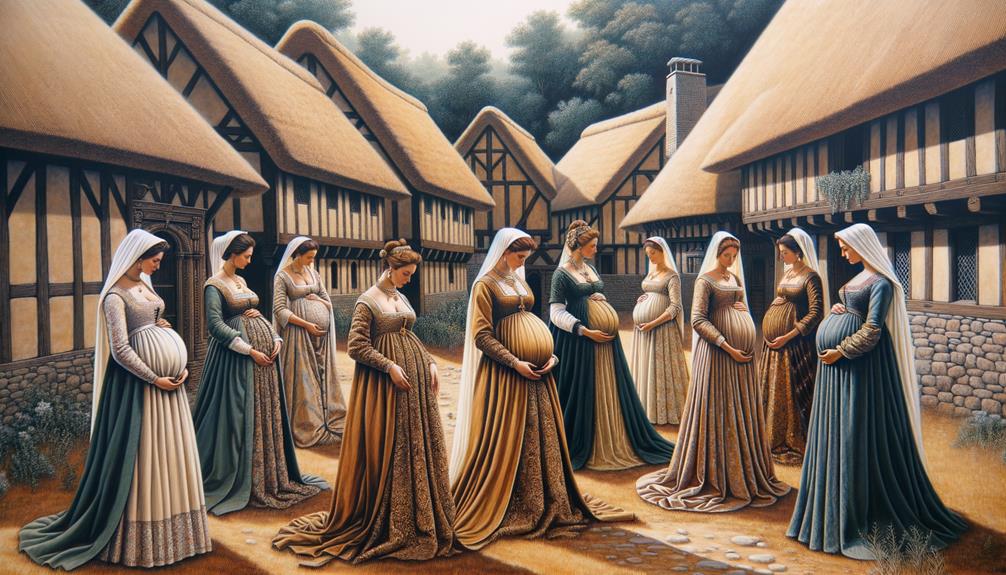
Medieval maternity wear was surprisingly innovative, with adjustable laced bodices and flowing empire waists that catered precisely to the changing bodies of pregnant women. These garments, crafted centuries ago, demonstrate a deep understanding of the pregnant form and its needs. The thoughtfulness behind each dress, with side lacing and bodices that rested gently on the belly, is practical innovation that still resonates today.
Loose gowns with empire waists were a staple in medieval maternity fashion, offering comfort without sacrificing style. These dresses allowed for an elegant drape over the growing belly, highlighting the beauty of pregnancy while ensuring ease of movement. The designers did not stop there: petticoats with ties on both sides were designed to accommodate fluctuating weight, making these garments adaptable throughout the different stages of pregnancy.
This attention to functionality and reuse of fabrics post-pregnancy shows the resourcefulness of the medieval period and reveals a respect for the material’s value. Each piece of maternity wear reflected the era’s blend of practicality and aesthetic consideration, creating a model for maternity fashion that still offers ideas today.
Influences of Social Class
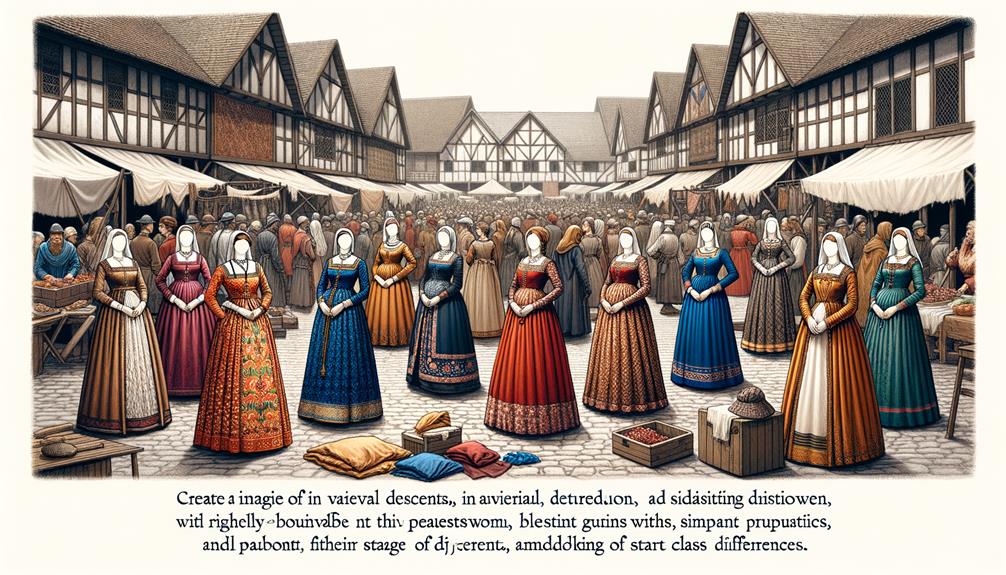
Social class played a significant role in shaping the quality and style of maternity wear in medieval times, reflecting the stark contrasts in wealth and status. For the nobility, being heavily pregnant was an opportunity to showcase opulence. Luxurious fabrics like silk and velvet, adorned with intricate embroidery, were the norm. Paintings by Rogier van der Weyden often depicted noblewomen in rich, flowing garments, even during pregnancy. These images highlight how maternity wear was a display of wealth and artistic craftsmanship.
In contrast, peasants and lower classes relied on simpler, more practical garments. Their maternity wear was typically made from coarser fabrics like wool or linen. The disparities were evident:
Materials: Fine fabrics were reserved for the nobility, while peasants made do with coarse materials.
Design: Intricate designs were a hallmark of noble maternity wear, whereas peasants had simple, utilitarian clothing.
Customization: Wealth allowed for tailored fits, whereas lower classes had limited options.
Purpose: Nobles used maternity wear to display their status, whereas peasants prioritized practicality.
These differences went beyond clothing; they mirrored the social hierarchy. The availability of resources dictated the variety and customization of maternity clothing, making social class an inescapable influence in medieval maternity wear.
Symbolism and Fashion Trends
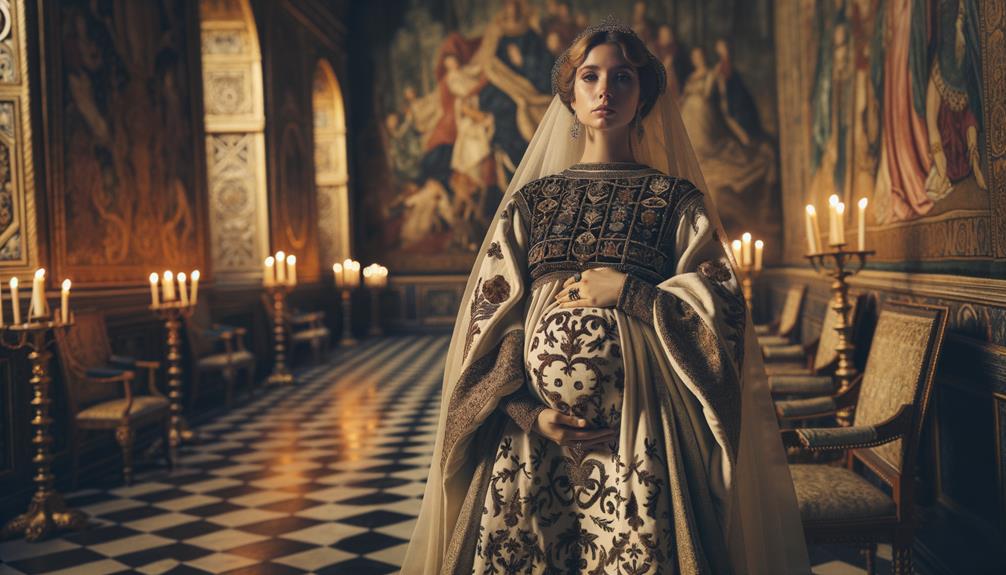
While social class undeniably shaped the material and construction of maternity wear, the symbolism and fashion trends of the time added layers of meaning and practicality to these garments. In the early medieval period, maternity fashions were both functional and symbolic, reflecting societal values around fertility and motherhood. Loose, flowing garments allowed pregnant women comfort and mobility, while also representing nurturing and abundance.
Artwork from this period vividly captures maternity wear’s practicality. Pregnant women are often depicted in regular dresses with adjustable features like lacing, ensuring comfort throughout pregnancy. Side-laced gowns and surcotes were particularly popular, emphasizing the adaptability of medieval maternity fashion. These designs show how maternity fashions folded directly into everyday wear.
| Style | Feature | Symbolism |
|---|---|---|
| Surcote | Loose fit | Fertility |
| Side-laced gown | Adjustable lacing | Motherhood |
| Regular dress | Flowing fabric | Nurturing |
These garments conveyed more than just practicality; they carried deeper societal messages. The flowing fabrics and adjustable designs underscored the importance of motherhood and the community’s support for pregnant women. Medieval maternity fashions reflected the era’s ingenuity, blending practicality with profound symbolism.
In this period, maternity wear was not just about function; it conveyed societal values. The emphasis on comfort and adaptability symbolized the community’s recognition of pregnant women’s needs. By blending form and function, medieval maternity fashions showcased the era’s resourcefulness and understanding of motherhood.
Frequently Asked Questions
What Is the Difference Between a Kirtle and a Bliaut?
A simple, practical kirtle contrasts sharply with the elaborate bliaut, which features flowing sleeves and a fitted bodice. The contrast highlights how simplicity and elegance can coexist, each enhancing the other.
How Early Did You Start Wearing Maternity Clothes?
Most women switched to dedicated maternity clothing around the second trimester, seeking comfort and flexibility as the body changed. Embracing the change early helped them feel more at ease and stylish with their evolving shape.