The Barong Tagalog is a distinctive fusion of Filipino and Spanish influences, rich in history. Made from piña, jusi, or piña jusi fibers, its lightweight fabric feels both delicate and refined. The intricate embroideries often feature motifs like coconut trees and flowers. This shirt suits formal events, symbolizing Filipino heritage and pride. Designers continue to innovate, blending traditional artistry with modern cuts. It requires careful hand washing and gentle storage.
History and Origins
The Barong Tagalog, a symbol of Filipino heritage, has a history that reaches back to the pre-colonial Philippines. Early Filipinos wore lightweight, loose-fitting garments, and the term ‘baro’ in Tagalog means outfit or clothing. Over time, the Barong evolved from these early forms of dress.

When the Spanish colonizers arrived, they brought intricate embroidery and fine fabrics, which added an air of elegance to the Barong Tagalog worn by men. This fusion of Filipino and Spanish aesthetics produced a garment that is both sophisticated and deeply rooted in Filipino history.
Asian traders also played a significant role in shaping the Barong’s design, incorporating their own unique touches. This blend of influences produced a garment that is both refined and deeply rooted in Filipino culture. The evolution of the Barong Tagalog reflects the resilience and adaptability of Filipino culture, blending indigenous and foreign elements into one form.
Today, the Barong Tagalog for men stands as formal attire, embodying elegance, sophistication, and national pride. It is a living piece of history, a symbol of cultural resilience and innovation.
Fabric and Materials
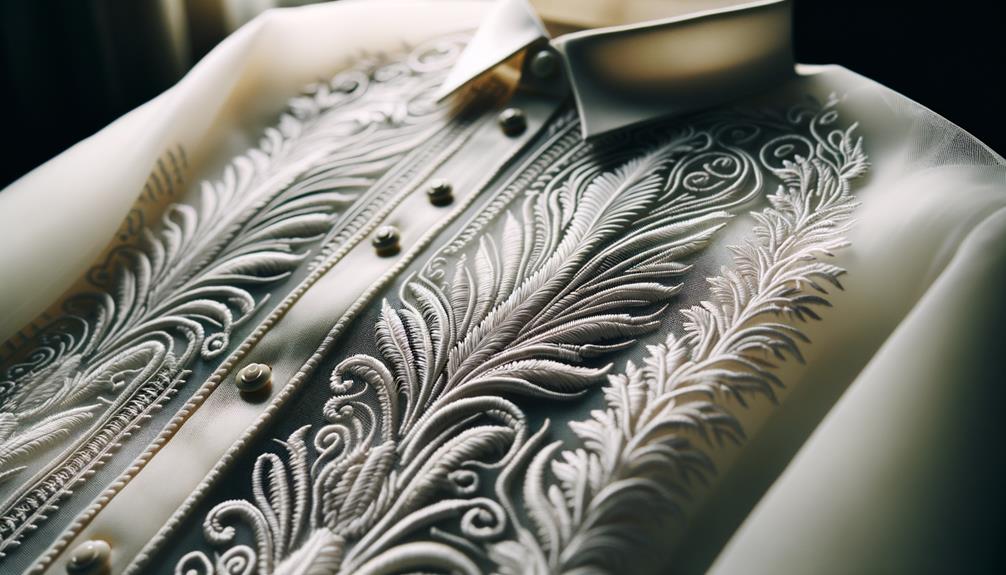
The choice of fabric defines the elegance and status of the Barong Tagalog. The fabric is more than a material; it is a statement that tells its own story through texture, sheen, and drape.
Piña, derived from pineapple leaves, is among the most prized materials. Its delicate, translucent quality turns any Barong Tagalog into a piece of art. Piña seda blends the pineapple fiber with silk, offering a smoother touch while retaining the sheer quality. Jusi, made from abaca or silk, is a more affordable option that keeps its elegance. Piña jusi combines the strengths of both, delivering a versatile and stylish choice.
| Fabric | Characteristics | Status |
|---|---|---|
| Piña | Sheer, lightweight, delicate | High |
| Piña Seda | Sheer, smooth, luxurious | High |
| Jusi | Sheer, durable, affordable | Moderate |
| Piña Jusi | Sheer, blend of piña and jusi | Moderate-High |
The intricate embroidery on these materials adds another layer of sophistication, turning the Barong Tagalog into a masterpiece. The fabric is not simply a backdrop; it is the canvas that brings out the beauty of the garment.
Design and Embroidery
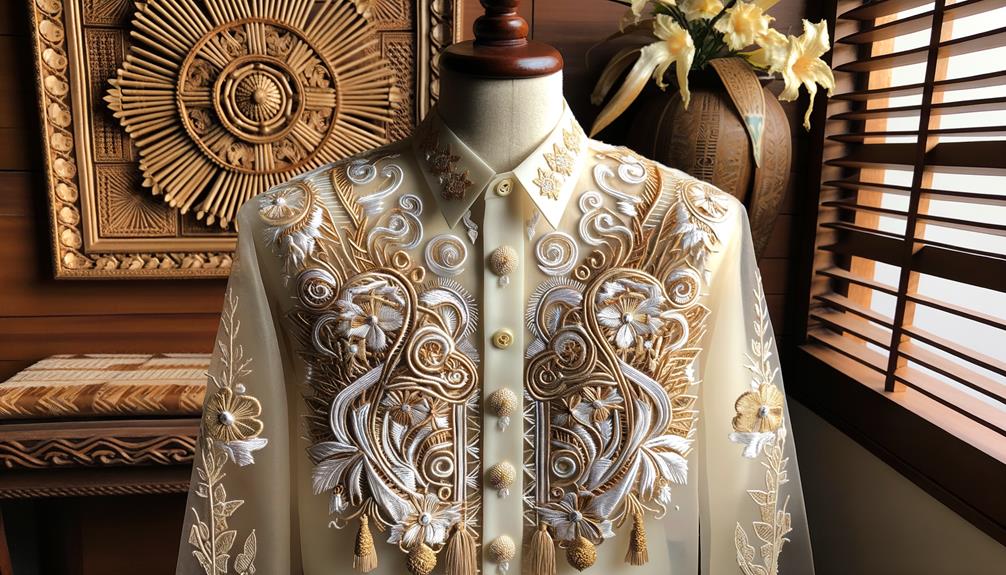
The Barong Tagalog’s design and embroidery transform it into a piece of art rich in cultural heritage. Each traditional Filipino garment is adorned with intricate detailing, showing the skill of the craftspersons who make it. The embroidery often features nature-inspired motifs like coconut trees, bamboo, and flowers, creating a visual narrative that connects the wearer to the natural world.
Three key elements make the Barong Tagalog’s design and embroidery stand out:
- Intricate Detailing: From simple patterns to elaborate designs, each Barong Tagalog showcases a range of embroidery styles that vary in complexity. This level of detail adds a touch of elegance and cultural significance to the garment.
- Nature-Inspired Motifs: The embroidery often includes motifs like coconut trees, bamboo, and flowers. These nature-inspired designs enhance the aesthetic appeal and reflect the Philippines’ rich natural heritage.
- Regional Variations: Different regions in the Philippines have their own unique embroidery styles for the Barong Tagalog. These regional variations highlight local traditions and heritage, making each garment distinct.
Occasions to Wear
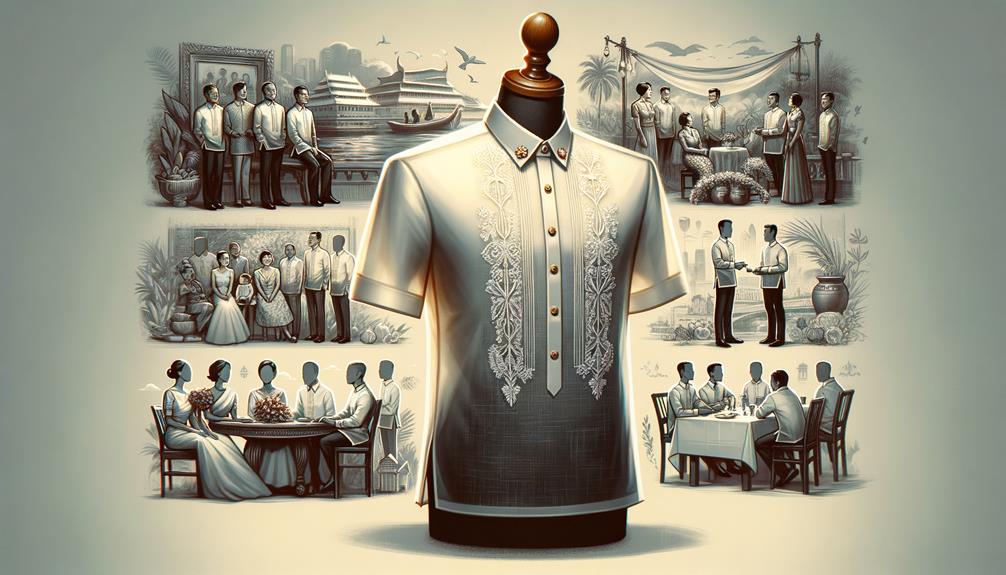
The Barong Tagalog is closely associated with special occasions such as weddings, graduations, and national holidays. It is the standard attire for formal celebrations and traditional ceremonies, representing Filipino cultural heritage. This traditional shirt is versatile and serves as a symbol of a rich cultural identity, suited to any significant event.
Formal Celebrations
At milestones such as weddings or graduations, the Barong Tagalog is a common choice for honoring Filipino heritage. This traditional Filipino attire adds a touch of elegance and sophistication that is hard to match. For men, wearing a Barong Tagalog is about making a statement as much as about appearance.
Here are three occasions where this shirt truly shines:
Weddings: The intricate embroidery and fine fabrics make the Barong Tagalog well suited to such a meaningful event. It adds a layer of cultural significance to the ceremony, connecting present joy with historical pride.
Graduations: Marking academic achievements with this traditional garment underscores the value of perseverance and cultural identity. It honors the past while confidently stepping into the future.
Cultural Events: Whether a formal celebration or a significant cultural gathering, the Barong Tagalog connects wearers to their roots and showcases Filipino craftsmanship.
Wearing a Barong Tagalog during these events honors age-old traditions and brings a level of sophistication and pride to any formal gathering. It is a way to celebrate milestones while staying true to Filipino identity.
Traditional Ceremonies
At traditional Filipino ceremonies such as weddings, baptisms, or fiestas, the Barong Tagalog embodies elegance and cultural pride. This classic attire, the National Dress, connects wearers to their roots and showcases the richness of Filipino culture. The intricate embroidery and traditional fabrics give any occasion a sense of importance and reverence.
At a wedding, the Barong Tagalog places the wearer within a timeless tradition. The delicate piña or jusi fabric, adorned with exquisite designs, turns a simple shirt into a statement of heritage. At baptisms, the Barong Tagalog symbolizes purity and new beginnings, transforming a religious rite into a celebration of culture and community.
During vibrant and energetic fiestas, the Barong Tagalog is on full display. It is a visual representation of a shared history. Even in modern Filipino settings, this attire bridges the past with the present. Families often wear matching Barongs, showcasing unity and pride. The classic Barong Tagalog remains a potent symbol of identity and origin, making every traditional ceremony uniquely Filipino.
National Holidays
On national holidays such as Independence Day and Rizal Day, the Barong Tagalog is worn to honor Filipino heritage. These special days are opportunities to celebrate Filipino identity and cultural pride. Wearing the traditional attire creates a clear connection to history and to the heroes who have shaped the nation.
The Barong Tagalog is a symbol of identity. Its formal elegance makes it well suited to these significant days. It is often seen at official ceremonies and parades, where it stands out as a symbol of unity and national identity. It is a way to visually express collective respect for the past.
Three national holidays on which the Barong Tagalog is commonly worn:
Independence Day (June 12th) celebrates freedom and the birth of the nation.
Bonifacio Day (November 30th) honors the bravery of Andres Bonifacio.
Rizal Day (December 30th) pays tribute to the legacy of Dr. Jose Rizal.
Wearing the Barong Tagalog on these days is a strong expression of Filipino heritage.
Modern Variations
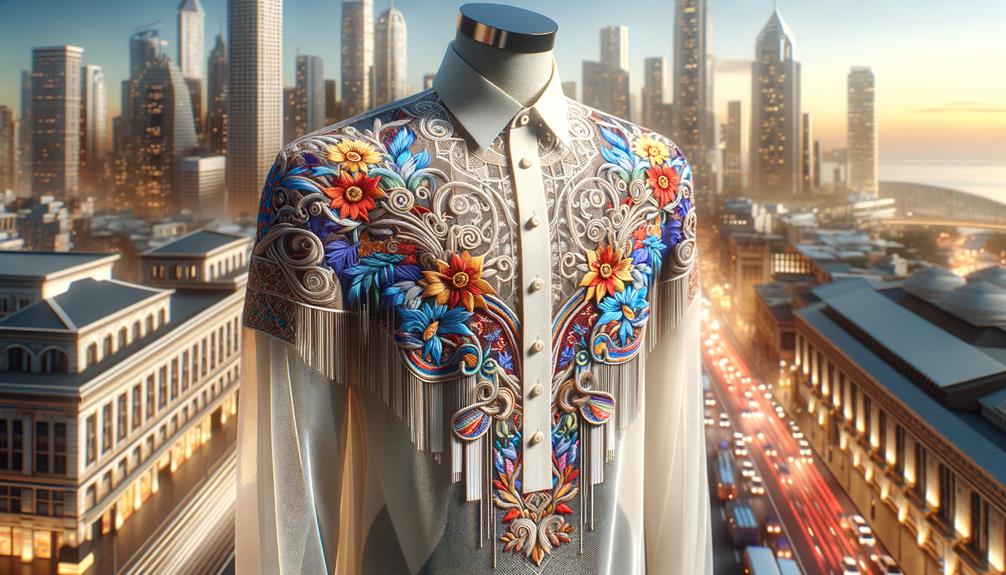
Modern variations of the Barong Tagalog have merged tradition with contemporary style, appealing to both old and new generations. The Short Sleeve Barong, a notable innovation, offers a casual yet refined take on the traditional Filipino garment. This modern version goes beyond shorter sleeves. It redefines elegance for today’s fast-paced world.
Designers are pushing the boundaries of traditional Filipino fabrics, experimenting with unique textures and hues. The handmade Barong remains a staple, but with fresh details such as intricate embroidery and modern cuts that highlight the wearer’s individuality.
Pierre Cardin-inspired designs have also made a mark. These adaptations keep the Barong’s essence while adding a global perspective, producing a garment that stands at the intersection of tradition and trend.
Each piece tells a story, reflecting a blend of heritage and innovation. Whether for a formal event or a more relaxed setting, the Barong Tagalog’s versatility shines through. It is an evolving symbol of Filipino pride.
Care and Maintenance
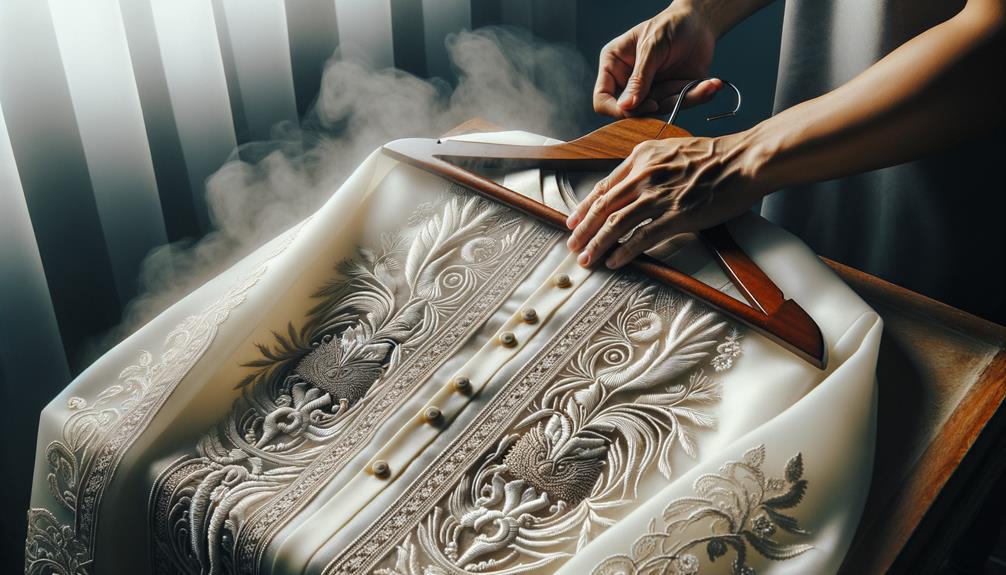
Caring for a barong tagalog takes a gentle approach. It should be hand washed in cold water, avoiding any wringing to protect the delicate fibers. To dry, air it in the shade. When it is time to iron, use a cloth to preserve the intricate embroidery. For storage, choose a breathable garment bag to keep it safe from dust and insects.
Proper Washing Techniques
To keep a Barong Tagalog looking its best, gentle care is essential. Hand wash it in cold water to preserve the delicate fabrics such as piña or jusi, which require special attention. The intricate embroidery details also demand care. The steps are straightforward:
First, use a mild detergent to avoid damaging the fabrics. Harsh detergents or bleach can destroy the delicate materials and intricate embroidery.
Next, gently submerge the Barong Tagalog in cold water, swirling it lightly. Never wring or twist, as the fabric’s delicate nature requires a tender touch.
After rinsing thoroughly, lay the Barong flat on a clean towel, reshaping it gently. Hanging can cause stretching and distortion, so it is best avoided.
Finally, iron the Barong inside out using a low heat setting. This safeguards the delicate fabrics and embroidery, keeping the Barong Tagalog looking sharp.
These steps take some time, but they are worth the effort to maintain the Barong Tagalog as a symbol of elegance and craftsmanship. Proper care preserves its beauty and longevity.
Storage and Preservation
Proper storage and preservation are crucial to maintaining the elegance and pristine condition of a Barong Tagalog. Start by selecting a storage location that is cool, dry, and away from direct sunlight. This helps prevent moisture damage, which can ruin the delicate fabric.
To maintain the garment’s shape, use padded hangers. These distribute the weight evenly, preventing wrinkles and creases. Avoid wire or plastic hangers, as they can distort the fabric over time.
Refrain from storing a Barong Tagalog in plastic bags, as they trap moisture and create an ideal environment for mildew to grow. Instead, cover the garment with a breathable cloth, such as cotton or linen, to protect it from dust and light while allowing air to circulate.
Regular airing is essential to prevent musty odors and maintain the garment’s freshness. Occasionally remove the Barong Tagalog from storage, let it breathe, and ensure it is free from any lingering moisture.
Frequently Asked Questions
What Does Barong Symbolize in Philippines?
The barong symbolizes Filipino elegance and national pride, reflecting the country’s rich cultural heritage. It showcases intricate artistry and craftsmanship, signifying respect for tradition, unity, and the resilient creativity of the Filipino people.
Why Is Barong Tagalog Expensive?
Several factors drive the cost of a Barong Tagalog. The most expensive pieces use natural fibers such as piña and jusi, which are labor-intensive to extract and process. Hand embroidery adds further cost, since detailed work takes many hours. Commissioned and bespoke shirts also cost more than mass-produced ones, and a well-made garment is intended to last for many years, which adds to its value.
What Are Filipino Dress Shirts Called?
Filipino dress shirts are known as Barong Tagalog, a traditional attire that embodies the country’s rich heritage. These lightweight, sheer, and intricately embroidered shirts are a symbol of Filipino pride and identity, well suited to formal events and cultural celebrations.
Is It Okay to Wear a Barong?
Wearing a Barong is completely acceptable and often encouraged. This traditional attire pairs easily with modern style, making it suitable for many occasions. Wearing one expresses cultural pride and a strong fashion sense.