Inca textiles were at the heart of their society, with each pattern telling a story of history and identity. The weaving of cotton from the lowlands and wool from llamas and alpacas into vibrant tapestries, colored with natural dyes, remains remarkable. These garments were more than clothing; they were symbols of status and power, featuring geometric motifs that carried the memory of the past. The stories behind these intricate designs, and the skilled hands that crafted them, reward study.
History of Inca Textiles
The history of Inca textiles is a deep cultural inheritance, where every thread tells a story of a civilization that thrived in the rugged Andes. Inca weavers, particularly skilled women, transformed wool into masterpieces adorned with geometric design motifs. Each piece of clothing was practical, and also a statement of identity and social standing.

Inca textiles were often made from the wool of llamas, alpacas, and the highly coveted vicuña. The vicuña wool, renowned for its softness and rarity, was reserved for the elite, a tangible symbol of power. A garment that exclusive spoke volumes about the wearer’s place in society.
The intricate geometric patterns and vibrant colors, achieved through natural dyes, conveyed more than aesthetics. They carried deep cultural significance, with each hue and motif communicating messages about wealth and heritage. These textiles served dual roles as both currency and art, making them invaluable to the Inca way of life.
An Inca textile is more than fabric; it is a woven narrative of a people who turned fibers into history.
Materials and Colors
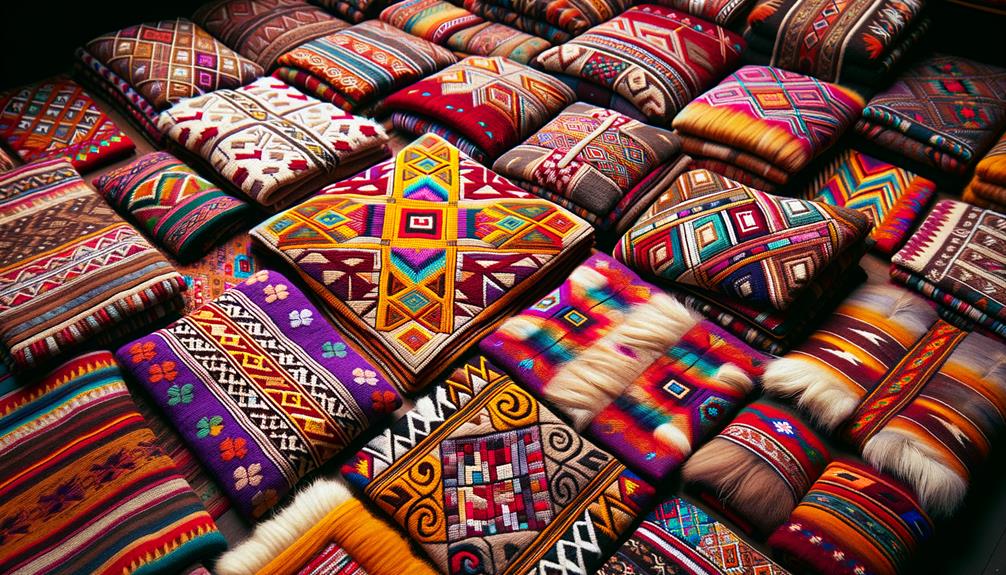
A piece of Inca textile brings together the softness of cotton from the lush lowlands and the warmth of wool from highland llamas, alpacas, and vicuñas, combining varied texture and color. Each thread tells a story of a civilization that revered the art of weaving. Inca textiles were crafted with meticulous care, using materials derived from natural sources, capturing the essence of Inca culture. The finest vicuña wool, renowned for its exceptional softness, was reserved for the elite.
Colors were about more than aesthetics; they carried profound meaning. Red, derived from the crimson cochineal insect dye, symbolized rulership and conquest. Black represented the underworld, while purple embodied nobility and prestige. Skilled Inca weavers harnessed natural dyes to create these vivid hues, which formed the foundation of their color palette.
Intricate design motifs adorned these fabrics, featuring human figures, animals, and geometric patterns that told stories of their cosmos. The textures and colors of these textiles reveal the innovation and emotional depth woven into every piece, showing the Inca’s exceptional craftsmanship.
Textile Art Methods
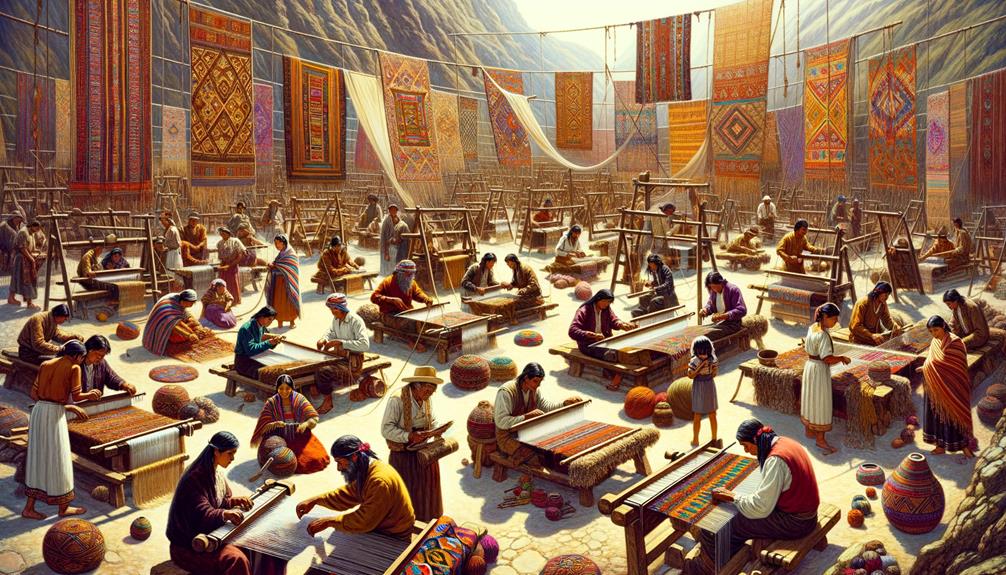
The skilled hands of aclla weavers manipulated backstrap looms deftly, transforming natural fibers into intricate textiles dense with cultural significance. These female weavers, secluded in the Acllawasi, were masters at converting twisted yarn threads into visual marvels. The rhythmic clatter of the loom was their symphony, each beat a step closer to a masterpiece.
Using the backstrap loom, aclla weavers created textiles adorned with repeated geometric shapes and striking motifs like tocapus. They employed the method of twining, where twisted yarn threads interlace to form strong, flexible fabric. The result was a canvas of cultural expression and innovation, not merely cloth.
The geometric patterns functioned as a coded language, each shape narrating stories of the cosmos and the divine. In these weaving centers, creativity met precision. The female weavers, with their skilled hands, turned simple fibers into complex designs, each piece showing their skill and dedication. The Acllawasi was a hub of artistry, where tradition and creativity combined.
Social and Cultural Significance
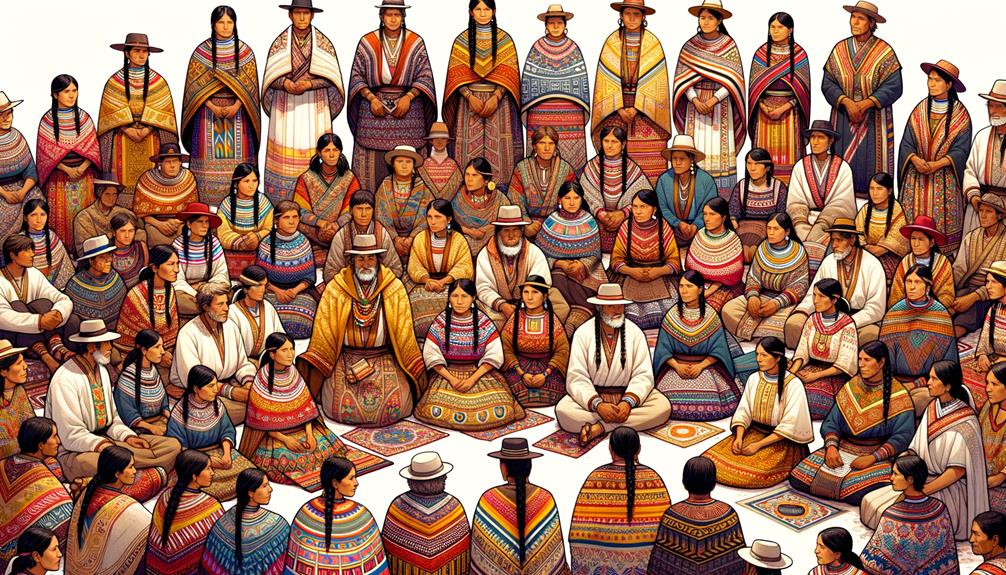
Inca textiles were not just clothes; they were powerful symbols of social status and cultural identity. Every thread, every stitch, told a story. These Andean textiles were not mere adornments; they were badges of wealth and status, each piece confirming one’s place in Inca society.
The finest textiles, often crafted by the Chosen Women, were reserved for royalty and religious elites. Their abstract geometric designs and vivid hues clearly indicated power. These garments were meant to be displayed, worn openly as a declaration of wealth. Clothing also functioned as a form of currency, exchanged during significant holidays and ceremonies, embedding textiles in the economic fabric of the Inca state.
Specific meaning was woven into every pattern, often featuring the Inca state insignia, marking the wearer’s allegiance and rank. Social class distinctions were clear, and the cultural significance of these textiles was unmistakable. Inca textiles were the essence of Inca identity, not simply clothing.
Fabric Patterns and Designs
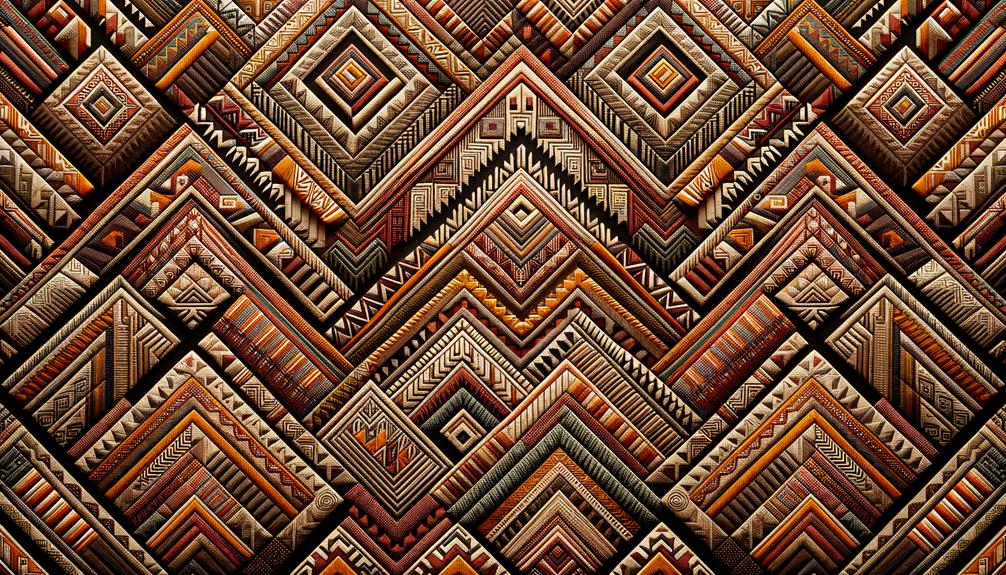
The story of the Inca civilization is woven into their fabric patterns and designs, where each abstract geometric motif and vibrant color speaks volumes about their world. Inca textiles were cultural canvases, more than just cloth. The meticulous weavers, often with looms around their waist, crafted intricate designs that blended checkerboard motifs with geometric elegance.
Each pattern had a specific meaning and purpose. Abstract designs of felines, llamas, snakes, and birds moved across the fabric, telling stories of nature and spirituality. These designs were not random; they were tied to family groups, or ayllus, and sometimes served as a form of taxation to the state. Dues could be paid in the form of a beautifully woven piece of history.
Color symbolism was crucial. The Inca knew that a splash of red or a hint of yellow could convey messages as profound as any spoken word. Textile decoration went beyond patterns; tassels, brocade, feathers, and precious beads added layers of depth and meaning. Inca textiles told a story with every thread, each one placed to create a record of life, legacy, and innovation.
Frequently Asked Questions
What Kind of Clothing Did the Incas Wear?
Inca men wore loincloths, tunics, and cloaks made from cotton or wool, while women draped themselves in large cloths. Their clothing was practical, and also reflected their social status, with nobles wearing the finest textiles.
What Textiles Were Worn by the Inca Elite Which Has Geometric?
The Inca elite wore textiles adorned with intricate geometric tocapus. These patterns, woven by acllas, conveyed a rich cultural identity, social standing, and ancestral heritage.
What Place Did Textiles Hold in Incan Culture?
Textiles held a revered place in Incan culture, serving as status symbols, currency, art, and a means of communication. They were more than just fabric; they told stories and conveyed social codes. The intricate designs and profound cultural significance of these textiles remain impressive.
Did the Inca Grow Cotton?
The Inca people did grow cotton, specifically in the lowlands. The intricate patterns woven by the skilled aclla in those regions produced vibrant textiles that showed their innovation and artistry.