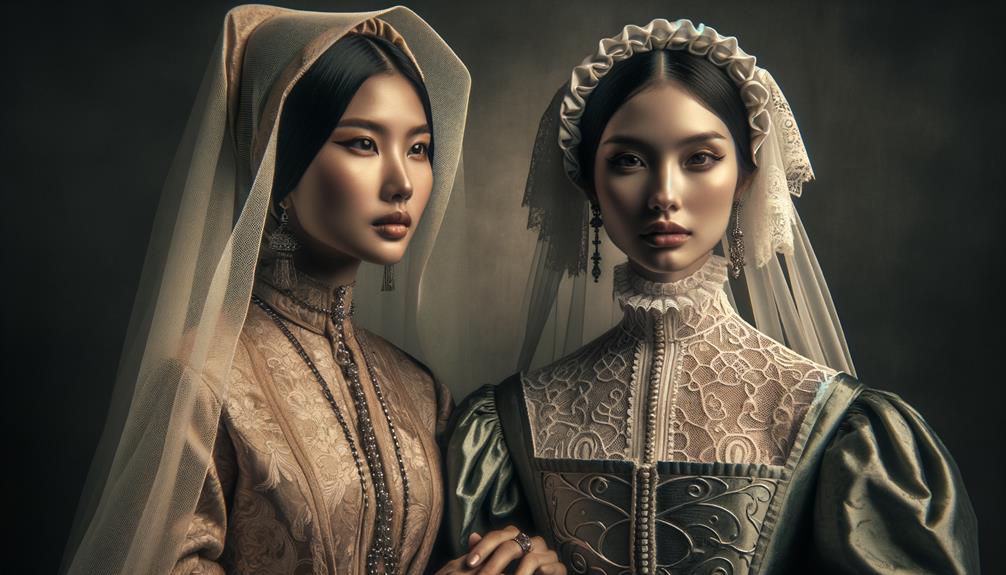
Buttons played a decisive role in medieval fashion, arriving as a new technique for adornment. The intricate craftsmanship that went into these tiny yet mighty artifacts invites close attention. Crafted from bone, wood, metal, and even gold and ivory, each button told a story of status and skill. They weren’t just fasteners; they were symbols, meticulously designed to convey wealth and taste. These small details could transform an entire garment into a work of art that showcased social standing. What secrets do these buttons hold, waiting to be uncovered?
Early Button Designs
In the early dawn of civilization, buttons crafted from bone, shell, and thorns emerged as symbols of human ingenuity and status. They were more than just fasteners; they told stories of the earliest artisans, meticulously crafted by the hands of the Indus Valley around 2000 BC. A small, curved shell button is a striking example, humble in material yet rich in symbolism. These early buttons marked a significant shift from simple lacing to a more considered balance of form and function.

The Indus Valley civilization, known for its sophisticated cities and craftsmanship, gave birth to a remarkable chapter in the history of buttons. Each button was a tiny yet profound indication of the desire for both utility and adornment. They adorned garments, whispering tales of wealth and status through their delicate designs.
The history of buttons shows a lineage of innovation that speaks to a basic human need to blend practicality with beauty. These early designs weren’t just about fastening; they were about expressing identity, narrating a journey from the mundane to the extraordinary, one button at a time.
Materials and Techniques
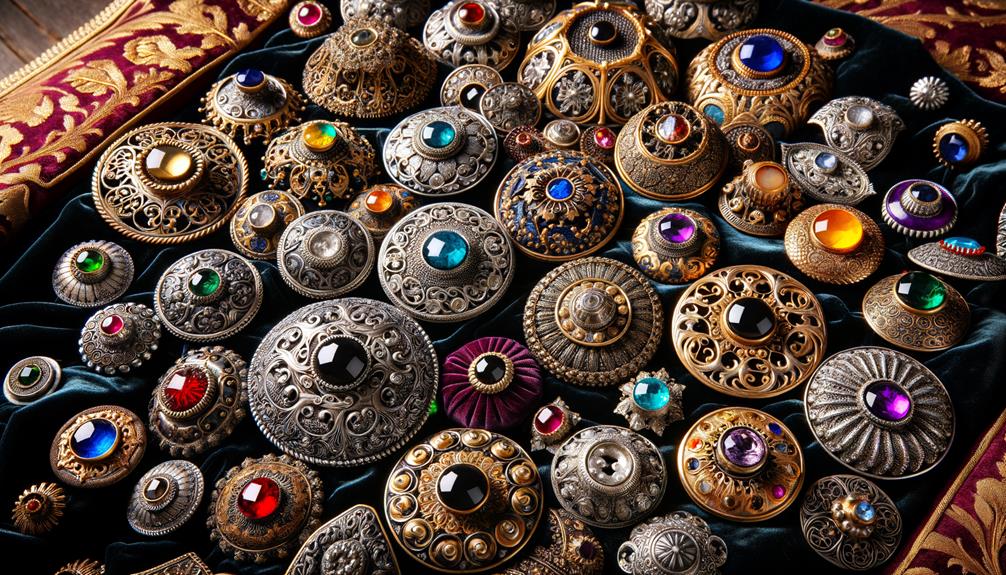
The history of buttons draws on the diverse materials and techniques medieval artisans used to turn these small objects into symbols of elegance and craftsmanship. The combination of materials like bone, wood, and metal was not just functional; it was an art form. Each button, meticulously crafted, told stories of dedication and skill.
Thread buttons, a marvel of their time, were created by wrapping thread over a wire ring. This technique offered a unique, textured design that enhanced even the simplest garment. Luxury buttons, however, took this artistry to another level. Gold, silver, ivory, and copper were used, their shine reflecting the wearer’s wealth and refined taste.
Medieval techniques were diverse and innovative:
Fabric-covered buttons added a touch of opulence with luxurious textiles.
Animal horn buttons balanced durability with natural beauty, crafted with precision.
Mechanized production, which began in 1830, marked the start of mass-produced fabric-covered buttons.
In this world of intricate materials and innovative techniques, buttons became more than just fasteners; they were the silent narrators of medieval fashion’s grandeur and sophistication.
Buttons as Status Symbols
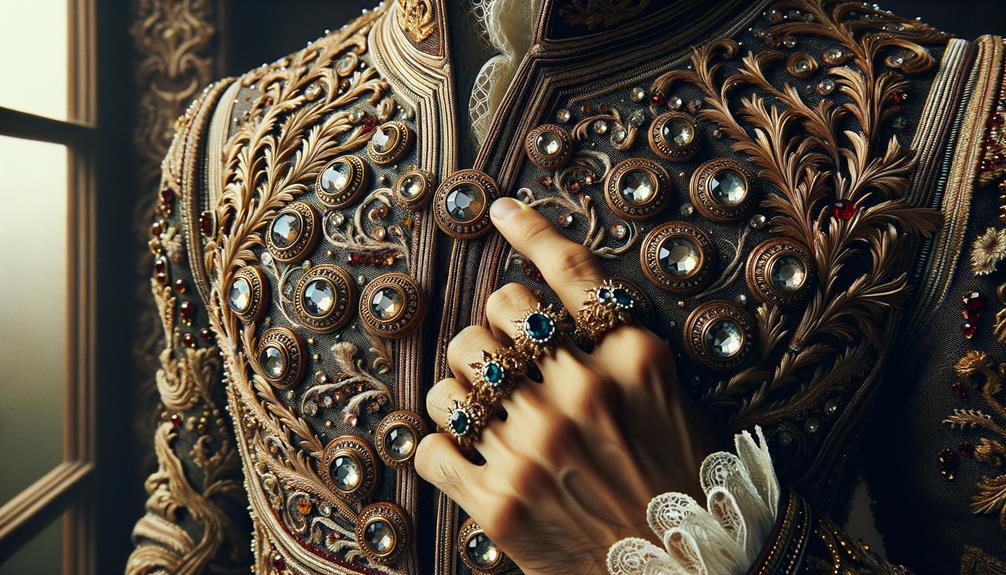
In medieval times, a single button could convey an entire social hierarchy. Buttons, often used as ornamental embellishments, spoke volumes about one’s status. Crafted from gold, silver, ivory, and copper, these tiny artifacts transformed simple garments into declarations of prestige.
The intricate craftsmanship of each button reflected the wearer’s lofty position. The evolution of button designs from mere fasteners to elaborate symbols of luxury shows how significant they became. To create one, artisans poured their skill and soul into crafting pieces that transcended functionality, becoming emblems of distinction.
Sumptuary laws dictated who could wear what, reinforcing the idea that buttons were markers of social order rather than simple accessories. This tradition dates back to medieval times, where a button’s material and design could raise a person’s standing in society.
In this context, buttons weren’t merely practical; they were powerful. They turned clothing into a canvas of identity, a subtle yet telling indication of one’s place in the wider scheme of life.
Decorative Uses in Garments
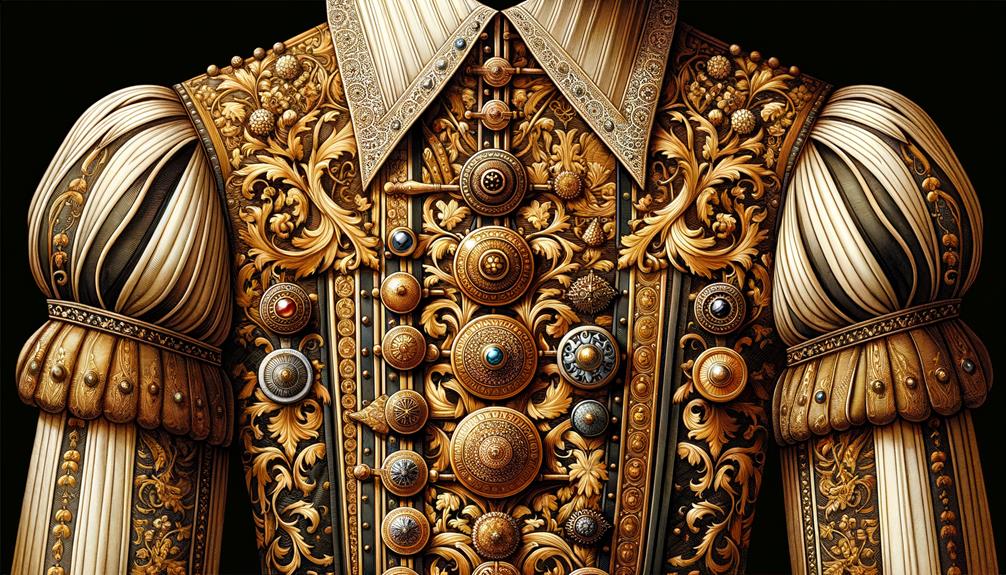
Beyond their role as status symbols, buttons in medieval fashion also served as exquisite decorative elements, turning garments into masterpieces of art and expression. These tiny, often overlooked objects could transform a simple piece of fabric into something remarkable. Crafted from gold, silver, ivory, and even copper alloys, buttons became the jewels of the garment world, narrating tales of craftsmanship and elegance.
Looking closely at the intricate designs, it is easy to imagine the artisans at work, meticulously shaping each button to reflect the latest fashion trends. The introduction of buttonholes in the 13th century enhanced their functionality while also amplifying their decorative potential.
Consider these three ways in which buttons were used decoratively:
- Embellishment: Buttons adorned sleeves, collars, and hems, creating patterns that danced across the fabric. The way they were arranged, their shapes, and colors all contributed to the overall aesthetic.
- Symbolism: They often bore religious or heraldic symbols, adding layers of meaning to the garments. These symbols conveyed the wearer’s identity, social status, or even their values.
- Contrast: Different materials and colors created striking visual contrasts, making each outfit unique. The interplay of textures, hues, and shapes added depth and visual interest to the garments.
In medieval fashion, buttons were more than mere fasteners; they were storytellers, artists, and innovators. Their decorative uses turned garments into canvases, each button a brushstroke in medieval sartorial art.
Influence on Modern Fashion
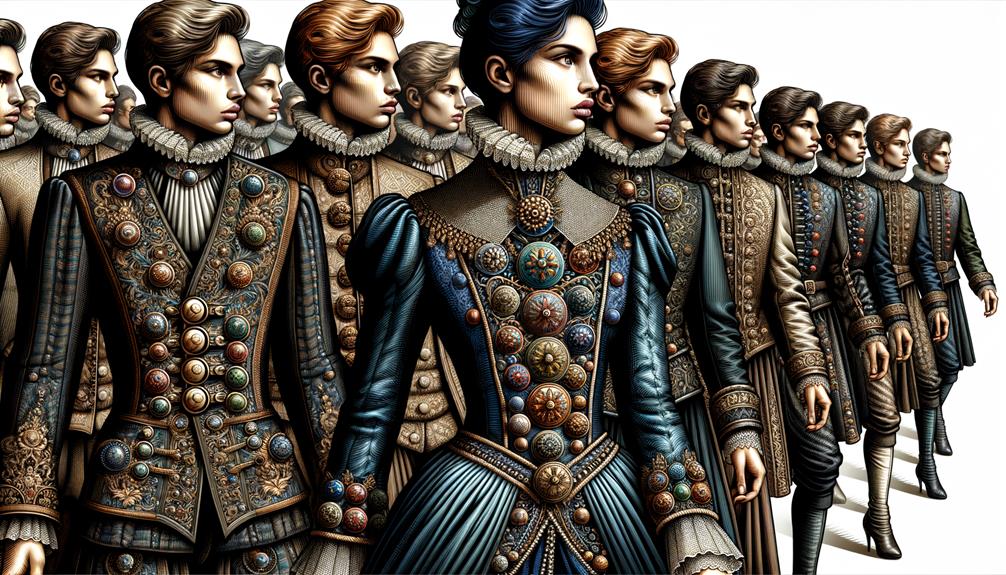
Medieval buttons, once symbols of status and artistry, continue to inspire modern fashion. Initially, buttons served a functional purpose while also acting as intricate adornments signifying wealth and sophistication. These meticulously crafted pieces reflected a time when attire was a canvas for storytelling and identity.
Today, designers draw heavily from this rich heritage, using buttons as focal points in their creations as much as for function, echoing medieval elegance. A single button can transform a simple garment into a statement piece, much as it did centuries ago. The linear progression from medieval to contemporary fashion underscores the button’s enduring allure.
It is striking how historical elements are reimagined in today’s collections. The tactile and visual appeal of buttons, and their ability to convey both utility and beauty, remains hard to match. This reflects the cyclical nature of fashion and its capacity to innovate through the ages. Every button sewn into a modern jacket or blouse is a tribute to the past, connecting the garment to an era where every detail in attire held profound meaning.
Frequently Asked Questions
What Is the History of Buttons in Fashion?
Buttons started as mere decorations, but with the arrival of the buttonhole, they transformed into essential fasteners. Over time, buttons evolved into symbols of self-expression, reflecting societal trends and personal style.
Did They Have Buttons in the Renaissance?
People did wear buttons in the Renaissance era. Something so small can have a large impact on clothing design, blending aesthetics and functionality. These tiny innovations reveal a lot about human ingenuity and the constant pursuit of both beauty and practicality in design.
Why Are Buttons Important in Clothes?
Buttons are a remarkable aspect of clothing, striking a balance between form and function. Each small button showcases human ingenuity, combining fabric and fashion.
What Are Some Interesting Facts About Buttons?
Buttons have come a long way from their humble beginnings as shell trinkets. Without them, laced garments would be far less practical. Horn and corozo buttons add a touch of character, and today’s designs allow people to express their individuality.