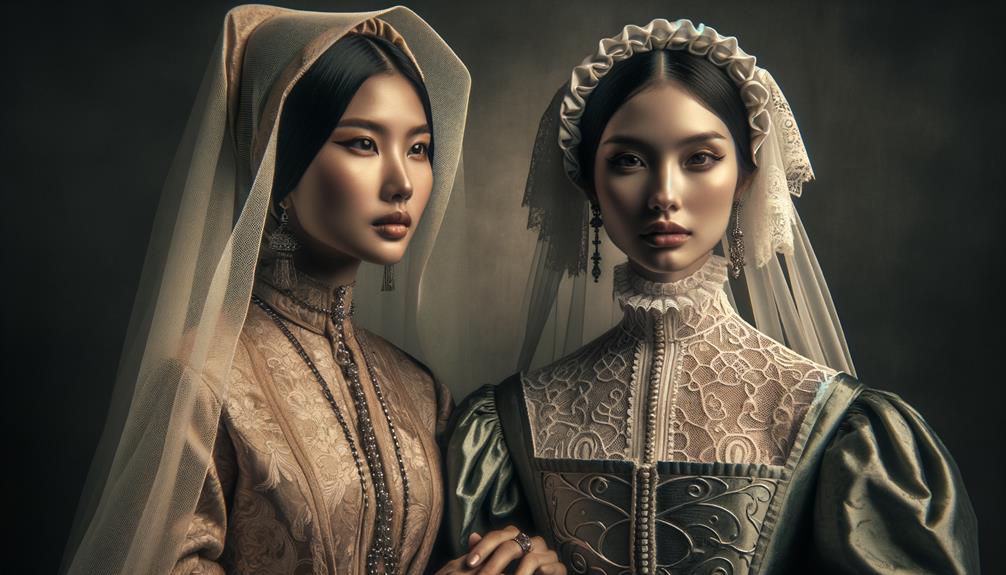
The Byzantine Empire‘s luxurious textiles held a powerful allure for European royalty, shaping the course of medieval fashion. The rich silk and intricate gold embroidery from Byzantium became synonymous with power and status. The elaborate motifs, often inspired by the empire’s iconic mosaics, did more than decorate garments. They conveyed a sense of divine authority. This influence extended beyond the courts, touching clerical attire and even leaving a mark on modern fashion.
Byzantine Art and Textiles
Byzantine art and textiles had a profound impact on medieval fashion, characterized by intricate designs, rich colors, and luxurious materials. The meticulous motifs and patterns derived from iconic mosaics and frescoes made their way into medieval clothing and accessories, setting a new standard for elegance and sophistication.

The textile techniques developed in Byzantium, particularly silk weaving and embroidery, were groundbreaking, and they transformed the fashion landscape of the medieval period. The precision and artistry involved in Byzantine silk weaving and embroidery made these textiles highly sought after, embodying the pinnacle of craftsmanship.
The opulent Byzantine court dress also became a model for the medieval nobility’s wardrobe. The luxurious and ornate styles worn by Byzantine royalty were emulated by medieval kings and queens, who sought to project power and prestige through their attire. The detailed iconography woven into these textiles went beyond decoration. It conveyed profound cultural and religious symbolism, which enhanced their allure. Byzantine art and textiles did not simply influence medieval fashion. They redefined it.
Luxurious Materials and Colors
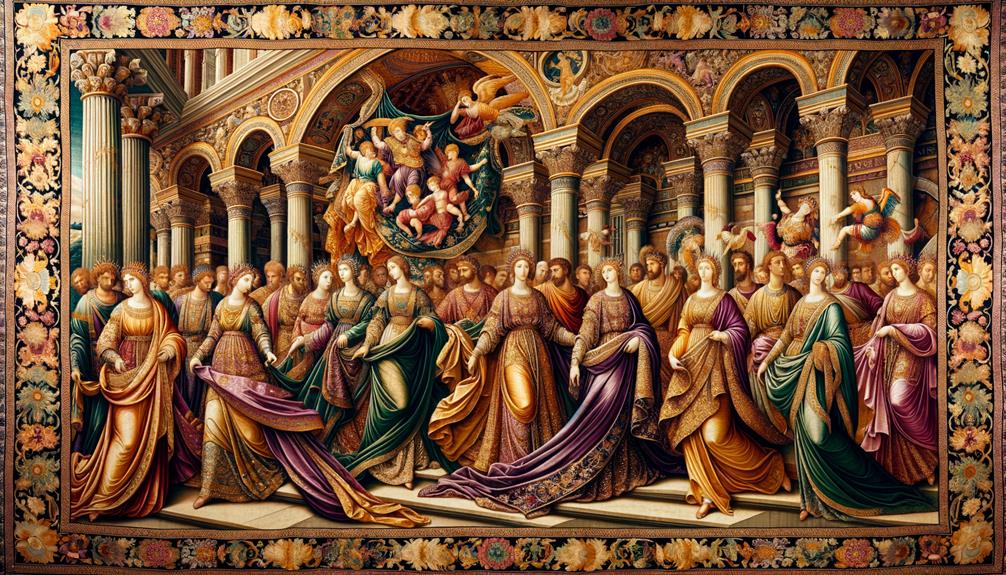
The impact of Byzantine style on medieval fashion shows in the opulence of silk fabrics and the vibrant colors achieved through advanced dye techniques. The Byzantines were masters of gold embroidery, creating garments that were genuine works of art. These luxurious materials and colors defined an era of elegance and grandeur in medieval clothing, showing the refined tastes of the time.
Opulent Silk Fabrics
In medieval fashion, richly colored silk fabrics in purple, gold, and red played a pivotal role, reflecting the era’s fascination with luxury and status. The opulent garments worn by Byzantine nobility were symbols of power and prestige. Drawn by the luxurious feel, medieval royalty adopted these intricate designs to display their own wealth and influence.
The Byzantine Empire’s cultural influence was profound, with silk textiles imported from China becoming a symbol of economic strength. These textiles, with their sumptuous textures and detailed patterns, set the standard for high fashion. The allure of these silk fabrics lay in their visual appeal and in their embodiment of the era’s values of power, prestige, and opulence.
Vibrant Dye Techniques
The mastery of vibrant dye techniques, producing deep and rich colors like purple, red, and gold, had a profound impact on medieval fashion’s aesthetic. The work of Byzantine artisans with luxurious materials such as silk shows a clear line of influence. They did not simply dye fabrics; they turned them into opulent canvases of unusual richness.
Byzantine dye techniques produced colors that spoke of power and prestige. Purple, often reserved for royalty, became a symbol of imperial authority because of the meticulous dyeing processes involved. Red and gold, equally striking, adorned garments and expressed wealth and status. Medieval fashion readily adopted these rich colors, seeking to replicate Byzantine grandeur.
The intricate patterns that Byzantines incorporated into their textiles also showed a sophisticated understanding of aesthetics. These designs went beyond decoration. They told stories, conveyed cultural significance, and displayed technical prowess. Medieval tailors and dyers inspired by this opulence adopted such patterns for their own creations.
Byzantine dyeing techniques and the lavish use of silk and rich colors set a new standard. They redefined medieval fashion, leaving a legacy of opulence and intricate beauty that still influences work today.
Gold Embroidery Mastery
Building on the vibrant dye techniques, the mastery of gold embroidery in Byzantine fashion brought medieval garments to new levels of opulence and artistry. The Byzantine influence is clear in the intricate designs and luxurious materials like silk and velvet. Gold embroidery was not only a decorative technique. It served as a status symbol, turning ordinary cloth into imperial attire.
Medieval fashion designers drew on Byzantine craftsmanship, creating garments adorned with gold thread and luxurious embellishments. Such materials did more than add beauty. They conveyed a message of power and extravagance. The elaborate patterns and shimmering gold threads drew the eye and proclaimed the wearer’s elevated status.
Adopting these elements went beyond aesthetics. It meant taking up a cultural language of opulence and grandeur. The meticulous gold embroidery techniques, combined with the finest materials, produced garments that were visually striking and rich in symbolic meaning. This fusion of Byzantine influence with medieval creativity resulted in attire that epitomized luxury and imperial splendor.
Influence on European Royalty
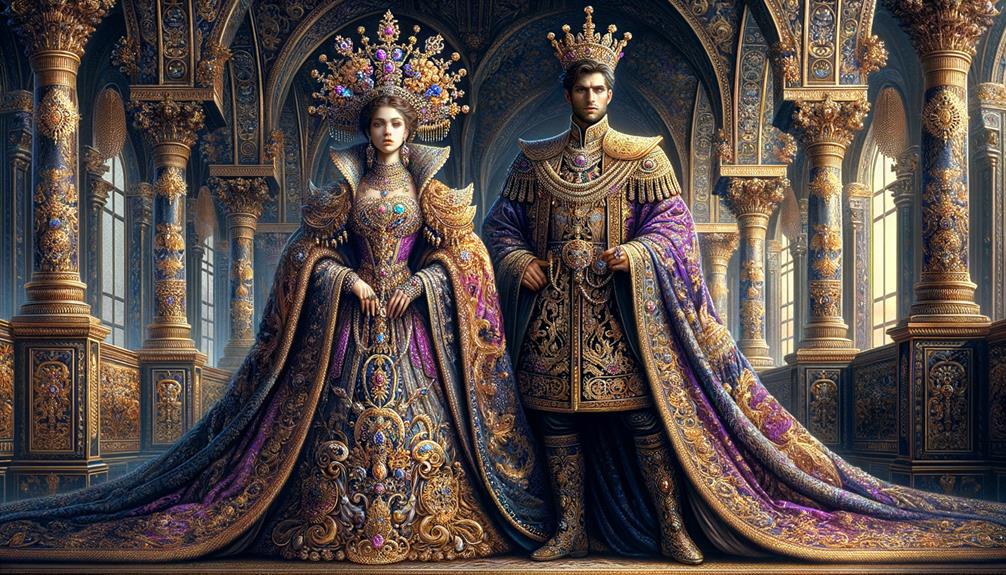
European royalty was captivated by the luxurious textiles and rich colors that Byzantine fashion brought to their courts. The allure of Byzantine opulence, epitomized by Emperor Justinian and Empress Theodora’s reign, was hard to resist. Their imperial power and regal symbolism were enthusiastically emulated in European court dress, featuring lavish silks and gold embellishments that signalled not only wealth but a connection to the sophisticated Eastern Empire.
Several key elements stand out when considering the influence of Byzantine fashion on European royalty:
- Luxurious Textiles: Rich silks and brocades, often imported directly from Byzantium, adorned the garments of European nobility, showcasing their wealth and status.
- The adoption of Byzantine Motifs in royal attire added visual grandeur, featuring ornate patterns and symbols, including religious iconography.
- The use of Regal Symbolism, such as gemstones and gold thread in clothing, mirrored the imperial power of Byzantine rulers, asserting the authority of European monarchs.
- Accessories, including intricate headdresses, jewelry, and other adornments, completed the transformation, making European courts shimmer with Byzantine splendor.
Byzantine fashion transformed European royalty, leaving a lasting legacy in the grandeur and elegance of medieval European attire.
Intricate Embroidery Techniques
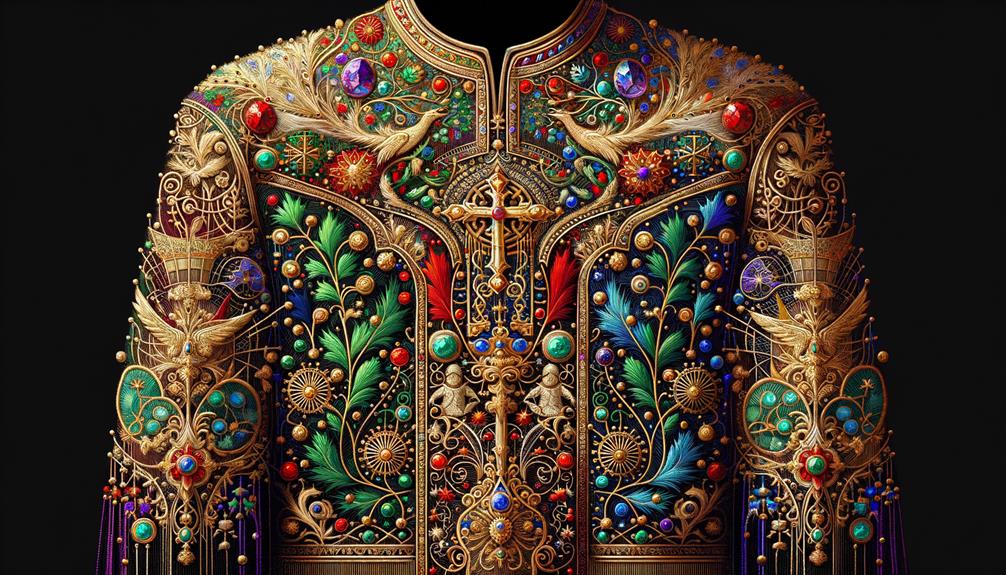
Byzantine embroidery is defined by rich gold thread embellishments. The intricate geometric patterns and religious motifs went beyond decoration, conveying deep cultural and spiritual significance. These techniques influenced medieval fashion, adding layers of texture and meaning to clothing.
Gold Thread Embellishments
During the medieval period, Byzantine gold thread embroidery turned garments into symbols of opulence and sophistication. The intricate embroidery techniques integrated gold thread into medieval clothing, producing opulent designs that were the hallmark of Byzantine craftsmanship. This went beyond fashion. It was a statement of luxury and power.
The elements involved can be described as follows:
- Gold Thread: Fine strands of gold were meticulously woven into fabrics, adding a radiant shimmer that illuminated the wearer.
- Embroidery Techniques: Artisans employed various stitches and patterns to create complex and visually stunning designs.
- Opulent Designs: These designs often featured elaborate motifs inspired by Byzantine artistry, making each garment a masterpiece.
- Byzantine Craftsmanship: The skill and precision required for such detailed work were exceptional, reflecting the grandeur of the Byzantine Empire.
Such embellishments were reserved primarily for royalty and nobility, who used them to display wealth and status. The use of gold thread in medieval fashion echoed the splendor of Byzantine textiles, making it a defining element of luxury fashion. The influence of Byzantine gold thread embroidery was profound, leaving a lasting mark on medieval sartorial elegance.
Geometric Pattern Designs
The intricate geometric pattern designs in medieval embroidery show a profound Byzantine influence, showcasing the mastery of artisans who crafted visually striking textiles. Interlocking circles, squares, and intricate floral motifs add an air of sophistication and luxury to medieval garments, and Byzantine-inspired embroidery techniques advanced the textile art form.
Byzantine artisans perfected the art of crafting elaborate geometric patterns, a skill that medieval fashion designers readily adopted. These designs, often featuring intricate floral motifs, conveyed a sense of opulence and cultural depth. The motifs blend into the textiles, turning simple fabrics into finished works of elegance and detail.
The meticulous embroidery techniques brought a new level of refinement to medieval fashion. The intricate geometric patterns did more than adorn clothing. They told stories of influence, craftsmanship, and artistic innovation. The adoption of Byzantine-inspired embroidery marks a pivotal moment where art and luxury converged, leaving a lasting impression on the aesthetics of the era.
Religious Iconography Motifs
The intricate embroidery techniques of medieval fashion showed the profound influence of Byzantine art. Delicate craftsmanship brought religious motifs to life on garments, reflecting the deeply symbolic nature of Byzantine art. The opulence of these garments came from the use of gold and silver threads.
Religious iconography was a cornerstone of these intricate embroideries, featuring:
- Saints: Figures of revered saints were meticulously stitched, each detail capturing their holy aura.
- Angels: Ethereal angels adorned many garments, their wings and halos carefully crafted to convey divine presence.
- Biblical Scenes: Entire narratives from the Bible were often depicted, transforming robes into storytelling canvases.
- Byzantine Art Elements: Characteristics such as gold leaf and elaborate patterns underscored the connection to Byzantine opulence.
These embroideries formed a visual language of faith and devotion. The precision and dedication required for such work speak to the cultural and spiritual significance of these garments. In them, fashion, history, art, and religion intertwine. The Byzantine influence brought medieval fashion into a distinctive sphere of sacred artistry.
Iconographic Dress and Symbols
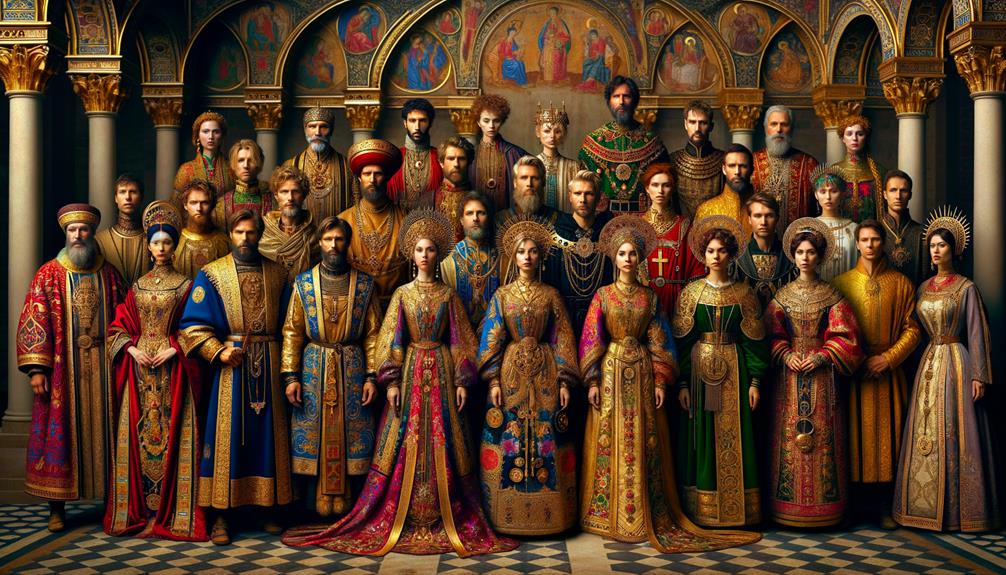
In Byzantine art, iconographic dress frequently featured figures adorned in pseudo-Biblical attire, reflecting both religious reverence and contemporary fashion. The Virgin Mary was often depicted wearing a distinctive mantle with a hood, blending Byzantine clothing with a divine aura.
Biblical scenes often featured figures in contemporary Byzantine clothing, bridging the sacred and the secular. The clerical dress, evolving from lay clothing into distinct garments like the epitrachelion and orarion, added layers of meaning to these representations. Predominant white or muted colors symbolized purity and spiritual significance.
This intertwining of fashion and faith reached beyond the clergy. The symbolism embedded in these garments influenced broader medieval fashion trends, infusing everyday attire with a touch of the divine. These iconographic details show that Byzantine art and clothing were a powerful medium for conveying religious narratives and values rather than merely aesthetic choices. This fusion of faith and fashion continues to inspire work in religious and secular attire.
Elite and Clerical Fashion
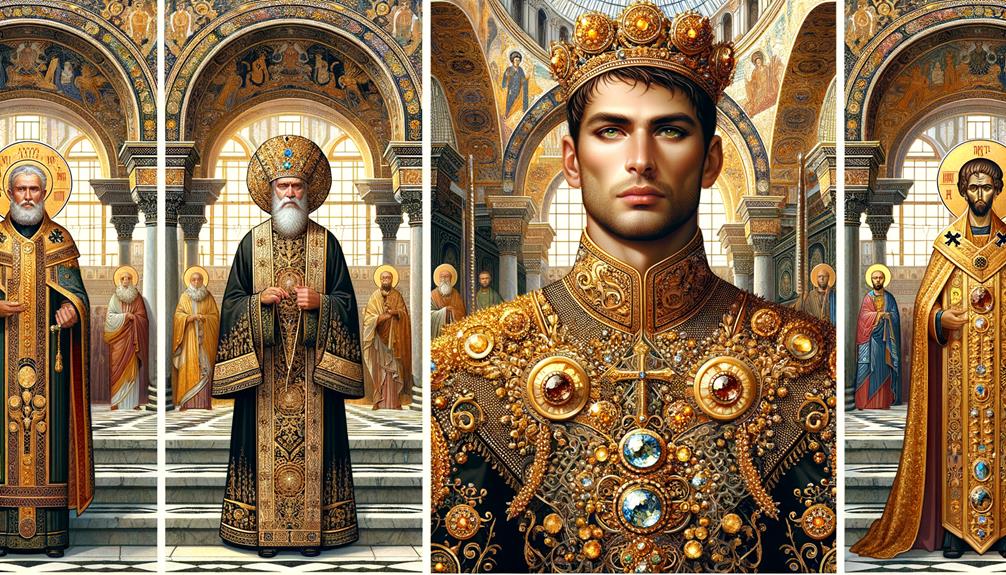
In medieval Byzantium, elite and clerical fashion combined opulence and symbolism. Byzantine elite fashion reflected social status and wealth. Richly patterned silk cloths were commonplace, designed to denote class and rank. For the clergy, distinct garments evolved from lay clothing to specialized attire reflecting their ecclesiastical roles.
The meticulous details of their clothing choices include:
The chiton robe, a long, flowing garment, was a staple for both elite and clergy, often adorned with intricate patterns and embroidery.
The diadem, a jeweled crown, signified nobility and was worn by both emperors and high-ranking clerics.
Imperial boots, crafted from the finest materials, were a symbol of power and prestige.
Clergy often appeared in pseudo-Biblical dress, complete with shaped mantles and hoods, reminiscent of Biblical times.
These styles permeated even religious iconography. Figures in Biblical scenes donned contemporary Byzantine clothing, bridging the past with their present. The intersection of fashion and symbolism in the Byzantine Empire offers a rich record of innovation and tradition.
Legacy in Modern Fashion
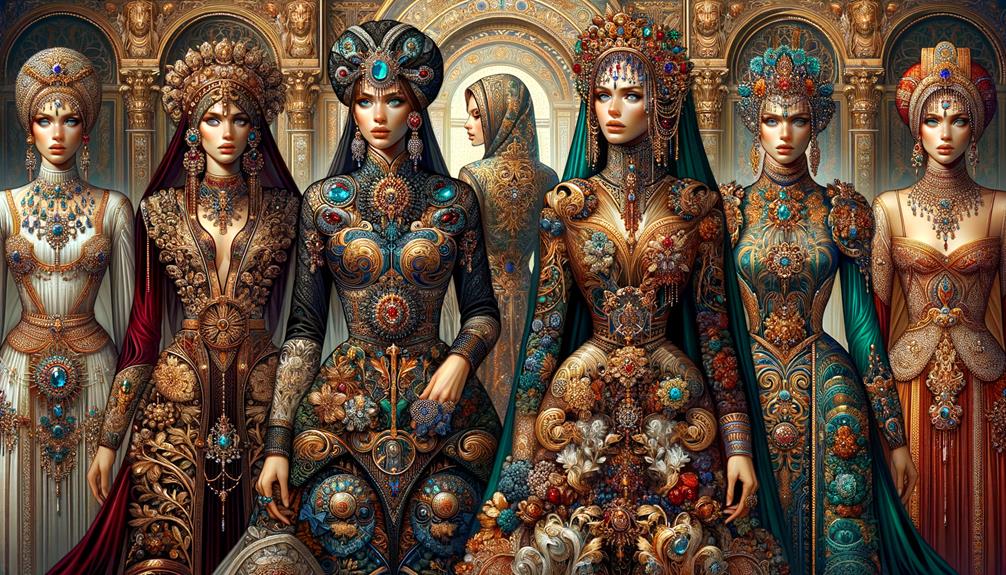
Modern fashion often reinterprets the grandeur of Byzantine clothing, with its taste for opulence and intricate design. Designers like Alexander McQueen, Chanel, Dolce & Gabbana, and Valentino draw heavily from Byzantine art, incorporating elements like gold, rich colors, and intricate embroidery into their collections. This blend of historical opulence and contemporary style creates pieces that are both traditional and forward-looking.
What stands out is how these designers incorporate mosaic-like patterns and head-to-toe Byzantine-inspired looks. High-fashion collections often feature striking jewelry that echoes the Byzantine era’s grandeur. Iconic pieces by designers such as Fulco Santostefano della Cerda and brands like Verdura and Givenchy showcase these intricate, historically inspired elements.
The legacy of Byzantine fashion goes beyond borrowing aesthetic elements. It captures a sense of splendor and artistry that continues to resonate. Modern fashion is richer for it, showing that the intricate beauty of Byzantine art and clothing remains a source of inspiration that bridges centuries with elegance and flair.
Frequently Asked Questions
What Fashion Designers Were Influenced by the Byzantine Empire?
Designers such as Alexander McQueen, Karl Lagerfeld, Dolce & Gabbana, and Valentino have all drawn inspiration from the Byzantine Empire’s lavish style and intricate details.
How Did the Byzantine Empire Influence European Styles?
Byzantine influence is evident in European styles through the adoption of rich colors, gold embellishments, and luxurious textiles. These elements transformed European fashion, adding a sense of opulence and grandeur that was previously unseen.
What Role Did the Byzantine Empire Play in the Middle Ages?
The Byzantine Empire acted as a cultural and economic powerhouse in the Middle Ages. It played a pivotal role in shaping trade routes, influencing art and architecture, and setting standards in various domains, leaving a lasting legacy that still inspires innovation today.
What Are the Two Major Influences on the Byzantine Style?
Byzantine style is a unique blend of classical Greek modesty and vibrant Persian colors and patterns. These influences merged to create a distinctive fashion that resonated throughout medieval European attire.