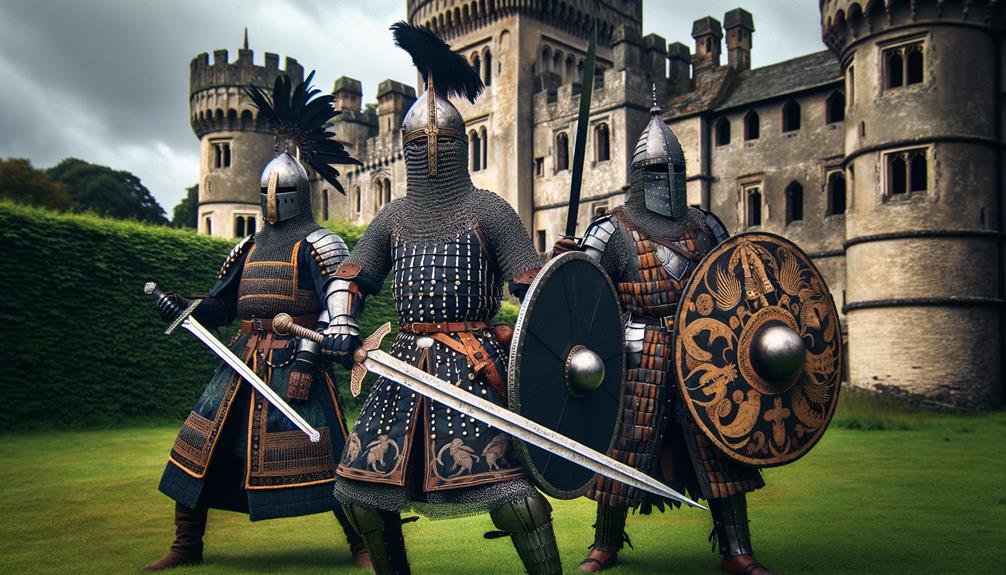
Heraldic symbols might seem like a quaint medieval relic, but their influence on fashion is considerable. These intricate designs woven into garments were a sophisticated language of lineage and identity. Each element, from colors to animals, told a story of heritage and status, turning clothing into a canvas of personal and familial pride. These visual codes communicated a great deal about a person’s place in society. What meanings and subtleties did these symbols truly convey?
Origins of Heraldic Symbols
The origins of heraldic symbols begin with a practical need: identifying knights on medieval battlefields. In the chaos of combat, recognizing friend from foe was crucial. Knights, clad in armor, needed a way to distinguish themselves, and heraldic symbols were born. Painted on shields and banners, these symbols became unique markers of identity.

These symbols soon extended beyond the battlefield to represent medieval royal lineage and prestige. Families adopted these emblems to showcase their heritage, with each element chosen to convey specific virtues. The language of heraldry reflects this evolution, with precise terms defining each component.
These symbols were coded messages rather than decoration, with lions, eagles, and dragons symbolizing courage and power, while crosses and stars stood for faith and honor. This system provided a visual lexicon that communicated a family’s values and status.
Understanding the origins of heraldic symbols offers a clear view of medieval society, where innovation met tradition and identity was painted in vivid, symbolic strokes.
Symbolism and Meaning
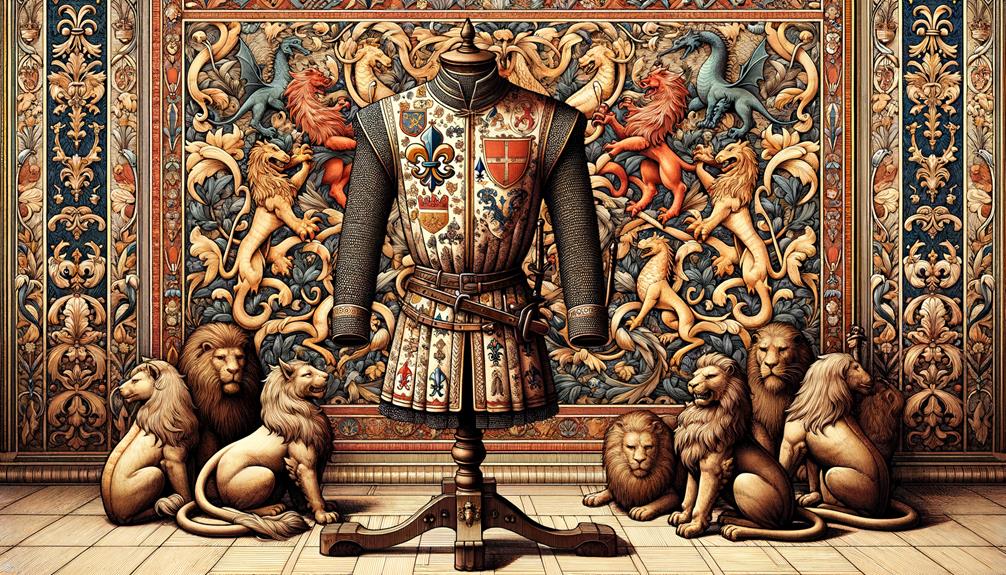
In medieval heraldry, colors and common animals each carry significance. Every hue and creature was chosen with care, reflecting personal and familial values. Knights and nobles were adorned with lions, symbolizing courage, or eagles, representing nobility.
Colors and Their Significance
Each color in medieval heraldry tells its own story of symbolism and meaning. Take, for instance, a red shield. In the world of heraldry, red proclaims courage and valor. The color stands out visually and also speaks to bravery and fierce determination, qualities that warriors and nobles sought to embody.
Blue, on the other hand, conveys loyalty and truth. This hue speaks to steadfastness and reliability, essential traits in a world where allegiance was often a matter of life and death. Green evokes hope and joy, suggesting renewal and growth amid the often tumultuous medieval landscape.
Black, with its somber tones, symbolizes constancy and grief, reflecting a steadfast, enduring nature even in times of sorrow. Purple, the color of royalty and power, was reserved for the highest echelons of society, denoting prestige and sovereignty.
Gold, or ‘Or’, signifies generosity and a lofty mind, while silver, or ‘Argent’, embodies peace and sincerity. Together, these colors create a layered narrative about the values and ideals of medieval society.
Common Heraldic Animals
Among heraldic animals, the lion embodies strength, courage, and royal nobility. This regal beast frequently dominates coats of arms, a visible reminder of the noble virtues it represents. A lion on a shield stands for bravery and leadership, the qualities medieval knights aspired to.
The eagle is another well-known symbol, representing power and leadership. Its presence on coats of arms conveys dignity and authority. With their keen vision and commanding flight, eagles embody the aspiration to rise above and lead with wisdom.
Dragons, steeped in myth and legend, signify protection, wisdom, and immense power on coats of arms. Their mythical quality adds a sense of mystique and strength, suggesting a guardian spirit that watches over and defends.
By contrast, crosses on heraldic shields reflect faith and spirituality, grounding the wearer in their religious devotion. Stars, on the other hand, symbolize honor and ambition, highlighting achievement and pointing to future promise.
Heraldic Colors and Their Significance
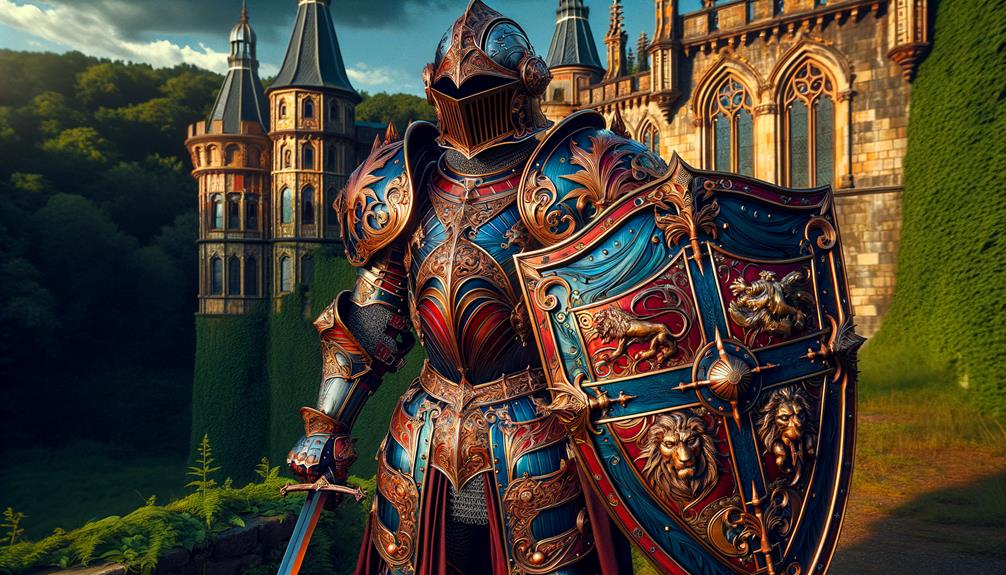
Every color in heraldry has its distinct significance. Combining red, which symbolizes strength, with blue, which represents loyalty, sends a clear message about courage and trustworthiness. The careful thought behind selecting every hue and pairing is evident on shields and garments.
Symbolism of Colors
In the medieval world of heraldry, colors carried meanings that reflected the values and aspirations of the time. Each shade on a coat of arms was a deliberate choice to communicate character and ideals. Red symbolized courage and strength, a trait prized in knights and leaders. Blue represented loyalty, essential in a world where alliances mattered. Green signified hope and joy, while black denoted wisdom and constancy. Purple, a color commanding respect, embodied royalty and high rank.
Gold (Or) illustrated generosity and elevation of mind, whereas silver (Argent) conveyed peace and sincerity. Heraldic furs like ermine and vair added more meaning: ermine stood for purity and dignity, while vair signified wealth and prosperity. The choice of colors was a considered expression of identity and ambition.
A brief overview of their meanings:
| Color | Symbolism | Meaning |
|---|---|---|
| Red | Valor | Courage and strength |
| Blue | Loyalty | Faithfulness and trust |
| Green | Hope | Joy and renewal |
| Black | Wisdom | Constancy and resolve |
These colors told a vivid narrative through each coat of arms.
Color Combinations
The colors on a coat of arms can reveal a deeper, more intricate story, since each hue is deliberately chosen to convey meaning. Red, symbolizing valor, might be paired with gold to emphasize courageous generosity. Blue, representing loyalty, combined with silver, suggests sincere faithfulness and peace.
In illuminated manuscripts, these color combinations were selected to keep the message clear. Green, signifying hope, might be set against the dignity of ermine to balance aspiration and respect. Black, denoting constancy, could be paired with vair to symbolize steadfastness through the ages.
Purple’s regal sovereignty, combined with any other color, further raises the coat of arms’ prestige and authority. The use of bright, strong colors ensures that these symbols register visually, even from a distance. Proper color placement maintains the authenticity of the charges, building a layered meaning that reaches beyond the purely visual into historical and emotional territory.
Common Heraldic Charges
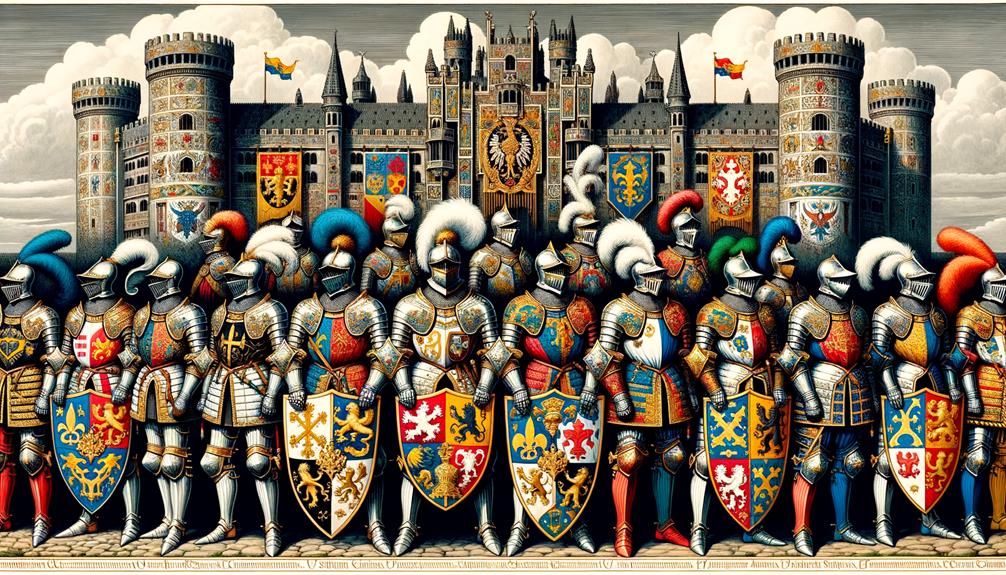
Charges such as lions, crosses, eagles, dragons, and stars carry deep symbolism in medieval heraldry. These symbols were coded messages, conveying information about the bearer’s social status and personal virtues.
The lion, a stalwart of heraldic design, personifies courage, royalty, and strength. It is a bold declaration of noble lineage and valor. Crosses, ubiquitous in heraldry, represent faith, piety, and a strong connection to Christianity. Their presence on a coat of arms often indicated devoutness and moral standing.
Eagles, with their wings spread wide, symbolize nobility, dignity, and exceptional strength. They convey a sense of esteemed status and authority. Dragons, mythical and fierce, are emblematic of wisdom, protection, and formidable strength, often chosen to denote guardianship.
Stars signify honor, ambition, and greatness. They are aspirational symbols, reflecting the bearer’s lofty goals and distinguished character. Each of these charges beautified the heraldic shield while communicating messages about identity and aspiration.
Animals in Heraldic Design
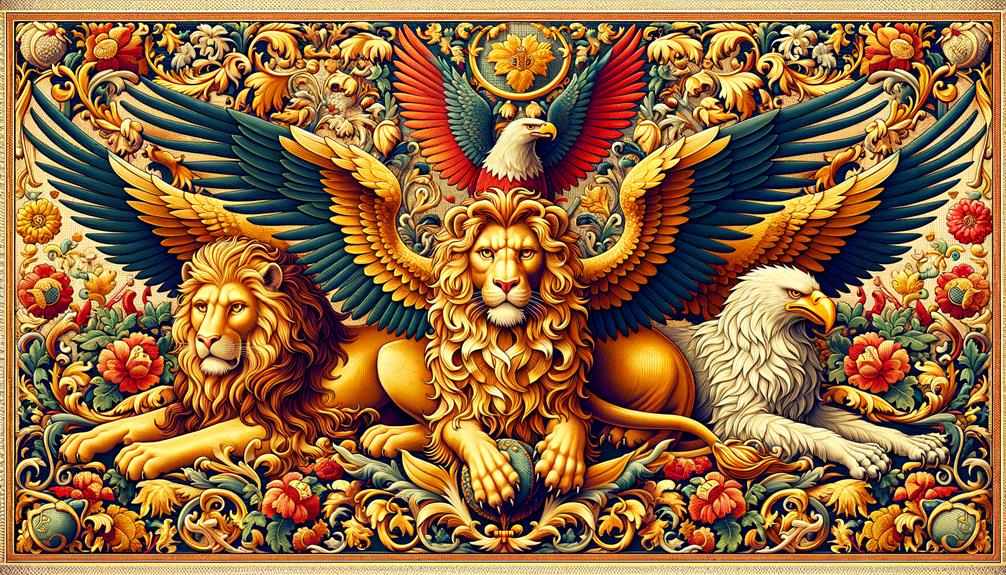
In animals in heraldic design, each creature embodies distinct virtues and historical significance. During the Middle Ages these animals were coded messages about the bearer’s lineage, virtues, and aspirations. Four animals stand out in heraldic symbolism:
- Lions: Often representing courage and leadership, lions were a common sight on the shields of royalty. Their imposing presence signified the regal authority and bravery of the bearer.
- Eagles: Symbolizing strength and vision, eagles were frequently used by noble families. The bird’s ability to soar high and spot distant prey made it a fitting emblem for those who aspired to power and dominance.
- Horses: These noble creatures stood for loyalty and speed. Knights and warriors often chose horses to signify their readiness for battle and their unwavering loyalty to their sovereign.
- Griffins: Combining the strengths of both lions and eagles, griffins epitomized courage and protection. They were mythical guardians, representing vigilance and the fierce defense of a territory.
Heraldic Symbols in Clothing
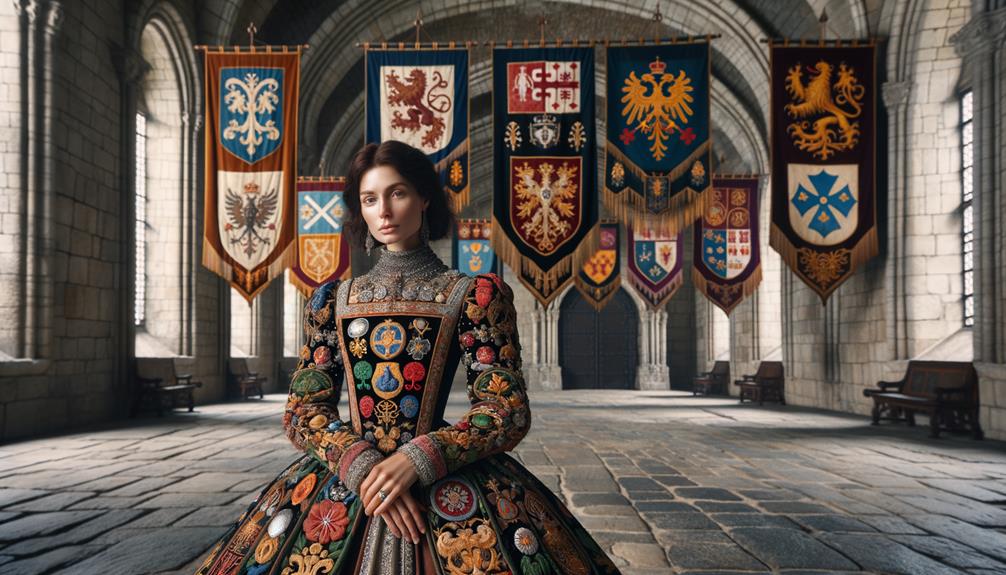
Beyond the bold animals depicted on shields, heraldic symbols intricately adorned the clothing of medieval nobility, telling stories of lineage and status in every stitch. These symbols wove a narrative of identity and allegiance into the fabric of society.
Noble individuals wore their heritage. Every coat of arms, meticulously embroidered or woven, transformed a piece of clothing into a declaration of noble lineage. Heraldic symbols served as essential markers, allowing others to recognize a wearer’s family ties and social standing at a glance. The outerwear carried these symbols, and linings, trims, and accessories were adorned with the same emblems, extending their significance to every layer of attire.
At ceremonial events and court functions, heraldic symbols on clothing were a striking display of wealth and power. The intricate designs communicated personal identity and allegiance to a particular family or kingdom. These garments were a living representation of medieval society’s intricate social hierarchy.
Frequently Asked Questions
What Is Heraldry in the Middle Ages?
Heraldry in the Middle Ages was a system where knights used distinct symbols on their shields to identify themselves on the battlefield. Over time it came to represent a person’s lineage, achievements, and social status, becoming deeply intertwined with medieval culture and identity.
What Do the Symbols Mean in the Middle Ages Coat of Arms?
Symbols in medieval coats of arms work as compact stories: lions represent courage, eagles signify nobility, dragons embody protection, crosses symbolize faith, and stars represent ambition.
What Is the Heraldic Symbol?
Heraldic symbols are unique emblems that represent a person’s lineage, values, or achievements. Each element is carefully crafted to reflect the story of the bearer, making them a blend of art and history.
What Do the Color Mean in Medieval Heraldry?
The colors used in medieval heraldry carried clear meanings: red symbolizes bravery, blue represents loyalty, green signifies hope, black is associated with mourning, and purple represents power. Colors held significant meaning in that context.