Socks and stockings in medieval times were woven with stories and significance, much like the tapestries that adorned castle walls. These often-overlooked garments were once symbols of status and artistry. Crafted from materials like silk, wool, and linen, they kept feet warm while also conveying wealth and allegiance through their intricate designs and vibrant colors. The use of techniques like naalbinding and bias cutting speaks to the remarkable skill of medieval artisans. In medieval society, these garments played a significant role in social hierarchy and daily life, making them fascinating pieces of history.
Evolution of Medieval Footwear
The evolution of medieval footwear is a fascinating story. From humble beginnings with animal skins to the sophisticated socks and stockings worn today, it shows human ingenuity and adaptation over the centuries. Initially, people wrapped animal hides around their feet for basic protection. As time passed, medieval socks began to take shape, crafted from fabrics like piloi, udones, and puttees.

The decisive change came with the introduction of knitted woolen threads, marking the birth of modern socks. This transformation was about fit and form, not just materials. Medieval socks were often secured with garters, ensuring they stayed in place, and were cut on a bias to hug the ankle snugly.
Medieval stockings came in various materials, including linen and wool, and were available in different colors. Sizing was precise, based on calf measurements and shoe size, reflecting an early appreciation for customized fit.
Medieval footwear went beyond practicality. It ranged from sturdy military boots to elegant footwear for noblewomen, each design mirroring the era’s social structure and technological advancements. This journey of medieval footwear highlights a relentless pursuit of innovation and comfort.
Materials and Craftsmanship
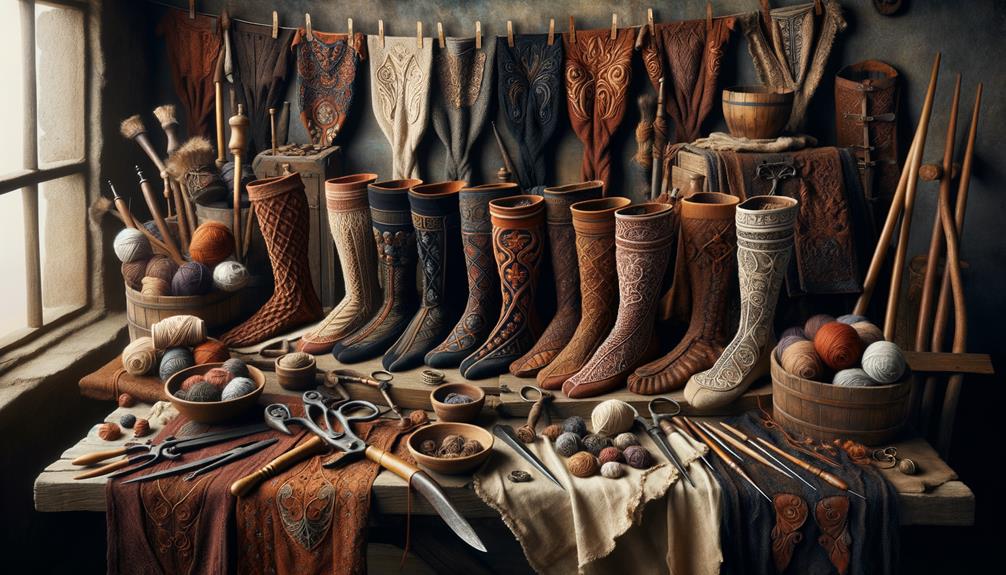
The intricacies of medieval socks and stockings show the remarkable skill and precision that went into creating these historical pieces. Artisans of the time carefully crafted each item, often using wool, linen, and cotton to ensure both warmth and comfort. Wool and linen socks were the workhorses of the medieval wardrobe, with cotton a rare imported luxury rather than a staple.
The craftsmanship involved in creating these socks and stockings was truly exceptional. Techniques such as intricate knitting and detailed hand-sewing were employed, ensuring each piece was functional and also a work of art. The materials and craftsmanship details break down as follows:
| Material | Craftsmanship Technique |
|---|---|
| Wool | Naalbinding |
| Linen | Hand-sewn details |
| Cotton | Intricate knitting |
Each type of sock, from naalbinding socks to clocked stockings, reflects the diverse skills and resources of the time. The meticulous attention to detail, similar to that given to historical military boots or Victorian slippers, underscores a deep appreciation for quality and authenticity. These pieces were masterpieces of medieval ingenuity that blended practical needs with artistic expression.
Styles and Designs
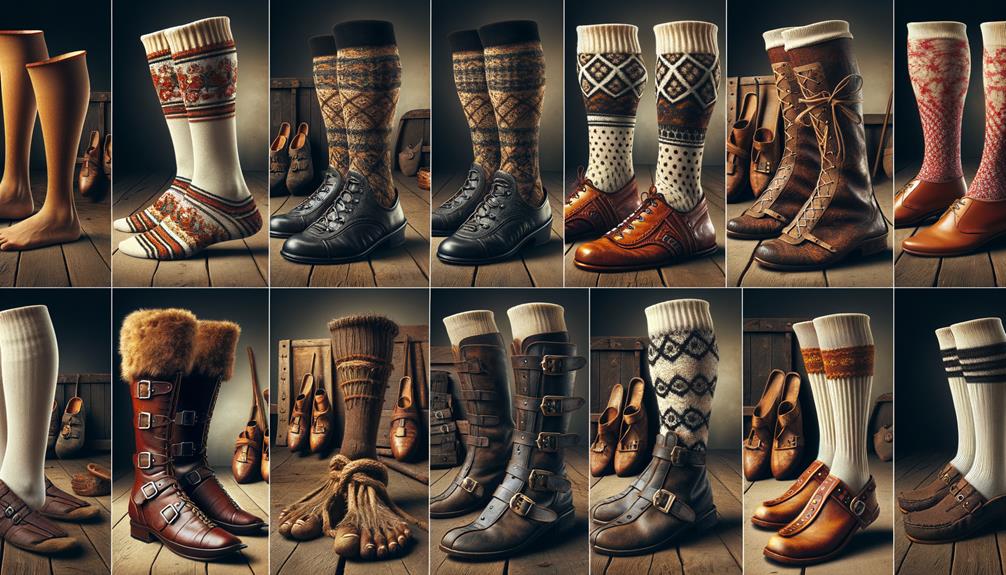
The styles and designs of medieval socks and stockings are marked by intricate embroidery and diverse patterns. The use of materials like wool, linen, and silk, combined with techniques such as naalbinding and knitting, showcases exceptional craftsmanship. Each piece is a unique blend of artistry and practicality, reflecting the rich cultural heritage of the medieval and Renaissance periods.
Embroidery and Patterns
Intricate embroidery on medieval socks and stockings, with their geometric patterns and floral designs, often reflected the wearer’s social status and regional style. Such small garments could carry a great deal of significance. A simple, unicolour knee-high sock might seem plain at first glance, but the addition of ornate embroidery could turn it into a work of art. The geometric patterns often featured on these socks carried cultural motifs and local traditions rather than serving as pure decoration.
Floral designs, on the other hand, added a touch of nature’s elegance, making the wearer’s attire both sophisticated and symbolic. Nobility often wore the most elaborate designs, showcasing their wealth and status. The artisans’ skill was evident in the meticulous hand-stitching, where every thread was placed with precision and care.
Interestingly, embroidery was not purely cosmetic. It also reinforced areas like the heel and toe, adding both beauty and functionality. The patterns ranged from simple stripes to intricate interwoven designs, reflecting the ever-changing fashion trends of the era. Each stitch told a story, making these medieval pieces historical artifacts that have stood the test of time.
Materials and Techniques
The rich embroidery and patterns on medieval socks and stockings were made possible by the meticulous selection of materials and innovative techniques used by artisans of the era. Initially, artisans worked with animal skins, then moved to piloi made from matted animal hair and udones crafted from fabrics. Eventually, they adopted knitted woolen thread, which offered both comfort and durability. This shift marked a significant leap in the craftsmanship of medieval underwear.
Linen and wool were the most common fabric choices. Linen, available in a range of colors, provided a lightweight option, while wool, though more expensive, offered additional color options and warmth. The artisans’ ability to dye these fabrics enhanced the aesthetic appeal of medieval stockings, making them both functional and fashionable.
The techniques used were as innovative as the materials. Cutting stockings on the bias allowed for a fitted ankle, a feature still admired today. These stockings were secured by rolling down and gartering above the knee, ensuring they stayed in place. Inspired by medieval artwork, these designs balanced comfort and style, reflecting the ingenuity of medieval craftsmanship.
Social Significance
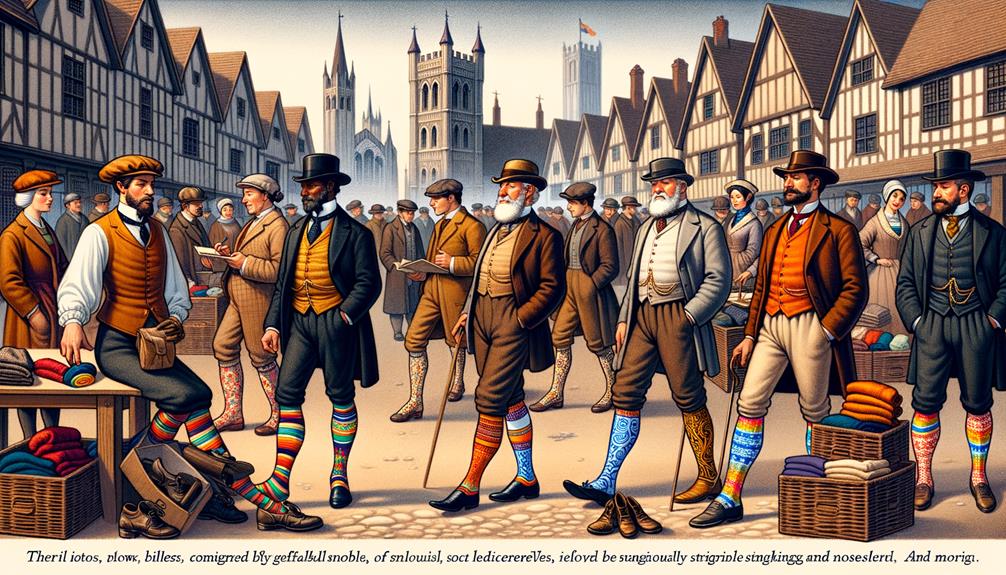
In medieval times, socks and stockings were more than practical items. They were a clear indicator of social status. The colors and materials used often revealed a person’s rank and occupation, effectively turning footwear into a statement of identity. This blend of functionality and symbolism says a great deal about the cultural values and social hierarchies of that era.
Class Distinction Indicators
Medieval footwear shows how socks and stockings served as clear indicators of social hierarchy. Luxurious silk stockings, often worn by the nobility, were a stark contrast to the simple wool or linen socks of peasants. The materials, colors, and designs of these garments were a significant visual representation of one’s place in society, going well beyond comfort or aesthetics.
When examining these indicators, three key aspects stand out:
- Material Quality: The wealthy wore socks made from expensive silk or velvet, while commoners had to make do with more affordable wool or linen.
- Color Significance: Bright, rich colors were reserved for the upper class due to the high cost of dyes, while peasants typically wore undyed, drab-colored socks.
- Embellishments: Intricate designs and embroidery adorned the stockings of the wealthy, serving as a display of their status and wealth.
These distinctions played a significant role in the social fabric of medieval life, making it easy to identify someone’s rank at a glance. The disparity in footwear quality and design was a daily reminder of the rigid class structure that defined the era.
Symbolic Cultural Meanings
Socks and stockings in medieval society were more than a practical piece of clothing. They were a visual representation of one’s social standing, wealth, and occupation. The colors, fabrics, and styles chosen conveyed a person’s status within the social hierarchy. For instance, vibrant colors like crimson or royal blue signified wealth and high social standing, while simpler, natural hues were reserved for the common folk.
The symbolism extended further, with the length of the sock or stocking denoting rank. Nobles and clergy wore longer, more elaborately decorated stockings, while peasants wore shorter, plain ones. Patterns and embroidery told stories of family heritage, religious beliefs, and political allegiances.
| Attribute | Symbolic Meaning | Example |
|---|---|---|
| Color | Social Status | Crimson for nobility |
| Length | Rank or Role | Long stockings for clergy |
| Embroidery | Family Heritage | Crests and symbols |
These intricate details show that identity was woven into every stitch. Medieval footwear went beyond protection or comfort; it was a visual proclamation of who a person was and where they stood in society. Each pair of socks or stockings was a small, yet profound, canvas of symbolic cultural meanings.
Functional Uses
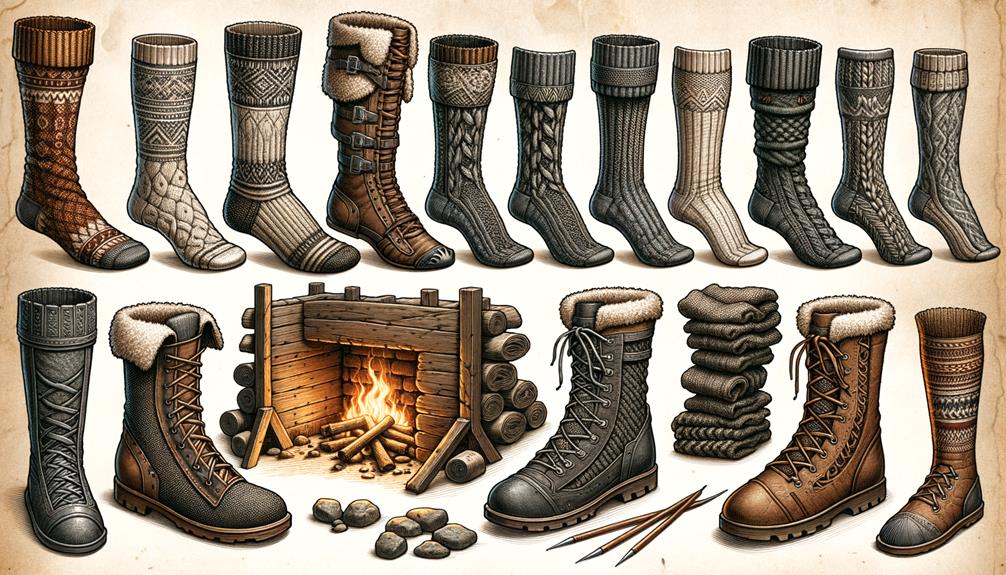
Medieval socks and stockings played a vital role in daily life, offering both practical warmth and essential protection against the elements. Made from wool or other natural fibers, these garments provided much-needed insulation during cold winters, ensuring that feet stayed warm and dry. They were a necessity for survival, not merely a comfort.
The functional uses of these garments can be broken down into three key areas:
- Protection: Medieval socks and stockings shielded feet from harsh weather and rough terrains, making them essential for peasants working the fields and soldiers marching into battle.
- Support: Crafted to fit snugly, knitted hose offered excellent support, reducing fatigue and discomfort. This was particularly beneficial for soldiers, who benefited from the added support during long marches.
- Versatility: Available in various weights, from heavy to light, these garments were adaptable for different climates and activities, making them indispensable in medieval wardrobes.
Regal ladies’ footwear often featured elegant designs, demonstrating that functionality didn’t exclude style. Linen and wool stockings, handcrafted by specialist artisans, ensured durability and authenticity. The artistry behind these items was impressive, blending form and function with ease. In an era where practicality reigned supreme, medieval socks and stockings were innovative solutions to everyday challenges.
Modern Reproductions

In today’s market, there is a fascinating array of modern reproductions that capture the essence of medieval socks and stockings, blending historical authenticity with contemporary comfort. These items echo the past while accommodating present-day needs. Brands have carefully examined historical artwork and surviving examples to ensure their designs remain faithful to the original garments.
Most striking is the variety of materials available, from cotton and linen to wool, each offering a different level of comfort and practicality. There is a range of colors to match a personal style or the specific historical period being replicated. Many of these reproductions come in one size, which simplifies the purchasing process, although some brands do offer multiple sizes for a better fit.
These socks and stockings are especially popular among reenactors, historical costume enthusiasts, and LARPers. The attention to detail in these reproductions allows for an immersive experience, making the wearer feel as though they have stepped back in time. With frequent discounts and offers available, these wearable pieces of history have become even more accessible. It is an exciting time to explore this unique blend of past and present.
Frequently Asked Questions
What Did Medieval People Wear as Socks?
In medieval times, people wore a variety of socks, each reflecting a quest for practicality and comfort. Animal skin socks provided durability, while piloi made from matted hair offered an innovative solution. Later, udones made of fabric and eventually knitted woolen socks emerged, showcasing a continuous pursuit of comfort and functionality.
Did They Have Stockings in Medieval Times?
In medieval times, people wore stockings that were early innovations in leg warmth. They started with animal skins, evolved into fitted fabrics, and came in various colors and sizes, secured by garters, blending historical accuracy with evolving comfort.
What Is the Medieval Word for Socks?
The medieval word for socks is “hose”, which also covers stockings. The language and clothing have evolved over time since then, reflecting advancements in textile technology and a continuing quest for innovation.
Do Knights Wear Socks?
Yes, knights wore socks, known as hose. These wool or linen garments, often brightly colored, showcased social status and provided vital warmth and protection during battles and long journeys.