The Barong Tagalog captivates with its airy fabrics and intricate embroidery, a close blend of tradition and innovation. This quintessential Filipino garment, worn untucked, exudes resilience and adaptability. It’s a tangible celebration of artistry, each stitch a homage to the nation’s evolving identity. There’s an undeniable allure to how this seemingly simple piece commands respect and pride, inviting readers to peel back its layers and unravel its multi-faceted meanings.
History of Barong Tagalog
The Barong Tagalog‘s origins trace back to Spanish colonization, blending Filipino traditions with foreign influences. This attire’s evolution is striking, merging local and external elements. With its translucent fabric and intricate embroidery, the Barong speaks volumes about Filipino ingenuity and adaptability.

Consider early Filipinos adapting their clothing under Spanish rule. Native styles transformed, embodying a new identity while preserving cultural roots. The Barong is more than clothing; it’s a narrative woven into fabric.
Its untucked design stands out, a subtle defiance against colonial formality. This national costume carries a legacy of resilience and pride. Witnessing it at formal events evokes a deep connection to history and heritage.
The calado embroidery silently narrates tales of the past, stitching stories into every thread. The Barong is more than attire; it’s a symbol of how innovation and tradition coexist, creating something distinctly Filipino.
Fabrics and Materials
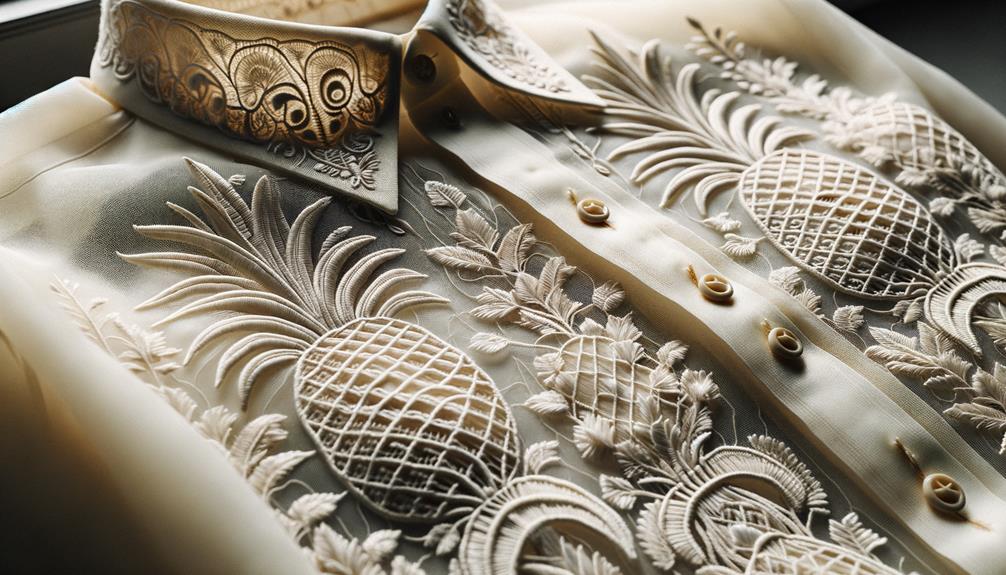
Cradling the delicate pina and jusi fabrics is an exercise in stepping back in time, sensing the whispers of history and tradition. These fibers, spun from pineapple and banana, embody the essence of the Barong Tagalog. The pina’s sheer, lightweight texture holds an ethereal beauty, while the jusi’s subtle sheen and durability create an elegant yet resilient garment.
Contemporary iterations embrace organza’s crisp texture, striking a balance between tradition and modernity. These fabrics define the Barong’s aesthetics and wearability, making it suitable for formal events, especially in warm climates.
Practical linen and polyester blends have also found their place in modern designs, ensuring the Barong remains accessible for everyday wear.
Hand-painted silk or organza Barongs transform the garment into an artistic canvas, blending the past with the present.
Embroidery and Design
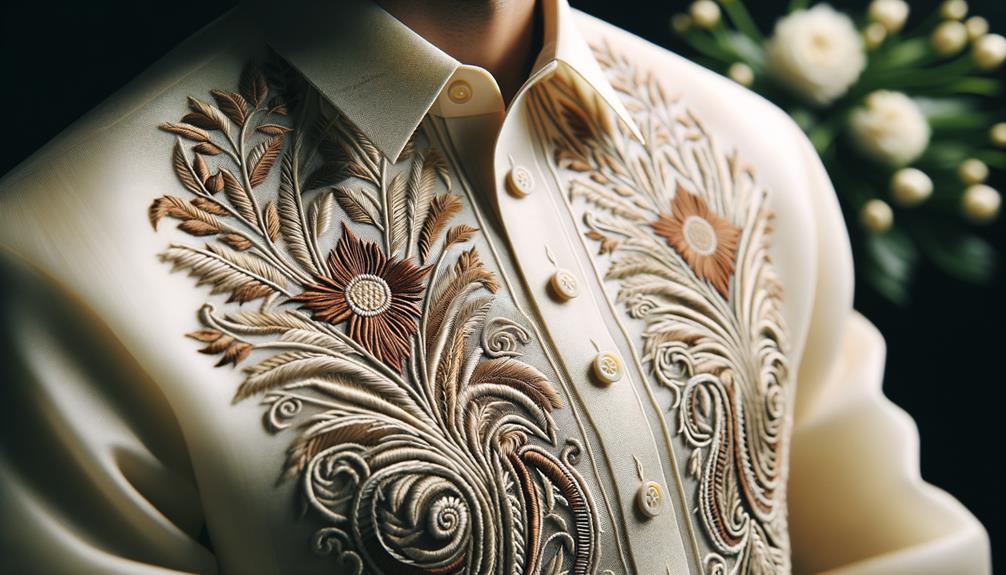
Leaving the fabrics behind, the intricate embroidery that infuses life into each Barong Tagalog inspires real awe. The patterns, floral, geometric, or historical, transcend mere decoration, weaving narratives into the fabric itself. Every stitch represents hours, sometimes weeks, of painstaking craftsmanship.
Barong Tagalog embroidery celebrates the Philippines’ cultural diversity, with designs varying regionally. Unique techniques like calado, an exquisite form of cutwork, add layers of sophistication and intricacy.
- Floral motifs evoke nature’s beauty and growth.
- Geometric shapes exude modernity and precision.
- Historical elements pay homage to Filipino heritage.
- The calado technique demands exceptional skill in delicate cutwork.
- Regional variations capture each province’s distinct cultural story.
These embroidered masterpieces instil profound respect for the artisans. Their work lifts the Barong Tagalog from ordinary attire to a canvas portraying Filipino identity. The designs also signify social status and personal flair, rendering each garment a unique statement.
In an era of mass production, this hand-embroidery stands as a mark of dedication and artistry, resonating a timeless connection between past and present.
Occasions to Wear
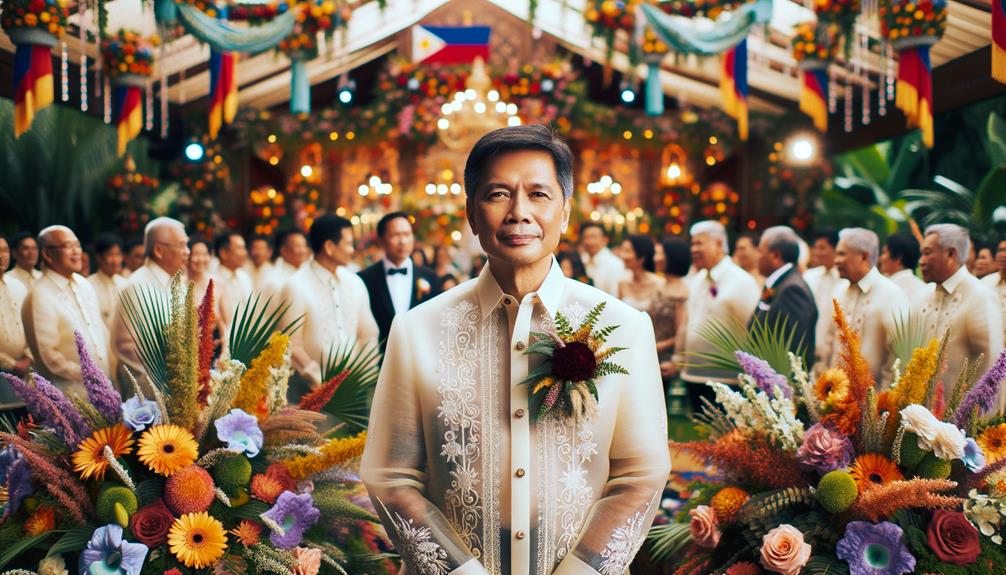
The Barong Tagalog effortlessly graces occasions ranging from weddings to business meetings. Its versatility shines through, suitable for formal and semi-formal events alike. Wearing this traditional garment is like embracing centuries of rich cultural heritage intricately woven into every thread.
Traditional Ceremonial Events
Traditional events display the Barong Tagalog’s cultural significance. The intricate embroidery and delicate fabrics represent deep-rooted traditions.
The Barong Tagalog makes a stylish appearance at:
- Weddings: Celebrating love with heritage.
- Baptisms: Welcoming new life in traditional attire.
- Graduations: Marking milestones with cultural pride.
- Festivals: Showcasing the richness of Filipino culture.
- State functions: Asserting national identity globally.
Its lightweight fabric keeps the wearer cool in tropical climates, while elaborate designs command attention. Wearing the Barong Tagalog pays homage to Filipino roots while embracing the present.
The Barong Tagalog bridges past and future. It harmonizes tradition with innovation, embodying an evolving identity.
Formal Business Gatherings
Formal business gatherings transform when attendees don the Barong Tagalog. This traditional Filipino attire oozes sophistication, blending cultural roots with professionalism. The intricate embroidery and fine fabric go beyond aesthetics; they represent deep respect for Filipino heritage.
Donning a Barong Tagalog makes a statement. It conveys appreciation for tradition while maintaining a polished demeanor. Paired with formal trousers and shoes, the ensemble harmonizes modernity and heritage.
The Barong Tagalog bridges past and present remarkably. In business settings, it becomes a physical manifestation of cultural identity intertwined with innovation. Wearing this garment instils a profound sense of connection to one’s roots while confidently striding into the future.
Cultural Celebrations and Festivals
Cultural events serve as vibrant backdrops for the Barong Tagalog’s timeless elegance. It radiates rich Filipino heritage, more than mere attire, a sartorial embodiment of identity. Men wear it proudly at weddings, Independence Day parades, and other significant gatherings, evoking cultural pride.
The Barong Tagalog dons its most popular form, the Blue Barong, lending a modern flair while preserving tradition. Complementing this, women grace events in Filipiniana dresses like the iconic Terno or Maria Clara gowns, woven with historical threads. These garments transcend mere clothing, tying wearers to their roots and celebrating their uniqueness.
Various occasions showcase the Barong Tagalog and Filipiniana dress in their full splendor:
- Weddings: Gracing both altar and reception with timeless elegance.
- Fiestas: Infusing joyous festivities with vibrant flair.
- Flores de Mayo: Enhancing the beauty of floral parades.
- Santacruzan: Exuding regal charm in grand processions.
- Pahiyas Festival: Complementing the vibrant, ornate decorations.
In these moments, the Barong Tagalog and Filipiniana dress aren’t mere garments; they radiate the spirit and pride ingrained in Filipino culture.
Modern Styles
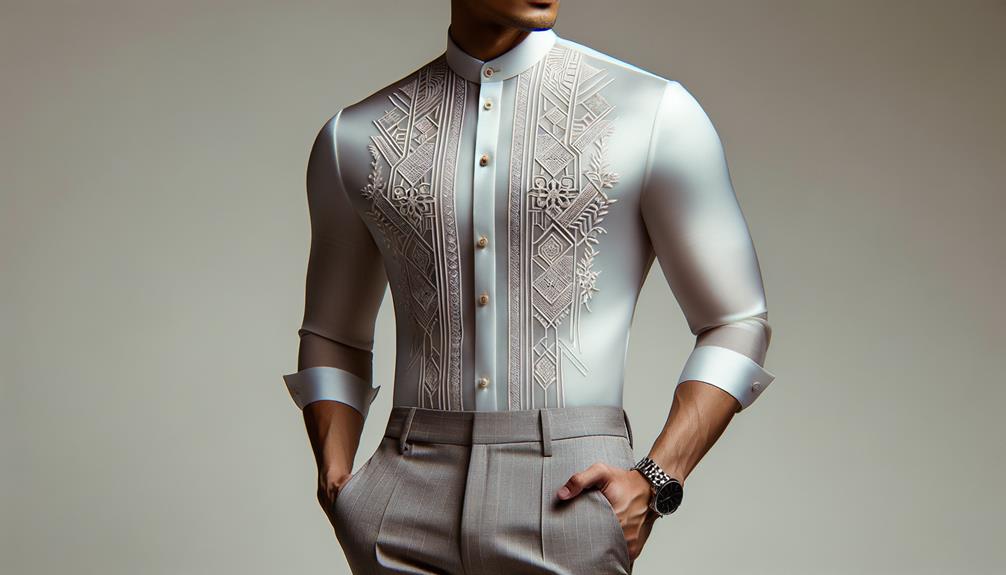
Traditional Barong Tagalog clothing creatively blends age-old designs with tailored modern cuts nowadays. These garments have evolved, showcasing both cultural heritage and innovative sensibilities. Take the modern Filipiniana Barong Dress, for instance: intricate floral embroidery adorns sheer organza skirts, lending an air of sophistication.
Recent years witnessed a surge in custom-fitted Barong Tagalog styles, gracing the classic silhouette with a fresh, polished aesthetic. Designers experiment with hand-painted silk cocoon tops and embroidered linen blazers. Traditional fabrics transformed into contemporary yet deeply Filipino-rooted ensembles is worth watching.
Gingham patterns and silk wrap skirts add variety to modern Filipiniana fashion, catering to diverse tastes. The mermaid-style skirts are particularly eye-catching, blending timeless silhouettes with modern tailoring. This evolution allows wearers to showcase unique fabrics, cuts, and embellishments, infusing personal flair into traditional attire.
Ultimately, today’s Barong Tagalog and Filipiniana dresses transcend mere clothing; they’re statements of identity and ingenuity. These styles pay homage to the past while fearlessly embracing the future, offering a versatile and stylish option.
Care and Maintenance
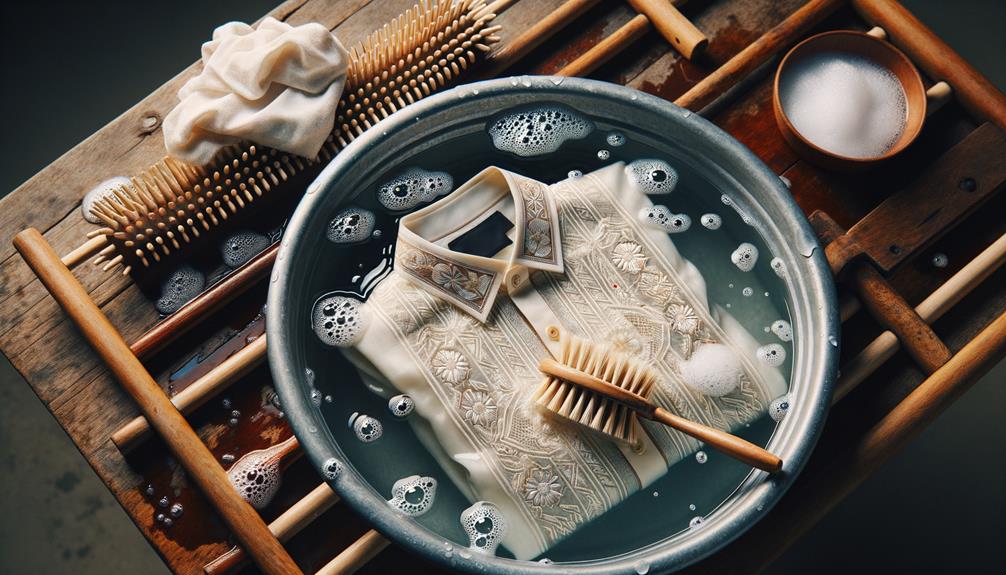
Caring for a Barong Tagalog requires dedication. Hand washing with a mild detergent and air drying it on a hanger preserves the delicate fabric and shape. Following proper storage and cleaning routines keeps it looking sharp and fresh.
Proper Storage Techniques
Keeping a Barong Tagalog in pristine condition requires proper storage techniques. The elegant Filipiniana attire demands meticulous care, especially for the traditional Barong Tagalog. Safeguarding this garment involves more than just hanging it in the closet.
To maintain a Barong Tagalog’s impeccable condition, follow these tips:
- Store it in a garment bag or breathable fabric to protect it from dust and sunlight.
- Avoid wire hangers; they can stretch and distort the delicate fabric.
- Choose a cool, dry location to prevent mold or mildew growth.
- Use lavender sachets or cedar blocks to deter pests and keep it fresh.
- Regularly inspect for any signs of damage or discoloration.
These practices ensure a Barong Tagalog looks as fresh as the day it was acquired. A little effort in proper storage goes a long way in preserving the garment’s integrity and elegance. For those who appreciate the blend of tradition and innovation, these techniques are essential. The Barong Tagalog deserves nothing less than meticulous care.
Cleaning Best Practices
Maintaining the beauty of a Barong Tagalog requires care. Hand washing with mild detergent gently cleans the delicate fabric without damaging intricate details. Avoid harsh dry cleaning chemicals that could ruin the material.
When washing, handle the garment carefully, gently scrubbing only where needed. Drip drying on a hanger prevents warping or stretching, keeping the crisp, formal shape intact.
Check fabric care labels for specific instructions. Custom-fit Barongs deserve extra attention to preserve their distinguished look.
Frequently Asked Questions
What Does Barong Symbolize in Philippines?
The barong tunic has deep roots in Filipino culture, weaving together Spanish influences with local traditions. Slipping one on brings a sense of national pride, an elegant nod to Filipino heritage that never goes out of style.
Why Is Barong Tagalog Expensive?
Barong Tagalog’s hefty price tag stems from meticulous handmade embroidery, premium fabric quality, and skilled craftsmanship from expert artisans. Customized designs and reputable brands drive up costs, turning each piece into a labor-intensive, one-of-a-kind wearable art form. These eye-catching garments require extensive effort, justifying their higher price point compared to mass-produced clothing items.
What Is the Female Version of Barong?
The traditional Filipino counterpart to the Barong is the Filipiniana dress. The blend of heritage and modern twists, like the Maria Clara and Terno styles, is genuinely striking. These outfits encapsulate Filipino culture in a compelling way.
What Is a Traditional Filipino Dress Called?
The traditional dress for Filipino women is known as the Baro’t Saya. This ensemble blends elegance with cultural roots, crafted from delicate fabrics. Its evolution embraces modern interpretations while honoring the nation’s heritage.