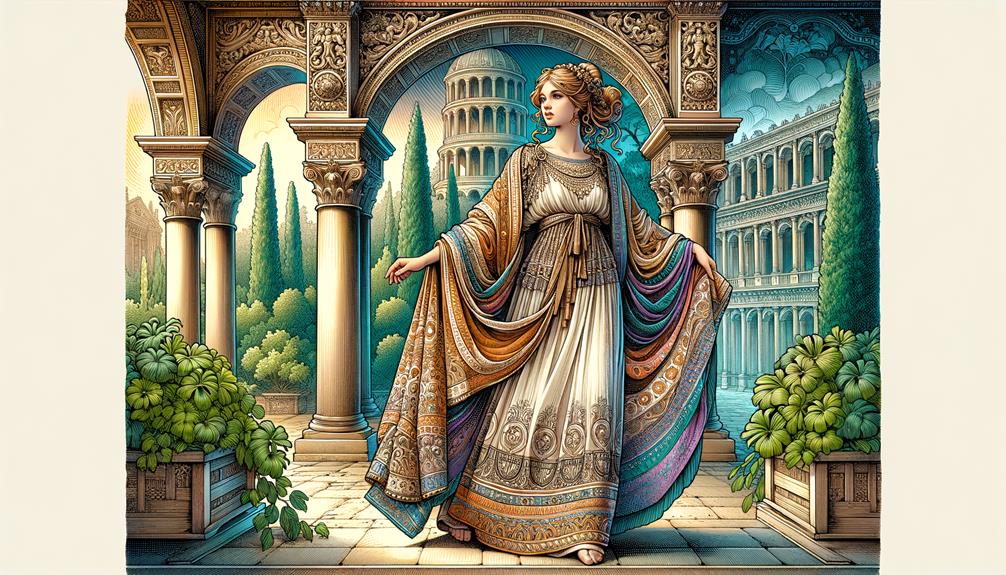
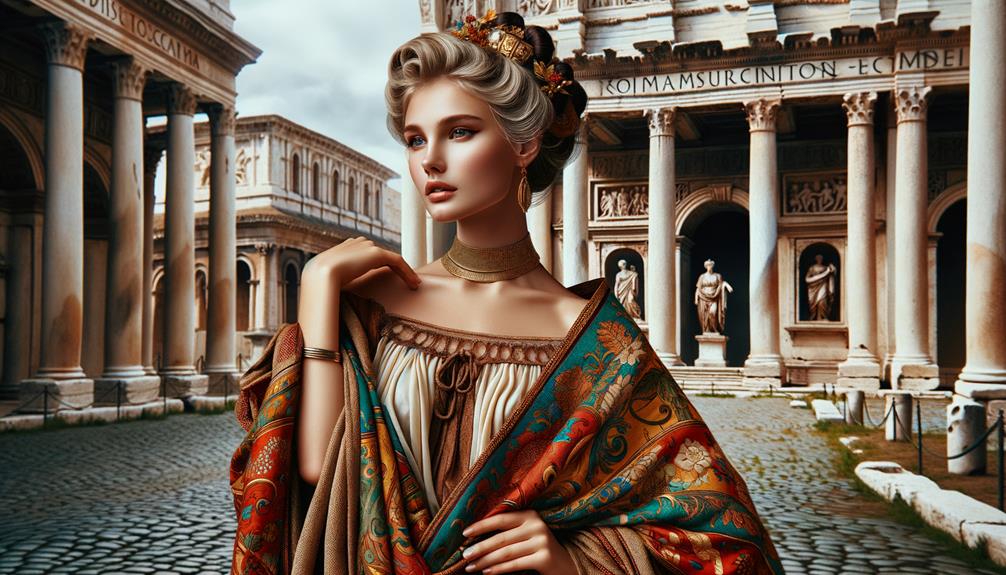
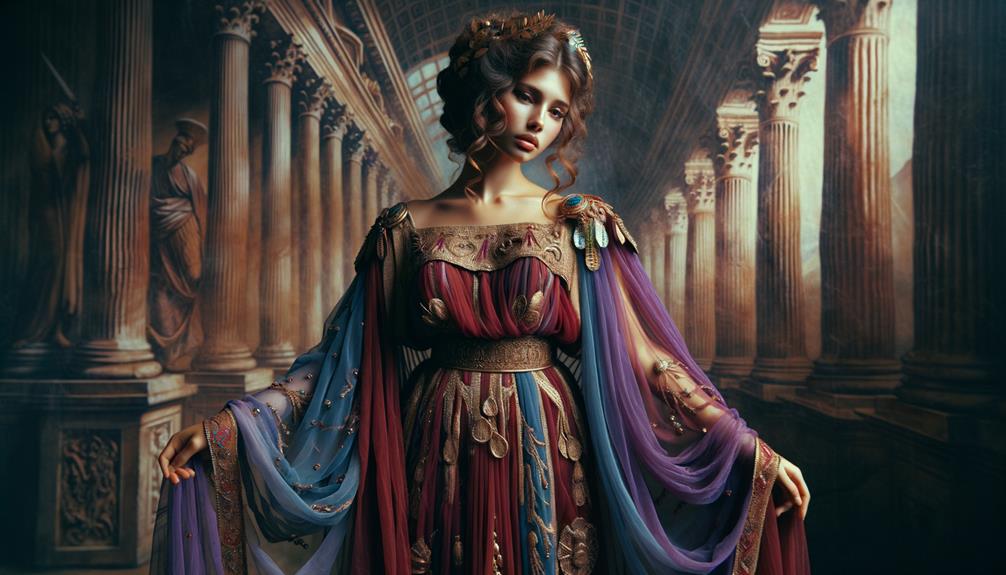
Roman fashion for women was more than just about covering the body; it was a reflection of social status and identity. A simple tunic was the foundation, while the stola, elegantly draped over it, signified a woman’s respectability and marital status. The palla shawl added a touch of sophistication and individuality. The choice of fabrics like wool, silk, and linen, along with intricate jewelry, spoke to a person’s wealth and taste. How these elements intertwined with daily life and societal norms reveals much about the period.
Ancient Roman Tunics
How did tunics, the essential garments of Ancient Roman women, shape their daily lives and social identities? In Ancient Rome, tunics were more than clothing; they were a reflection of one’s status and identity.
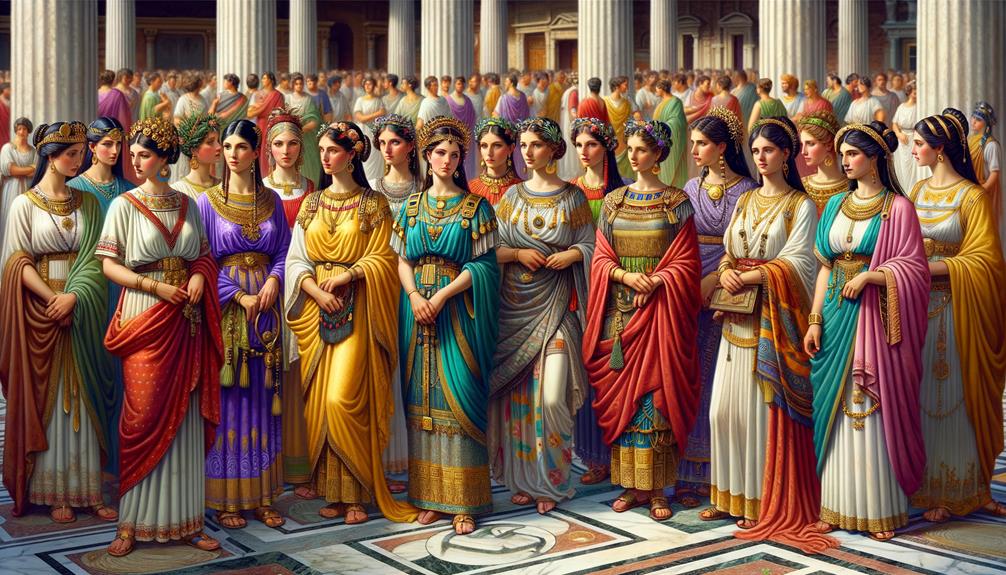
For women from lower social classes, tunics served as practical, everyday wear. These simple garments resembled modern dresses and were functional, yet they also revealed one’s social standing. In contrast, wealthy women transformed their tunics into symbols of prestige by layering them with stolas, those long, sleeveless dresses that conveyed respectability and marital status.
Young girls wore tunics until they got married. This ceremonial garment marked their transition from childhood to womanhood. After marriage, they donned the stola, signaling a rise in social status and maturity.
The intricate designs and adornments on rich women’s tunics, such as fibulae, showcased their wealth and social standing. These details went beyond decoration; they were statements of power and influence, clear to anyone who saw them.
Tunics, in their simplicity and diversity, played a significant role in shaping the daily lives of Roman women. They were woven threads of social identity and status, deeply ingrained in Ancient Rome’s fabric.
The Stola Dress
The stola has a rich history. This long, sleeveless tunic, typically made of wool, was a symbol of dignity and respectability. Married women wore it with a girdle, which set them apart in society.
Historical Significance
In ancient Roman society, the stola was more than a piece of clothing; it was a symbol of a woman’s respectability and marital status. When a woman got married, she would wear the stola, a long, sleeveless tunic made of wool, over her regular clothes. This garment differentiated her from others, showcasing her dignity and modesty. The stola was fastened with a girdle high above the waist, highlighting her new role and respectability.
Women who were divorced or considered less respectable, like courtesans, were not allowed to wear the stola. This restriction underscored its significance in Roman culture. The stola wasn’t just a piece of fabric; it represented a woman’s moral character and social standing. By wearing it, a Roman woman was embracing a long-standing tradition and acknowledging the virtues expected of her.
The stola became a powerful symbol of a woman’s identity and her adherence to societal norms. It was a visual cue to society about her marital status and social standing. In essence, the stola was a badge of honor for those who had entered matrimony, and it played a significant role in shaping a woman’s sense of self within the social hierarchy.
Design and Fabric
The stola, a long, woolen tunic, was the epitome of elegance and decency for a married Roman woman. The choice of wool fabric reflected the practical yet refined nature of Roman women, valuing durability and comfort. This sleeveless garment, worn over a tunica, signified marital status and societal respectability.
The design of the stola was simple yet sophisticated. Fastened with a girdle high above the waist, it created a flowing silhouette that emphasized modesty. Decorative brooches, or fibulae, often adorned the stola, adding a touch of personal flair without compromising its traditional essence. The stola’s length and fabric symbolized a woman’s commitment to her household and her role within society.
In public, the stola was paired with a palla, a draped cloak, distinguishing married women from their unmarried counterparts. This combination highlighted the importance of societal status in Roman culture. The stola wasn’t just a piece of clothing; it was a statement of identity and respect. In an era where appearances conveyed much about one’s place in the world, the stola dress was an essential part of a Roman woman’s wardrobe.
Styling Techniques
Styling the stola began with selecting a finely woven girdle to cinch it high above the waist, creating that iconic Roman silhouette. In ancient Rome, women wore stolas made from two rectangular pieces of fabric, traditionally wool, to symbolize respectability. The positioning of the girdle marked the difference between married and unmarried women.
Decoration came next. Intricate fibulae and elegant flounces add to the charm of the garment. These details transform it from mere traditional clothing to a statement of dignity and beauty.
The stola isn’t complete without the palla. Draping this <strong>long cloak</strong> over the shoulders so that it flows gracefully communicates social status. This outdoor accessory offers modesty and displays adherence to cultural norms.
Each element of the stola, the girdle, the decorations, and the palla, speaks to an inventive approach to fashion. The simplicity of two rectangular pieces combined with thoughtful styling techniques transforms it into a timeless expression of Roman femininity.
The Palla Shawl
Draping a palla over the shoulders gave an immediate sense of elegance and sophistication. For a Roman woman, this shawl was more than a piece of clothing; it was an extension of her identity. The palla shawl was versatile, allowing it to be draped around the body in various styles, each one chosen to suit the mood and the occasion.
Worn outdoors, the palla served a practical purpose, shielding the wearer from the elements. It was also a statement, quietly communicating the wearer’s place in society. The palla acted as a personal canvas, showcasing beauty, wealth, and status without needing to say a word.
- Versatility: it could be styled in multiple ways.
- Protection: it shielded the wearer from the weather.
- Elegance: a symbol of refinement.
- Status: it indicated social standing.
- Identity: a personal expression of the wearer’s character.
Each palla told a story, woven into the fabric of Roman life. The shawl was an integral part of women’s clothing, blending functionality with elegance. It also connected the wearer to the generations of women who came before, each drape evidence of the enduring allure of Roman fashion.
Fabrics and Colors
Roman women chose fabrics and colors that reflected their identity and status. Wool was the usual choice, the foundation of most Roman women’s clothing. It was practical, yet versatile. Silk, though rare and luxurious, hinted at exotic origins and opulence. Linen or cotton, lighter and cooler, were preferred for the warmer months.
Colors spoke volumes. White conveyed virtue and simplicity, while vibrant hues like orange drew attention and reflected social standing. Maintaining these colors was crucial. Women regularly visited dye shops and fuller shops to keep their garments looking their best.
Clothing conveyed identity. The fabric’s texture against the skin and the color’s vibrancy in the light were more than aesthetics; they were silent declarations, daily choices woven into the fabric of Roman society. Roman women’s fashion was not just about wearing clothes. It was about crafting identities with each thread and shade.
Hairstyles and Jewelry
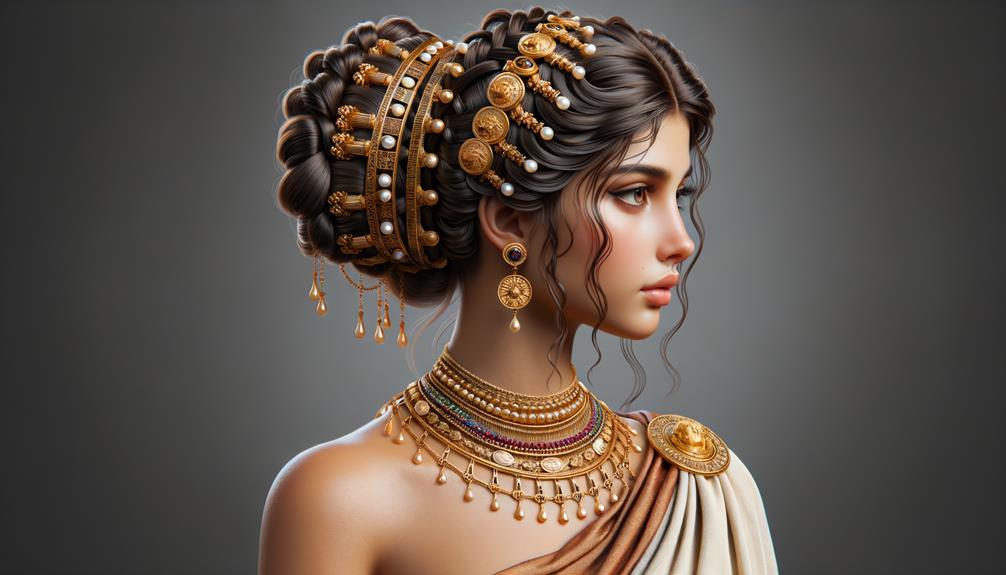
Roman women spared no detail when it came to their hairstyles and jewelry. They often took cues from empresses, adorning themselves with intricate hair accessories and elegant gemstones. Gold and pearls were status symbols, blending beauty with social standing.
Elegant Hair Accessories
Roman women’s hairstyles, intricate and elaborate, often relied on ornate hairpins, wigs, and hairnets to achieve their sophisticated looks. These accessories were artistic expressions as much as practical tools, symbols of status and innovation.
Hairpins, crafted from bone, ivory, or precious metals, held elaborate hairstyles in place. Wigs offered versatility, letting Roman women experiment with different looks without altering their natural hair. Hairnets, woven with gold or silk threads, added an extra layer of luxury and refinement.
Jewelry played a vital role in enhancing these elegant hairstyles. Fibula pins secured garments and doubled as decorative pieces. Earrings, often featuring pearls, framed the face beautifully. Necklaces and rings, laden with intricate designs, further accentuated their elegance.
Roman portraits vividly depict women adorned with these accessories, highlighting their significance in society. Their fashion went beyond appearance; it reflected identity, status, and innovation. Through their hairstyles and jewelry, Roman women expressed themselves, merging tradition with creativity. In every twist, pin, and adornment, they told a story of elegance and refinement.
- Hairpins: crafted from bone, ivory, or precious metals
- Wigs: offered versatility in hairstyles
- Hairnets: added a luxurious touch with gold or silk threads
- Fibula pins: functional and decorative
- Earrings, necklaces, rings: intricate designs added elegance
Gemstones and Metals
Jewelry adorned with pearls, emeralds, and amethysts showcased Roman elegance and wealth. The Romans understood the significance of precious gemstones, intricately designing them into gold and silver pieces. Each piece told a story; cameos carved with scenes and figures offered a glimpse into their world.
Hairpins, more than just accessories, were crafted from gold and silver to hold together elaborate hairstyles, signifying status. They were art as much as practical tools. The metals’ sheen contrasted with dark, coiled hair, creating a visual display of luxury.
In Roman society, appearances mattered. Precious gemstones and metals communicated more than beauty; they conveyed social standing. A woman wearing an emerald necklace showcased her family’s wealth. A cameo brooch on her tunic spoke of her refined taste and cultural knowledge.
Every piece of jewelry and hairstyle choice was deliberate, reflecting individual status within the societal hierarchy. Precious gemstones and metals didn’t just adorn; they conveyed messages of opulence and sophistication. Every hairpin and necklace was more than decoration; it was a declaration of identity and a statement of innovation in a world that valued beauty and meaning.
Cosmetics and Beauty
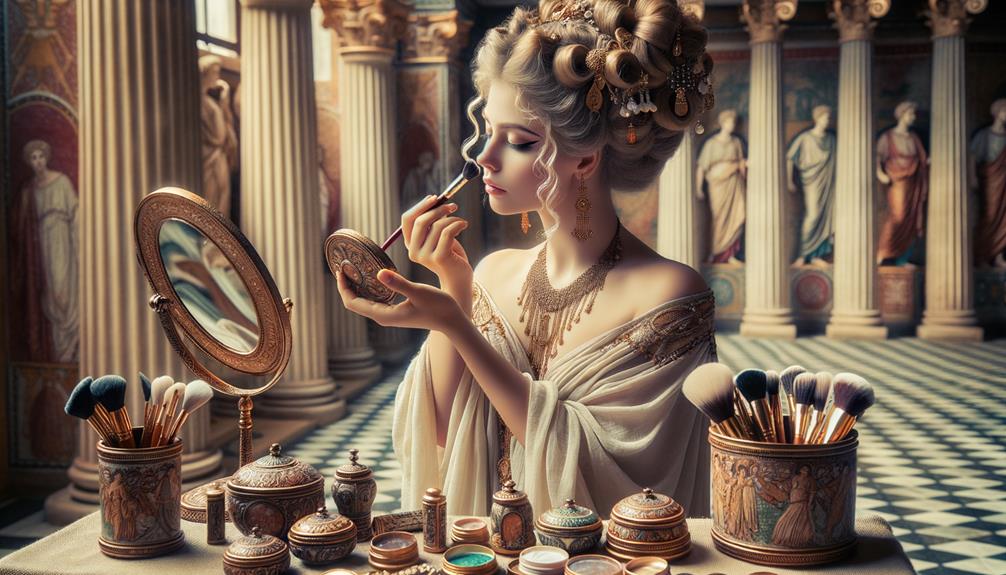
From the vibrant hues of saffron to the deep shadows of kohl, ancient Roman cosmetics reveal a great deal about the lives of Roman women. Their use of cosmetics went beyond looking good; it was a daily ritual that spoke volumes about their culture and values.
Roman women employed a variety of beauty enhancements. They used white lead and chalk to achieve a pale, smooth complexion, and rouge to add a delicate flush to their cheeks. Kohl was used to define their eyes, echoing the iconic look of Cleopatra. Natural ingredients like saffron and herbs were used to create lip colors. Perfumes made from flowers and spices were used to mask odors and add allure.
Skincare was also a vital part of their daily routine. They used oils, creams, and masks crafted from honey, milk, and olive oil to nourish and rejuvenate their skin. This meticulous routine highlights their keen understanding of natural ingredients and their benefits.
These beauty practices went beyond appearance; they were about taking care of themselves. Through these rituals, Roman women connected with the world around them, using what nature provided to enhance their beauty and well-being.
Social Status and Fashion
In ancient Rome, fashion was a powerful tool for communicating social status. A woman’s attire went beyond personal style; it was a public declaration of her family’s wealth and class. The type of fabric used in clothing was a significant indicator of social standing. Luxurious silks were reserved for the elite, while simpler fabrics like wool and linen were worn by the lower classes. Brightly colored silks, in particular, were a status symbol.
Accessories played a crucial role in conveying social status as well. Ornamental hems, known as instita, adorned the garments of wealthy women. These decorative elements were not just aesthetically pleasing; they were a symbol of prosperity and wealth. Hairstyles also varied by social class. Upper-class women often sported intricate hairstyles, while simpler styles were more common among the lower classes.
Here’s a breakdown of how fashion varied by social class:
| Social Class |
Materials Used |
Common Accessories |
| Lower Class |
Wool, Linen |
Simple Jewelry |
| Middle Class |
Linen, Dyed Fabrics |
Modest Ornaments |
| Upper Class |
Silk, Embroidered Fabrics |
Elaborate Jewelry |
| Wealthy Elite |
Brightly Colored Silks |
Instita, Precious Gems |
| Senatorial Class |
Finest Silks, Gold Trim |
Gold Ornaments |
In ancient Rome, fashion was a reflection of the societal hierarchy. It was a way for people to showcase their wealth, status, and power.
Frequently Asked Questions
What Did Roman Females Wear?
Roman women wore a stola, a symbol of respectability and modesty. Made of wool and sleeveless, it was often paired with a palla when going outdoors. This traditional attire reflected social status and conformed to Tertullian’s ideals, but any deviation from this traditional dress code would invite criticism, as Juvenal’s satires often targeted women who strayed from the norm.
How to Dress up Like a Roman Woman?
To channel a Roman woman’s style, focus on the stola, palla, and some seriously intricate hairstyles and jewelry. These elements carry the ancient Roman look.
What Did Unmarried Women in Rome Wear?
Unmarried women in ancient Rome wore simple, shorter tunics that didn’t include the stola, a traditional garment reserved for married women. This minimalist approach to fashion likely conveyed a sense of freedom and social status. The styles of ancient civilizations still offer a useful model for anyone rethinking modern fashion around simplicity and purpose.
What Did Ancient Roman Women Look Like?
Only a small percentage of Roman women lived into their 70s. They typically had olive skin, dark hair, and eyes. Their hairstyles varied greatly, reflecting their individual style and social status. The way they balanced practicality and elegance in their appearance remains striking.