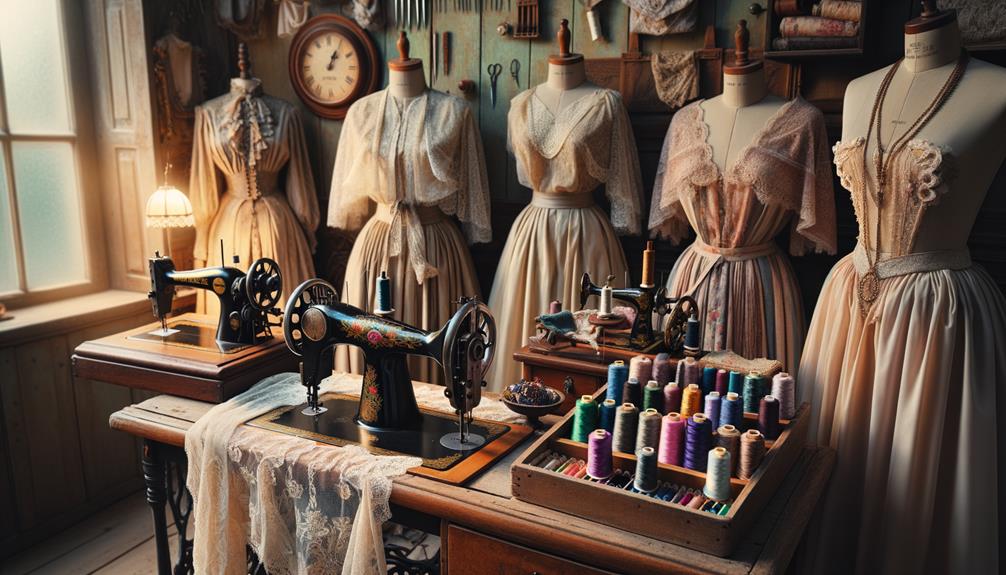
Preserving historic textiles is a meticulous art form, where every technique speaks to human ingenuity and care. From controlling temperature and humidity to prevent mold, to gently using HEPA-filtered vacuums, these delicate fibers require a deft touch. Storage is an art too, with acid-free tissue and flat techniques ensuring preservation. When displaying textiles, UV-filtering covers and careful lighting protect against the relentless march of time. Cleaning, whether spot or ultrasonic, demands precision, cleansing without harm.
Understanding Textile Instability
The fragility of textiles is a reminder of the delicate balance of life itself. These silent witnesses of time are as susceptible to their environment as we are. The dance of temperature, humidity, and light exposure threatens their very existence.

Each thread and weave shows human innovation, yet also a reminder of our struggle against entropy. The relentless march of time, coupled with fluctuating conditions, can discolor, embrittle, and weaken textiles. Light exposure further exacerbates this fragility, fading vibrant hues.
Long-term textile preservation demands a sanctuary from these environmental foes: a space with meticulous humidity control and minimal light exposure.
Understanding textile instability goes beyond an academic exercise; it is a clear acknowledgment of their ephemeral beauty. Each piece holds stories that could dissolve without vigilant care. Preserving these delicate artifacts requires balancing respect for tradition with the urgent need for conservation.
Key Environmental Factors

Preserving textiles depends on maintaining the right temperature and moisture levels. Too much light can fade the vibrant colors, while unpredictable weather can weaken the fabric. These controlled environments act as a sanctuary, protecting textiles from the silent ravages of time.
Temperature and Humidity Control
Temperature and humidity play a crucial role in the preservation of cherished textiles. Even minor imbalances can invite mold growth or cause irreparable damage. Maintaining the right temperature and humidity levels is more than a technical requirement; it is a delicate balance with the environment where precision is paramount.
Consider how a mere shift in degrees or percentage points can either sustain textile fibers or unravel them into oblivion. These silent storytellers react to every whisper of change. High humidity can saturate and weaken them, while excessive dryness can make them brittle and prone to breakage. Mold thrives in the damp crevices where neglect has allowed humidity to reign unchecked.
Fortunately, modern technology offers unparalleled control over these environmental factors. Advanced monitoring and adjustment systems allow the past to be preserved and the future of textile conservation to be secured with precision. Embracing these innovations ensures the longevity of cherished textiles, safeguarding their stories for generations to come.
Light Exposure Management
Much like a painter’s brushstroke can bring a canvas to life, the interplay of light and shadow in textile conservation holds the power to either preserve or destroy woven narratives. Exposure to light, especially UV radiation, can lead to the fading, discoloration, and weakening of textile fibers over time. This delicate balance between visibility and preservation calls for thoughtful strategies.
Managing light exposure is crucial. Four techniques are essential:
- Using UV-filtering sleeves or bulbs for fluorescent and halogen lighting to minimize harmful UV radiation.
- Controlling how long textiles are displayed to reduce prolonged exposure.
- Regularly rotating textiles on exhibit to ensure no single piece bears the brunt of light exposure.
- Employing UV-blocking window films or curtains to allow diffused natural light rather than direct sunlight.
These methods are acts of reverence towards the past, guaranteeing that each textile fiber continues to tell its ancient tales to future generations. Balancing the light that reveals them and the shadows that protect them is the essence of textile conservation.
Proper Handling Practices
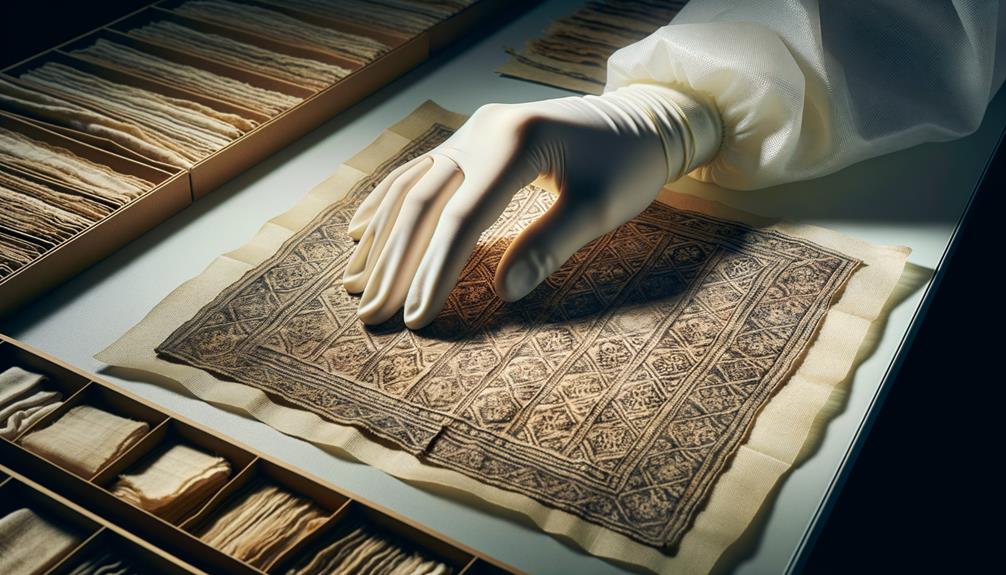
In textile conservation, delicate fabrics are handled with great care. Each piece, whether an ancient tapestry or a fragile silk scarf, has its own story to tell. These textiles demand not just caretaking, but a gentle respect.
Proper storage is vital. For silks and other precious materials, acid-free tissue safeguards against the ravages of time. Rolling larger items around acid-free tubes prevents creases from etching the fabric, preserving its integrity. Flat storage, away from gravity’s pull, maintains the weave and prevents distortion.
When lifting heavy textiles like quilts, a sturdy box or board is essential. This simple act protects the piece’s structure, preventing sagging and tearing. It’s also critical to keep these artifacts away from direct light, heat, and humidity fluctuations, which can accelerate decay.
In every careful movement there is a harmony between past and present, a practice of preservation that honors the artistry and stories woven into every thread.
Effective Cleaning Methods
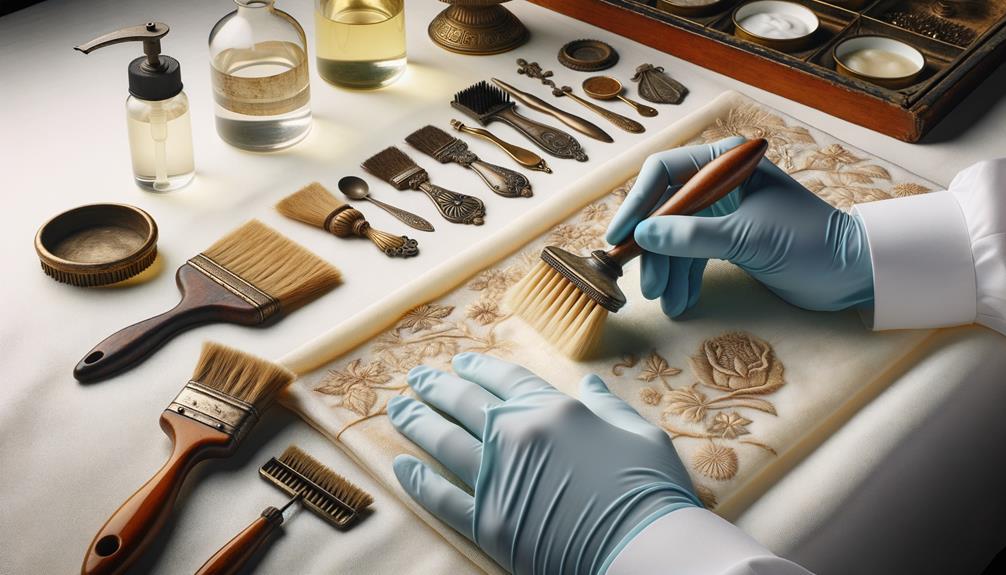
Cleaning delicate textiles demands a blend of precision, respect, and specialized techniques. It combines scientific knowledge with a deep reverence for history.
- Dry Cleaning: Hiring a professional conservator ensures the use of appropriate solvents, avoiding the risks of water-based cleaning. This method preserves the textile’s integrity, preventing the damage that household methods could cause.
- Spot Cleaning: Sometimes, a gentle touch is required. Using distilled water or mild solvents, stains can be addressed with caution. Each dab balances removing the blemish against preserving the fabric’s essence.
- Ultrasonic Cleaning: Innovation meets tradition here. Employing ultrasonic waves lifts dirt and grime without immersing the textile in liquid. This method is gentle yet effective, maintaining the textile’s delicate structure.
- Vacuum Suction: With a HEPA-filtered vacuum, surface dust and dirt can be removed without direct contact. It’s a method that respects the fabric’s fragility, ensuring no fibers are disturbed.
Each technique embodies a meticulous balance, a confirmation of the delicate dance of conservation.
Optimal Storage Solutions
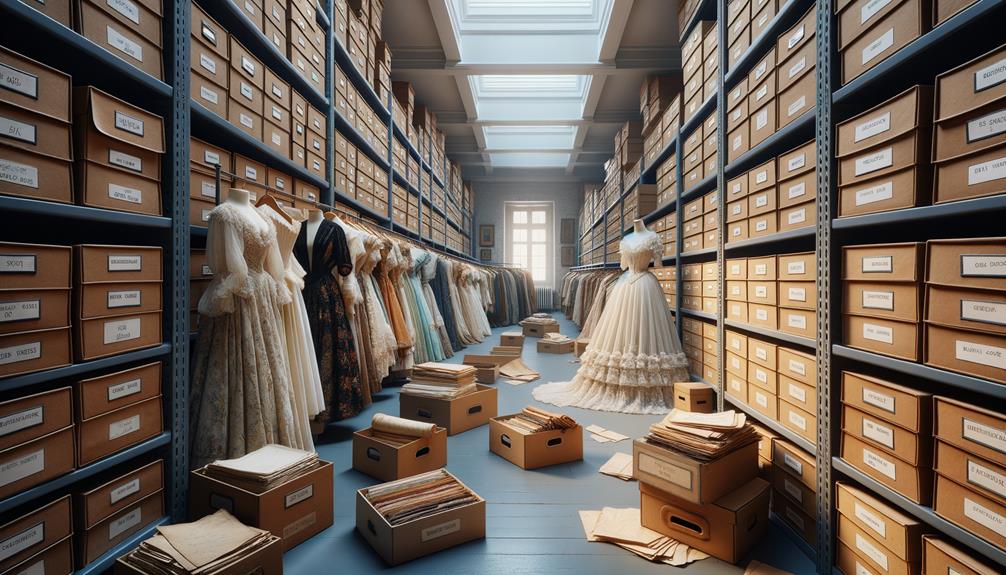
After the delicate task of cleaning, attention shifts to the equally crucial practice of safely storing these precious textiles. Each antique textile, having endured the ravages of time, has an evident need for a sanctuary free from the threats of textile damage. A cool, dry, and dark environment becomes a haven, where temperature and humidity are unwavering guardians.
Cradling each piece in acid-free, lignin-free tissue paper creates a cocoon that matches the care of the cleaning process. These archival boxes and tissue paper form a stable microclimate, a shelter that guards against deterioration.
| Storage Solutions | Purpose |
|---|---|
| Acid-free tissue paper | Prevents creases and abrasion |
| Archival boxes | Creates a stable microclimate |
| Cool, dry, dark environment | Minimizes environmental damage |
Avoiding attics, basements, and garages, where fluctuating conditions lurk, is crucial. These environments betray the fragile fibers, inviting irreversible harm. Clearly labeled containers, each bearing the essence of what lies within, reduce the need for unnecessary handling.
In this careful ritual, the silent narratives woven into every thread are acknowledged. It’s not just about preservation; it’s about honoring the stories these antique textiles carry, ensuring they remain unblemished for future generations.
Display Techniques
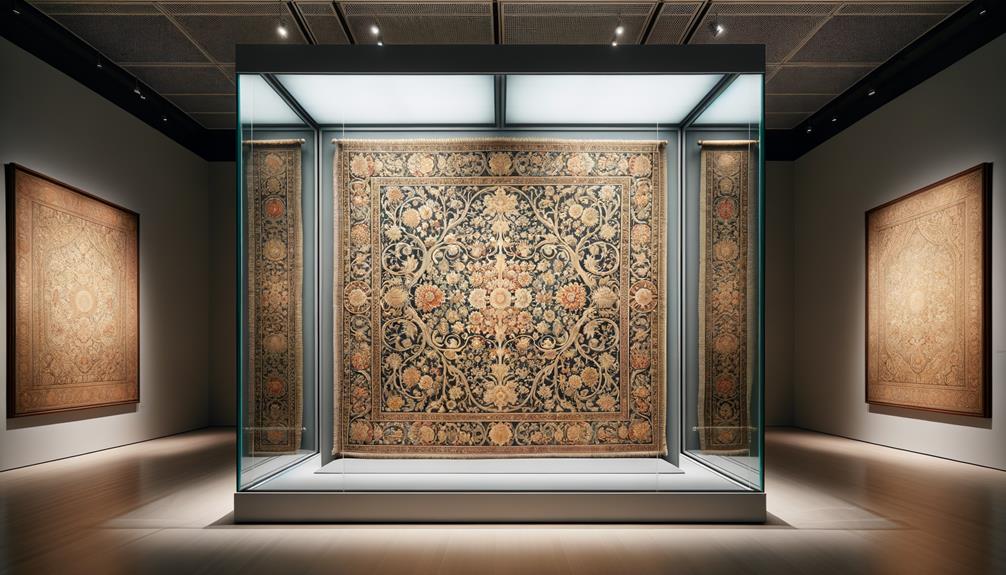
Displaying textiles is a delicate balance between showcasing their beauty and preserving their condition. The methods used for mounting and framing, environmental controls, and careful lighting all work together to protect these fragile pieces from the relentless effects of time. It’s a dance of light and shadow, where each decision safeguards the history these textiles hold.
Mounting and Framing Methods
Mounting and framing textiles is an intricate art, where each stitch and frame serves to display and preserve the delicate history woven into every fiber. The responsibility for safeguarding these artifacts from damage is considerable. A range of techniques ensures both aesthetic appeal and preservation.
- Dressing Forms and Padded Hangers: These specialized mounts help minimize creases and distortion, maintaining the textile’s shape and integrity.
- UV-Filtering Glazing and Acid-Free Matting: These materials protect textiles from harmful light exposure and environmental pollutants when framing.
- Reversible Conservation Techniques: Stitching textiles to supports or using customized display cases allows for easy removal and access, keeping the conservation process adaptable.
- Slip-Cover Mounts: These innovative mounts offer gentle support, reducing strain on delicate fabrics and providing a simple display.
Each method holds a story, a silent vow to honor the past while embracing the future. These techniques blend tradition and innovation, ensuring the textiles endure for generations.
Environmental Control Measures
Preserving the beauty of textiles requires meticulous control of their environment. Even the most durable fabrics can succumb to damage over time if not properly cared for. To ensure these textiles remain timeless, specific display and storage techniques are needed.
Limiting long-term textile display minimizes exposure to all types of light, which can be particularly harmful. For storage, boxes designed specifically for textiles help prevent creases and other potential damage.
Some key storage methods include:
- Flat storage: Prevents creases
- Acid-free tissue: Softens folds
- Rolled on tubes: Maintains large textiles
Storing antique textiles flat with as few folds as possible keeps them free of unsightly creases. Acid-free tissue paper is invaluable for softening any necessary folds, preventing undue stress on the fabric. For larger pieces like quilts, rolling them around acid-free cardboard tubes has proven exceptionally effective.
Lighting and UV Protection
While careful storage is essential, how textiles are displayed under lighting conditions is just as crucial. Light, a quiet yet powerful force, can transform vibrant fabrics like cotton and linen into relics in poor condition. Balancing illumination and preservation requires attention, since each ray of light holds the potential for both beauty and damage.
- UV-filtering covers: Using acrylic or glass shields that block harmful UV radiation ensures fragile textiles like silk aren’t exposed to damaging wavelengths.
- Adjustable lighting: Employing adjustable LED or fluorescent lights provides the necessary illumination without causing further damage, a balance between visibility and preservation.
- Rotating displays: Implementing rotating displays and limiting exhibition times minimizes overall light exposure, particularly for light-sensitive materials, to ensure their longevity.
- Lux meters: Monitoring light levels with lux meters ensures textiles aren’t subjected to damaging illumination, a meticulous yet critical task for conservators.
In this thoughtful interplay of light and shadow, innovation must continue. Employing a combination of UV-filtering materials, adjustable lighting, and strategic display periods goes beyond preservation; it honors the legacy woven into every thread.
Frequently Asked Questions
What Are the Methods of Textile Conservation?
Many surviving historical textiles are structurally fragile. Gentle cleaning, humidification, stitching, and mounting are vital methods for reviving these fragile, storied fabrics. Each technique brings new life to the textiles, preserving their rich history and cultural significance.
Cleaning the textiles with care is crucial to prevent further damage. Controlled humidity helps to relax fibers and allow for gentle adjustments. Stitching can reinforce weak areas, while mounting the textiles on specialized frames safeguards their delicate structure. These conservation methods are essential for ensuring these precious artifacts endure for generations to come.
What Is the Best Way to Preserve Fabric?
Preserving fabric can be a delicate task, but with the right approach, cherished textiles can be protected. The key is to store them in a cool, dry place away from direct sunlight, which can cause fading and damage over time. Handle the items gently, using acid-free materials to cushion and support the fabric. This thoughtful care helps preserve the history and craftsmanship woven into each piece, allowing their timeless beauty to be appreciated for years to come.
What Are the Techniques of Textile Development?
Creating textiles is akin to painting with threads. Each technique, whether weaving, knitting, felting, embroidery, or applique, offers unique ways to shape fabric. The choice often depends on the desired texture, strength, and artistic vision.
Weaving intertwines warp and weft threads to construct a sturdy, woven fabric. Knitting uses needles to loop yarn into a flexible, textured material. Felting mats and binds wool fibers together into a dense, durable cloth. Embroidery decorates fabric by stitching detailed patterns with thread. Applique involves cutting and applying fabric pieces onto a base material to create intricate designs.
These diverse methods allow textile artists to explore a range of creative possibilities, from sleek, minimalist styles to ornate, layered compositions. The versatility of textile development techniques empowers designers to bring their unique visions to life through the medium of fabric.
What Are the Treatments for Textile Preservation?
Textile preservation is a delicate process that involves several key steps. Gentle cleaning, like using mild detergents, helps remove dirt and grime without harming the fabric. Humidifying the textiles can help relax fibers and reduce creases. For storage, acid-free materials are used and textiles are displayed under UV-filtering glass to shield against light damage.
Each preservation method requires care, protecting historical treasures with modern techniques. Innovation can safeguard the past for future generations to appreciate.
Conclusion
Textile conservation is like caring for a delicate garden. Every thread is a petal that needs attention. Environmental factors, handling practices, cleaning methods, storage solutions, and display techniques all work together to preserve the fabric. It is not just about protecting the material, but cherishing the history it holds. In each careful stitch, there’s a whisper of the past, reminding us that conserving textiles is an art of patience and reverence.