The image of King David wearing an ephod as he dances before the Ark of the Covenant is rich in history and symbolism. The clothes of Ancient Israel were woven with care and infused with profound meaning, reflecting layers of identity, devotion, and social roles. Each thread tells a story. These ancient garments, from the simple ezor to the ornate priestly vestments, encapsulate a deep tradition and spirituality. The deeper symbolism hidden within these ancient threads rewards careful study.
Men’s Garments
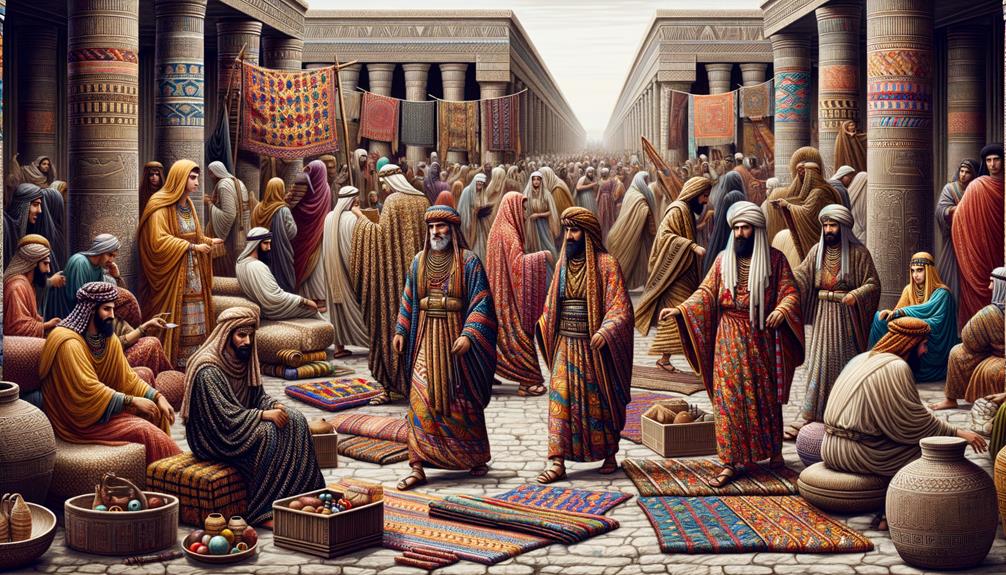
Ancient Israelite men expressed their identity through their distinctive garments. Each garment conveyed volumes about their roles, beliefs, and daily lives. The ezor, a simple yet fundamental piece, wrapped around their hips, showcased a practical elegance. This basic garment formed the cornerstone of their attire, whether made from animal skins or linen.

Beyond the ezor, outer garments like the simlāh and me’il adorned their forms, providing warmth and a visual statement of their status and intentions. The simlāh, often a heavy shawl, turned an ordinary look into one of distinction and purpose. The priests, with their linen ephod and later the kethōneth, stood apart, their garments subtly hinting at their sacred duties.
Religious accessories like the ṣîṣ and Tefillin added layers of meaning, weaving their faith into the very fabric they wore. These accessories were declarations of devotion, integrating spirituality directly into their daily existence, rather than mere embellishments. Through these garments, ancient Israelite men crafted their identity, their beliefs, and their stories into the fabric of their lives.
Women’s Attire
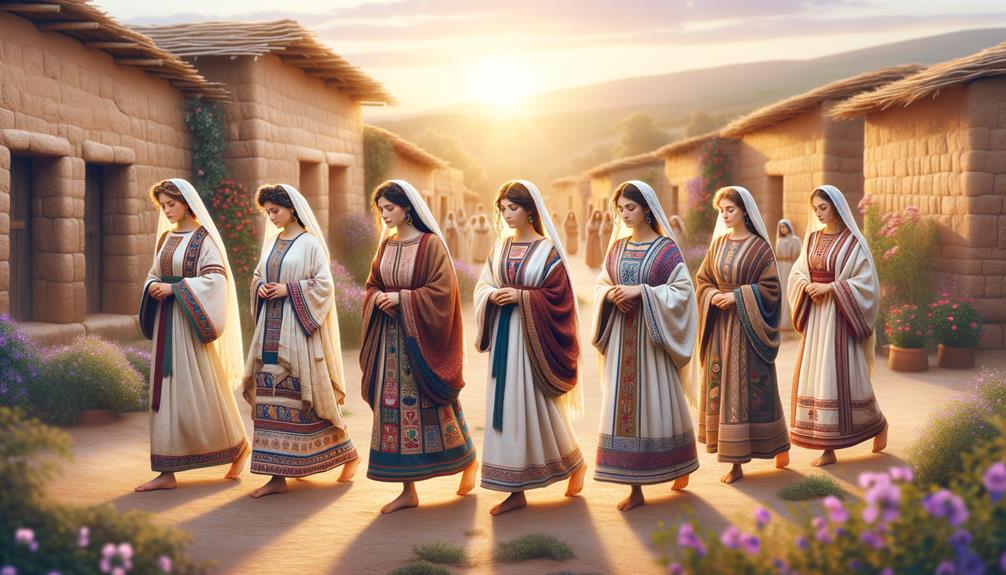
The attire of ancient Israeli women was both practical and ornate. They wore simple tunics and aprons for daily tasks, yet adorned them with intricate fringes and jewelry. Veils and head coverings added layers of meaning and protection, combining tradition and utility.
Traditional Garments Overview
In ancient Israel, women’s attire was a blend of practicality and elegance. Their wardrobe staple was the tunic, made from woven fabrics like linen or wool, designed for comfort and modesty. Over the tunic, they wore longer outer garments adorned with intricate fringes and embellishments, adding a touch of sophistication to their daily look.
Head coverings played a significant role in ancient Hebrew clothing, reflecting both cultural values and religious observance. During religious ceremonies, women wore veils, sometimes extending this practice to public spheres for modesty and protection. These head coverings held deep spiritual symbolism.
Aprons were a practical addition to their attire, allowing women to carry items and protect their garments during daily chores. This integration of practical elements showcased the ingenuity of ancient Hebrew clothing. Jewelry, including bracelets, anklets, earrings, rings, and even nose jewels, added beauty and personal expression to their attire, creating a wardrobe that was both versatile and visually stunning.
Accessories and Adornments
While traditional garments formed the foundation of ancient Israeli women’s attire, their accessories and adornments brought a unique flair and personal expression to their daily lives. How these women accentuated their outfits reveals a culture rich in subtle, yet impactful, details.
Bracelets and anklets, often crafted from metals or beads, softly jingled with each step, adding an air of elegance to their movement. Fingers and toes were decorated with rings, each piece possibly signifying personal milestones or familial bonds. Delicate and intricate earrings framed their faces, enhancing their natural beauty.
The head held significant importance in their adornment practices. Women often wore head coverings, which served both protective functions and spiritual purposes during prayer. The veil, a versatile piece, might be draped elegantly over the head and shoulders, offering both modesty and mystique, although it wasn’t always necessary for public appearances.
While cosmetics were generally avoided, the use of perfume, like the fragrant frankincense, provided a sensory layer to their presence, leaving a subtle yet sophisticated impression. These adornments were woven into the very fabric of their identity and daily existence, not mere embellishments.
Priestly Vestments
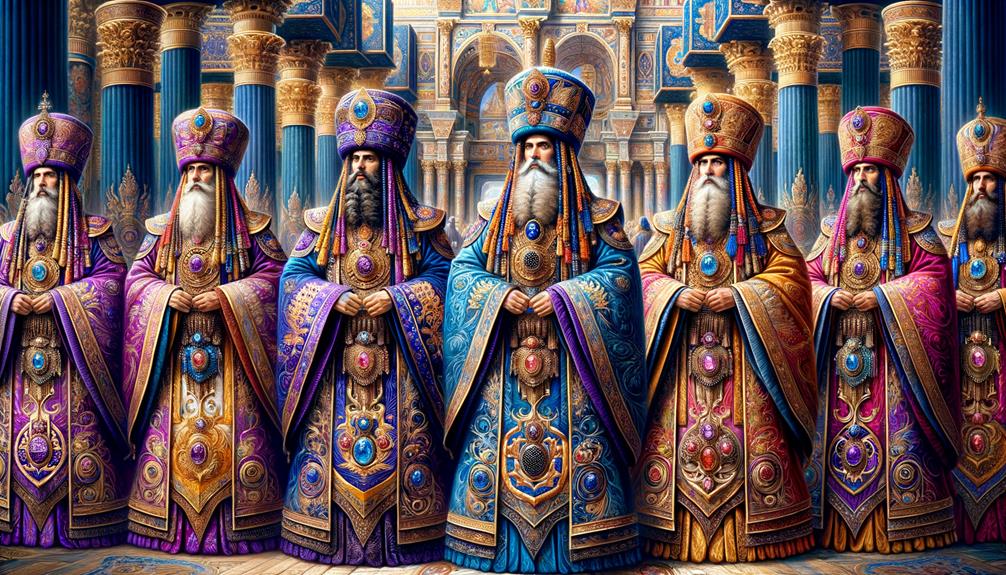
In ancient Israel, the priestly vestments held immense significance, conveying the wearer’s esteemed role in society. The linen ezor, known as the ephod, was reserved exclusively for the High Priest, symbolizing the utmost respect and responsibility.
The kethonet, a long under-tunic, was another vital component, signifying honor and high standing. It draped the priest in a mantle of respect and duty, reminding both the wearer and observers of the sacred tasks at hand. Additionally, the priests adorned themselves with tzitzit, tassels that served as a constant reminder of their covenant with the divine, and Tefillin, small leather boxes containing scripture, which underscored their dedication to faith and law.
Each piece of the priestly vestments carried its own weight of meaning, weaving a visual narrative of holiness and service. These garments carried the sacred duties and responsibilities that came with being a priest in ancient Israelite society, and were more than just attire.
Fabrics and Materials
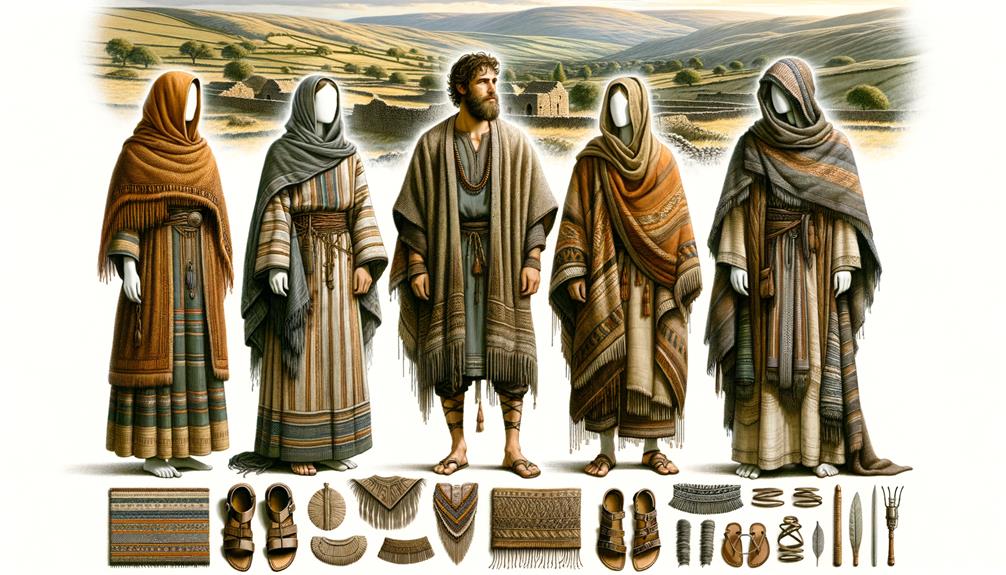
In ancient Israel, garments woven from linen, wool, and occasionally silk tell a rich story of the land’s resources, the people’s ingenuity, and their deep connection to tradition and faith. Linen, made from flax, was the go-to fabric for everyday wear. Its breathability made it ideal for the hot climate, providing comfort under the scorching sun. It was a necessity shaped by the environment and the resources available, not just a practical choice.
Wool, on the other hand, symbolized warmth and ceremony. Sourced from the sheep that roamed their landscapes, it was reserved for colder weather and special occasions. The texture and weight of wool garments offered a tactile reminder of the changing seasons and the importance of preparation and reverence.
Silk, although rare and luxurious, hinted at distant trade routes and exotic connections. Imported from afar, silk was the fabric of choice for the elite, encapsulating status and opulence in its delicate threads. These diverse fabrics did more than clothe the ancient Israelites; they wove together narratives of survival, status, and spirituality. Each material showed their adaptability, reflecting a society deeply attuned to its surroundings and its sacred traditions.
Colors and Designs
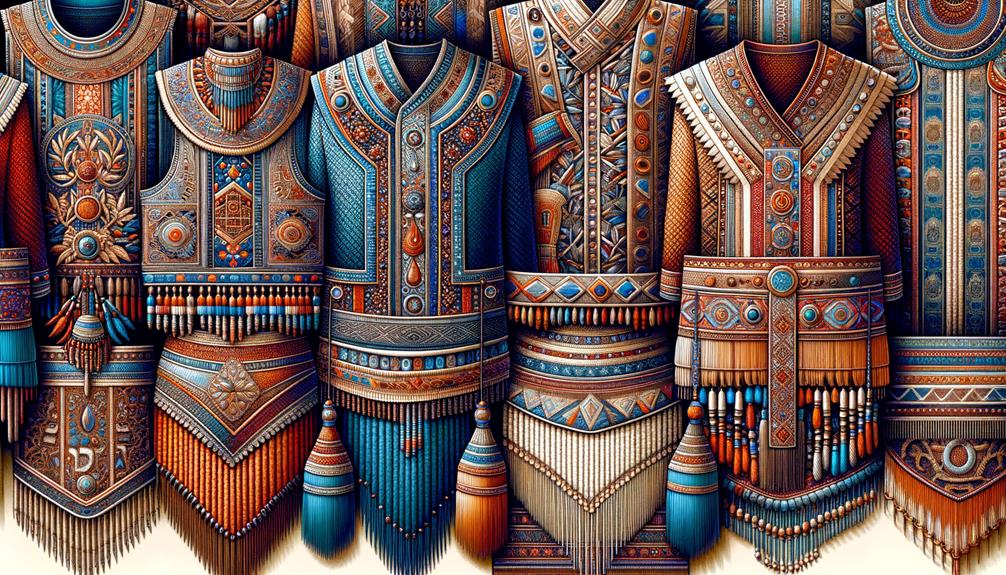
The colors and designs of ancient Israelite clothing carry rich symbolism behind each hue and pattern. White, for instance, represented purity, while blue and purple were reserved for royalty. The simplicity of their designs also underscored a cultural emphasis on modesty and reverence. Even the dyeing techniques and motifs, though understated, revealed a society rich in symbolic expression and spiritual depth.
Symbolism of Colors
In ancient Israelite society, the colors worn on clothing held profound symbolic meanings that went beyond mere aesthetics. White, for example, represented purity and was often worn by religious leaders as a visual declaration of their sacred role. Blue, on the other hand, signified royalty and divinity, reserved for the elite and those performing sacred duties, which infused their presence with a celestial aura.
The symbolism embedded in colors transcended the fabric itself, speaking volumes about one’s identity, social status, and spiritual beliefs. The careful selection of colors in ancient Israelite clothing allowed individuals to move through their social classes and religious roles with clarity and reverence. Each color choice carried significant connotations, reflecting the wearer’s place in the intricate social and spiritual fabric of ancient Israel.
In this society, where every thread and dye held cultural significance, the deliberate selection of colors was a powerful form of communication, not just about fashion. This silent language conveyed messages of purity, divinity, and social standing, weaving a complex narrative that defined the wearer’s place in ancient Israelite society.
Patterns and Motifs
The intricate patterns and motifs woven into ancient Israelite clothing told a story about the wearer’s identity and beliefs. Each garment, adorned with delicate embroidery, fringes, and tassels, combined symbolism and tradition. These patterns conveyed deep spiritual beliefs and social status, blending the sacred and ordinary, rather than being just decorative.
Motifs often featured elements of nature, geometric shapes, or religious symbols, each design carefully chosen to reflect tribal affiliations or family heritage. The use of certain motifs signified devotion, wisdom, or a person’s role in the community. The painstaking art of embroidery brought these intricate designs to life in vivid detail, transforming simple fabrics into powerful statements of identity.
Fringes and tassels, frequently seen on the hem of garments, held significant religious meaning. They served as constant reminders of the commandments, connecting the wearer to their faith and community. The balance of practicality and tradition in these designs showcased an innovative spirit, blending utility with profound cultural expression.
These patterns and motifs show the essence of ancient Israelite life, where every stitch told a story and every design a declaration of belief and belonging, rather than just fabric.
Dyeing Techniques Used
Through the lens of ancient dyeing techniques, one can glimpse the vibrant character of Israelite culture, where every hue and pattern held profound meaning and purpose. By harnessing the power of natural dyes, the Israelites created a palette of rich colors. Indigo yielded a deep blue, madder produced rich reds, and saffron bestowed a bright yellow. However, these colors were not chosen randomly; each carried significant symbolism. Blue, often seen in ceremonial garments, represented divinity, while the purity of white and the power imbued in red spoke volumes about the wearer’s status and role.
Designs on garments were generally simple yet elegant, incorporating stripes, borders, and geometric patterns. These designs communicated identity and social standing more than being mere embellishments. The rare and luxurious purple dye, extracted painstakingly from Mediterranean mollusks, was reserved exclusively for royalty and the affluent, marking their high standing.
Weaving techniques such as tapestry, brocade, and embroidery added layers of complexity and beauty to the fabrics. These intricate methods allowed for the creation of ceremonial attire that was visually stunning and rich in cultural significance. Each thread, color, and pattern woven into these garments tells a story of an ancient people deeply connected to their craft and heritage.
Headwear and Accessories
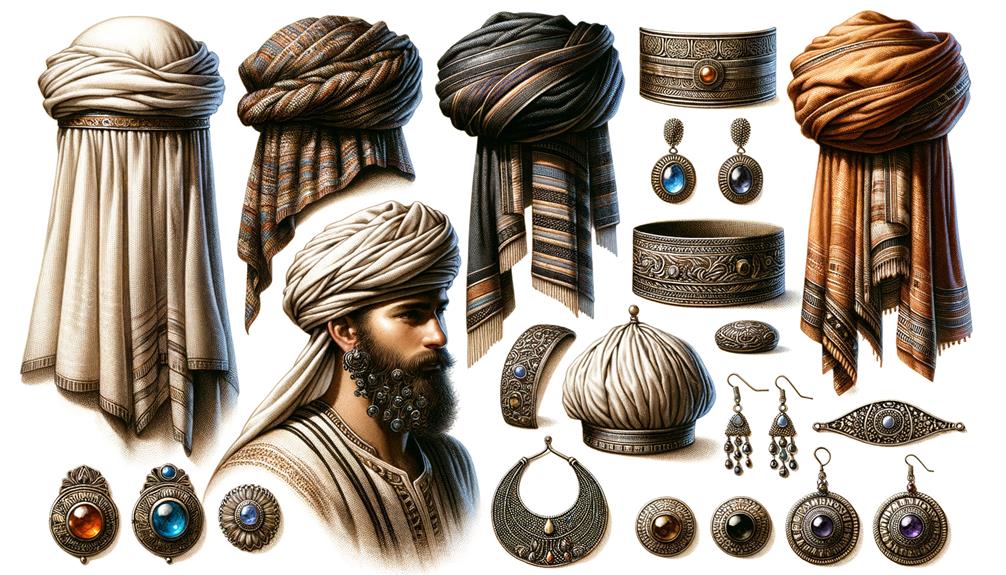
In ancient Israel, headwear and accessories conveyed social status, religious devotion, and personal identity, going far beyond fashion statements. Among the ancient Hebrews, men commonly wore linen turbans, while wealthy women, bridegrooms, and priests also donned this headwear. The High Priest, however, stood out with a unique priestly turban that distinguished him from others. The keffiyeh, often worn by Hebrews, differed from the headbands depicted on ancient Syrian art.
Accessories carried profound significance as well. Necklaces, crescent-shaped pendants, bracelets, and earrings were cherished adornments. Women’s ornaments, like bracelets and anklets, were integral to their attire, symbolizing beauty and status. Jewelry reflected divine imagery and truths, and was not just for adornment.
Here is a visual representation to encapsulate these ideas:
| Headwear | Accessories |
|---|---|
| Linen Turbans | Necklaces (anaq) |
| Priestly Turbans | Crescent-shaped Pendants (saharon) |
| Keffiyeh | Bracelets (tsamiyd) |
| Syrian Headbands | Earrings (nezem) |
These traditions show the intricate ways the ancient Hebrews communicated through their attire, weaving layers of meaning into every thread and ornament.
Footwear

Among the many elements of ancient Israelite attire, the humble leather sandals, known as Naalayim, offered both protection and a glimpse into the culture’s values and daily challenges. These sandals were crafted with a keen eye for practicality, typically made from braided leather or, at times, papyrus. Their design showcased the resourcefulness of the Israelites, ensuring that their feet were shielded from the scorching sands.
The Naalayim were more than just practical footwear; they also served as a subtle indicator of social status. Wealthy individuals adorned their feet with more elaborately crafted pairs, while the lower classes relied on simpler, more utilitarian designs. This variation in materials and styles subtly communicated one’s place within the social hierarchy.
In daily life, sandals were indispensable, yet they were conspicuously absent indoors or within sacred spaces. This practice underscored a profound respect for one’s environment and the sanctity of certain spaces. Walking barefoot often signified mourning or poverty, a poignant reminder of the fragile balance between comfort and hardship. The Naalayim reflected the intricate life of ancient Israelite culture, going beyond being merely footwear.
Social and Religious Significance
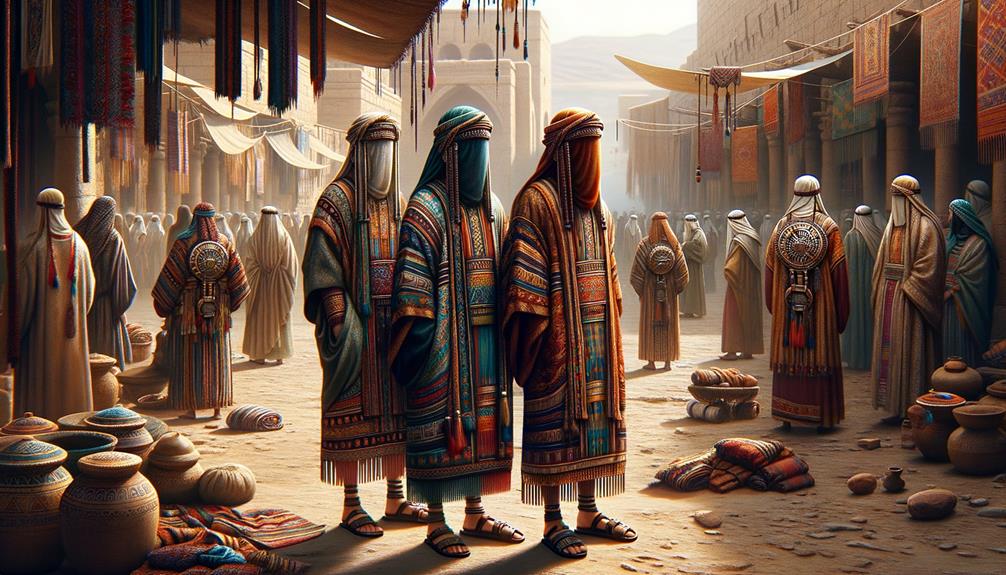
Clothing in ancient Israel conveyed social and religious significance well beyond mere necessity. Each garment whispered tales of status, occupation, and spiritual devotion. The robes and accessories people chose to wear were symbolic markers that spoke volumes about one’s place in society.
High priests, draped in the ephod and kethoneth, were instantly recognizable by their distinctive attire during religious ceremonies. These garments, imbued with symbolic meaning, distinguished them in their sacred roles, bridging the earthly and the divine. The choice of clothing extended beyond the priests, reflecting the wearer’s position and honor within the community.
Jewelry adorned many, signifying wealth and social standing. These ornaments carried meaning beyond opulence, often reflecting personal or familial status. Each piece of jewelry, each stitch in their garments, emphasized the interconnected fabric of their identity and social hierarchy.
In essence, the clothing worn in ancient Israel was a multifaceted narrative, one that conveyed social significance and religious roles, weaving together the sacred and the secular.
Frequently Asked Questions
What Did People Wear in Ancient Israel?
Ancient attire in Israel was simple, with people wearing basic garments like the ezor and kethoneth. Priests, on the other hand, donned unique linen ephods. Completing their practical yet symbolic ensemble were outer garments, religious accessories, and sandals.
What Did Jews Look Like in Jesus’ Time?
The Jews of Jesus’ time were serene and elegant, shaped by the harsh desert climate. Their wise eyes and modest attire, consisting of simple tunics and cloaks, spoke to their humble and devout lives.
What Is the Traditional Clothing in Israel?
Traditional Israeli clothing is characterized by simplicity and profound meaning. Men’s garments, such as the ezor and simlāh, hold significant cultural and spiritual importance, while women’s longer outerwear tells a story of its own. Each piece of clothing reflects the country’s rich heritage.
What Kind of Garment Did Jesus Wear?
Jesus wore a humble tunic, a timeless garment, with a cloak draped elegantly over his shoulders. His worn sandals symbolize his modest journey and profound humility.