The Agbada is a traditional Nigerian robe that embodies a rich cultural heritage, elegance, and intricate craftsmanship. The sweeping wide sleeves and detailed embroidery are striking and symbolize status and authority. Typically made from silk or cotton, and sometimes adorned with Aso Oke cloth, the Agbada transforms the man who wears it into a figure of sophistication. This attire is more than just fashionable; it carries family heritage and symbolizes wealth and status. Modern adaptations keep this tradition alive and relevant, blending old and new in striking ways.
Historical Significance
The rich history of the Agbada Nigerian robe is a tale of cultural fusion and tradition. These prestigious robes, adorned with intricate embroidery and wide sleeves, were once reserved for men of great importance, symbolizing power and authority. Beyond being mere garments, they were treasured family heirlooms, passed down through generations, each robe telling a story of lineage and legacy.

The Agbada’s evolution shows the cultural exchange that shaped its design and usage. The influence of Islamic traditions and the Fulani rulers in Nigeria is evident, highlighting how cultural exchange molds fashion. Trade networks played a significant role, connecting Nigeria to distant lands and introducing new materials and styles. However, the introduction of imported fabrics led to a decline in demand for handmade robes, affecting traditional weaving and embroidery skills.
Despite this, the Agbada remains a reflection of Nigeria’s vibrant cultural heritage. This garment tells a story of history, power, and the intricate web of traditions and trade that have shaped it. Its enduring significance and the stories woven into its very fabric are easy to see.
Design Elements
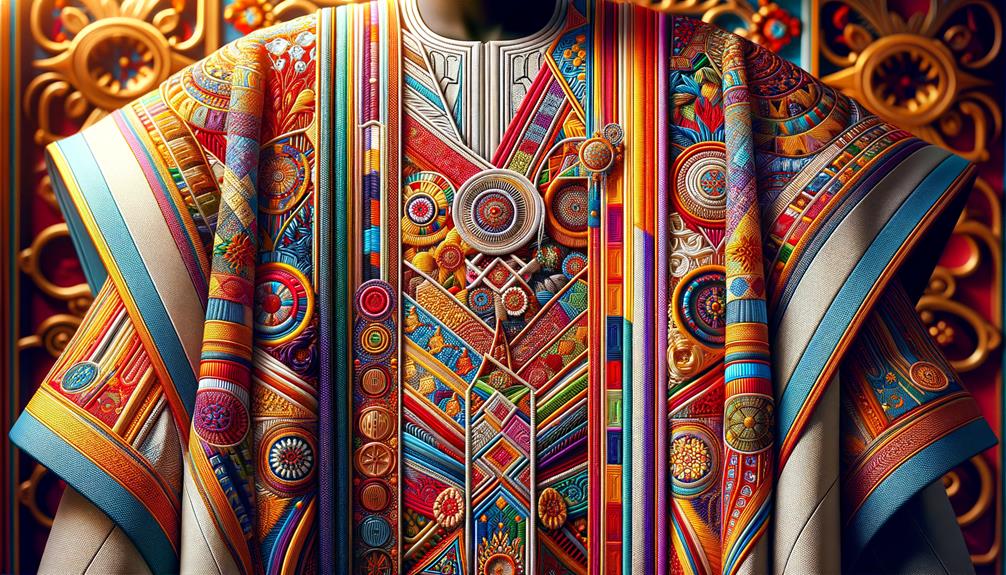
A closer look at the Agbada reveals the intricate design elements that show the artistry and symbolism woven into each garment. The wide, flowing sleeves are more than a fashion statement; they signify the status and elegance of the wearer. The intricate embroidery, often featuring symbolic motifs, adds layers of meaning and showcases the skill of the artisans.
Traditionally, the Agbada is made from luxurious fabrics like silk or cotton, which enhance its elegance. What truly sets it apart is the use of Aso Oke, a unique strip-woven cloth that adds texture and richness to the ceremonial robe. The matching cap, known as the Fila Aramori, completes the ensemble, tying the look together neatly.
Some key design elements of the Agbada include:
| Design Element | Description | Significance |
|---|---|---|
| Wide Sleeves | Flowing and expansive | Symbolizes status and elegance |
| Embroidery | Intricate and symbolic | Showcases artisan skill and cultural motifs |
| Fabrics | Silk or cotton | Enhances elegance |
| Aso Oke | Strip-woven cloth | Adds unique texture and richness |
| Fila Aramori | Matching cap | Completes the ensemble |
Each Agbada, whether displayed in a museum or worn by Nigerian men, tells a story through its hand-woven cloth and detailed craftsmanship.
Cultural Symbolism

The Agbada’s cultural significance runs deep, representing wealth, status, and a profound connection to Nigerian heritage during special occasions. This garment, found throughout much of West Africa, encapsulates the essence of tradition and modernity. These robes have become family treasures, passed down from generation to generation, symbolizing continuity and legacy.
An Agbada shows more than intricate embroidery and elaborate designs; it carries stories of generations. The craftsmanship reflects a history of textiles traded over vast distances, bridging communities and cultures. Wearing one amounts to wearing a piece of history, a statement of identity and pride.
Family Heirlooms: Old robes have become treasured family possessions, preserving memories and heritage.
Global Influence: These garments are found throughout the world, enjoyed by celebrities and influencers alike.
Symbol of Elegance: The Agbada is synonymous with sophistication and cultural depth.
The Agbada is more than a piece of clothing; it’s a symbol of elegance, deeply woven into the cultural fabric of Africa. Its presence in global fashion signifies a growing appreciation and respect for its rich cultural roots.
Modern Adaptations

Modern adaptations of the Agbada robe show a strong blend of traditional craftsmanship and contemporary fashion trends. The classic Agbada, revered in West Africa, has undergone a remarkable transformation. Designers now incorporate slim-fit cuts and shorter lengths, blending heritage with modern style. The attention to fabric choices and unique patterns is impressive, making each piece a statement of personal flair.
These garments are often passed down from father to son, steeped in cultural significance. However, modern adaptations breathe new life into this practice, making the Agbada relevant for today’s generation. The incorporation of contemporary fashion influences has created innovative variations that appeal to a global audience eager to embrace African cultural attire.
At weddings and funerals, where Agbadas are traditionally worn, modernized robes now add a sophisticated touch to these occasions. Similar garments also reflect this dynamic evolution, illustrating the willingness to merge tradition with cutting-edge design. This integration of old and new results in stylish, sophisticated ensembles that honor heritage while embracing innovation.
Wearing the Agbada
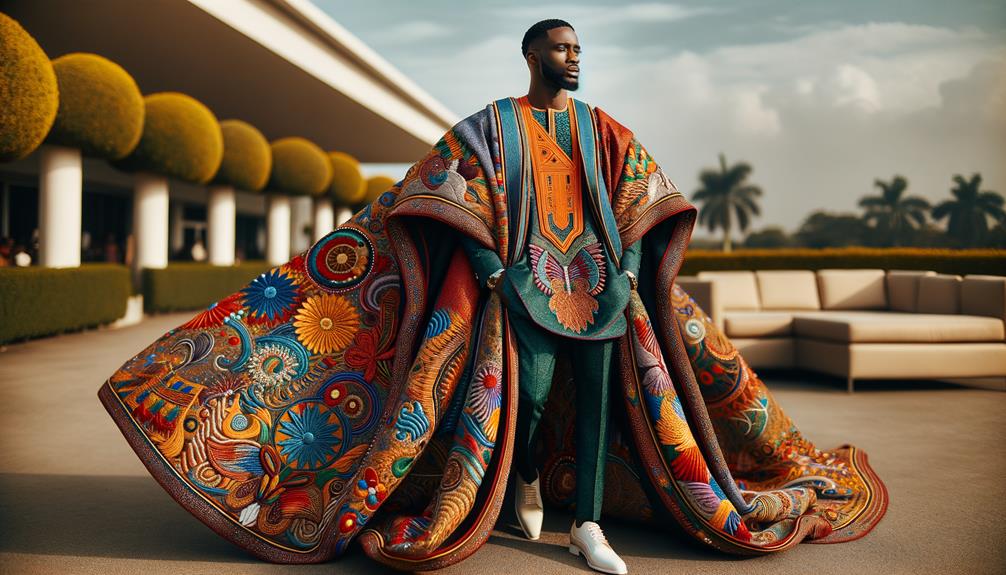
Putting on an Agbada carries an intense sense of connection to heritage and to the generations that have worn this regal attire before. Draping the wide-sleeved robe over the shoulders brings to mind ancestral voices, their pride woven into each intricate stitch. This is more than a garment; it is a treasured family heirloom passed from father to son, carrying stories and traditions that anchor a wearer to their roots.
Wearing the Agbada at major celebrations brings a strong sense of cultural pride. The rich, vibrant colors and elaborate embroidery reflect craftsmanship and a deep respect for history and identity. Each thread tells a tale of artistry and resilience.
The Agbada’s design exudes a blend of refinement and poise that’s hard to match. It’s a declaration of cultural identity and heritage. These fine old robes are family heirlooms, worn with pride and passed down through generations.
In the West, the Agbada is increasingly found at cultural events, symbolizing a connection between past and present.
Frequently Asked Questions
Why Do Nigerians Wear Agbada?
Nigerians wear Agbada to connect with their heritage, celebrate milestones, and honor their family’s legacy. It’s more than clothing; it’s a symbol of roots and cultural identity.
Is Agbada Igbo or Yoruba?
The Agbada robe is primarily associated with Yoruba culture, but it’s also adopted by the Igbo. This blend of traditions highlights Nigeria’s rich cultural diversity and the robe’s enduring influence across different ethnic backgrounds.
What Is Another Name for Agbada?
Another name for agbada is Rigalia in Hausa culture, or Riga in the Hausa-Fulani version. These variations carry the same cultural significance and prestige.
What Is Agbada in Yoruba Language?
In Yoruba, ‘Agbada’ translates to ‘Aṣọ ibile,’ which means traditional attire, and ‘Agbádá,’ which refers to its loose, flowing style. An Agbada, with each stitch telling a story of cultural heritage, is a symbol of tradition and innovation.