The enduring colors of a medieval tapestry depended on the meticulous extraction of dyes from plants like madder and woad, and on the careful use of mordants such as alum to fix the hues. The artisans’ mastery of temperature and pH control, which allowed them to achieve precise shades, was remarkable. The daily lives of these skilled craftsmen balanced art and science in the pursuit of a precise result.
Natural Dye Sources
The vibrant spectrum of colors in medieval textile dyeing came from natural sources like madder, woad, and weld. These plants were the key to transforming plain fabrics into vivid work that seemed to pulse with life. Madder, with its roots rich in alizarin acid, produces a deep, enduring red that was cherished for its intensity and became a staple in medieval palettes.

Woad, essential in northern Europe, yielded the iconic blue dye. This humble plant produced a striking hue essential for tapestries and garments alike. Weld, often overlooked, was fundamental for its bright yellow dye. Alongside ladies bedstraw and fustic, weld painted the Bayeux Tapestry with its luminous tones.
Natural dyeing in medieval times was a craft that joined nature and human skill. The cultivation of these dye plants, each with its own properties, shows a profound connection to the earth and a determined pursuit of beauty.
Extraction Processes
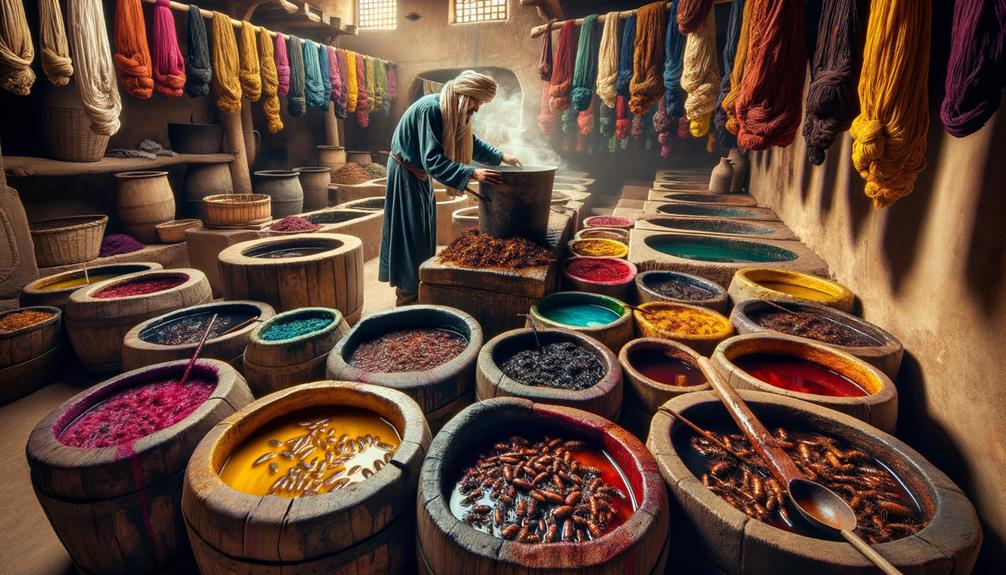
The medieval textile industry‘s vibrant colors came from meticulous extraction processes. Boiling madder roots, woad leaves, and weld released rich pigments that transformed plain fabrics into finished work. The methods show real innovation for their period. Madder roots, for instance, were carefully boiled to extract alizarin acid and create the coveted red dye. This process required a deep understanding of plant materials and their chemical properties, going well beyond simple boiling.
The extraction of blue dye from woad leaves was equally demanding. By boiling these leaves with ammonia derived from urine, medieval dyers produced vibrant blue hues. The pungent smell was strong, but the result was remarkable. These artisans achieved such striking colors through ingenuity despite limited resources.
These extraction processes were not only about achieving color. They ensured it lasted. Each step, from selecting the right plant materials to understanding their chemical reactions, was precise. The result was fabric that carried evidence of skill, patience, and sustained effort.
Role of Mordants
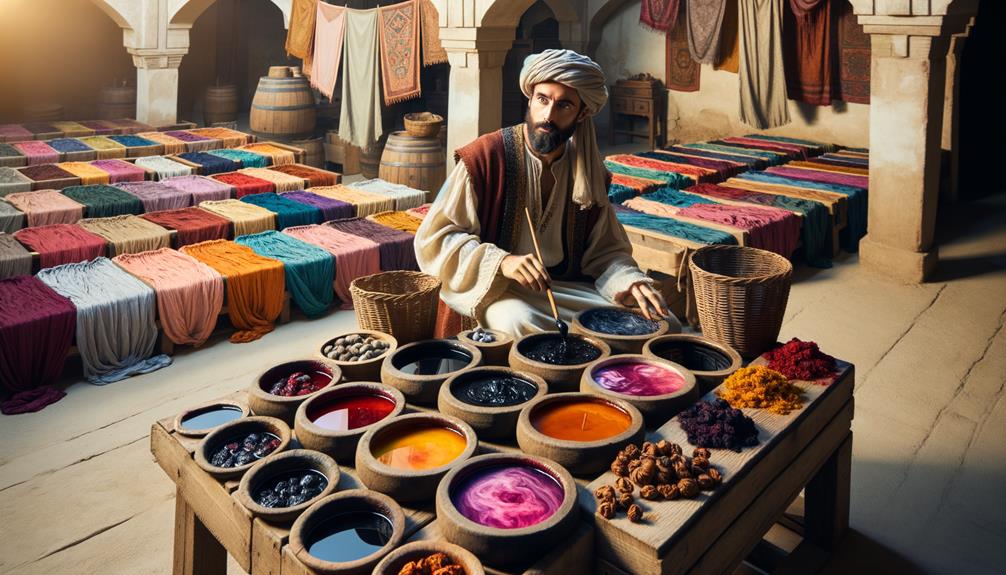
In medieval textile dyeing, mordants were vital in revealing and preserving the vibrant colors extracted from natural dyes. The careful use of substances like alum and copper sulfate significantly shaped the dyeing process.
Alum played a pivotal role. It helped dyes adhere firmly to fibers, improving color fastness and making those hues last longer. Copper sulfate, on the other hand, added a blue-greenish tint and widened the palette available to medieval dyers.
These mordants did more than fix colors. They shaped them. The hues derived from dye plants like madder, woad, and indigo were significantly influenced by the mordants used. Understanding their role was vital for any dyer aiming for specific shades.
A closer look at their impact reveals:
Alum improved color fastness and vibrancy.
Copper sulfate introduced blue-greenish casts.
Madder produced reds and oranges, enhanced by alum.
Woad and indigo yielded blues, affected by mordants.
These ancient techniques bring together art and science in medieval dyeing.
Dyeing Methods
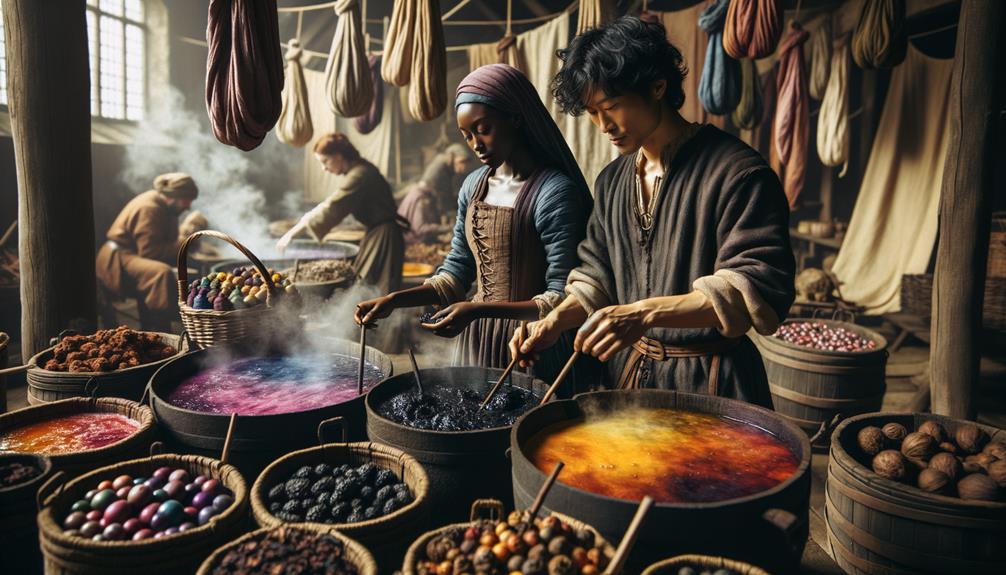
Medieval dyeing methods were a meticulous and artistic process that transformed simple fibers into vibrant textiles. The dye recipes of the Medieval and Renaissance periods show the ingenuity and devotion required to extract hues from nature. The madder plant provided a rich red dye, while the woad plant and indigo yielded the deep blues that dominated the medieval fabric landscape. To achieve greens, dyers would overdye in indigo vats using yellow weld or green nutshells.
The role of mordants like alum was crucial, as it fixed the colors onto the textiles and ensured the vibrancy endured over time. Oak galls also played a significant part in the dyeing repertoire, contributing to the range of colors possible.
These medieval artisans approached textile dyeing with a craftsman’s attention to detail, blending natural elements to create wearable art. Each shade and hue conveyed social status and the dyer’s skill. The combination of colors, extracted from the earth and bound to the fabric, marks a significant chapter in the history of innovation and craftsmanship.
Temperature Control
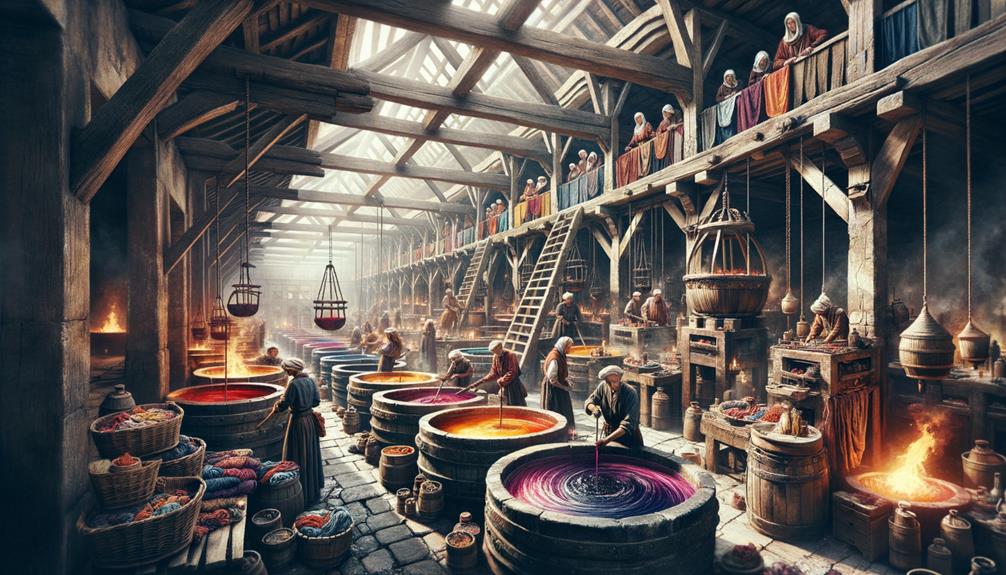
Temperature played a crucial role in medieval dyeing and in achieving the desired hues, particularly with madder dye. A slight fluctuation could turn vibrant reds into dull browns.
To achieve the desired shades from natural dyes, medieval dyers mastered the following:
- Madder Dye: Required a consistent temperature to guarantee a rich, deep red. If it got too hot, it turned orange; if it was too cool, it faded.
- Woad: Needed precise warmth to bring out its famed blue without leaning towards green.
- Weld: Demanded steady heat to maintain its bright yellow; any deviation caused uneven dye absorption.
- Colorfastness: Achieved through meticulous temperature control, ensuring fabrics retained their vibrant colors over time.
This control of temperature was about more than keeping hues consistent. It respected the character of the natural dyes themselves. Each plant had its own properties, and through precise temperature control, medieval artisans wove those characteristics into the fabric of their creations.
Ph Level Adjustments
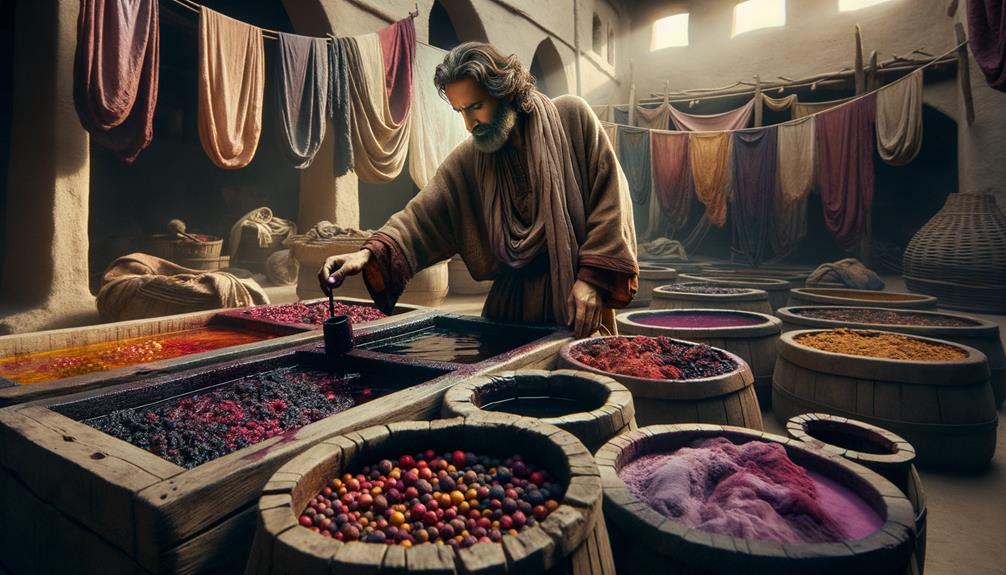
Medieval textile dyeing depended on a delicate balance of pH levels to produce vibrant colors. Mastering pH adjustments was crucial, whether adjusting acidity for dyes like madder or raising alkalinity with ammonia for woad. Careful use of pH indicators guided these artisans, letting each fabric tell a story through its hues.
Acidic Dyeing Processes
Adjusting the pH level of the dye bath with acidic substances like vinegar or citric acid was crucial in medieval textile dyeing, as it guaranteed vibrant, long-lasting colors. Chemistry and artistry were closely joined in these techniques. The acidic dyeing processes did more than add color. They created a bond that would endure.
Making black dye, for instance, involved a sequence of steps:
- Prepare the initial solution with lime water.
- Add orpiment and mix it thoroughly.
- Grind them together until a uniform consistency was achieved.
- Adjust the pH level with vinegar, ensuring the dye bath was suitably acidic.
This process was vital for fixing natural dyes, improving color absorption, and ensuring colorfastness. The acidity coaxed the fibers into accepting the dye, turning the textiles into finished pieces. Each dye, whether madder, weld, or woad, had its own requirements. The final hue showed the dyer’s skill in handling an acidic environment and promised that the colors would endure.
Alkaline Dyeing Adjustments
In medieval textile production, manipulating the pH level of dye baths proved crucial in achieving vibrant and lasting colors. Adjusting the pH level with substances like ammonia or soda ash produces an alkaline state that opens up a wider spectrum of brilliance and depth. This shift improves color brightness as well as dye fastness, ensuring the dyes adhere more permanently to the fibers.
The solubility and stability of dyes were greatly influenced by these pH adjustments. Maintaining a precise pH level allowed for consistent and reliable results, turning ordinary fabric into vivid finished work. A comparison of how different pH levels affected the dyeing process reveals:
| Condition | Effect |
|---|---|
| Acidic | Moderate brightness |
| Alkaline | Enhanced brightness |
| Neutral | Minimal color change |
| High Alkaline | Increased dye stability |
| Low Alkaline | Improved dye solubility |
Achieving Colorfastness
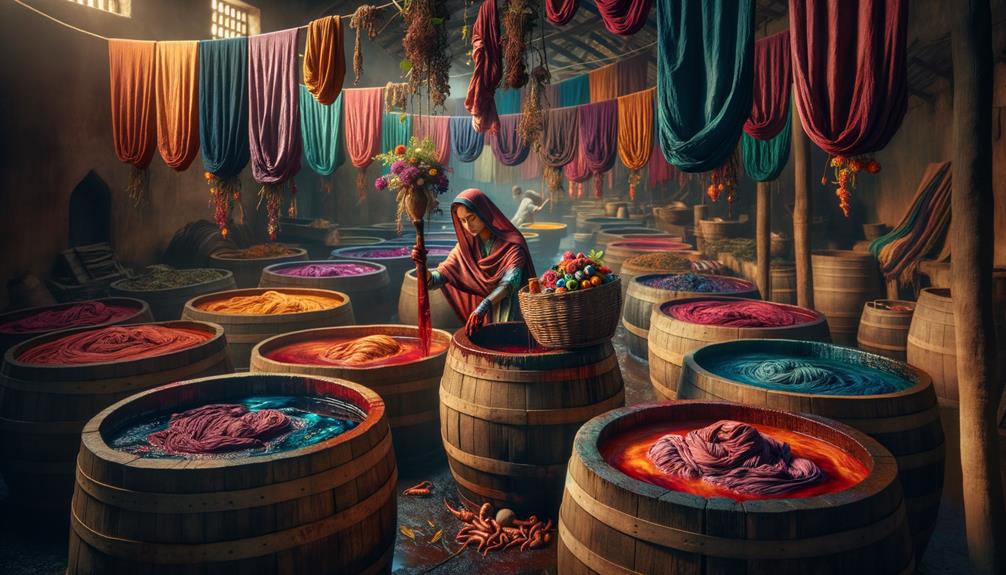
Securing colorfastness in medieval textiles was an intricate art, relying on natural mordants like alum and copper sulfate to bind vibrant hues to fabrics. These mordants were essential, fixing natural dyes to the threads so they did not wash out or fade quickly. The dyeing process was delicate and required precise temperature control. Too hot, and the colors could change or dull; too cool, and the dye would not set properly.
Overdyeing techniques were among the most exacting parts of this craft. By layering different dyes, artisans achieved depth and complexity in color that single dyes could not provide. This method improved colorfastness and also produced unique, rich shades.
Here is a glimpse into the multifaceted process:
- Selecting the right mordant, such as alum or copper sulfate, was crucial to secure the dye; chrome is a 19th-century industrial development.
- Natural dyes sourced from plants like madder, woad, and weld provided vibrant, enduring hues.
- Temperature control was vital to prevent color alterations and ensure proper dye fixation.
- Overdyeing techniques involved layering dyes to enhance colorfastness and develop unique shades.
Medieval textile dyeing, with its blend of science and artistry, continues to inform modern work in sustainable and natural dyeing practices.
Frequently Asked Questions
How Was Fabric Dyed in Medieval Times?
Fabric in medieval times was dyed using natural dyes derived from plants, which were then fixed with mordants. Controlling the temperature was crucial. As trade networks expanded, more vibrant colors became accessible, showing considerable innovation.
What Was the Common Medieval Dye?
The most common medieval dyes were the rich red of madder and the striking blue of woad. These natural dyes did more than add color. They were woven into the fabric of medieval life and creativity.
What Are 2 Methods of Ancient Dyeing?
Two principal methods of ancient dyeing were vat dyeing and direct application, each demanding careful control to create enduring, vibrant textiles.
How Were Colors Made in Medieval Times?
Medieval artisans made colors using natural dye plants like madder, woad, and weld. To achieve vibrant hues in historical textiles, they relied on mordants to fix these colors and used overdyeing techniques that produced notable results.