Wool has an understated elegance in wardrobes around the world. Its ability to provide warmth without weight is remarkable. Wool’s talent for managing moisture is equally impressive, keeping wearers dry and comfortable. Add to that its fire-resistant properties, a quiet guardian in daily life. Then there’s its durability, withstanding the test of time, and its eco-friendly nature, a nod to the planet’s future. What truly fascinates people is how all these qualities come together in such a humble material. What is the secret behind wool’s timeless appeal?
Insulating Properties
Wool’s insulating properties stem from its unique ability to trap air, creating a natural thermal barrier that keeps wearers comfortable in various climates. The secret lies in the crimp of wool fibers, forming countless tiny pockets of still air that enhance its insulation. This natural design means that wool can regulate body temperature effectively, providing warmth without the bulk.
Wool is also remarkably adaptable. In cold weather, these fibers trap heat, wrapping the wearer in a cozy embrace. Conversely, in warmer conditions, wool’s breathability ensures that excess heat escapes, keeping the body cool and comfortable. It’s a delicate balance that feels almost magical, yet entirely natural.
Merino sheep, in particular, produce wool that’s incredibly fine and soft, enhancing these insulating properties. The fibers are adept at temperature regulation and inherently moisture-wicking. This means they move sweat away from the body, preserving warmth in chilly environments without compromising on comfort.
In a world increasingly focused on synthetic materials, wool stands out as a timeless, innovative material. Its ability to maintain comfort across diverse climates speaks to its enduring relevance and remarkable functionality.
Moisture Management

Wool’s remarkable ability to manage moisture is just as impressive as its insulating properties. Wool fibers can absorb up to roughly 30% of their weight in moisture without feeling damp to the touch. This feature is both fascinating and extremely practical, especially when considering the comfort it provides in various climates.
The structure of wool fibers plays a crucial role in this moisture management. Unlike synthetic materials, wool fibers can regulate moisture in ways that keep the skin dry and comfortable. This makes wool ideal for active wear and outdoor activities. Here are some key benefits:
- Moisture-Wicking: Wool fibers draw moisture away from the skin, ensuring you stay dry.
- Comfort: By preventing clamminess, wool maintains a comfortable microclimate against the skin.
- Breathability: Wool releases absorbed moisture as vapor, providing breathability and reducing wetness.
- Versatility: As a natural product, wool serves as an excellent base layer, offering warmth without the discomfort of dampness.
In essence, wool’s ability to manage and regulate moisture sets it apart, making it a sophisticated choice for innovative, performance-driven clothing.
Fire Resistance

Wool stands out in clothing for its natural ability to resist fire, offering a reassuring layer of safety. The unique properties of Merino wool, in particular, make it an excellent choice for those seeking reliable protection. Wool fibers are inherently resistant to flames, a quality that doesn’t diminish with wear or washing. This unique structure makes wool self-extinguishing, meaning it doesn’t support combustion, reducing the risk of fire accidents.
The high moisture content of wool adds an extra layer of security. It’s difficult to ignite, providing peace of mind whether worn next to the skin or incorporated into protective gear. Firefighters, for instance, rely on wool’s fire-resistant properties in their equipment. The fiber’s ability to withstand high temperatures without melting or sticking to the skin is invaluable.
When considering safety and clothing, wool offers an unparalleled advantage. Its natural fire resistance is a reflection of wool’s enduring relevance in innovative textile applications. From everyday wearers to those in high-risk professions, wool’s fire-resistant qualities provide indispensable protection.
Durability and Longevity
Beyond its remarkable fire resistance, wool is prized for its impressive durability and longevity in clothing. Wool garments are truly a reflection of nature’s brilliance. Wool fibers are exceptionally resilient to repeated bending, which is why wool garments are valued for durability. This inherent durability is further enhanced by wool’s natural elasticity, which helps garments maintain their shape and drape even after continuous use.
Merino wool stands out for its exceptional quality and longevity. It withstands regular use gracefully, ensuring that each garment remains a wardrobe staple for years. The resistance to abrasion and wear inherent in wool fibers ensures that clothing items crafted from this material retain their condition over time.
One of the most appealing aspects of wool is its ability to self-clean, which greatly contributes to its longevity. This characteristic minimizes the need for frequent washing, thereby preserving the integrity of the fibers.
Consider these key points:
- Durability: Wool fibers can bend roughly 20,000 times without breaking.
- Elasticity: Wool maintains shape and drape over time.
- Longevity: Merino wool withstands regular use.
- Self-cleaning: Wool requires less frequent washing, preserving fiber integrity.
In every way, wool embodies a blend of natural ingenuity and modern practicality.
Eco-Friendliness
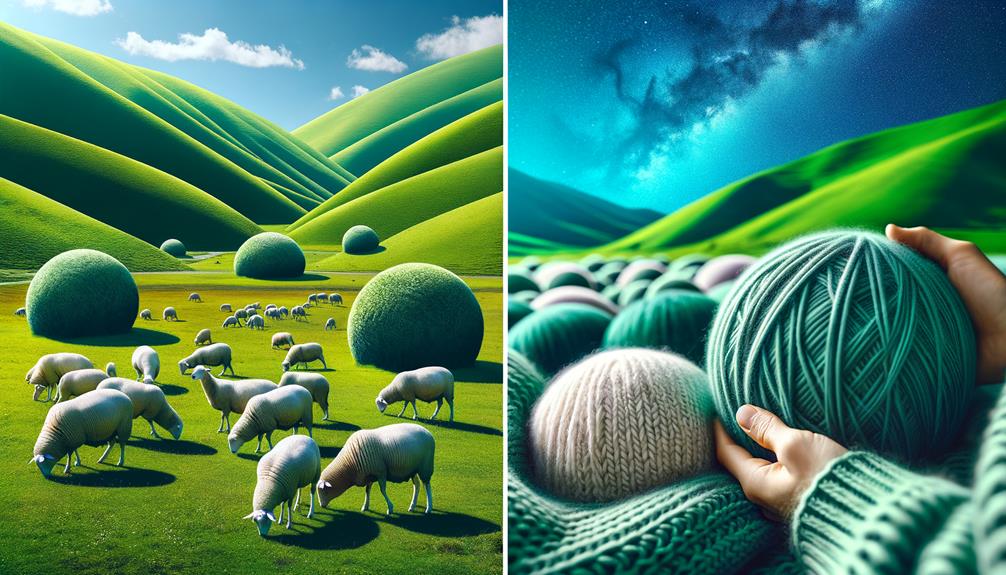
Wool’s eco-friendly nature makes it an ideal choice for those prioritizing sustainability in their wardrobe. Pure wool aligns well with eco-conscious values and offers numerous benefits. As a renewable fiber, wool is shorn annually from sheep without harming the animals, creating a continuous cycle that promotes harmony with the planet.
One of wool fabric’s most impressive features is its biodegradability. When wool decomposes, it releases valuable nutrients back into the soil, fostering a healthier ecosystem. Wearing wool is a small yet significant step toward reducing environmental impact. Additionally, wool’s natural UV resistance eliminates the need for chemical treatments, further enhancing its eco-friendly credentials.
Wool’s self-cleaning properties resist odors and reduce the need for frequent washing, which conserves water and energy while keeping the fibers intact longer. Wool also insulates even when wet, offering comfort by keeping moisture away from the body, making it a reliable outer layer. Embracing wool is a practical way to support sustainability while enjoying high-quality, long-lasting clothing.
Frequently Asked Questions
Why Is Wool Used for Clothing?
Wool is a cozy, breathable fabric that adapts to the seasons. Its natural properties, such as insulation and sustainability, make it well suited to creating comfortable, eco-friendly clothing.
What Is the Significance of Wool?
Wool’s significance stems from its remarkable adaptability and eco-friendliness. It keeps wearers cool in the summer and warm in the winter, while also resisting flames. Its natural self-cleaning properties and durability make it a timeless fabric that stands the test of time.
What Is the Function of Wool?
Wool is a natural insulator that regulates body temperature with ease. Merino wool is incredibly soft and non-itchy, making it well suited to sensitive skin. It also has self-cleaning properties and is easy to care for, making it a staple in sustainable fashion.
Why Is Wool an Important Industry?
Wool’s importance stems from its adaptability and eco-friendly nature. It creates sustainable jobs, boosts local economies, and caters to the modern demand for environmentally responsible products. Its natural properties enhance both comfort and safety in clothing.