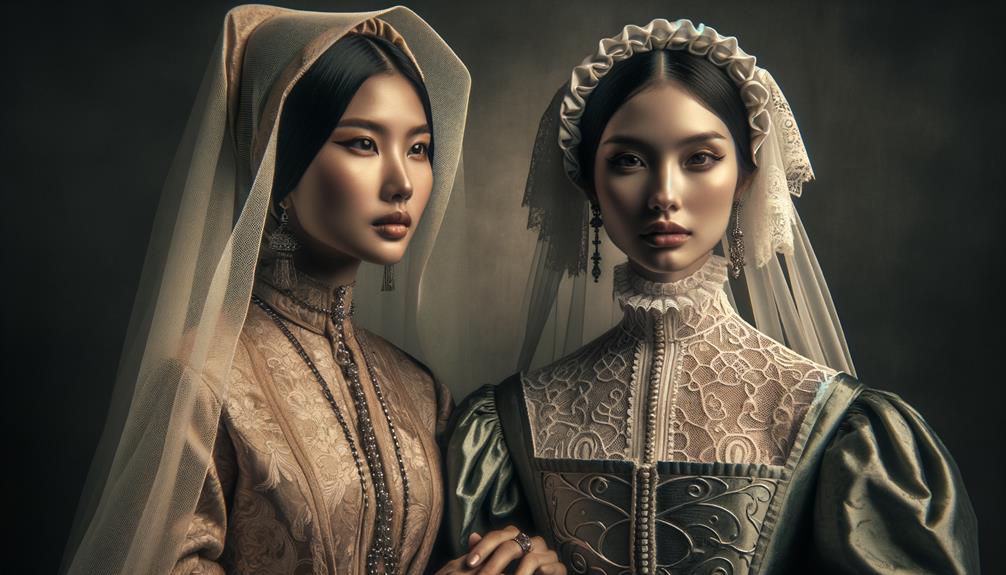
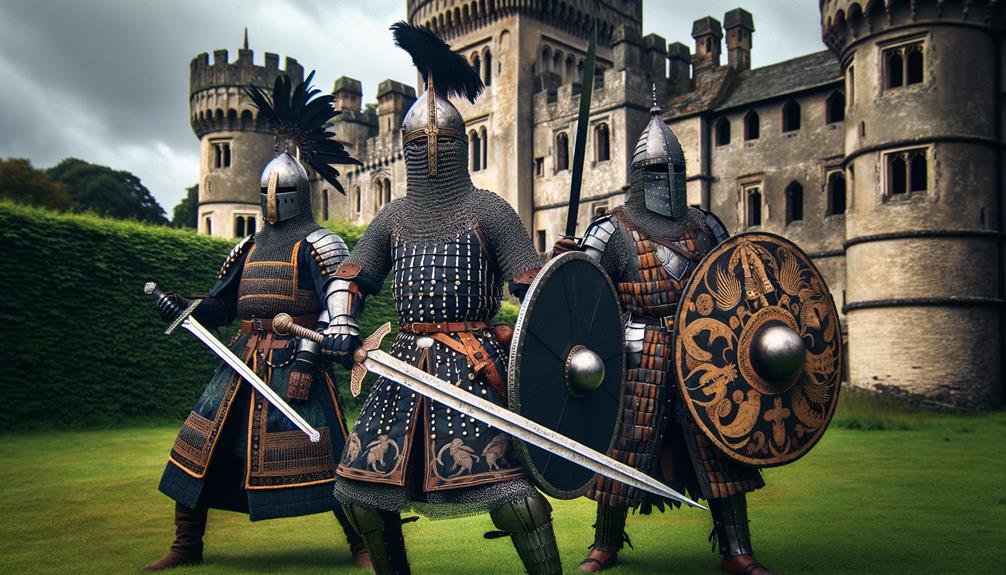
Medieval fashion varied sharply by region. In the north, the harsh climate demanded thick, warm clothing, whereas in the south the wealthy elite displayed their status with lavish fabrics and intricate designs. Along the coast, the influence of maritime life showed in a mix of exotic textiles and sea-inspired motifs. These regional differences answered two needs at once: they suited the practical conditions of each environment, and they mirrored the complex social hierarchies of the time. Such differences shaped how people judged one another and how they interacted.
Northern England Attire
In Northern England, medieval clothing centred on layering to combat the harsh climate. Women wore woolen tunics and long skirts, topped with warm cloaks. Each piece served a purpose, designed to trap heat and block the chill. The layering was practical, and it reflected a way of life shaped by the harsh environment.

Men’s medieval clothing followed a similar principle. Long tunics paired with trousers formed the base layer, while fur-lined cloaks added a vital barrier against icy winds. Accessories like fur-trimmed hoods and sturdy boots were necessary for both genders, completing their outfits with a rugged touch.
The regional variations in Northern English attire were striking. These were not arbitrary choices but adaptations to a specific environment. Fashion in this context was a blend of necessity and creativity. Each garment told a story of resilience and innovation, proof of human ingenuity in the face of nature’s challenges.
Northern England’s medieval clothing was an art form born of necessity, a layered defense against the elements that also showcased the region’s unique cultural identity.
Southern England Garments
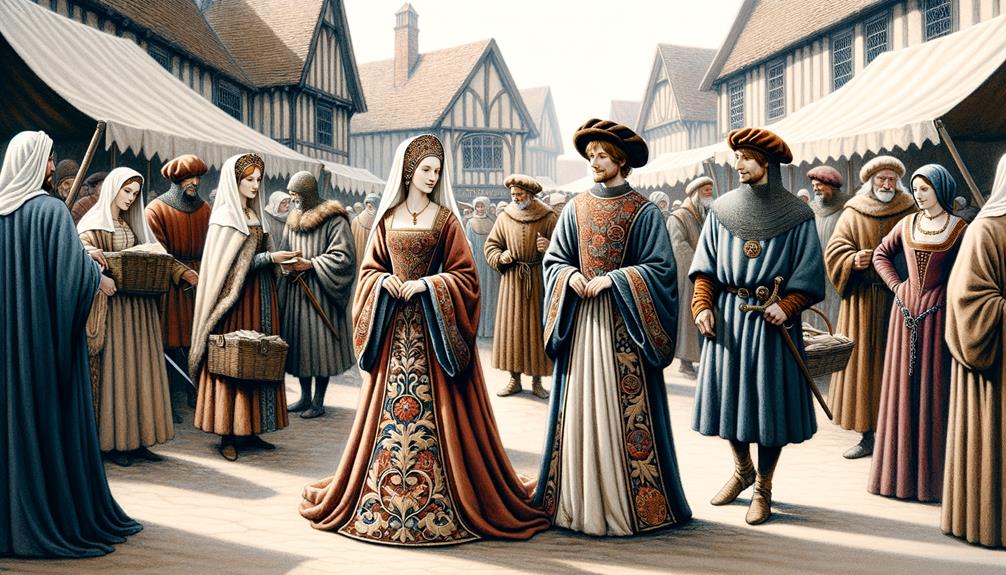
In Southern England, the nobility wore elaborate attire rich with intricate designs and ornaments. In contrast, commoners opted for practical clothing suitable for their daily labor. The choice of fabric reflected both necessity and social status, with warm woolens dominating the colder months and lightweight linens in summer.
Nobility’s Ornate Attire
Southern England’s nobility displayed their high social standing through exquisite attire, with vibrant colors, intricate embroidery, and opulent fabrics. During the Middle Ages, the noble class in Southern England favored ornate clothing, which served as a visual representation of their wealth and status.
Their meticulously tailored surcoats and tunics were often encrusted with jewels and precious metals, shimmering in daylight to reflect their high position in society. Each piece conveyed exclusivity, signaling the wearer’s noble lineage.
Several key elements define their attire:
| Element | Description |
|---|---|
| Fabrics | Silk, velvet, and brocade |
| Colors | Deep blues, rich reds, and striking purples |
| Embroidery | Gold thread, elaborate patterns |
| Adornments | Jewels, pearls, precious metals |
| Headwear | Jeweled crowns, elaborate headdresses |
These garments conveyed power and prestige rather than mere decoration. Ornate headwear, such as jeweled crowns and elaborate headdresses, completed the ensemble and reinforced the noble’s position in the social hierarchy. This attire blended artistry and authority, setting the nobility of Southern England apart in the record of medieval fashion.
Commoners’ Practical Clothing
In Southern England, everyday wear for commoners was about simplicity and practicality. Men wore plain tunics, often belted at the waist, paired with trousers. Women favored long, loose gowns and head coverings. Both sexes chose muted colors, reflecting the garments’ functionality and affordability.
Commoners prioritized durability in their clothing. Wool, a staple material, offered warmth and resilience, while linen provided a cooler option for undergarments and summer wear. These locally sourced materials were accessible and cost-effective. The lack of elaborate decoration reflected a lifestyle focused on necessity rather than fashion.
Belts and simple shoes completed their attire, emphasizing utility over aesthetics. Their clothing, though unadorned, was carefully made to withstand the rigors of daily life. This practical clothing allowed commoners to carry out their labor-intensive routines with ease.
In Southern England, commoners’ clothing choices demonstrated a strong connection between function and form, evident in every stitch of their wool and linen garments.
Seasonal Fabric Choices
Medieval garments in Southern England adapted to the changing seasons, prioritizing comfort and practicality. The region’s climate dictated these seasonal fabric choices. In the warmer months, lighter fabrics like linen and cotton were preferred for their breathability, making the heat more manageable.
As winter approached, the fabric choices shifted to wool and heavier textiles, providing much-needed insulation and warmth. The adaptability of Southern English medieval fashion to the changing weather was both ingenious and necessary.
The seasonal breakdown is straightforward:
| Season | Fabric Choice | Climate Adaptation | Practicality |
|---|---|---|---|
| Spring | Linen | Mild temperatures | Breathable, light |
| Summer | Cotton | Hot, dry | Cool, comfortable |
| Autumn | Wool | Cool, damp | Insulating, durable |
| Winter | Heavy Textiles | Cold, harsh | Warm, protective |
These seasonal fabric choices were driven by functionality rather than aesthetics. Each garment had a role, a purpose set by the climate. Southern England’s medieval clothing reflected a close reading of the local environment, prioritizing comfort and practicality above all else.
In medieval Southern England, people’s clothing choices were shaped by the seasons. The region’s unpredictable climate meant that garments needed to be adaptable to ensure comfort and protection. The shift from lighter fabrics in warmer months to heavier textiles in winter shows the resourcefulness of the people who lived there. By choosing fabrics that suited the climate, medieval Southerners were able to thrive in their environment.
Coastal Region Styles
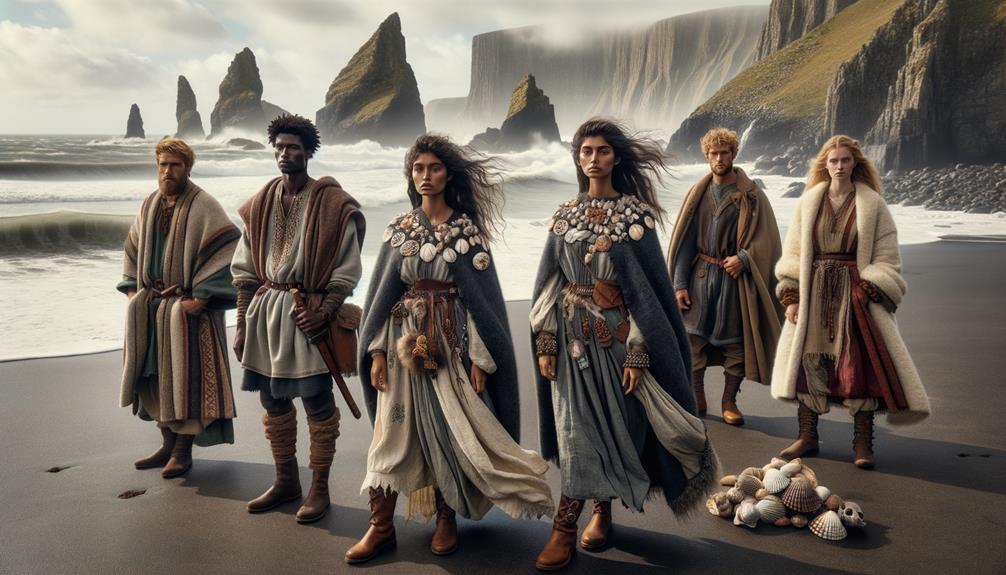
In coastal regions, fashion takes inspiration from the sea, reflecting the local seafaring lifestyle. Exotic fabrics and styles arrive via trade routes, blending with local elements to create a unique style. Practicality meets vibrancy, as durable attire for fishermen and sailors often features ocean-inspired colors.
Nautical Influence on Attire
Coastal communities wove the sea’s essence into their clothing, blending practicality with marine motifs like waves and shells. In coastal regions, attire was about surviving a harsh maritime lifestyle as much as about style. Nautical elements were everywhere: from wave patterns embroidered on tunics to shell-shaped brooches adorning cloaks.
Fishermen and sailors needed garments that could withstand the elements, resistant to moisture and salt. They opted for durable fabrics that could handle the spray of the sea and the wear of daily labor. Practicality often merged with beauty in the form of marine motifs, intricate yet functional.
Nautical influence reached their attire in several visible ways:
| Feature | Example |
|---|---|
| Marine Motifs | Wave patterns, shells |
| Practical Designs | Moisture-resistant fabrics |
| Nautical Accessories | Ropes, knots, anchors |
These elements created a unique look distinct from inland fashions. The garments were more than clothing; they reflected the maritime spirit of the coastal regions. With each knot and wave came the story of the sea, effortless and enduring. Coastal fashion was both a necessity and an art form, a close fit between life and landscape.
Trade Impact on Fashion
The influx of exotic fabrics via bustling trade routes transformed the fashion landscape of coastal regions. The availability of luxurious materials like silk and cotton raised local fashion, leading to the creation of intricate and vibrant designs.
In these regions, fashion flourished as people incorporated elements from different cultures into their own style. The blend of influences resulted in a distinctive aesthetic that was both innovative and opulent.
The impact of trade showed in the variety of fabrics and in the craftsmanship. Local artisans experimented with imported textiles, pushing the boundaries of design and technique. This produced a dynamic fashion scene that was as much about artistry as about functionality. Coastal regions displayed a rapid and remarkable fashion evolution shaped by the influences of trade.
Trade had a profound impact on what people wore and how they expressed themselves through clothing.
Influence of European Trends
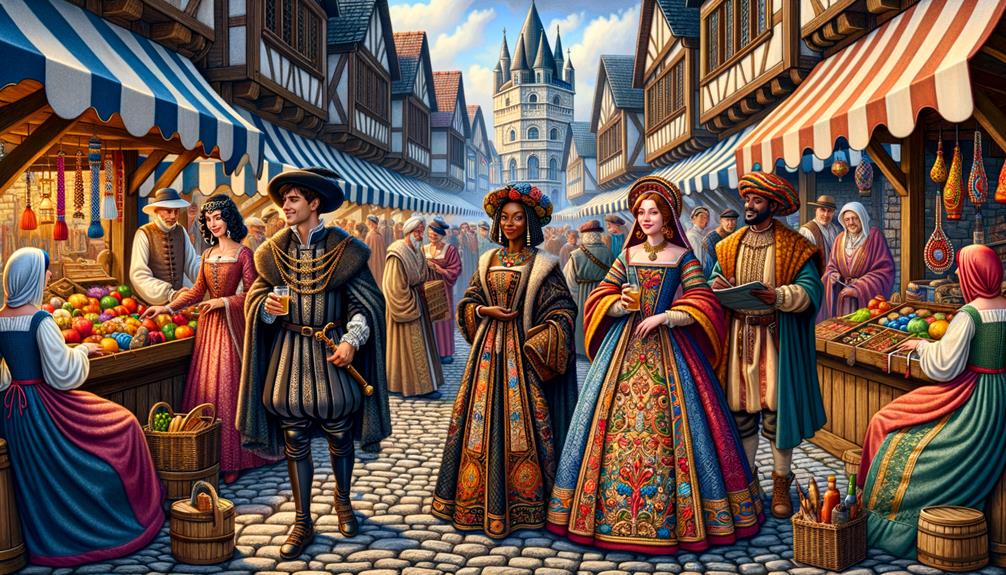
Regional medieval fashion often drew inspiration from prevailing European trends of the time. In the Byzantine world, opulent silks and intricate embroidery defined a sophisticated aesthetic, which influenced neighboring regions. Anglo-Saxon women, in particular, adopted elements of this elaborate style, integrating rich fabrics and detailed patterns into their attire.
During the Viking Age, Norse clothing exhibited a blend of practicality and European influences. Viking traders brought back luxurious materials and new styles, which were then adapted to withstand harsh Scandinavian climates. Their tunics and cloaks, while functional, often mirrored the more decorative aspects of medieval European dress.
Throughout medieval Europe, fashion did not exist in isolation. Social exchanges and trade routes played pivotal roles in spreading these trends. The Carolingians, for example, showcased Roman-inspired attire that evolved into unique regional styles. Each area, from the British Isles to the Nordic regions, developed distinct fashion identities while still echoing a shared European sensibility.
The interplay of regional influences, social norms, and historical developments shaped medieval fashion. Whether through the sumptuous textiles of the Byzantine world or the practical elegance of the Viking Age, European trends left a lasting impact on regional medieval dress.
Urban Vs. Rural Dress
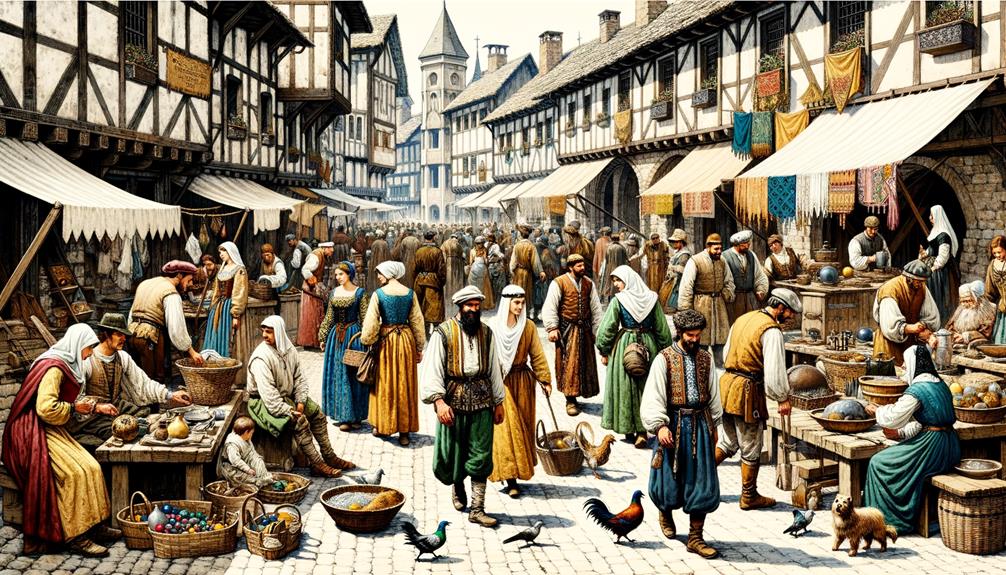
Urban and rural medieval dress were worlds apart in both form and function. In cities, finer fabrics and brighter colors marked urban dress, showcasing social status. Silk, intricate embroidery, and layers reflected the wearer’s standing. Urban fashion thrived on trade and cultural exchange, producing elaborate designs that were expressive and luxurious. The urban dweller’s wardrobe was a canvas of sophistication and innovation.
Rural clothing, on the other hand, prioritized practicality. Peasants and laborers needed garments that could withstand the rigors of daily work. Durability and comfort took precedence over aesthetic appeal. Rough wool and linen were common, chosen for their resilience. Simple cuts allowed ease of movement, essential for agricultural tasks and manual labor.
The disparities in attire encapsulated the broader social divide. Urban residents, often wealthier, could afford sartorial elegance. Their dress reflected identity and aspiration. In contrast, rural populations wore what was necessary for survival, their modest apparel a representation of a life of hard work and modest means.
Medieval fashion was a vivid reflection of a person’s environment and social standing, distinguishing urban sophistication from rural practicality.
Noble Vs. Peasant Clothing
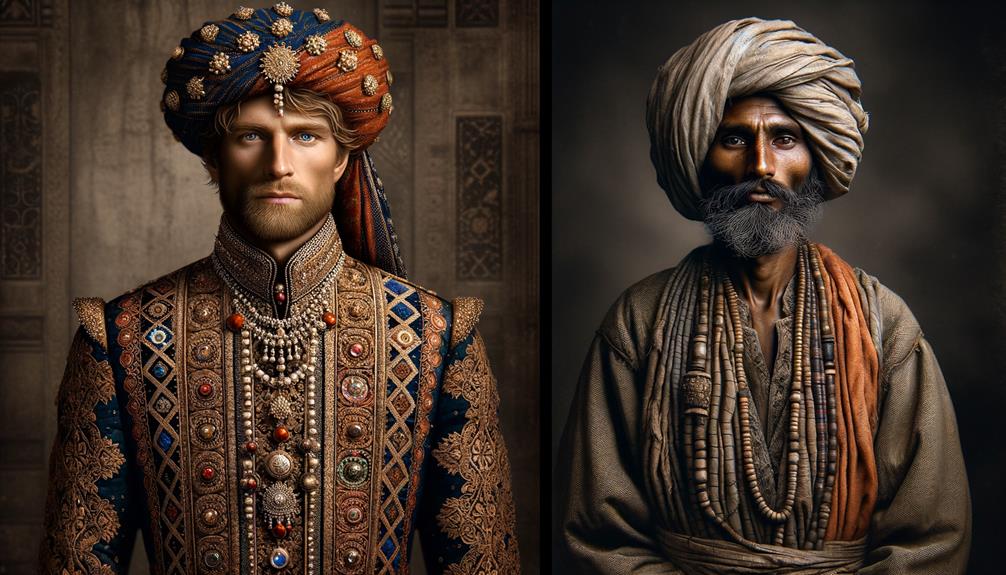
Nobles’ wardrobes showed their wealth and status in fine fabrics, bright colors, and intricate designs. In contrast, peasant clothing was practical and functional, with dull colors and simple designs. This stark contrast highlighted the vast social and economic disparities of medieval society.
The upper classes wore ornate surcoats and tailored garments, adorned with luxurious accessories, reflecting their high position in society. Each piece of clothing was a statement, a visual cue of their wealth and status. In contrast, peasants dressed in modest, practical attire, with simple tunics and basic footwear being the norm.
The distinction between noble and peasant clothing was not about aesthetics alone. It was about survival and social order. While noble fashion evolved rapidly, peasant attire remained consistent, rooted in utility rather than style. This consistency underscored the rigid social structures of the time, where innovation in fashion was reserved for the upper ranks.
Clothing was a silent yet powerful indicator of a person’s place in society, reflecting the vast economic and social disparities of medieval times.
Textile and Fabric Choices
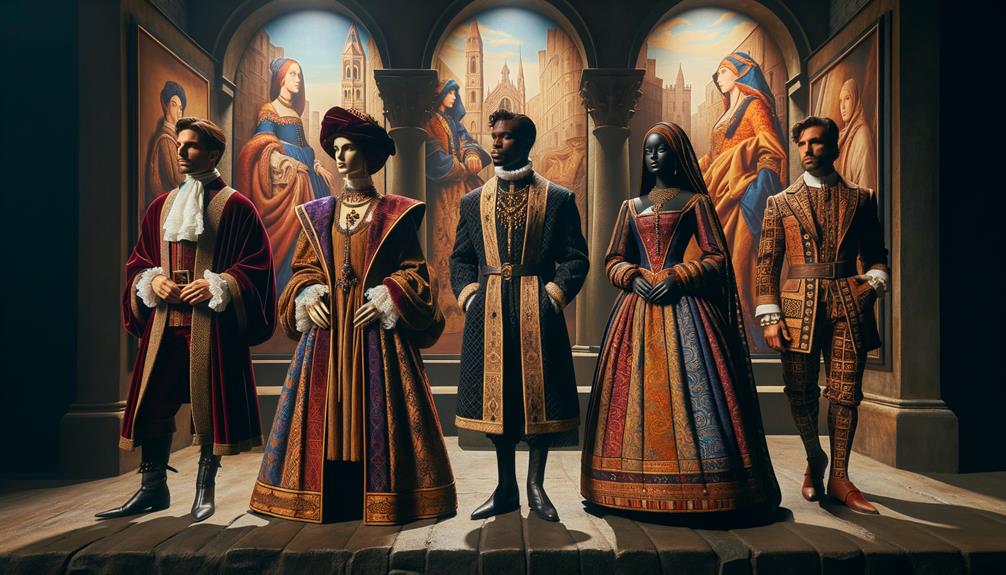
In medieval Europe, the choice of fabric and textile was a status symbol, revealing a person’s social standing and regional influences. Wool, a staple material, was worn by both peasants and nobles, offering warmth and durability across the continent.
Silk, on the other hand, was a luxury reserved for the wealthy elite. Imported from distant lands, its lustrous sheen signified affluence and exotic connections. This delicate fabric was a statement of wealth and power as much as a pleasure to wear.
Linen and hemp, although humble, were essential fabrics. Linen, breathable and cool, formed the basis of undergarments, while hemp provided sturdy, practical clothing for daily labor. These fabrics were the backbone of medieval wardrobes, practical yet vital.
Damasks, with their intricate patterns, became closely associated with opulence after the Crusades, when they arrived in Europe alongside a wider culture of luxury weaving. Their designs reflected the craftsmanship and cultural exchange of the time.
Each fabric choice expressed identity and status as much as function. Wool, silk, linen, and hemp each spoke a different language, recording the social and regional diversity of medieval Europe.
Seasonal Variations in Fashion
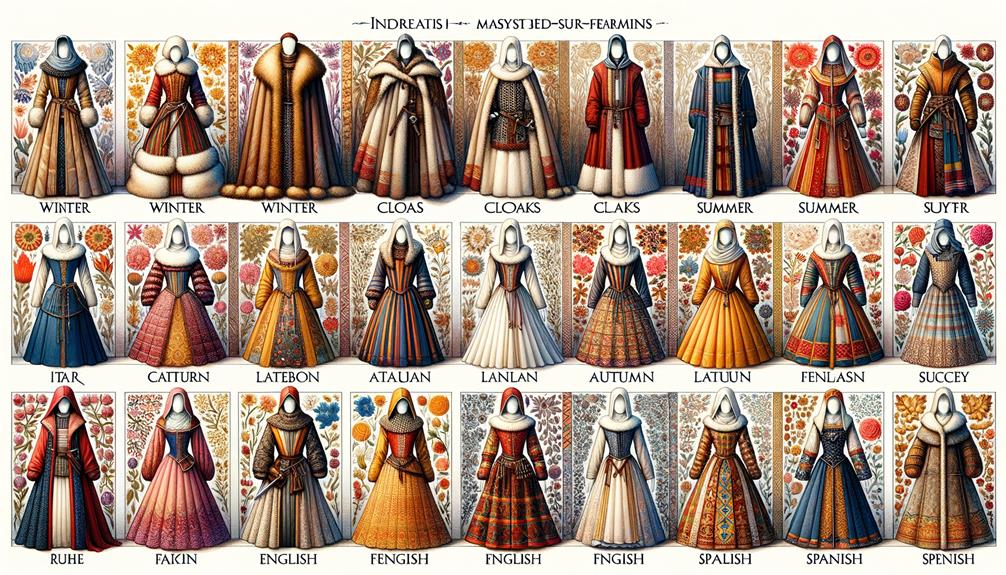
Medieval fashion was heavily influenced by the changing seasons. During winter, people wore heavy fabrics like wool and fur to keep warm. They layered their clothing, often adding fur trimmings and longer hemlines to combat the cold. Cloaks, hoods, and gloves were essential for survival in the harsh weather.
In contrast, summer clothing was made of lighter fabrics like linen and silk, which were breathable and comfortable in the warmer months. Shorter sleeves and lighter colors were also popular during this time.
Regional differences played a significant role in these seasonal variations. In colder northern regions, people prioritized insulation and warmth, often wearing fur-lined inner layers and woolen outer garments. In southern areas, where the winters were milder and summers hotter, clothing was lighter and more breathable.
The changing weather conditions demanded a wardrobe that could adapt. Medieval fashion had to be functional and versatile, with practicality defining every choice. The seasons shaped what people wore and how they wore it.
Frequently Asked Questions
What Were the Different Types of Medieval Dresses?
Medieval dresses varied greatly, from long-sleeved tunics to tube-like garments, ankle-length gowns, and surcoats. Each piece told a story, blending elegance and practicality while reflecting the wearer’s status and personal style.
What Were the Characteristics of Medieval Fashion?
Medieval fashion was characterized by its rich fabrics, intricate embroidery, and layered garments. It evolved over time to reflect social status and cultural influences. The colors, textiles, and styles varied greatly, showing the creativity and adaptability of medieval clothing.
What Are Some Styles From the Middle Ages?
The Middle Ages included a diverse range of styles, from Roman-inspired tunics through Anglo-Saxon simplicity to Norman flair, and from luxurious Byzantine silks to the long-toed shoes of the period. These remain striking examples of medieval dress.
How Did European Fashion Change During the Middle Ages?
As European fashion evolved from Roman styles, regional variations emerged, influenced by invaders. Over time, styles merged, with Roman forms persisting in clergy attire. Luxury fabrics like silk and cotton signified elite status, while commoners wore cloth produced locally.