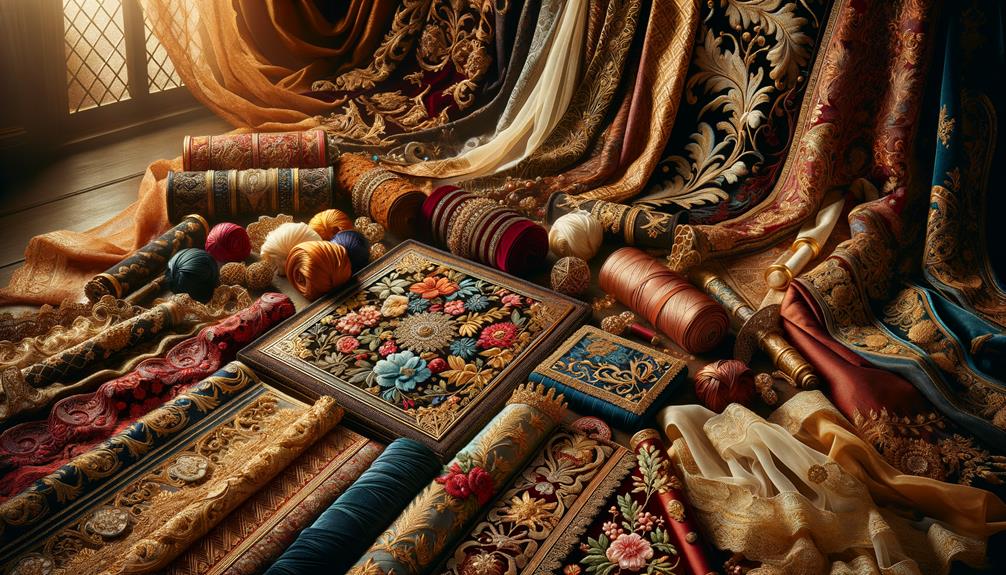
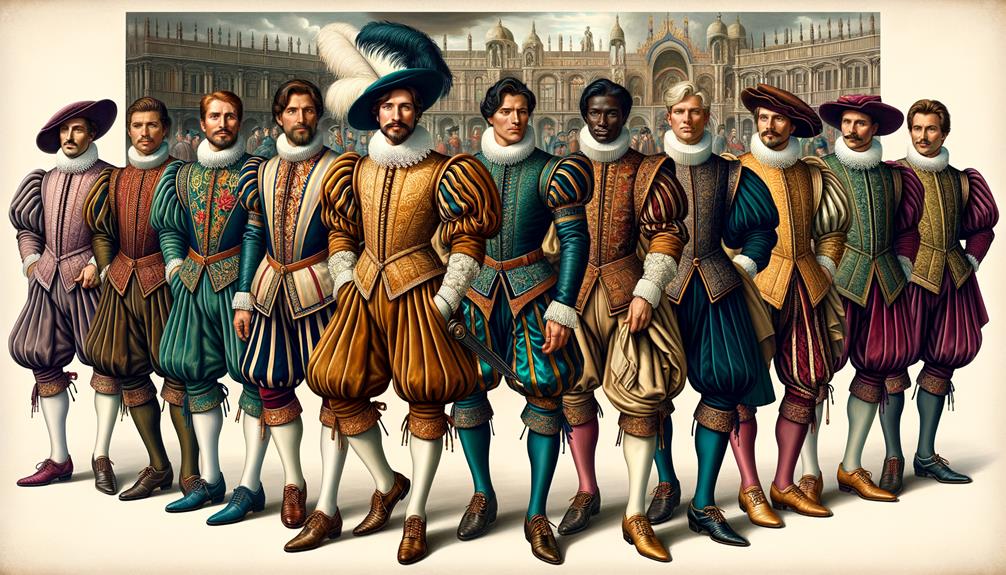
The rich tapestries and luxurious fabrics that define Renaissance fashion in France were extraordinary. The structured bodices and voluminous skirts, elegantly coordinated, exude opulence and sophistication. Silk, velvet, and brocade speak of wealth and artistry. For men, fitted doublets and hose merge practicality with grandeur, each stitch showcasing meticulous craftsmanship. Headwear and intricate lace collars frame faces with elegance. This sartorial fusion, seeded by Italian influence, blossomed into a unique French identity.
Influences on French Fashion
The Italian Renaissance‘s profound influence on French fashion is undeniable. During this transformative era, elegant collars, slashes, and codpieces redefined style. Françoise I, with his visionary approach, commissioned Italian designers to infuse French clothing with intricate details and luxurious fabrics. This fusion of Italian artistry and French innovation gave birth to an extraordinary sartorial renaissance, ultimately reimagining the identity of the wealthy French Renaissance elite.

Lyon, the Silk Capital of France, was defined by the sound of looms weaving threads of opulence. The city’s dedication to silk production became a cornerstone of French textile wealth, while regions like Rouen and Tours diversified the industry with their wool and linen. Every thread and stitch carried the essence of Italian craftsmanship, raising the French aesthetic to new heights.
Françoise I’s promotion of the textile industry did more than adorn the bodies of the elite; it spurred artistic development and economic growth, weaving a deep culture that still inspires innovation today.
Key Garment Styles
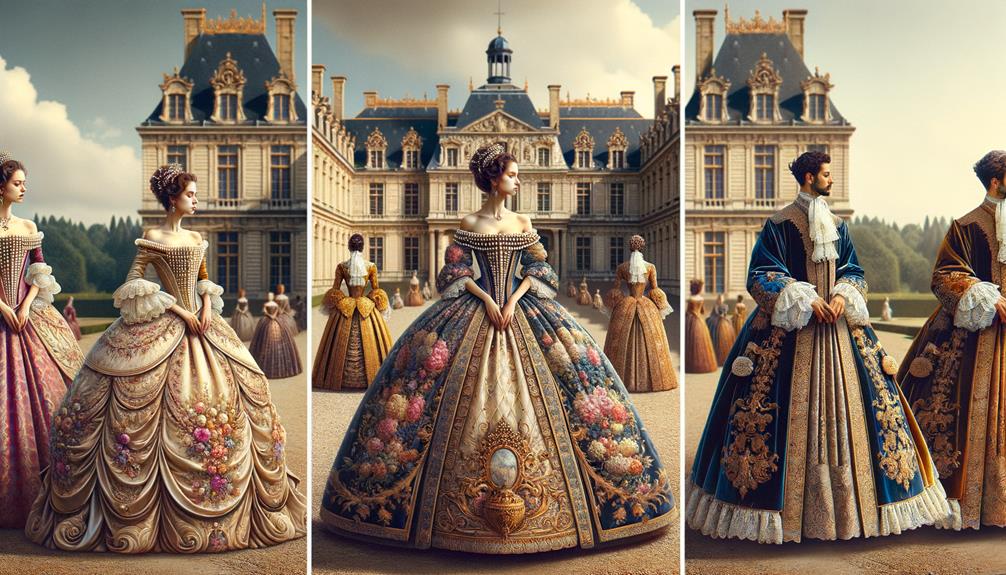
In the intricate dance of French Renaissance fashion, structured bodices with square necklines and voluminous farthingales sculpted a regal and refined silhouette. These elements came together to create a visual symphony of elegance. The structured bodices, meticulously designed to emphasize the waist and bust, framed the upper body with precision. Their square necklines, a reflection of the era, brought a dignified allure, drawing the eye to the wearer’s posture.
Farthingales transformed skirts into bell-like shapes, showing the ingenuity of the time. These hoop skirts did more than enhance volume; they redefined the way space interacted with the human form. The interplay between the structured bodices and voluminous farthingales worked like a sartorial ballet, each garment playing its part in a narrative of sophistication.
This attention to detail and commitment to form speaks to an era that revered innovation and tradition. These garments capture the Renaissance spirit, an enduring legacy woven into the fabric of fashion history.
Popular Fabrics and Materials
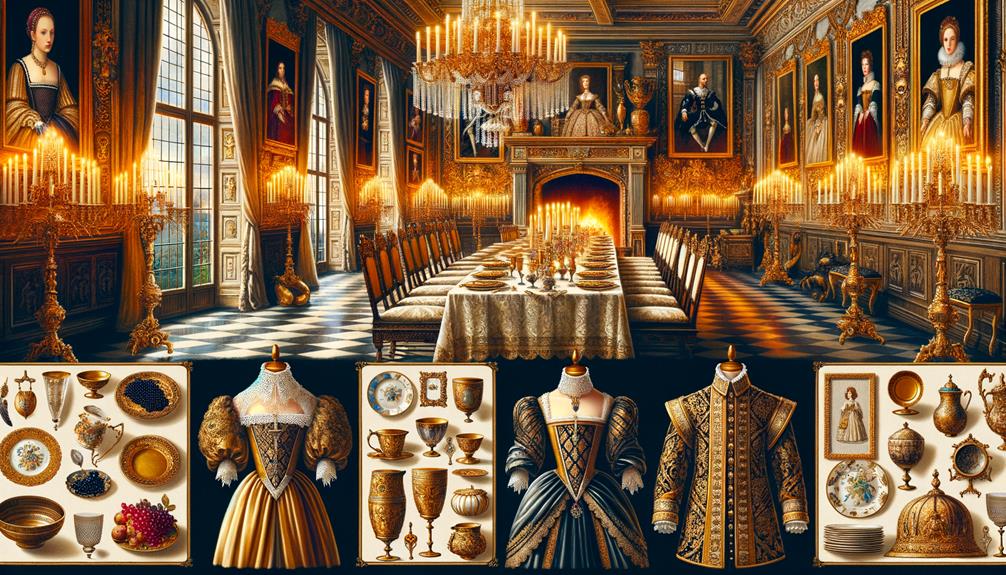
The opulent fabrics of the French Renaissance included luxurious silk that seemed to float effortlessly in the air. Velvet, with its rich depth, added a tangible richness that evoked nobility and grandeur. Then there was brocade, with its intricate, ornate patterns, weaving stories of opulence into every thread.
Luxurious Silk Dominance
Amidst the splendor of the French Renaissance, silk wrapped the nobility in a cascade of shimmering elegance, its luxurious threads telling stories of opulence and artistry. During this period, French fashion was a visual representation of wealth and social standing, and nowhere was this more evident than in the lavish use of silk.
In every twist and turn of the fabric, a narrative of grandeur unfolds, a silent declaration of power and refinement. Lyon, the Silk Capital of France, became the epicenter of this luxurious movement, its looms producing the most intricate embroidery and brocade designs. Each garment, a masterpiece of craftsmanship, reflected the era’s love for luxury and artistry.
Silk’s allure lay in its texture and in its capacity to transform the wearer into a living embodiment of sophistication. Silk mattered greatly in French Renaissance fashion:
| Fabric | Use | Significance |
|---|---|---|
| Silk | Garments for nobility | Symbol of wealth and status |
| Embroidered silk | Detailed decorative elements | Showcases intricate craftsmanship |
| Brocaded silk | Richly patterned textiles | Adds depth and sophistication to attire |
| Lyon silk | Production center for luxury fabrics | Cemented Lyon’s reputation as Silk Capital |
In every thread, a world of elegance and prowess unfolds before the eyes of Renaissance France.
Velvet’s Regal Appeal
French Renaissance fashion leaned heavily on velvet’s luxurious charm and sumptuous texture, which embodied nobility and wealth. This lavish fabric, with its rich hues and intricate details, was a favorite among the nobility, turning simple garments into masterpieces of opulence. Velvet’s soft, smooth surface invites more than admiration: it offers a tangible connection to the wearer, a tactile expression of sophistication and status.
In the radiant courts of France, velvet adorned elaborate gowns, doublets, and accessories, each piece meticulously crafted to showcase the wearer’s prominence. The inherent richness of velvet added depth and elegance to noblewomen’s attire, saying much about their social standing. This fabric was a declaration of power and prestige, not merely about aesthetics.
During the French Renaissance, luxurious fabrics reigned supreme, and velvet’s popularity exemplified this era’s fascination with lavish materials. Velvet was more than just a fabric. It was a symbol of an era defined by its relentless pursuit of beauty and grandeur.
Brocade’s Ornate Patterns
Within French Renaissance fashion, brocade’s intricate patterns stand out, showing the era’s passion for luxurious detail and artistic flair. The craftsmanship woven into every thread is striking. Brocade, favored by the nobility for its intricate and lavish designs, was a symbol of elegance and status rather than simple fabric.
These ornate designs, often woven with metallic threads, shimmered with a rich opulence that caught the light at every turn. Noblewomen adorned themselves in brocade gowns, their doublets and accessories sparkling with the wealth and sophistication of the French Renaissance. Each piece showcased the wearer’s status and also the era’s commitment to luxury and exquisite craftsmanship.
Brocade embodied the essence of the Renaissance, an age that revered beauty, art, and innovation, rather than mere appearance. The fabric’s extravagant appearance made it perfect for court events and formal occasions, where every detail mattered. In brocade’s intricate patterns, we see a world that cherished the luxurious and the extraordinary, a world where every thread told a story of artistic expression.
Women’s Fashion Highlights
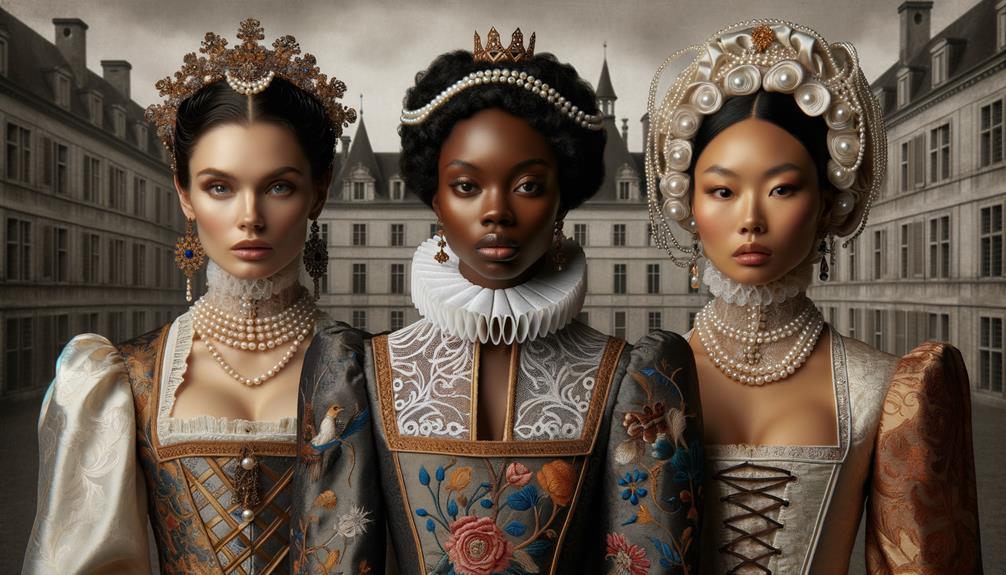
French Renaissance women’s fashion reflects the era’s refined elegance. The structured bodices and bell-like skirts create a mesmerizing silhouette that exudes sophistication. The intricate lace detailing transforms these garments into works of art.
The fabrics used, such as silk, brocade, and linen, are adorned with delicate embroidery, telling a story of opulence and meticulous craftsmanship. The farthingale, with its ingenious design, adds volume to the skirts, giving them that iconic bell-like shape. The structural elements harmonize with the softness of the fabrics, creating a balanced yet striking aesthetic.
These historical garments blend strength and delicacy. The structured bodices sculpt the torso and also serve as a canvas for the era’s most exquisite embellishments. The intricate lace detailing adds a layer of complexity and beauty, making each piece a reflection of the era’s artistic spirit.
Men’s Fashion Highlights
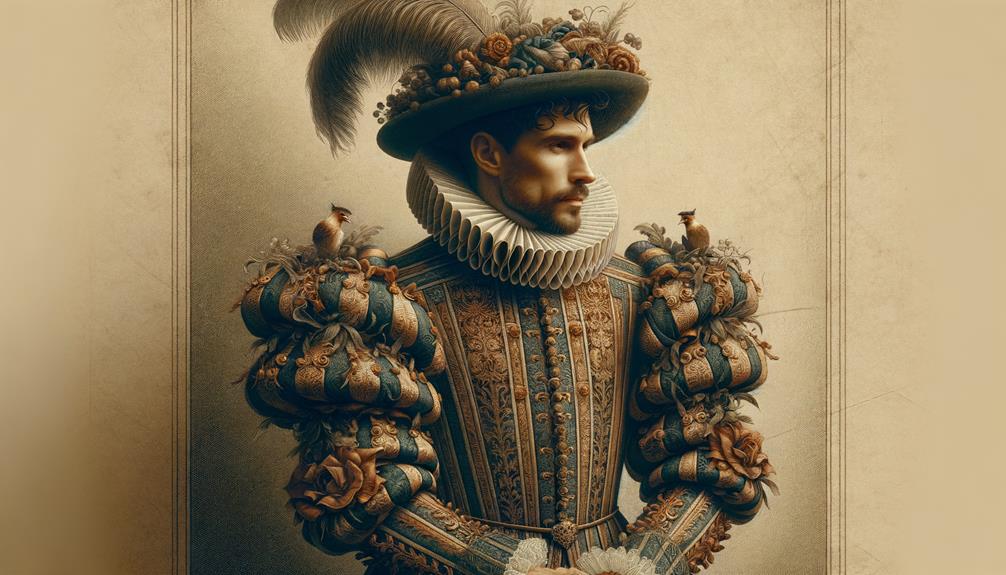
Men’s fashion during the French Renaissance featured fitted doublets and ornate hose that accentuated the male form. Each piece, from the slashed fabrics to the prominent codpieces, reflected a time when clothing was both a form of artistic expression and a means of self-protection. The blend of Italian influence and French sophistication brought a unique refinement to every stitch and embellishment.
Doublets and Hose Styles
Amid the splendor of Renaissance France, men’s fashion reached new heights with intricately designed doublets and elegant hose that adorned their bodies. These quintessentially French garments embodied the era’s opulence and attention to detail. Doublets, close-fitting and waist-length, were crafted from luxurious fabrics like wool, linen, and velvet, showcasing the wearer’s status and refinement. Intricate embroidery and contrasting fabrics transformed these doublets into personal statements, silently conveying wealth through every stitch and fold.
These doublets evolved by blending Italian and Spanish influences into their design. They adapted to the ever-changing tides of fashion while retaining an unmistakable French elegance. Paired with hose that clung tightly to the legs, the ensemble was both practical and aesthetically pleasing. The hose, like the doublets, reflected the meticulous craftsmanship of the time rather than serving as plain garments.
These pieces blend form and function harmoniously, where innovation was celebrated, not merely accepted. During the Renaissance, men’s attire transcended utility, becoming an art form in itself.
Accessories and Embellishments
The elaborate headwear that crowned the ensembles shows the nuances of this era. Both men and women favored intricate designs, with men often donning berets or capotains that echoed the grandeur of the French hood worn by women.
The codpiece, a peculiar yet striking embellishment, stood out with its triangular form, often lavishly decorated to accentuate the male figure. It was a bold statement, both functional and ornamental, reflecting the wearer’s status and daring fashion sense.
Ornate belts cinched at the waist, sparkling with every movement, and doublets adorned with gold thread and gemstones conveyed wealth and elegance. Intricate lace collars framed the face, adding a refined touch to the overall look. The embroidery on these garments went beyond decoration; it was a meticulous craft that conveyed the splendor and innovation of French Renaissance fashion. In each stitch and gem, a story of opulence and distinction unfolded.
Legacy of Renaissance Fashion
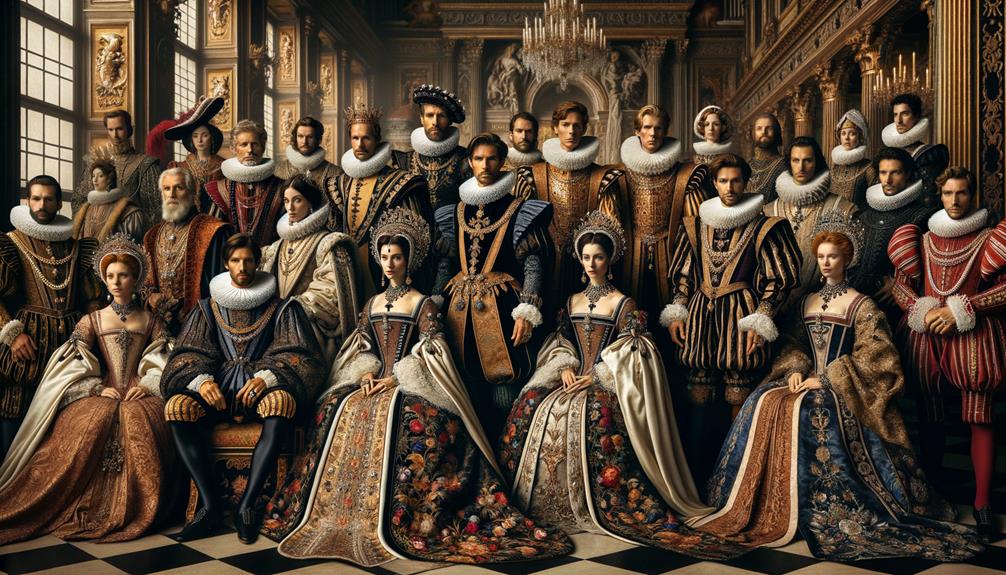
The rich heritage of intricate embroidery and lavish fabrics in Renaissance fashion continues to inspire modern designers. The era’s dedication to intricate details and luxurious fabrics has had a lasting impact on the fashion world. Haute Couture, in particular, reflects this influence, showcasing an appreciation for the artistry and craftsmanship that defined Renaissance attire.
Modern wedding gowns echo the past, with long, flowing dresses and delicate embroidery reminiscent of a time when fashion was a true art form. This connection to history is more than nostalgic; it’s a tribute to the enduring beauty and sophistication of Renaissance fashion. Bridal designers draw on these elements, creating pieces that feel timeless yet innovative.
Contemporary fashion continues to reveal the Renaissance’s unique blend of elegance and opulence that still captivate designers. The principles of French Renaissance fashion, an appreciation for luxurious materials and meticulous craftsmanship, continue to resonate. This legacy honors the past while fueling the creative spirit, urging designers to innovate while respecting tradition.
Frequently Asked Questions
What Was the Fashion Like in the French Renaissance?
In the French Renaissance, fashion was a masterclass in opulence, with women’s structured bodices and men’s luxurious doublets exuding refinement and elegance. Every piece of clothing whispered of wealth, subtly defining the elite strata of society.
What Is the French Renaissance Era?
The French Renaissance, which spanned the 15th to 17th centuries, marked a cultural rebirth seen in grand castles and vibrant tapestries. It transformed France, sparking creativity and reshaping the very fabric of society.
What Was the Renaissance Style of Clothing?
The Renaissance style of clothing is an exquisite display of silk and brocade that exudes luxury. The high-waisted dresses, puffed sleeves, and bell-like skirts evoke elegance, with each piece showcasing exceptional craftsmanship.
What Are the Characteristics of the French Renaissance Design?
16th-century French fashion required an astonishing 200 yards of fabric for a single gown. The opulence is striking: velvet, silk, brocade, and intricate details that reflect a society that prized luxury and artistic innovation.