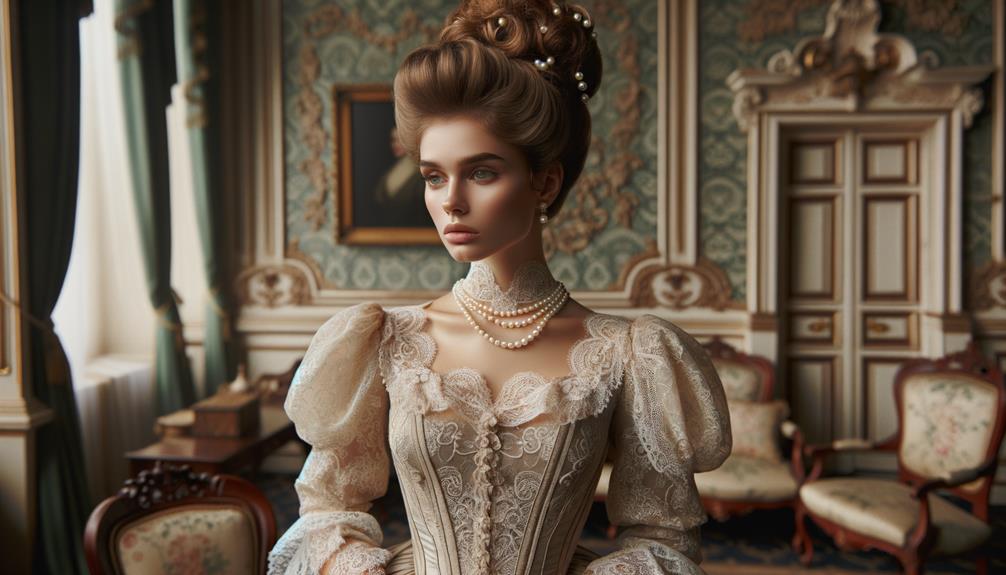
In the Victorian Era, gloves conveyed social standing and moral character, and they were more than just a fashion statement. The snug fit and light hues of gloves reflected a wearer’s refinement. Different gloves were worn for daytime and evening events, with materials ranging from fine kid leather to luxurious animal skins. Men removed their gloves to shake hands, as a sign of respect. Gloves required meticulous maintenance, cleaned with starch and ammonia, and stored flat to preserve their condition. Wearing them correctly spoke volumes about a wearer’s adherence to societal norms. In those days, gloves did not just cover the hands. They conveyed social status and intentions within the social hierarchy. Their symbolism runs much deeper.
Types of Victorian Gloves
The elegance of the Victorian era is evident in the variety of gloves that adorned women’s hands, each pair carefully chosen for its specific occasion. Daytime gloves, typically made of kid leather, were short and often pale in color, designed to complement the refined attire of the day. These subtle accessories ensured that no detail of a lady’s presentation was left unattended.

In contrast, evening gloves extended beyond the elbow and were crafted from the finest kid and other luxurious animal skins. They were a statement of sophistication and grace, and not merely functional. These gloves often featured intricate lace inserts, transforming them into pieces of art that harmonized perfectly with the opulence of evening gowns. By the late 1800s, silk gloves had fallen out of favor for evening wear, considered unsophisticated.
The shift from daytime to evening gloves was a transformation, and not merely a change in material. It was a journey from the practicalities of daylight to the enchantment of the night. Each glove, whether for day or evening, encapsulated the essence of the Victorian woman’s world.
Proper Glove Usage
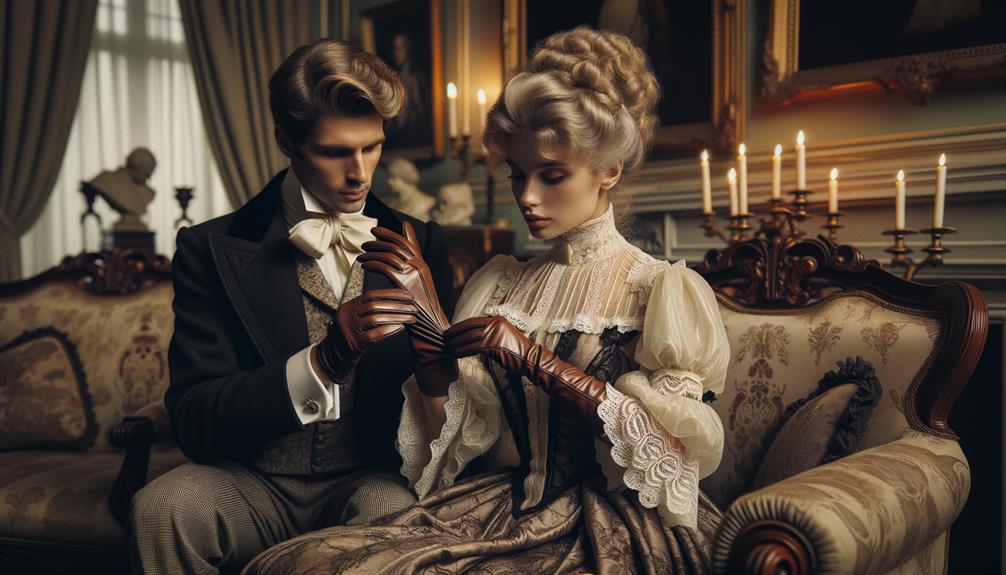
Each nuance of glove etiquette held profound significance for a lady’s public reputation in the Victorian era. Gloves were symbols of social status and elegance, and not just accessories. Wearing them correctly was crucial to a woman’s reputation.
Proper glove usage demanded attention to material, fit, and color. Silk or kid gloves were preferred for their luxurious texture, while the fit had to be snug yet comfortable, accentuating the delicate shape of a lady’s hand. White and light colors were suitable for most occasions, though darker shades were acceptable for certain events.
The following table captures the essential aspects of glove etiquette in the Victorian era:
| Occasion | Material | Color |
|---|---|---|
| Morning Walks | Kid Leather | Light Colors |
| Afternoon Visits | Silk | White or Pastels |
| Evening Events | Satin | Darker Shades |
| Mourning | Crepe | Black |
| Church | Cotton | White |
Adhering to these rules was a delicate dance, a silent conversation with society that underscored a wearer’s refinement. Each pair of gloves became an extension of the wearer’s persona, a reflection of the era’s unspoken yet rigid etiquette rules. Gloves transcended their practical utility, becoming intricate symbols of a bygone elegance.
Gloves in Social Settings
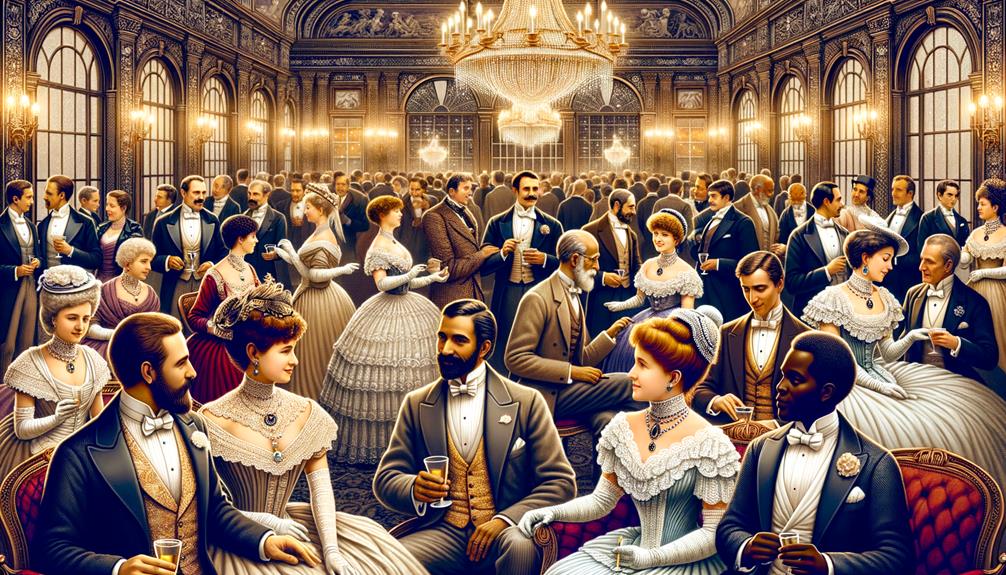
In Victorian social circles, gloves silently dictated a person’s level of sophistication and decorum. During this era of strict social norms, glove etiquette was a tangible reflection of social standing, and not just a fashion statement. Those meticulously planned gatherings relied on the soft rustle of silk gloves to whisper secrets of status and propriety.
For women, gloves remained a steadfast companion until the dinner bell rang, signaling a brief reprieve from the rigid norms. Men, on the other hand, demonstrated respect and trust by removing their gloves before a handshake, a gesture that bridged the gap between formality and informality. These subtle rituals, though simple, were the threads that wove the intricate fabric of Victorian social interaction.
Navigating these unspoken rules required an exquisite balance of grace and precision. One misstep, one moment of carelessness, could unravel the delicate fabric of a person’s public persona. Glove etiquette was a reflection of inner refinement, a mirror to a wearer’s adherence to societal standards. In every stitch and seam, one could read the narrative of an individual’s place within the vast hierarchy of Victorian society.
Care and Maintenance
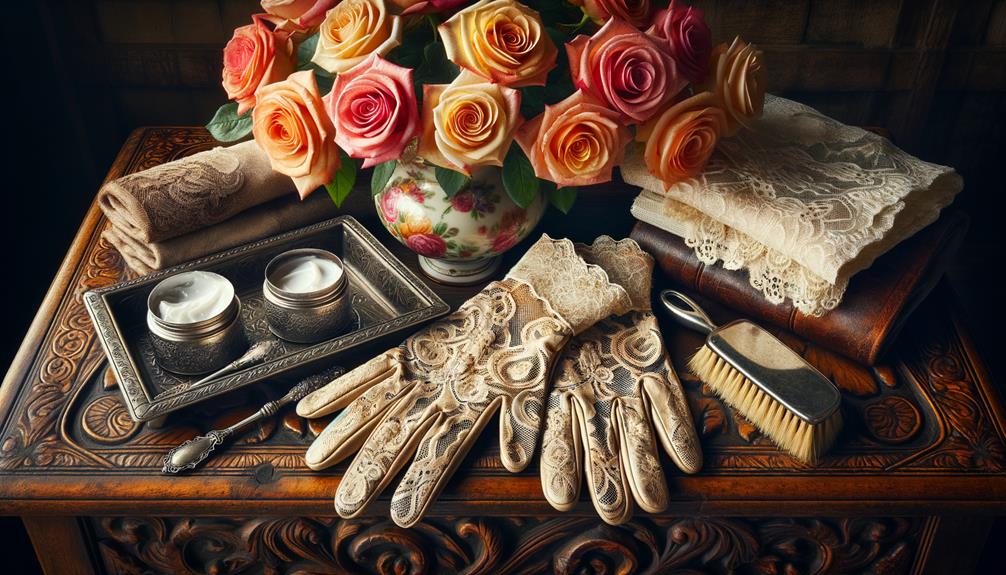
For each pair of gloves, the ritual of care and maintenance became a calming routine and a bittersweet reflection of their fleeting elegance. Wearing gloves demanded a commitment to daily upkeep, a task that transformed into a gentle dance of preservation.
To maintain these delicate materials, a meticulous routine was followed:
- Airing and Brushing: After each wearing, the gloves were left to air out and gently brushed free of any dirt or dust. This simple act allowed the gloves to breathe, preserving their delicate texture.
- Flat Storage: Gloves were stored flat to prevent creasing and maintain their graceful shape. Folding or crumpling them would lead to unsightly wrinkles and diminished charm.
- Cleaning and Repair: For white gloves, a careful wash in a mixture of starch and ammonia ensured they remained crisp and clean. Repairing small tears or loose seams was a delicate task, extending their ephemeral lifespan.
These tasks, though mundane, were infused with a sense of reverence. Each brushstroke, each stitch, was a quiet homage to the elegance that gloves once bestowed upon their wearers. Caring for them offers a poignant reminder of beauty’s impermanence.
Symbolism and Communication
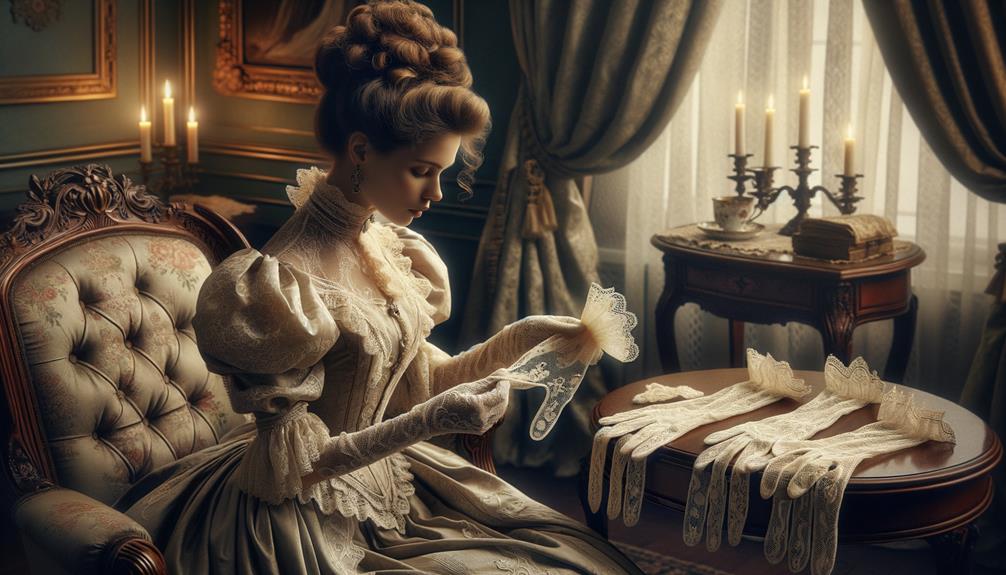
Gloves conveyed a person’s character and social standing in the Victorian era, and they were more than just a fashion accessory. They symbolized purity and refinement, silently revealing a person’s respectability. A simple act, such as removing gloves before shaking hands, signified trust and respect. This small gesture spoke volumes, weaving a complex social dance of interaction and decorum.
The condition and material of a person’s gloves subtly yet powerfully indicated social status. Well-maintained, high-quality gloves revealed attention to detail and adherence to the era’s strict social norms. They quietly conveyed a commitment to etiquette, silently showcasing sophistication and elegance.
Gloves also served as a form of non-verbal communication. Wearing them correctly, ensuring they fit well and were well-kept, conveyed refinement and adherence to societal rules. The melancholic elegance of a well-gloved hand symbolized a person’s place in a world obsessed with appearances and propriety.
In that world, gloves were essential tools for navigating the complex social labyrinth, and they were more than functional. Their silent language was a mark of a person’s character.
Frequently Asked Questions
What Were the Rules for Gloves in the Victorian Times?
Gloves were a near-universal part of upper-class Victorian dress. Strict rules governed glove etiquette, distinguishing between indoor and outdoor wear and selecting materials, and controlled their lives, suppressing individuality in the pursuit of refinement.
What Is the Etiquette When Wearing Vintage Hand Gloves?
When wearing vintage gloves, consider their material, fit, and color, ensuring they harmonize with the outfit. Their loss of elegance and refinement in our modern era’s pursuit of simplicity is worth lamenting.
What Is the Victorian Glove Language?
Victorians relied on subtle cues like glove language to express emotions, a stark contrast to today’s open, tech-driven interactions. A significant portion of the population used this discreet method of communication, a reminder of how people had to rely on subtle signals to convey their feelings.
Why Did Ladies Wear Gloves in the 1800s?
Ladies in the 1800s wore gloves to exude elegance, signify social standing, and protect their hands from the elements. Whether today’s innovations can evoke the same level of refined sophistication and nostalgic charm is a fair question.