An exhibit of ancient Greek footwear shows the elegance of historical attire. The intricate craftsmanship of the Embades stands out, with their warm, snug design. The Krepis, rugged yet refined, seems built for durability. The lofty Cothurnus raised the wearer’s height as well as their social standing. Each pair, adorned with subtle gold details and intricate carvings, told stories of a bygone era. These ancient styles continue to influence our modern fashion choices today.
Types of Ancient Greek Sandals
Exploring the varieties of ancient Greek sandals reveals a wide spectrum of designs, each with its own distinct character and social connotation. In ancient Greece, sandals were status symbols, occupation markers, and occasion wear, and they were more than simply footwear. The Embades, for instance, featured felt or fur linings, providing warmth and comfort, much like modern winter boots. The Krepis, with its rugged soles, was likely favored by those traversing rocky terrain.

The Cothurnus, with its high soles, boosted the wearer’s height as well as their social standing, and it was often associated with actors in ancient Greek theater. Meanwhile, the Buskin, distinguished by its closed laces, offered more coverage and support, making it suitable for travelers or soldiers. The Phaecasium, worn by priests and philosophers, embodied a sense of solemnity and reverence, reflecting the wearer’s scholarly or spiritual pursuits.
These ancient Greek sandals showcase a sophisticated understanding of design and function. Each style served a purpose, blending practicality with social messaging. These ancient designs have influenced modern footwear, combining intricate craftsmanship with innovative creativity.
Materials and Craftsmanship
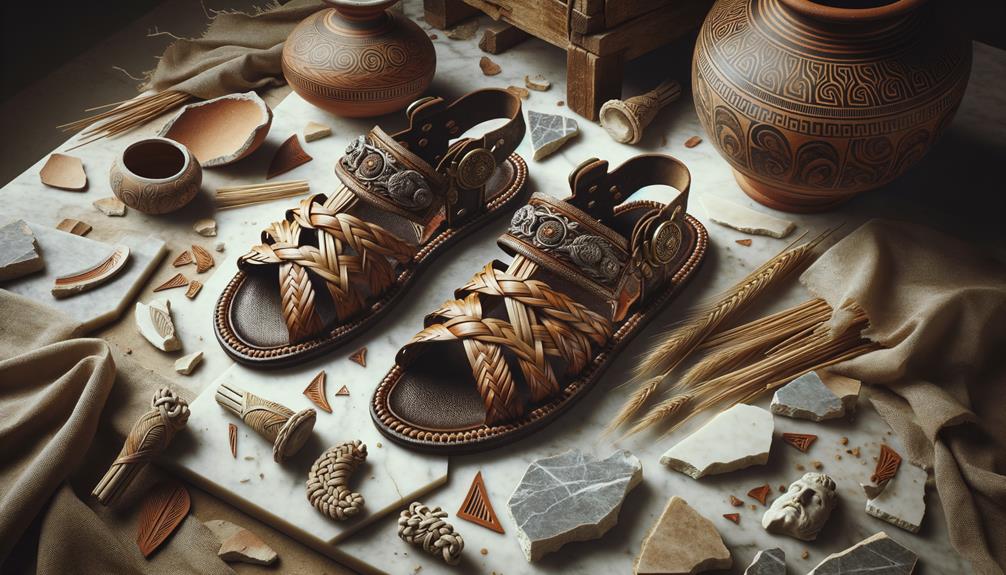
Exploring the materials and craftsmanship of ancient Greek footwear reveals a remarkable blend of practicality and artistry that has stood the test of time. The ingenuity of using leather as the primary material is striking. The tawing process, which softens hides, transformed leather into a pliable yet durable substance, perfect for creating shoes. This meticulous process speaks volumes about the craftsmanship of the era.
Craftsmen crafted statements, and they did more than make shoes. Some shoes were adorned with gold, indicating the wearer’s wealth and high social status. The attention to detail was extraordinary, since specific carvings and markings on leather footwear could denote rank and importance. A choice in footwear could convey a great deal about a person’s identity and position in society.
The evolution of shoemaking led to a variety of styles, each named after places, famous individuals, or unique characteristics. This diversity illustrates how innovation was woven into the fabric of everyday life. People even earned nicknames based on their favorite shoe styles, underscoring the cultural significance of footwear. Ancient Greek shoes were a form of personal expression and not simply functional items.
Footwear for Different Occasions
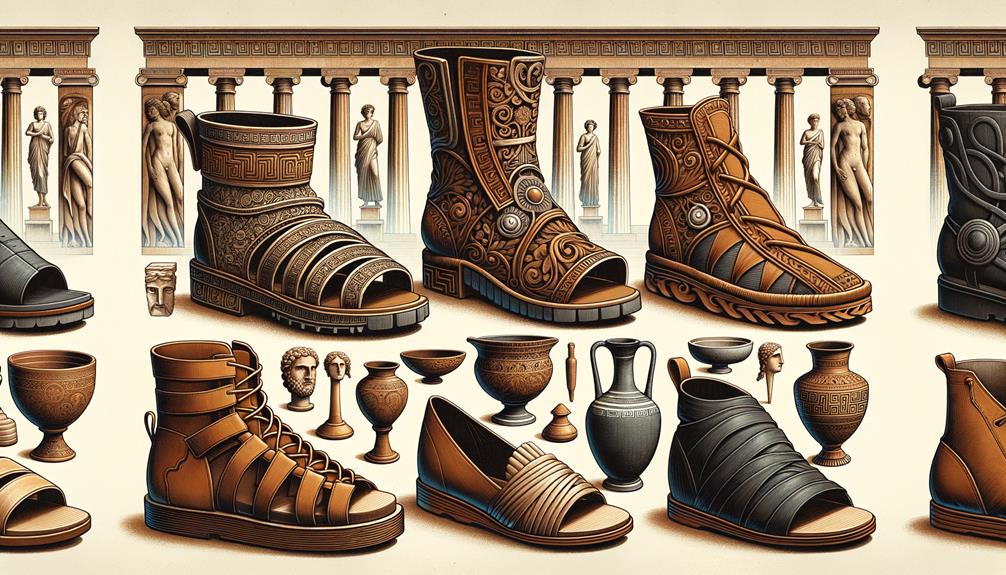
In ancient Greece, people carefully chose their footwear to reflect the occasion and their social status. The Greeks selected specific types of sandals and boots based on the event and their position in society, rather than wearing any shoes.
In everyday life, people wore sandals made from colored leather for ordinary activities. Each style served a purpose:
- Embades: Sturdy boots worn for outdoor adventures, providing protection.
- Phaecasium: Elegant footwear reserved for religious ceremonies, showing reverence.
- Cothurnus: High boots, often used in theater performances, adding dramatic flair.
The Greeks’ footwear choices mirrored their societal roles. Soldiers wore protective boots, ready for battle, while priests donned specific boots for sacred duties. The Greeks appreciated the balance between functionality and symbolism, making each step meaningful.
Footwear was a statement of identity, and not just about utility. The ancient Greeks’ attention to detail in selecting the right shoes for each occasion resonates even today. Their thoughtful approach to footwear continues to inspire, blending practicality with cultural expression.
Influence on Modern Fashion
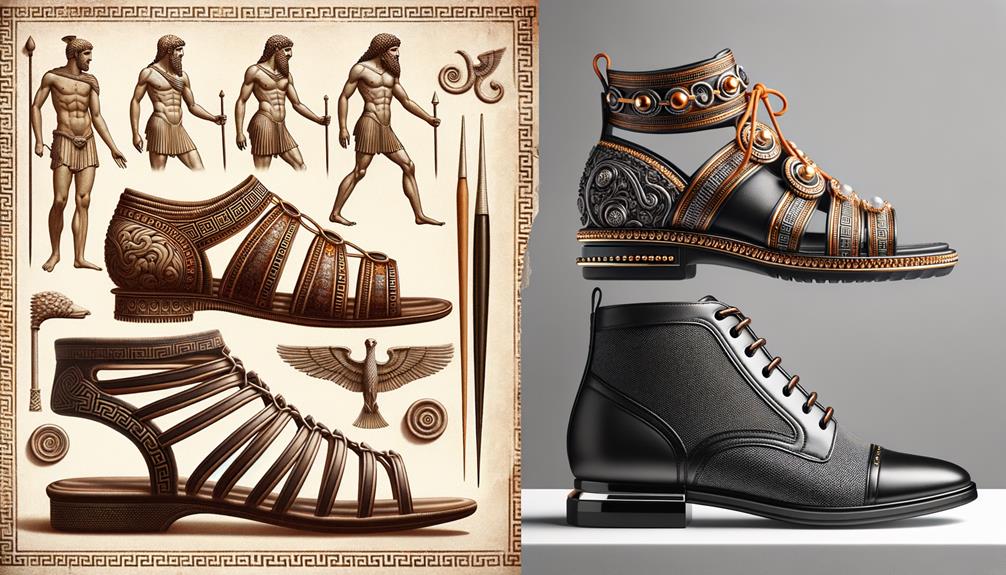
The allure of ancient Greek footwear still resonates in modern fashion trends. The creative simplicity of sandals, boots, and slippers from that era has left an enduring mark on contemporary shoe design. In boutiques and online collections, the echoes of Greek craftsmanship are easy to spot. The clean lines, intertwined straps, and natural materials pay homage to the ancient designs that balanced form and function.
Mythological stories, like Hermes’ winged sandals, add a layer of symbolism that continues to inspire unique and imaginative designs. Today’s designers often draw on that rich heritage, blending historical elements with modern flair. There is a deeper appreciation for the artistry and ingenuity that defined ancient Greek footwear, and it goes beyond aesthetics alone.
In an era driven by innovation, it is remarkable that ancient Greek fashion trends have endured. Their influence is evident in chic gladiator sandals or elegantly simple leather flats. By channeling the past, modern designers preserve history while pushing the boundaries of fashion, creating timeless pieces that resonate with today’s style enthusiasts.
Preservation and Museums
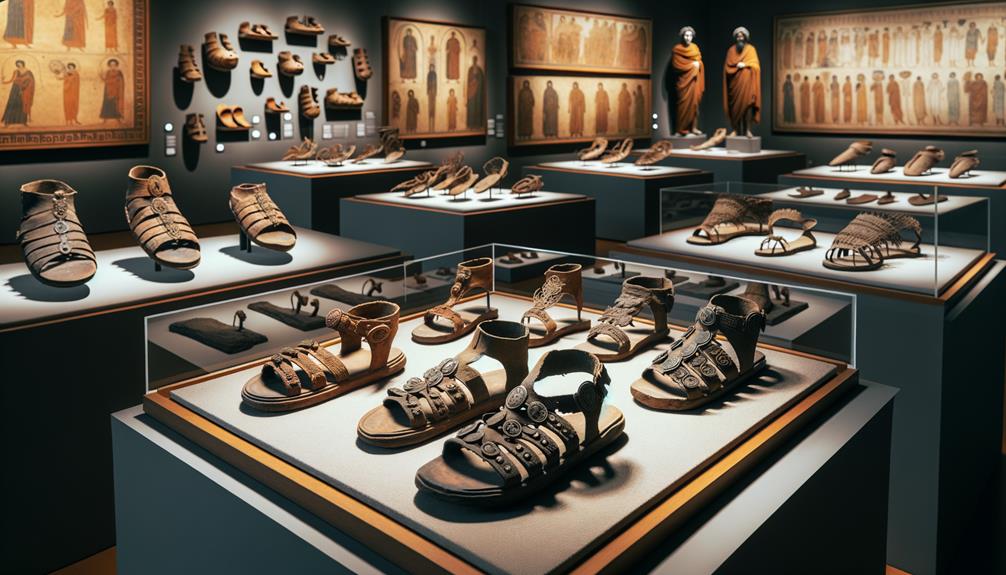
The halls of museums like the National Archaeological Museum in Athens display ancient Greek footwear. These artifacts, each a mark of historical value, are meticulously preserved using cutting-edge techniques. Temperature control and specialized displays ensure these relics remain intact, offering a glimpse into the past.
From the British Museum in London to the Louvre in Paris, ancient Greek footwear is showcased with elegance and care. Each display is a window into the craftsmanship and design that defined ancient Greek culture. Scholars and historians study these preserved pieces to uncover the societal norms and fashion trends of the time.
Preservation techniques play a vital role in maintaining the integrity of these ancient artifacts. Specialized displays are carefully designed to highlight the unique features of each piece. The historical significance of these shoes lies in the invaluable insights they offer into the daily lives and cultural practices of ancient Greeks.
These ancient artifacts show the dedication of curators and historians in preserving an important part of our shared heritage. Their efforts ensure that the legacy of ancient Greek footwear remains vibrant and informative for future generations.
Frequently Asked Questions
What Kind of Shoes Did Ancient Greeks Wear?
Ancient Greeks wore a variety of footwear, including sandals made from leather, cloth, and wood. The wealthy often flaunted their status with ornate, gilded shoes. Spartans, like other Greeks, generally wore sandals, though simple leather or wooden pairs. Their diverse footwear styles reflected their individual identities and social roles.
What Did Ancient Greeks Wear on Their Feet?
Ancient Greeks wore a variety of footwear, with sandals being a popular choice. Spartans favoured simple, durable sandals, while others preferred not to wear shoes indoors. Wealthy individuals flaunted their status with ornate, gilded shoes. Footwear was a personal expression of identity.
What Are Greek Shoes Called?
Greek shoes have a rich history, and their designs often reflected social status and occasion. Take sandals, for instance. They frequently featured multiple straps, which secured the fit while also conveying elegance and sophistication. This clever design innovation served a practical purpose while also making a fashion statement.
What Kind of Boots Did the Greek Warriors Wear?
Greek warriors relied on embades boots, rugged and fur-lined, providing protection and warmth in harsh conditions. The design of these boots impresses with its close fit of functionality, comfort, and resilience, all crafted from high-quality leather.