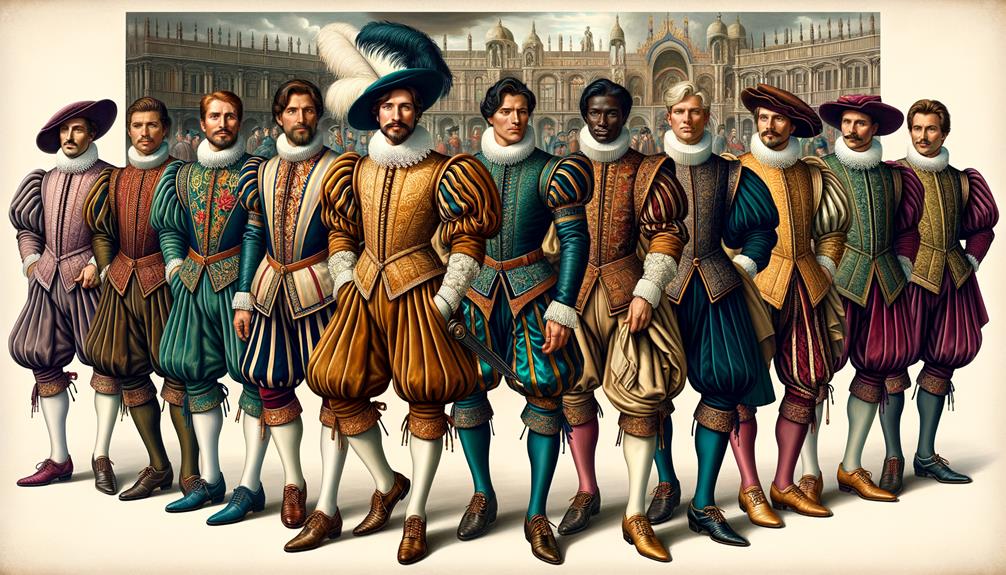
Renaissance footwear reflects the era’s cultural nuances closely. The primary material used was leather, often adorned with exquisite embroidery that signified social status. Women’s shoes featured elegant satin, while men’s boots combined practicality with style. Intricate Italian designs, particularly on chopines, transformed shoes into art forms. Slip-ons and rounded toes dominated until the late 16th century, when fasteners became popular. Skilled cobblers ensured both durability and beauty in every pair. Examining these details reveals a great deal about society during this period.
Historical Context
The historical context of Renaissance footwear shows how these styles evolved from the 15th to the 17th centuries, mirroring broader cultural and societal shifts. During this period of considerable innovation and change, Italian culture played a significant role in shaping the intricate and elaborate styles that emerged.

Renaissance footwear went beyond mere functionality to become a form of personal expression, much as jewelry did. Leather, a primary material, was often adorned with intricate embroidery, turning shoes into luxurious items that said a great deal about the wearer’s social status. The Metropolitan Museum of Art holds some fine examples, particularly the Italian Chopines from the 16th century. These elevated shoes showed the craftsmanship of the era and the cultural value placed on appearance and status.
Renaissance footwear therefore reflected the broader societal transformations of the time. It concerned identity, status, and creativity expressed through every step.
Materials and Craftsmanship
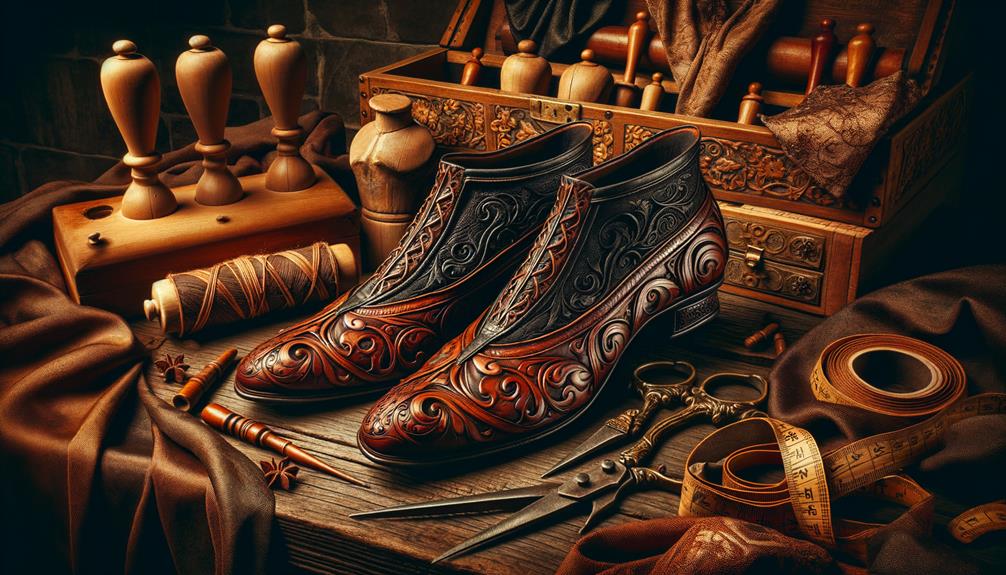
Mainly crafted from leather, Renaissance footwear showed a level of detail and precision that reflects the era’s dedication to quality. Wealthy women’s shoes often featured satin embellishments, adding a touch of luxury to their leather foundations.
The craftsmanship in this period was exceptional. Slip-on styles with low-cut designs and rounded toes were the norm, balancing practicality with aesthetic appeal. Fasteners gained popularity only in the late 16th century, marking an evolution in design. The use of pattens to protect shoes from dirt and moisture shows the thoughtful attention to detail that craftsmen applied.
Different types of Renaissance footwear, such as alberts with their high tongues and carbatines made from a single piece of leather bound by laces, show the variety and ingenuity in design. Today, Renaissance fairs and specialized retailers offer accurate replicas, allowing enthusiasts to experience the materials and craftsmanship of this period. The dedication to high-quality leather and detailed craftsmanship continues to inform modern footwear design.
Italian Influence
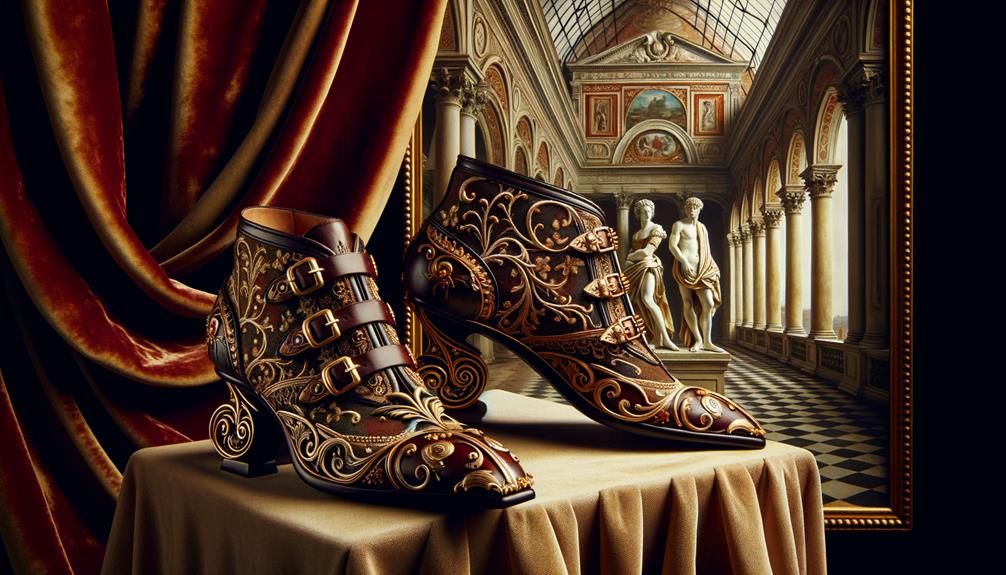
The Italian influence on Renaissance footwear is clear in the luxurious leather craftsmanship and intricate decorative patterns. These shoes epitomize Italy’s emphasis on elegance and sophistication, serving as a display of wealth and artistry as much as practical footwear.
Luxurious Leather Craftsmanship
Italian Renaissance footwear, with its intricate leather craftsmanship and rich detailing, reflects the era’s dedication to artistry and elegance. The workmanship goes beyond mere functionality, showing the skill and creativity of the artisans. The Italian influence is unmistakable, with every stitch and cut showing a commitment to luxury and sophistication.
The evolution from Medieval High styles to more refined Italian Renaissance designs is a notable part of this story. During this period, leather techniques were refined, producing footwear that was both beautiful and durable.
Luxurious leather craftsmanship in Italian Renaissance footwear is characterized by:
Superior Leather Quality: Only the finest hides were used, ensuring durability and a soft, supple finish.
Elaborate Stitching: Each shoe featured meticulous stitching, often in intricate patterns that highlighted the artisan’s skill.
Ornate Embellishments: Decorative elements, such as gold leaf or silk threads, were commonly used to signify status.
Custom Fit: Shoes were tailored to the individual, ensuring both comfort and a proper fit.
These aspects show the Italian Renaissance’s approach to footwear, blending functionality with a high standard of artistry.
Decorative Shoe Patterns
Italian decorative patterns in Renaissance footwear showed unparalleled craftsmanship, raising shoes from functional items to intricate works of art. During the Renaissance, beauty was actively pursued, and Italian artisans embodied that pursuit. Their exquisite embroidery, beading, and metalwork told a story of wealth and status.
The intricate designs that adorned these shoes showed the artisan’s skill and added a touch of opulence. These designs conveyed a sense of luxury that went beyond their practical purpose. Collections at the Bayerisches National Museum and The Metropolitan Museum of Art show how these patterns have endured and continue to inspire contemporary designers.
Italian decorative patterns in Renaissance footwear acted as a canvas for innovation, reflecting the cultural and social dynamism of the era. They turned shoes into fashion statements, symbols of luxury that surpassed their functional purpose. These patterns, born from an era of rebirth and creativity, continue to resonate with modern work in innovation and elegance.
Men’s Footwear
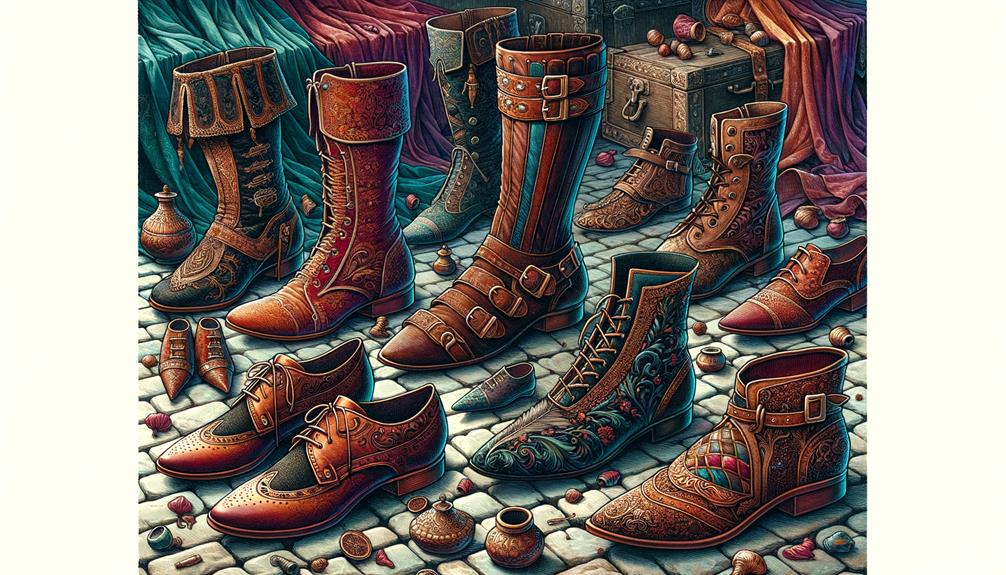
Renaissance men’s footwear showed exceptional craftsmanship and quality materials that made them both practical and stylish. Boots, shoes, and pattens were meticulously crafted from durable fabrics like leather and suede. High-quality boots, adorned with details like lacing, buckles, and embossing, served as a status symbol, displaying wealth and fashion sense.
Popular Shoe Types
Among the diverse footwear styles of the Renaissance, men’s shoes like poulaines, boots, and chopines distinctly mirrored their social status and occupation. Each style captures a unique facet of life during this era.
Poulaines, with their elongated, pointed toes, were a remarkable fashion statement. Often adorned with metal tips, they symbolized a man’s wealth and standing. Leather boots, by contrast, were a staple for many men, offering practicality and style along with essential support and protection for daily activities or horseback riding.
Chopines, originating in Italy, were high platform shoes worn to elevate stature and add an element of grandeur. They expressed the wearer’s social aspirations as much as height.
Four significant points about Renaissance men’s footwear stand out:
Poulaines were pointed shoes with metal tips, symbolizing a man’s wealth and standing.
Leather boots were essential for protection and support, offering a blend of practicality and style.
Chopines were platform shoes signifying social elevation, adding an element of grandeur.
Renaissance men’s footwear choices mirrored their social standing and occupation, making fashion, function, and social signaling intertwined, much as in women’s Renaissance shoes of the era.
Materials and Craftsmanship
Crafted with meticulous skill, Renaissance men’s footwear showed the era’s dedication to quality and artistry. Surviving pairs of leather shoes from that period display fine craftsmanship. The cobblers of the Renaissance were true artisans, transforming high-quality leather into durable and stylish footwear. Each pair demonstrated intricate stitching and decorative embossing, raising the shoe’s aesthetic appeal.
Leather shoes from this era were tailored to fit the wearer’s foot with precision, ensuring both comfort and durability. The sturdy soles were designed to endure the rigors of outdoor wear, reflecting a practical yet elegant approach to design. The choice of materials and the level of craftsmanship in men’s footwear also served as a marker of social status and fashion sensibility.
The cobblers’ dedication to quality still holds value. Their attention to detail and commitment to premium materials continue to be studied, recalling the lasting value of expert craftsmanship.
Women’s Footwear
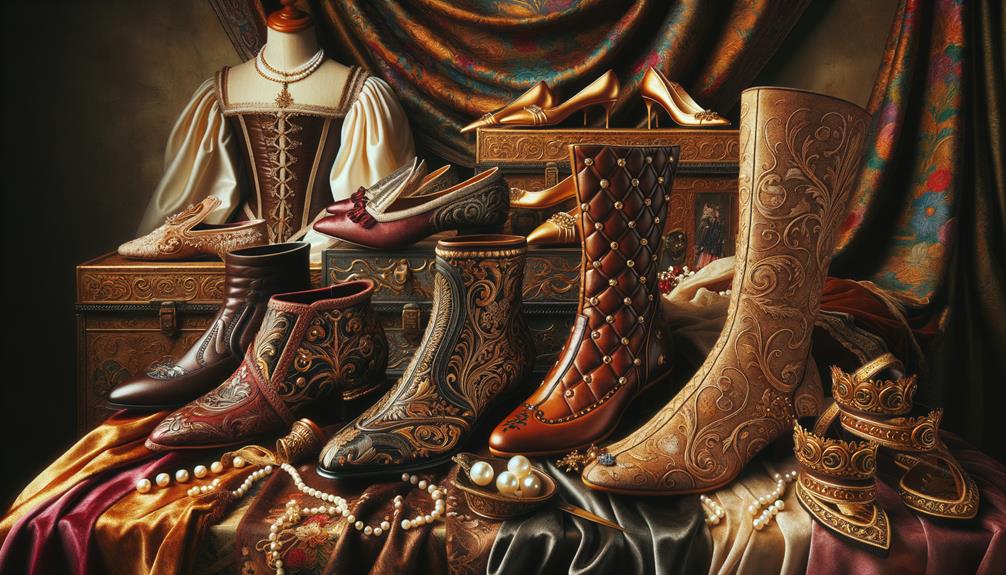
Renaissance women’s footwear combined practicality with opulence. These shoes, often designed for both function and elegance, showed intricate craftsmanship. The simplicity of slip-on styles, typically made from leather, was a hallmark of the era, while wealthy women often opted for luxurious satin embellishments.
Fasteners were not widely used until the late 16th century. Low-cut, slip-on designs dominated instead, providing ease of wear and an understated sophistication. Ankle boots, such as the Bateau boots, extended just above the ankle, balancing protection with style.
There are four notable types of Renaissance women’s footwear:
Albert Slippers: Slip-on shoes that resemble modern slippers, combining comfort and elegance.
Bateau Boots: Ankle-high boots that provided extra coverage and were often used outdoors.
Carbatine Shoes: One-piece leather shoes bound with laces, showing a minimalist yet sturdy design.
Pattens: Wooden or metal overshoes used to protect delicate footwear from dirt and moisture.
Replicas of these styles are still made today, making them accessible for historical reenactments and costume events.
Functional and Decorative Elements
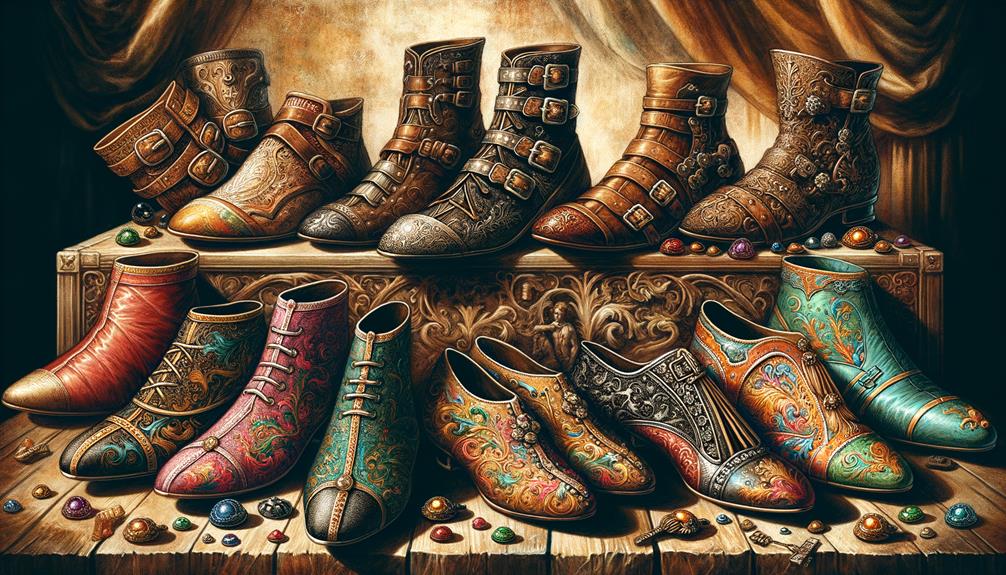
In Renaissance women’s footwear, essential elements like leather construction and slip-on designs were combined with decorative touches such as satin embellishments and engraved patterns. These shoes were practical and an expression of elegance and social standing. Leather, a durable material, provided the necessary resilience, while the slip-on design offered ease of use, a crucial aspect in daily life.
Pattens, wooden overshoes, protected these delicate creations from dirt and moisture, showing the period’s ingenuity in combining utility with style. Fasteners became more prevalent towards the late 16th century, improving the fit and functionality of the shoes while also serving a decorative purpose, often adorned with intricate designs.
Renaissance footwear included a variety of styles, among them Albert, Basan, Bateau, Caligae, and Carbatine. Each served different functional purposes, yet all shared a common thread of blending practicality with decoration. Period boots, for example, were as much about protection and durability as they were about displaying the wearer’s wealth and taste. The Renaissance mastered the art of merging function and beauty in women’s footwear.
Evolution Over Centuries
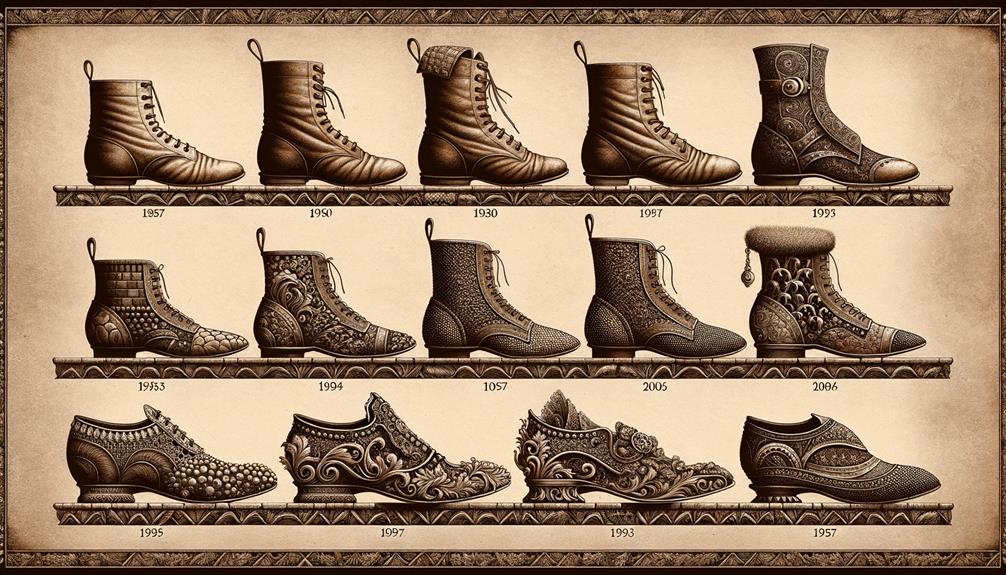
The transformation of Renaissance footwear over the centuries shows a change in fashion and a reflection of changing societal values and technological advancements. Practical designs gradually gave way to more elaborate and decorative features. The simple leather slip-ons of the early 15th century evolved into more intricate creations by the late 16th century, often adorned with satin embellishments.
Women’s leather boots, for example, became a staple for both function and fashion, adapting to the demands of changing lifestyles. The introduction of fasteners towards the end of the 16th century added a layer of sophistication and practicality. This period also saw the practical use of pattens to protect shoes from dirt and moisture, reinforcing the balance between elegance and utility.
Four key elements marked this evolution:
Material exploration led to creative uses of leather, silk, and metal in crafting diverse shoe styles.
Shoes evolved from basic slip-ons to intricate designs, showing greater design complexity.
Functional additions, such as fasteners and pattens, enhanced practicality.
Footwear styles varied across social classes, from Alberts to Carbatines, reflecting social values.
This evolution in Renaissance footwear encapsulates the innovation and adaptability of the era.
Frequently Asked Questions
What Kind of Shoes Did People Wear in the Renaissance?
People in the Renaissance wore elegant leather shoes, often adorned with satin. Slip-on styles with low cuts were popular, while pattens protected them from dirt and grime. These shoes combined practicality with subtle sophistication.
What Is Medieval Footwear Called?
Medieval footwear is often characterized by two distinct styles: poulaines, known for their pointed toes, and chopines, which were platform shoes. These styles show how fashion can reflect societal changes and provide a means of personal expression.
What Shoes Did They Wear in Medieval Times?
In medieval times, women wore leather shoes that were often adorned with satin among the wealthy. The simplicity of these slip-on styles with rounded toes was what made them elegant. To protect their shoes from mud and dirt, they wore pattens, a practical innovation.
What Were Shoes Called in the 1500s?
In the 1500s, people often referred to shoes as Albert, Bateau, or Carbatine. These were typically leather slip-ons with rounded toes. Notably, they lacked fasteners and featured ornate decorations that signified wealth and social status.