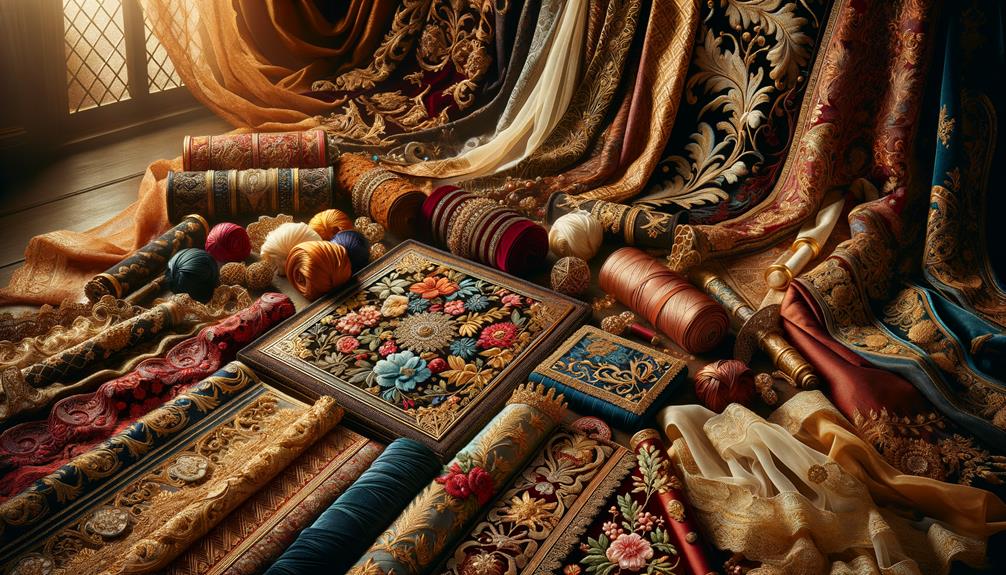
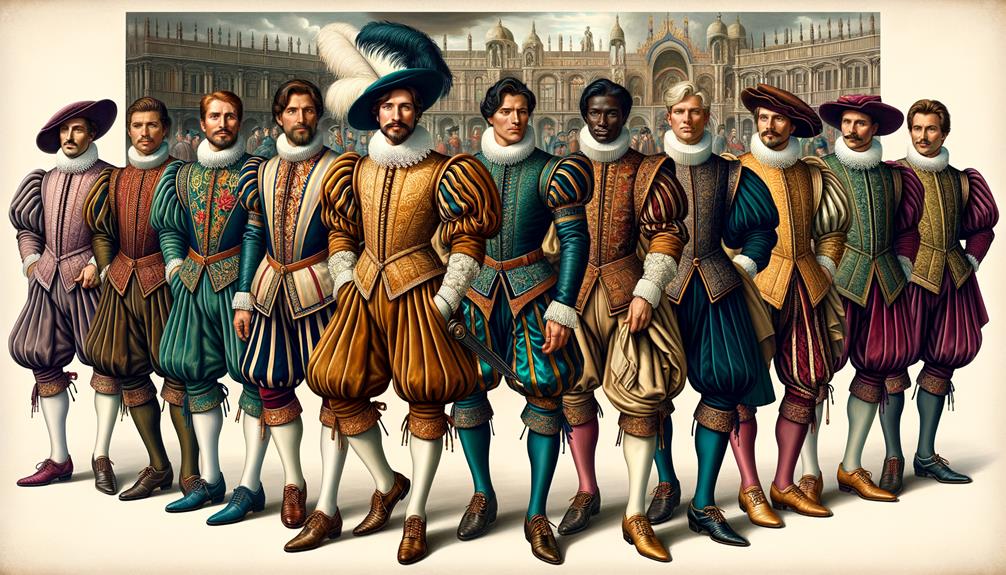
Renaissance hairstyles and headwear offer a clear glimpse into the past. During this era, women’s hair often flowed in loose waves or intricate braids adorned with pearls and gold, showcasing their elegance. Men balanced practicality with flair, sporting either short crops or luxurious curls, often topped with ribbons. Women’s headwear, such as silk crespines and velvet balzos, framed their faces with grace. Men wore hats that ranged from the stylish Tricorn to the adventurous Musketeer, each reflecting their social status. French hoods and elaborate bonnets showed great opulence. These hairstyles and headpieces reveal a great deal about the beauty standards and social signals of the time.
Women’s Hairstyles
Women in the Italian Renaissance often wore their hair in long, loose waves or intricate braids adorned with pearls and gold thread, showcasing elegance and artistry. Their hairstyles went beyond beauty; they were a means of self-expression and innovation.

Adorning one’s hair with pearls and gold thread was a deliberate choice, conveying a message about social status and cultural influences. The detailed braids and waves reflected a blend of Byzantine, Moorish, and Classical cultural inspirations.
Portraits of women like Beatrice d’Este and Isabella d’Este highlighted this evolution in hairstyles, which often set trends. They wore Renaissance hats made of silk, velvet, and feathers, each piece meticulously crafted.
Headwear also evolved, transforming from simple coverings to opulent headdresses. These Renaissance hats symbolized sophistication, adorned with jewels and intricate designs. The transformation from the Early Renaissance to the High Renaissance showcased an era of opulence and artistic expression.
In this period, every strand of hair, every pearl, and every gold thread spoke volumes about the wearer’s place in society and their cultural influences.
Men’s Hairstyles
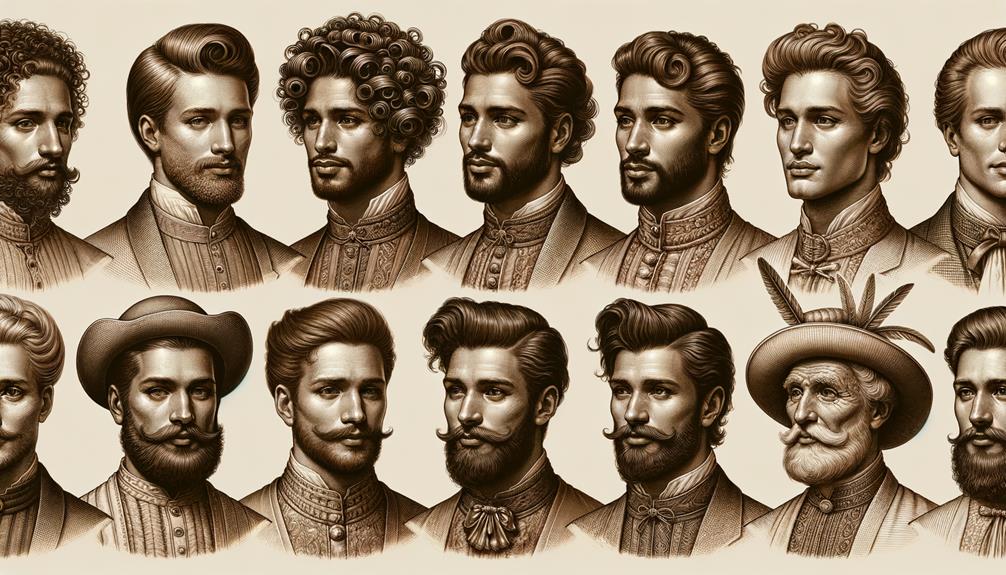
The Renaissance era’s men’s hairstyles ranged from short, clean-cut styles to elaborate, curly locks adorned with jewels and ribbons. The attention to detail in these hairstyles was striking, making hair a true statement of elegance and social standing.
Short Cropped Styles
During the Renaissance, men’s grooming was defined by short cropped hairstyles that exuded practicality and neatness. To achieve this look, men kept their hair short on the sides and back, with a slightly longer top layer. This versatile style required regular trimming and precise shaping, demonstrating their meticulous grooming standards.
These styles had an understated elegance. The simplicity of the look allowed men to focus on other aspects of fashion, creating a polished yet effortless appearance. These short cropped hairstyles balanced practicality with a refined look, making them a popular choice during the Renaissance.
| Feature | Description |
|---|---|
| Length | Short on sides and back, slightly longer top |
| Maintenance | Frequent trimming, shaping |
| Practicality | High |
| Fashion Focus | Allows attention on other grooming aspects |
During the Renaissance, a period known for its artistic and cultural revival, men adopted these short cropped hairstyles for the clean, polished image they projected, not just for ease. This style speaks to a keen sense of self and an appreciation for subtlety over extravagance. This approach to grooming highlights a timeless sophistication that resonates even with modern sensibilities.
Elaborate Curls and Waves
During the Renaissance, men’s hairstyles underwent a dramatic transformation, becoming elaborate curls and waves that showcased their dedication to luxury and attention to detail. Each carefully crafted curl reflected their desire to mirror the grandeur surrounding them. These styles embodied social standing and sophistication, not just hair.
Men adorned their locks with jewels and ribbons, often in shades of crushed velvet, adding richness to their appearance. Gold or silver threads intertwined with dark curls, catching the light and drawing the eye. Each wave and curl was meticulously shaped, showing the lengths men would go to achieve perfection.
These intricate designs recall the Peacock Age, a time when men’s styles rivaled women’s in their complexity. Queen Elizabeth’s own extravagant fashion sense had a significant influence; her court set high standards for appearance.
These hairstyles show a desire for beauty and a reflection of the era’s values. Paying attention to grooming went beyond vanity; it was a representation of one’s place in society. The Renaissance man used his hair to express ambition, elegance, and a keen eye for detail.
Women’s Headwear
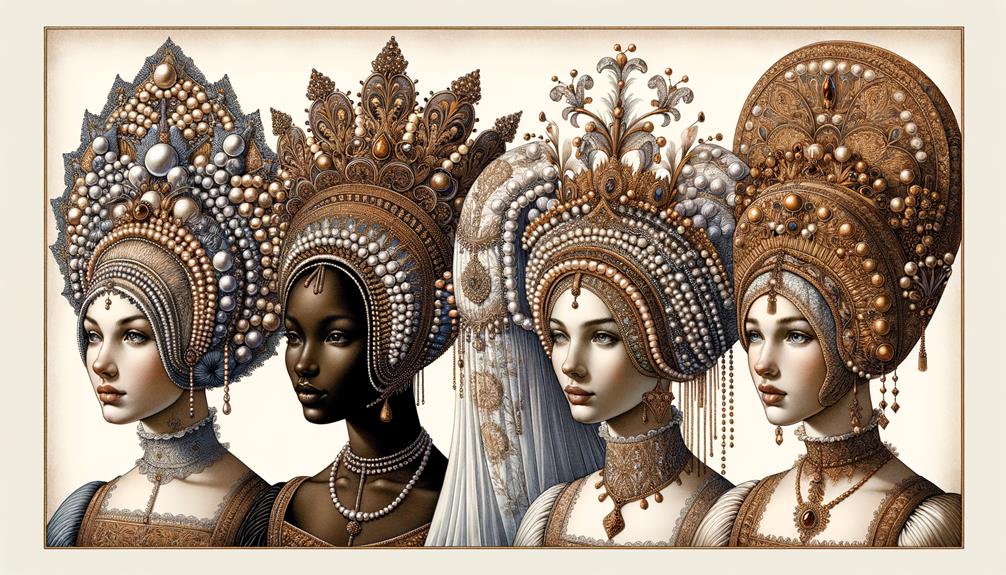
Women’s headwear in the Renaissance included stunning headdresses adorned with pearls and gold thread. Veils and decorative hairnets added layers of sophistication. Hats and bonnets conveyed social standing and beliefs, speaking volumes about the wearer’s status.
Elaborate Headdresses and Veils
The opulence and intricate designs of Renaissance headdresses played a significant role in shaping a woman’s status and personal style. During the Italian Renaissance, women’s headwear transformed into symbols of wealth and sophistication. Luxurious materials like silk, velvet, gold thread, pearls, and feathers adorned these elaborate headdresses, turning each piece into a work of art that conveyed power and prestige.
Various styles emerged, including the crespine, giornea, balzo, turban, and snood. Each style had its own unique language, expressing different facets of femininity and fashion. The crespine, for example, was a netted headdress that highlighted intricate hairstyles beneath, while the balzo, a padded headpiece, added height and drama. These designs were statements of identity rather than simple decoration.
Cultural influences had a profound impact on Renaissance headdresses. The opulence of Byzantine, the elegance of Moorish, the simplicity of classical, and the reverence of religious influences all merged to create a unique aesthetic. The evolution from simple coverings to extravagant, jewel-encrusted masterpieces mirrored the shifting tides of fashion and societal values.
In every stitch and pearl, these headdresses told stories of their wearers. They were extensions of self and tools of expression in an era where appearance was power, not just accessories.
Decorative Hairnets and Caps
Elegance and sophistication reached new heights in the Renaissance with the intricate hairnets and caps women wore. The delicate artistry that defined this era is striking. Hairnets crafted from fine silk or velvet, adorned with pearls and gold thread, transformed simple hairstyles into masterpieces. Each strand whispered opulence, with every feather delicately placed to catch the light.
Caps, like the structured Trinzale, sat at the back of the head, serving as a canvas for intricate embroidery and beadwork. The hands that wove these pieces demonstrated skill and patience with each stitch. These caps framed faces, exuding grace and refinement, rather than simply covering hair.
Women from various social statuses embraced these decorative pieces, their styles subtly shifting with regional influences and personal tastes. These accessories went beyond function to become symbols of individual expression and cultural identity.
These Renaissance practices offer inspiration, blending tradition with modernity. The past informs the future, and in these hairnets and caps, we find a timeless elegance that continues to inspire.
Symbolic Hats and Bonnets
During the Renaissance, women’s hats and bonnets were powerful symbols of social standing and personal identity, not just fashion accessories. The intricate embroidery and luxurious fabrics like silk and velvet conveyed a wealth of information about one’s place in society. Pearls and feathers were declarations that spoke volumes about the wearer, not mere decorations.
Married women wore bonnets as badges of respectability, with the shape and design subtly communicating their marital status. Every element, from veils to jewels and ribbons, was carefully chosen to convey messages about the wearer’s identity and status. These elements turned the hat into a personal statement that revealed more about the wearer than met the eye.
As fashion evolved, so did the styles of these hats and bonnets, reflecting shifting cultural influences. The designs became more elaborate, and the symbolism more layered. In many ways, the headwear was a canvas that reflected the ever-changing landscape of fashion and social norms.
This historical interplay of fashion and identity serves as a powerful reminder that what we wear can be a profound expression of who we are and where we stand, not just fabric and thread.
Men’s Headwear
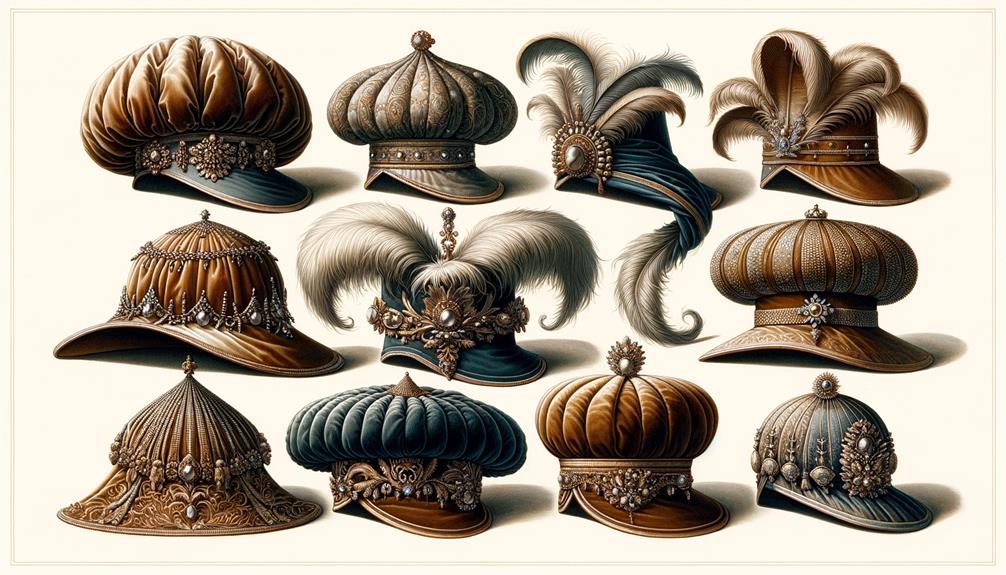
Men in the Renaissance often wore distinctive headwear that reflected their social status and fashion sense. Each hat, scarf, or bonnet told a story, revealing social standing as well as personal style.
In the bustling streets of Renaissance towns, a variety of headwear appeared, each unique in its design and purpose. Hats like the Tudor French Hood and Musketeers Hat were practical and also statements of elegance and bravado. The Tricorn hats, reminiscent of Jack Rackham’s Pirate Tricorn, added a touch of rugged adventure to any ensemble.
Some men chose more intricate designs, such as the embossed Corsair Hats or the elegantly crafted De la Croix Hats. These pieces often featured detailed embossing or embroidery, showcasing the wearer’s taste and appreciation for craftsmanship.
Triangle Head Scarves, like the Asta Triangle Head Scarf, provided a casual yet stylish option. Youth Medieval Sam Hats were popular among younger men, offering both practicality and a touch of youthful charm. Embossed Corsair Hats, with their intricate patterns, symbolized both elegance and a flair for the dramatic.
In each piece, there’s a blend of function and fashion, a tribute to the Renaissance spirit of innovation and expression.
French Hoods
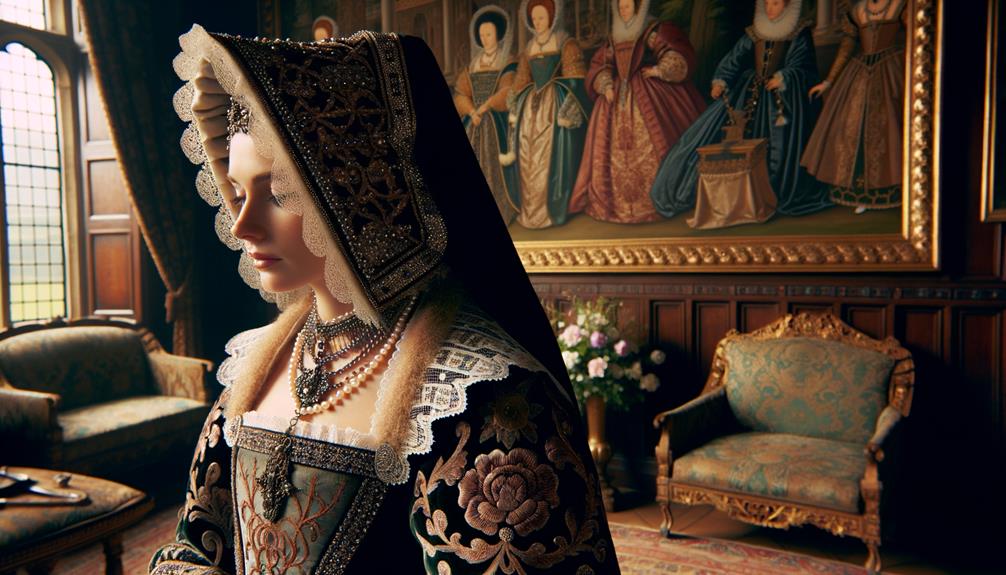
French Hoods, with their elegant crescent-shaped veils and luxurious fabrics, reflected the high status and refined taste of noblewomen during the Renaissance. These intricate headpieces featured structured caps adorned with pearls, jewels, and exquisite embroidery. Velvet and silk were often the materials of choice, emphasizing opulence.
Placing such a hood upon one’s head was a distinctive sensation. The weight of the fabric, the cool touch of jewels against the temple. It was a powerful statement rather than a simple accessory. Each element was meticulously chosen, each stitch showing wealth and refined taste. A French Hood completed an outfit and also marked the wearer’s place in society.
The exceptional craftsmanship speaks volumes. The veil’s delicate crescent shape, a masterful balance of form and function, frames the face with an air of grace. This was about making a statement rather than practicality. In court, where every glance carried meaning, the French Hood was a subtle yet powerful communicator of status.
In essence, French Hoods were wearable masterpieces. They signified expressions of identity, heritage, and aspiration rather than just fashion. To wear one was to embody an era of refinement and grandeur, where every detail mattered.
Bonnets and Scarves
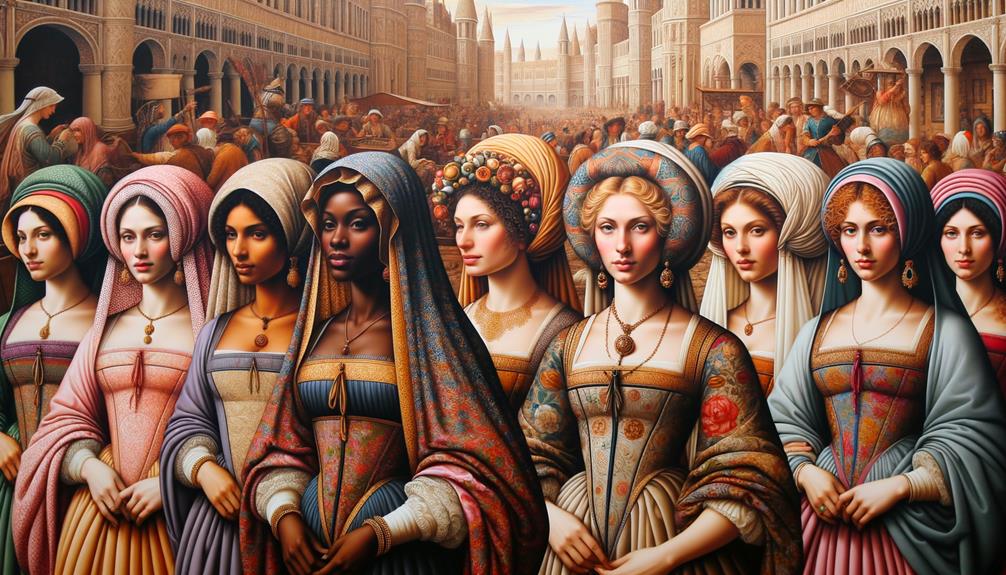
While French Hoods conveyed nobility, bonnets and scarves presented a distinct, yet equally refined charm. With their snug design, bonnets were crafted from soft fabrics that gently framed the head. Scarves exuded elegance, often draped in luxurious materials like silk or velvet. Each piece transformed a woman’s ensemble, adding layers of intricacy and poise.
The subtle nuances made these accessories distinctive. Ornate details like pearls, intricate embroidery, and delicate lace raised their simple forms into art. They were declarations of refinement rather than merely functional pieces.
Pearls, adorning the edges, caught the light, creating a halo effect around the face. Rich, detailed embroidery added texture and visual interest, telling silent stories. Soft and intricate lace provided a delicate frame, enhancing the overall aesthetic.
In the Renaissance, every element of attire held significance, and bonnets and scarves were no exception. They wove together functionality and beauty, allowing women to express elegance in a world that valued both innovation and tradition.
Tricorns and Musketeer Hats
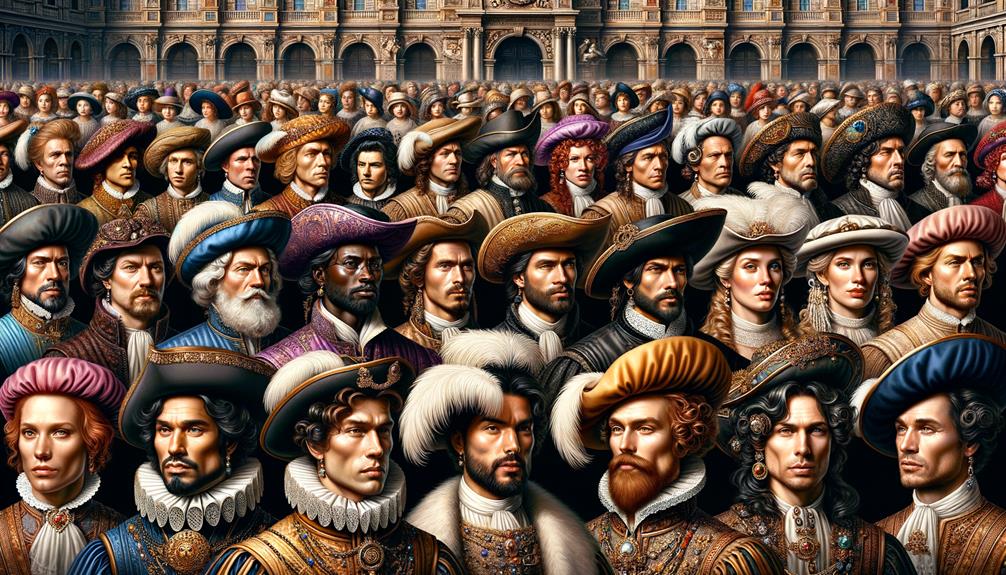
In the vibrant era of the Renaissance, tricorns and musketeer hats stood out for their bold designs and flair. Tricorns, with their three-point design, were the go-to choice for pirates and sailors, adding an air of adventure to their look. Each point seemed to slice through the air, reflecting the fearless spirit of their wearers.
Musketeer hats, on the other hand, boasted wide brims and extravagant plumes. The feathers, often lavish, swayed with every step, signaling a blend of bravery and refinement. These hats framed faces with an air of mystery, hinting at untold stories. Both styles became symbols of identity and social standing, transcending mere functionality.
These hats, crafted centuries ago, continue to fascinate people today. Historical reenactments and costume events see a resurgence in their popularity, proving their timeless appeal. Donning a tricorn or a musketeer hat allows one to step into the past, embracing the daring and drama of the Renaissance.
In every stitch and plume, there’s a narrative woven: a story of boldness, style, and the enduring human desire to stand out. These hats were declarations of character rather than simple accessories.
Hair Accessories and Embellishments
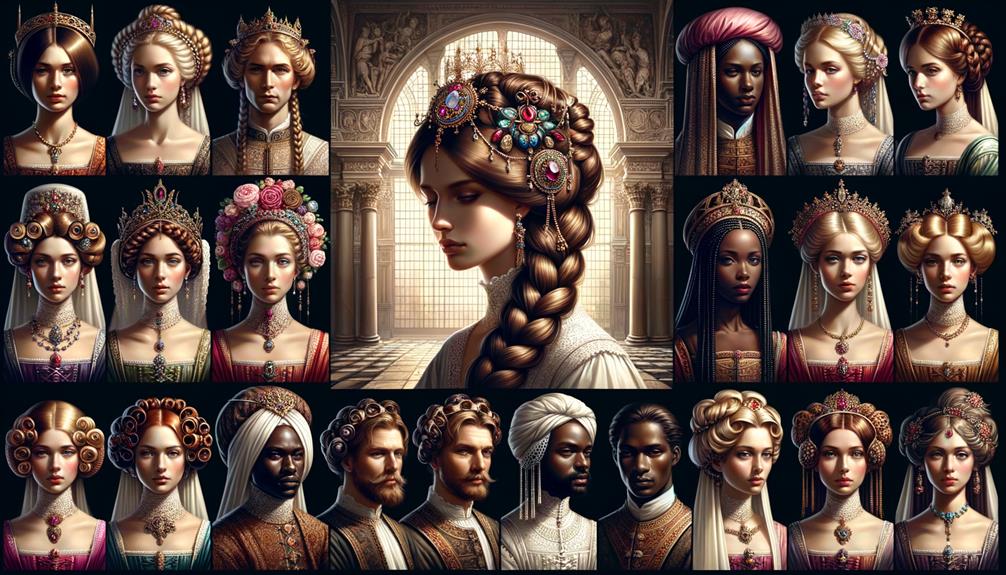
Intricate hair accessories of the Italian Renaissance, like crespines and snoods, turned simple hairstyles into works of art. These embellishments transformed the ordinary into the extraordinary. The rich, varied materials used conveyed elegance and social status.
Crespines, net-like coverings often adorned with pearls, held hair in place with a delicate, sophisticated air. Snoods, woven from silk or velvet, provided both practical restraint and opulent decoration. Balzos, towering headpieces wrapped in gold thread, commanded attention and spoke volumes about the wearer’s social standing.
Women’s hair, styled in intricate braids or left in loose waves, served as a canvas for these accessories. Gold threads wove through strands, pearls dotted along braids, and feathers added a touch of whimsy. The influence of Byzantine opulence and Moorish artistry shows in each piece, a fusion of cultures that birthed new beauty.
As hairstyles evolved from modest to extravagant, they reflected societal shifts. Each accessory and embellishment whispered secrets of its time, a reminder that even the smallest details can make a grand statement.
Frequently Asked Questions
What Hairstyles Were Popular in the Renaissance?
During the Renaissance, hairstyles showed luxury and craftsmanship. Long, flowing locks were a staple, often adorned with intricate braids and ornate updos that showcased exceptional artistry. Some styles featured short bangs, adding a touch of modernity. Wigs were also popular, adding volume and drama to an already extravagant look. Each hairstyle whispered secrets of opulence, reflecting the era’s timeless allure.
What Was the Headgear in the Renaissance?
Renaissance headgear was incredibly diverse, featuring crespines, giorneas, balzos, turbans, and snoods that adorned women’s heads. Luxury materials like silk, velvet, gold thread, pearls, and feathers crafted these opulent pieces. The innovative designs that emerged during this time are easy to imagine.
How Did Men Wear Their Hair During the Renaissance?
During the Renaissance, men’s hairstyles were a status symbol, often featuring long locks adorned with ribbons and jewels. Their meticulously styled hair reflected their social standing, a precursor to today’s fashion statements that convey one’s personality and character.
How to Dress in Renaissance Style?
Renaissance style combines rich fabrics like velvet and silk with gold thread accents and elaborate accessories. The look is about blending opulence with historical charm.