The art of costume aging breathes life into fabrics, transforming mere garments into stories woven with time. Traditional techniques like hand-dyeing, sanding, and tea stains evoke lived experiences, each mark a whisper of the past. Helen Butler’s innovative use of Meron grease paint, applied with cotton gloves, offers a versatile, actor-friendly approach that’s both intimate and precise. Her palette, with colors like zombie gray and Wolfman brown, tells tales of survival and resilience. The meticulous work takes costumes to narrative art, infused with history and nuance.
Traditional Costume Aging Methods
Each traditional costume aging method carries its own story and craftsmanship. These methods go beyond mere aesthetics, transforming fabric into a narrative of its own. Each wrinkle, stain, and tear is not just an imperfection but a deliberate stroke of artistry. This kind of workmanship demands meticulous attention to detail and a deep understanding of character history.

Traditional costume aging often involves hand-dyeing, sanding, and strategic tearing, each technique chosen for its ability to evoke life experiences. For instance, the careful application of tea or coffee stains can simulate years of wear, imbuing the fabric with a sense of time and place. Sandpapering edges and seams can replicate natural wear, while purposeful distressing tells stories words can’t always capture.
Yet, the beauty lies in the subtleties. The slight discoloration around a collar or the faded patches on a pair of trousers are nuanced touches that go beyond surface-level wear. They bring authenticity to a character, making the costume an integral part of their world and journey.
Helen Butler’s Innovative Technique
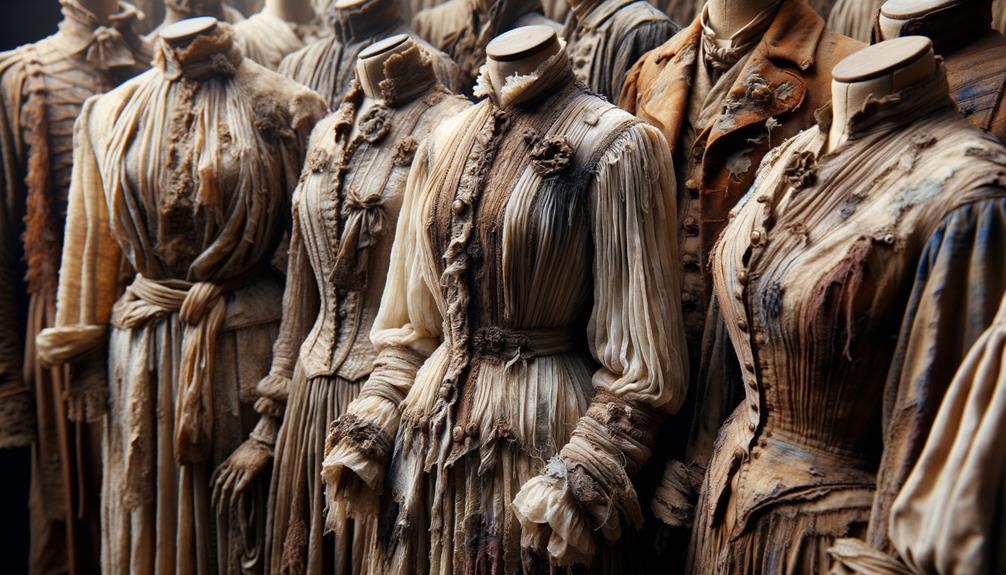
While time-honored methods remain central to costume aging, Helen Butler’s innovative technique offers a fresh perspective that’s both practical and artistically enriching. By using grease paint makeup from Meron, she’s crafted an approach that’s versatile and intuitive. The makeup, applied to an artist’s palette, makes application and blending easy, often yielding results that look almost magical.
Butler’s palette, customizable with colors like black, monster gray, zombie gray, Wolfman brown, yellow green, and clown red, allows for a wide range of aging effects. Each shade can be mixed to create everything from mustard stains to grass stains, or even the subtle touch of lipstick. This versatility sets her method apart, providing costume designers with a creative playground.
Wearing cotton gloves, Butler blends the colors directly on the fabric, offering a massage-like experience for the actor. This ensures precise application while keeping the process actor-friendly. The washable and non-toxic nature of the makeup further enhances its appeal, making it suitable for a broad range of costumes and fabrics. The approach joins practicality with artistic expression.
Selecting the Right Color Palette
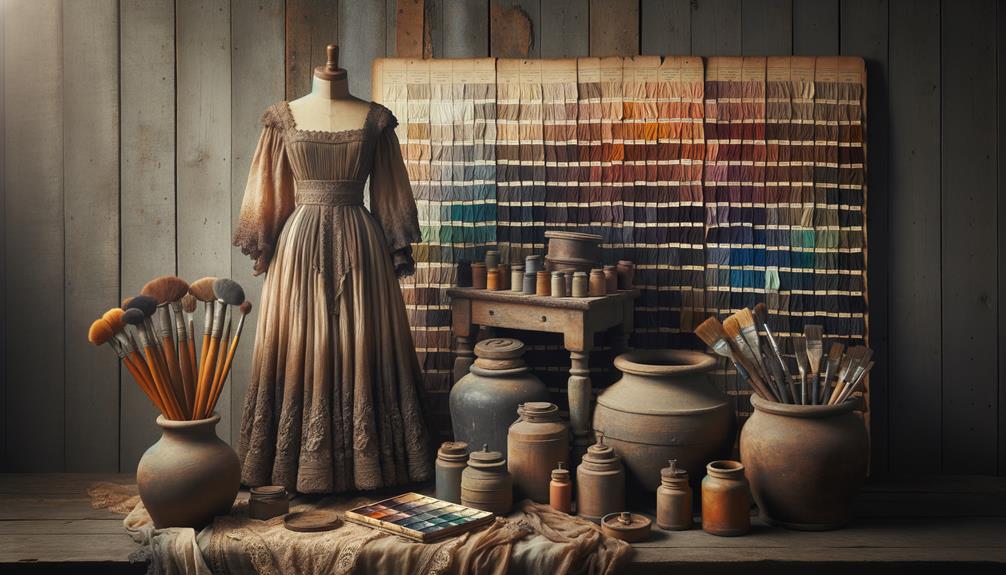
Choosing the right color palette is crucial to costume aging, much like a painter selecting the perfect brushes. It goes beyond wear and tear. It is about capturing a character’s story and the life they have lived. A working palette typically includes black, monster gray, zombie gray, Wolfman brown, yellow green, and clown red. Each hue carries its own narrative, from the subtle Wolfman brown to the striking clown red.
Such a palette is more than a collection of colors; it is a library of experiences. The versatility allows the designer to create specific stains like mustard or grass, adding authenticity. The colors are arranged on a smudge palette, making blending and application intuitive, almost second nature.
Mixing pigments is where the work shows most. Adjusting the intensity of zombie gray or adding a touch of yellow green can transform a clean fabric into a garment that tells a story of survival. Every smudge and stain is purposeful, aligned with the character’s backstory and the production’s aesthetic. This isn’t merely aging fabric; it’s imbuing it with life.
Application Using Cotton Gloves
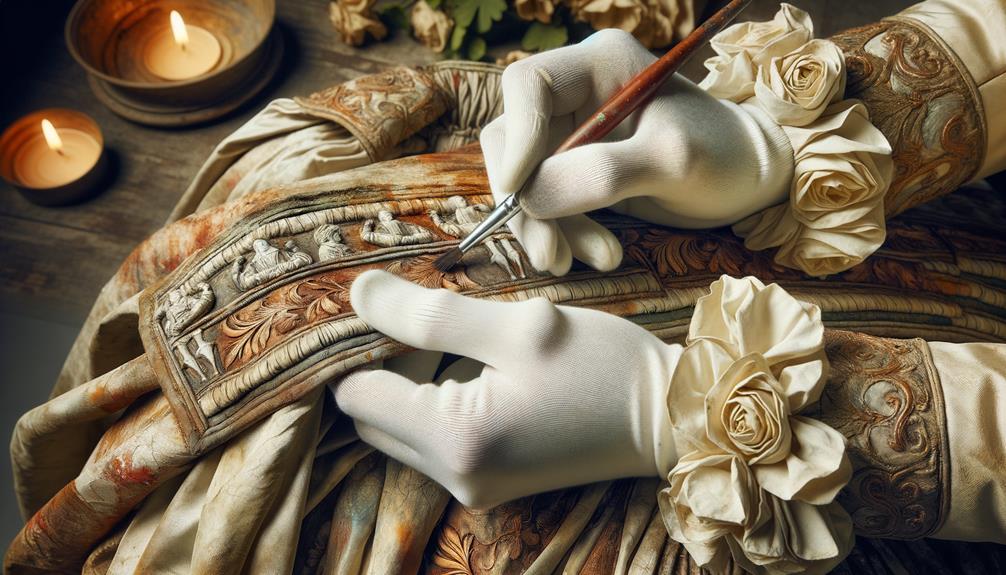
Using cotton gloves to apply grease paint makeup turns the process into an intimate, hands-on experience that allows for meticulous aging of the costume. It is a dialogue between the hands and the fabric, each stroke and blend creating a story of its own. The gloves facilitate a smooth application, providing comfort to the actor while also allowing for controlled distressing. This method lets the designer tailor the aging effects to suit the specific narrative needs of the project.
The true beauty lies in the blend. With the gloves, black, monster gray, and Wolfman brown mix to craft a spectrum of aging effects that bring a costume to life. Any excess makeup is easily wiped away with a clean glove, keeping the process tidy and professional. The versatility of this technique is remarkable; from mustard stains to lipstick smudges, the gloves enable varied and realistic marks on an array of fabrics.
This hands-on approach is about more than technique. It is about connection. Each costume becomes a canvas, and the gloves act as a brush, capturing the essence of time, wear, and countless untold stories.
Benefits of the Smudge Palette Method
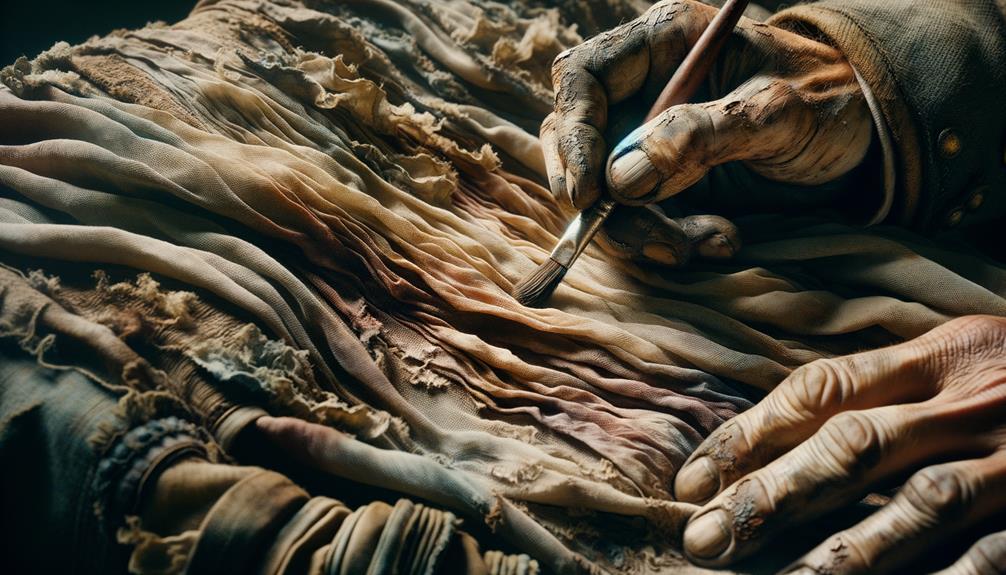
The smudge palette method joins practicality and artistry, transforming costume aging into a precise and intimate craft. Helen Butler’s technique is notable for its simple yet innovative approach. Using grease paints from Meron, adhered to an artist palette with a hot glue gun, the method provides a range of customizable aging effects that are both efficient and comfortable for actors.
One of the most remarkable benefits is the versatility of the palette. With colors like black, monster gray, zombie gray, Wolfman brown, yellow green, and clown red, these hues can be blended to recreate an astonishing variety of distressed looks. Whether the goal is mustard stains, grass stains, or even lipstick smudges, the process remains intuitive and adaptable.
Applying the makeup with cotton gloves offers precise control and gives the actor a tactile, almost massage-like experience. This approach ensures that the aging effects are both realistic and comfortably applied, an essential factor in maintaining the actor’s ease on set.
Also, the non-toxic and washable properties of the grease paint make it suitable for a wide range of fabrics and projects, reinforcing the method’s practicality without compromising on artistic integrity.
Frequently Asked Questions
What Is Costume Aging?
Costume aging is the craft of transforming brand-new clothes into garments that convey a story. By deliberately damaging, staining, and manipulating fabrics, costume designers create a visual history that brings characters and immersive worlds to life. This process helps to establish the backstories and lived experiences of the people portrayed on screen or stage. Through subtle distressing techniques, the costumes gain an authentic, weathered appearance that makes characters feel more real and grounded in their environments. Costume aging is a vital tool for bringing depth and realism to a production, enhancing the overall visual storytelling.
How Do You Age and Distress Costumes?
Grease paint makeup on a palette, applied with cotton gloves, creates precise, non-toxic effects to age and distress costumes. This method, developed by Helen Butler, is innovative, washable, and actor-friendly. It is a practical solution that allows costume designers to add wear and tear to outfits without damaging the materials. The makeup is easy to work with and produces believable results, making it a popular choice in the performing arts.
What Is the Psychology of Wearing Costumes?
Costumes can be a liberating experience, opening the door to different facets of a wearer’s personality. They are more than attire; they are transformative. Embodying admired characters helps people shed everyday constraints and connect with like-minded individuals. The costume becomes a vehicle for self-expression, enabling the wearer to step outside a usual role and inhabit something new. It is a chance to experiment, to play, and to connect with a community that shares a passion for the fantastical and imaginative. A costume is not just a disguise; it is a way to access parts of the self that might otherwise remain hidden.
What Does a Costume Breakdown Artist Do?
A costume breakdown artist brings characters to life through the art of distress. Skilled hands transform pristine costumes into relics that speak of a character’s journey. The artist works to align each weathered thread and subtle imperfection with the designer’s vision, ensuring the garments reflect the nuances of the narrative.
Rather than simply applying wear and tear, the approach treats each piece as a canvas, carefully considering how time, use, and the character’s experiences would shape the fabric. By infusing the costumes with a sense of history and authenticity, the artist immerses the audience in the world of the story, making characters and their circumstances feel tangible and real.
It is a delicate balance, blending technical expertise with an intuitive understanding of storytelling. Each distressed costume is a unique piece, carrying the character’s personality and the weight of their experiences. Breathing life into these garments, crafting visual cues that resonate with the audience and strengthen the overall production, is the core of the work.
Conclusion
Each technique in the art of costume aging is like a unique brushstroke on a well-worn canvas. Helen Butler’s innovative approach, combined with thoughtful color palettes and the delicate touch of cotton gloves, improves on the process. The smudge palette method doesn’t merely age costumes; it breathes life into them, offering depth and authenticity. In this creative work, every detail matters, and much of the effect lies in the imperfections.