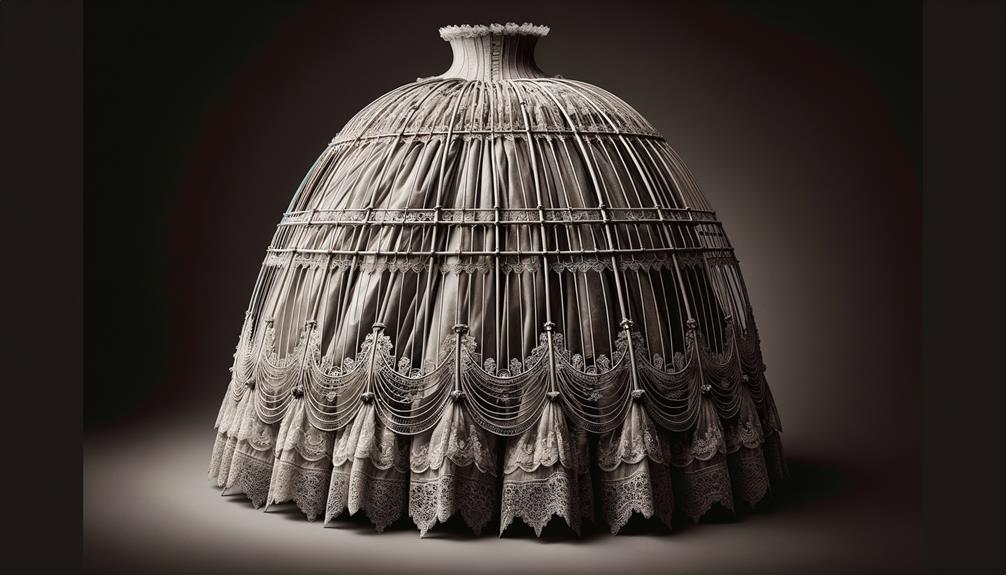
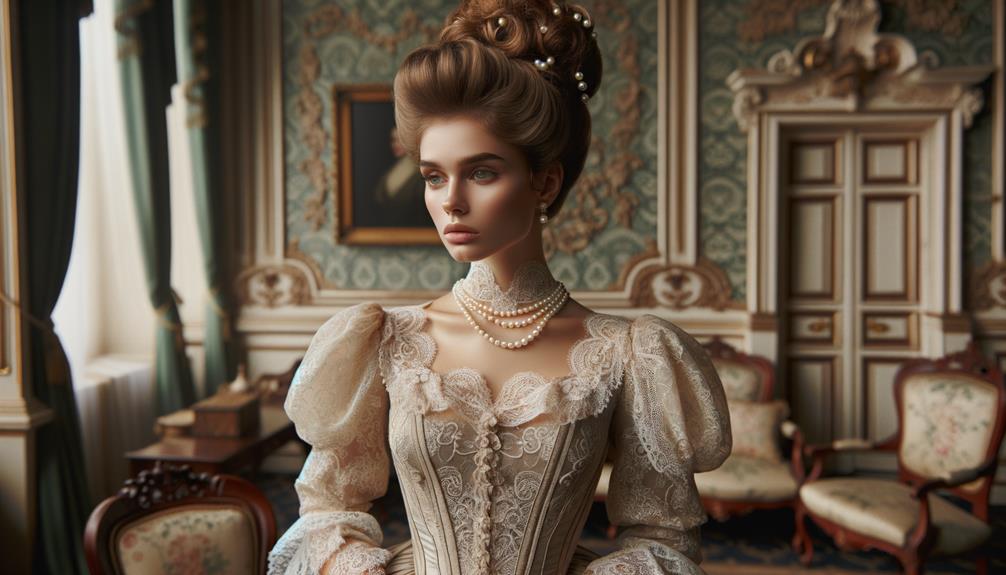
Intricate paisley prints originated in ancient Persia and made their way into Victorian fashion. These patterns, featuring a mix of floral motifs and rich jewel tones, adorned elegant shawls and fabrics. They were fashionable while also symbolizing status and artistic storytelling, blending Eastern and Western influences. When worn by Victorian women, paisley showed exceptional craftsmanship and cultural exchange. A Victorian paisley textile carries layers of meaning and beauty, and its journey and impact continue to be uncovered.
Historical Origins
The Victorian paisley pattern‘s journey begins in the heart of the Persian Empire around 221 AD, where it symbolized a range of natural and philosophical motifs. This intricate pattern, with its swirling floral designs, tadpoles, and feathers, served as more than just decoration. It was a visual language, conveying concepts like yin-yang and the essence of mangos.

Fast forward to the 11th century, and the paisley pattern had made its way onto the finely woven Kashmir shawls. These shawls, prized for their exquisite craftsmanship, became highly sought after across Asia, the Middle East, and Europe. A single design traversed continents, its journey intertwined with cultural exchange and trade.
Skilled artisans in Kashmir meticulously crafted each shawl, their work destined to adorn the shoulders of royalty. These shawls were more than fashionable items; they were statements of status and admiration for the paisley pattern. Every curl and curve of the design told a story, one that transcended borders and eras.
Victorian Popularity
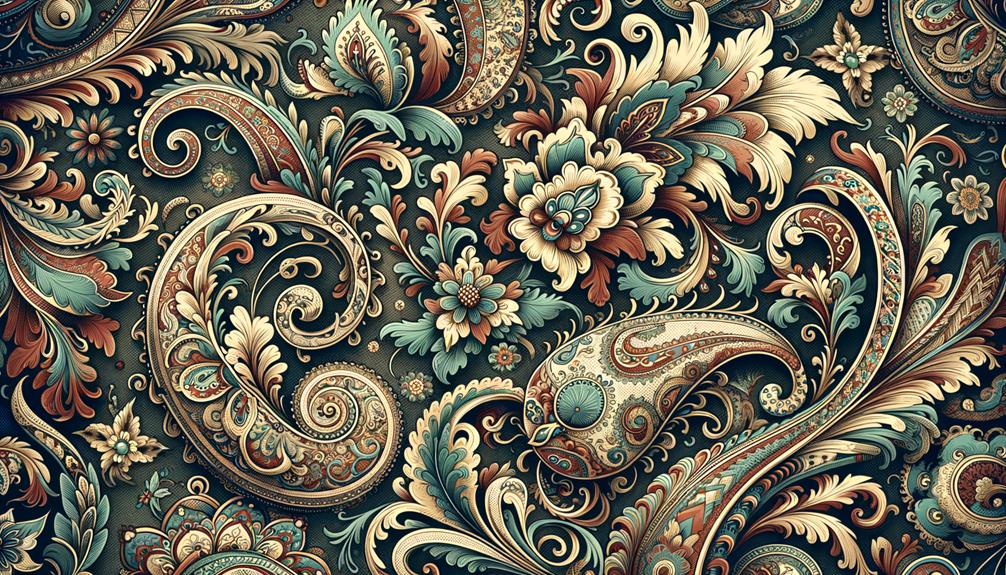
During the Victorian era, fashionable women draped in opulent paisley shawls became a familiar sight, each one showing the era’s fascination with intricate design and exotic allure. The paisley pattern was more than just a fleeting trend; it captured the collective imagination, becoming a staple in Victorian fashion. These shawls, often adorned with floral motifs, showcased the skill of textile workers who toiled tirelessly in places like Paisley, Scotland.
Victorian women, from the social elite to the bourgeoisie, fell in love with these shawls, turning them into symbols of both fashion and status. Napoleon’s wife, Josephine, was among the early adopters, amplifying their desirability across Europe. The demand for paisley shawls from Kashmir surged, and soon, Paisley, Scotland, became synonymous with this intricate pattern.
Paisley shawls:
- Adorned the attire of Victorian women
- Symbolized status and elegance
- Highlighted the craftsmanship of textile workers
- Boosted the economy of Paisley, Scotland
- Influenced subsequent fashion trends
Despite the eventual decline in shawl popularity, the paisley pattern’s legacy endured, continuing to inspire and shape the aesthetics of Victorian fashion. Its timeless appeal speaks to innovation and the transformative power of design.
Design Characteristics
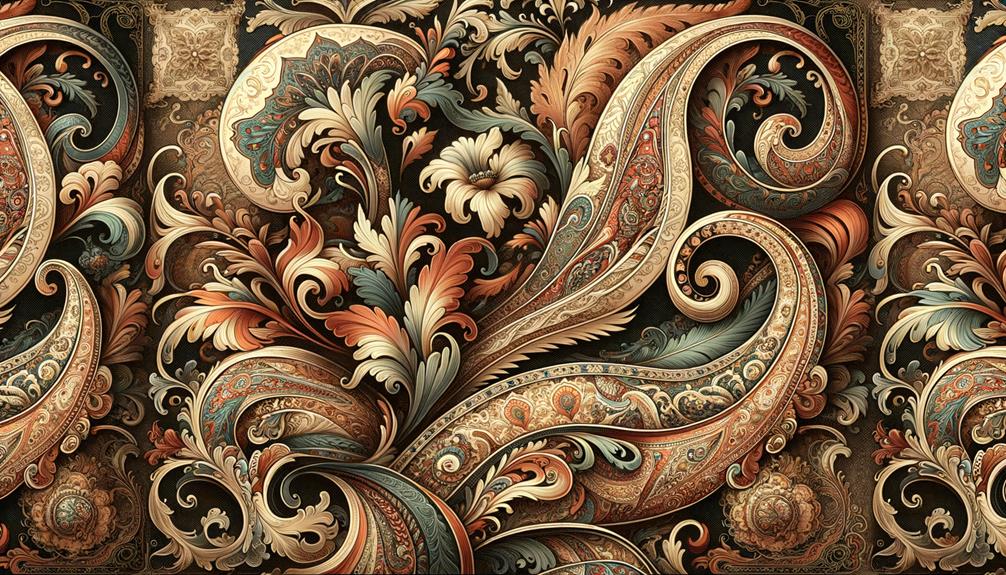
Victorian paisley patterns are defined by intricate floral motifs that weave a narrative of their own. The elegant color schemes, often rich and vibrant, evoke a sense of timeless beauty. Inspired by historical and exotic influences, these designs bring a touch of vintage sophistication to any fabric or decor, making them truly unique and eye-catching.
Intricate Floral Motifs
Victorian paisley prints feature intricate floral motifs that showcase vibrant, twisted teardrop patterns, blending Eastern and Western design influences. These designs evoke a sense of timeless elegance and sophistication, making them appealing for both decor and fashion.
The complexity of these floral patterns demonstrates the artisans’ skill and reflects a cultural exchange between two worlds. The intricate detailing within the paisley teardrop shapes often reveals:
Delicate petals intertwined with curling vines
Lush blooms nestled within paisley curves
Subtle, almost hidden, motifs that invite closer inspection
A harmonious balance of symmetry and natural asymmetry
Exquisite layering of textures and patterns
Each element tells a story, drawing the eye deeper into the design. The Victorian fascination with combining Eastern and Western aesthetics is evident, creating an immersive experience. These motifs are more than decorative; they offer a glimpse into a richly imaginative world where every detail matters.
Elegant Color Schemes
Victorian paisley prints boast elegant color schemes that evoke a sense of luxury and sophistication. Rich jewel tones like deep emerald and royal purple command attention, blending with intricate details that add to their elegance. Delicate gold accents and ornate flourishes infuse each pattern with a timeless charm, making every piece a visual treasure.
These prints show a harmonious blend of colors. Sapphire blue, burgundy, and forest green meld together to create an exquisite range of hues that feel both luxurious and inviting. Opulent gold threads enhance the visual depth, adding a touch of grandeur that is unmistakably Victorian.
The use of shades like maroon, teal, and mustard crafts a look that’s both lavish and ornate. Intricate floral motifs, adorned with these elegant color schemes, transform fabric into something almost ethereal. For those seeking design inspiration, the rich, sophisticated color palettes of Victorian paisley prints offer endless possibilities, inviting us to reimagine and reinvent timeless beauty.
Historical Inspirations
The luxurious color palettes of Victorian paisley prints are rooted in Persian and Indian design traditions. The intricate motifs, such as floral sprays, cypress trees, and twisted teardrops, evoke a sense of artistry that thrived on meticulous details. The 19th-century Kashmir shawls, with their vibrant colors and detailed designs, played a significant role in popularizing the Victorian paisley pattern.
These designs blend traditional and contemporary styles, creating a unique and vibrant aesthetic that resonates with modern tastes. The high-quality materials used in Victorian paisley prints ensured their durability, allowing these vibrant colors to stand the test of time.
Some key elements that make these patterns stand out are intricate floral sprays, elegant cypress trees, twisted teardrop shapes, explosive color combinations, and high-quality, durable materials.
These historical inspirations offer a glimpse into how Persian and Indian designs influenced Victorian tastes. The paisley pattern, with its roots in Kashmir, continues to inspire designers and artists who seek innovation, proving that timeless beauty endures.
Cultural Impact
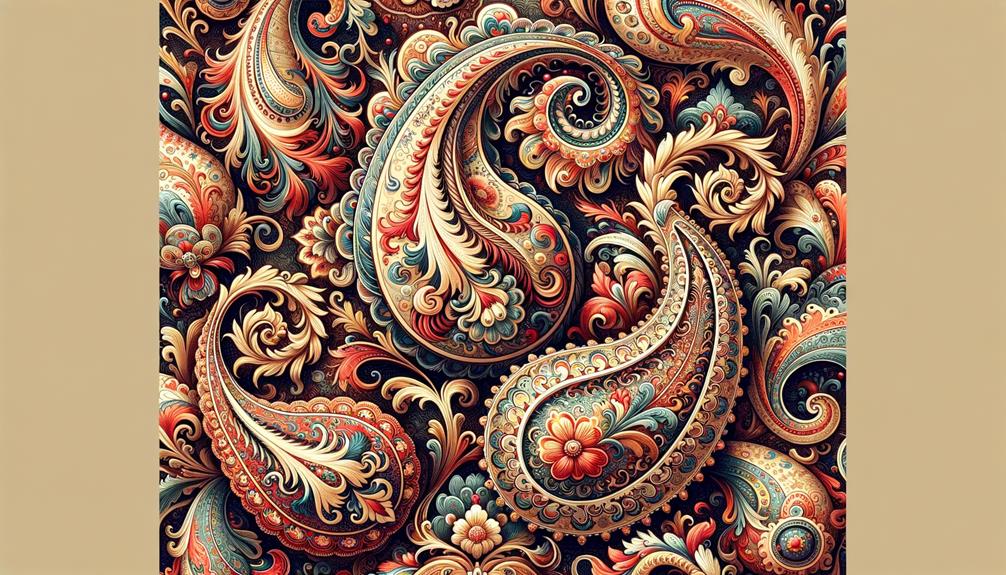
Paisley’s influence on modern fashion reaches back to its deep roots in rock ‘n roll’s flamboyant style. The symbolism behind paisley in art history, from fertility to rebellion, reveals a lot about collective taste. The journey of this pattern from ancient Persia to contemporary runways shows its enduring appeal.
Influence on Modern Fashion
The vibrant paisley print has blended vintage charm with modern style, making a striking statement in contemporary fashion. This textile pattern has become an integral part of fashion consciousness. Iconic rock stars like David Bowie and Liam Gallagher catapulted paisley to a symbol of flamboyant rebellion, making it synonymous with rock ‘n roll swagger.
Looking back at the ‘Summer of Love,’ paisley became a hallmark of the classic bohemian aesthetic. The psychedelic swirls and teardrop shapes captured the free-spirited essence of the 1960s. Top designers like Yves Saint Laurent and Biba have continually reinterpreted paisley in their collections, showcasing its timeless appeal and versatility.
Some notable points include:
- The Beatles’ adoption of paisley cemented its place in pop culture.
- Prince often wore paisley, making it a signature element of his eclectic style.
- Festival fashion frequently features paisley, celebrating its bohemian roots.
- High fashion adapts paisley for luxurious, modern contexts.
- Streetwear incorporates paisley, blending tradition with contemporary edge.
This pattern, steeped in tradition, remains relevant and innovative today.
Symbolism in Art History
Paisley’s intricate designs have woven themselves into the fabric of art history, symbolizing fertility, abundance, and a timeless connection to cultural heritage. The paisley print embodies the tree of life and the seed palm, symbols steeped in ancient lore and representing life’s perpetuity and growth. This pattern is more than decorative; it carries the weight of centuries, echoing the cycles of nature and human creativity.
The cultural impact of paisley is undeniable. From the flamboyant shirts of Mick Jagger to the bohemian flair of Janis Joplin, this print has danced through decades, always embodying a spirit of individuality and innovation. A pattern can convey such profound meanings and inspire so many.
| Symbol | Meaning |
|---|---|
| Tree of Life | Connection to nature |
| Seed Palm | Fertility and growth |
| Paisley Pattern | Creativity and legacy |
In its ability to blend tradition with modernity, paisley remains relevant and inspiring. It is not just a motif but a narrative, continually reinventing itself while staying rooted in its rich, symbolic past.
Modern Applications
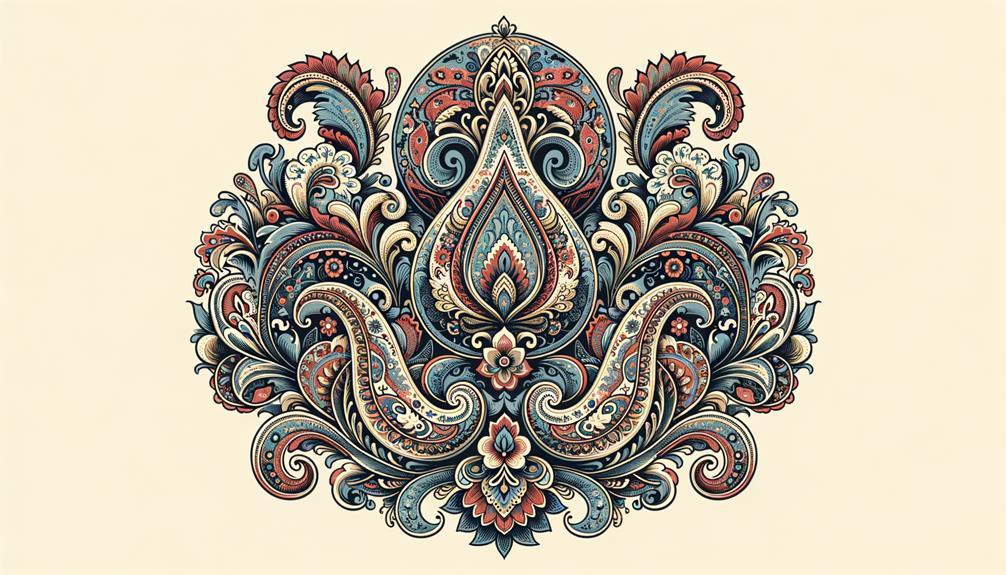
Today, the Victorian paisley pattern is experiencing a bold resurgence, blending historical charm with modern elegance. The intricate swirls and teardrop shapes, once meticulously crafted in textile manufacturing, now adorn contemporary runways and home decor with a flair that’s both nostalgic and fresh.
This pattern transcends its origins to fit easily into modern fashion, home decor, and accessories. Designers like Yves Saint Laurent and Biba have incorporated paisley into their collections, proving its timeless appeal. Its bohemian flair and sophisticated undertones make it a versatile choice, adored by style icons like David Bowie, Janis Joplin, and Mick Jagger.
Paisley truly shines in the following modern applications:
Fashion: Paisley brings a unique touch to flowing bohemian dresses and impeccably styled suits.
Home Decor: Vibrant cushions, elegant drapes, and even wallpaper showcase paisley’s charm.
Accessories: Paisley-infused scarves, handbags, and ties add a touch of sophistication.
Textile Manufacturing: Modern techniques breathe new life into this classic pattern.
Music and Pop Culture: The pattern’s flamboyant connotations continue to resonate with iconic figures.
The Victorian paisley print retains its exotic allure, remaining a timeless and versatile design choice across various industries.
Collecting and Preservation
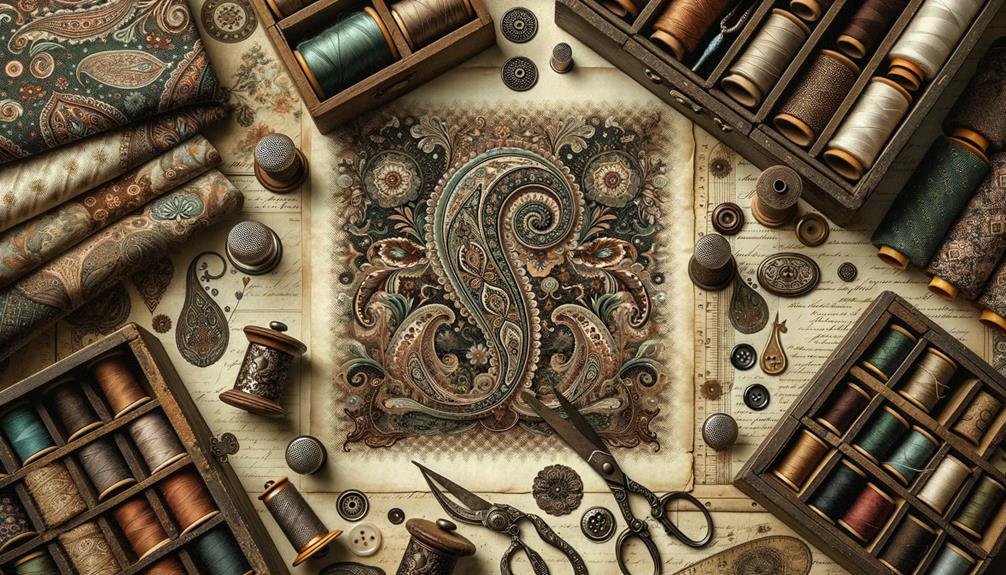
Amid the growing interest in Victorian paisley patterns, collectors deeply value these textiles for their intricate designs and historical significance. Each paisley design tells a story, weaving together the threads of cultural and artistic heritage. The allure of Victorian paisley patterns lies in their visual appeal and in the craftsmanship that speaks of a bygone era.
Preserving these delicate pieces is an art form in itself. Proper storage techniques, such as using acid-free paper, are vital in preventing deterioration. These methods ensure that the vivid colors and intricate patterns remain intact, allowing future generations to admire their beauty.
Museums showcase Victorian paisley textiles to educate visitors on their cultural and artistic significance. The exhibits often evoke a sense of nostalgia, connecting viewers to the past while inspiring future innovations in design.
Each paisley piece is a treasure. The meticulous preservation efforts are about maintaining fabric and conserving the essence of an era. They honor the artistry and ensure these patterns continue to inspire and fascinate.
Frequently Asked Questions
What Does the Paisley Pattern Symbolize?
The paisley pattern symbolizes life and creativity, blending traditional roots with modern flair. It embodies a sense of individuality and artistic heritage, making it a timeless emblem of style and abundance.
What Era Is Paisley Print?
The paisley print, with its roots in Persia, reached its peak in the Victorian era, exuding timeless elegance. Kashmir shawls of the 18th century show the pattern at its most refined.
What Patterns Compliment Paisley?
Floral prints, especially roses and daisies, beautifully complement paisley. Geometric patterns like stripes or checks add a modern touch. Mixing scales, such as pairing large paisley with small polka dots, creates visual interest. Velvet or silk textures add a luxurious feel.
What Style Is Paisley Print?
Paisley print, with its intricate teardrop shapes, blends classic sophistication with modern charm. It is both evocative and timeless, fitting easily into any style, whether traditional or contemporary. The vibrant, detailed designs regularly spark creativity and inspire new ideas.