The hanbok presents a kaleidoscope of vibrant colors and elegant lines, each hue infused with profound meaning. Red radiates passion, blue exudes serenity, yellow commands respect, and white whispers innocence. The luxurious fabrics of silk and satin add to its timeless sophistication, while delicate accessories like norigae charms and binyeo hairpins contribute subtle beauty. Modern interpretations inject fresh vitality into this traditional attire, blending heritage with contemporary style. Wearing a hanbok means embracing a cultural legacy rather than simply dressing up.
History and Significance
The history of hanbok shows how each vibrant color encapsulates the essence of Korean culture and its long traditions. The traditional Korean dress is more than fabric and thread. It carries a dense set of meanings woven from the past. Hanbok colors are never chosen arbitrarily; they connect directly to Confucian principles and the social hierarchy that once shaped daily life.

Red represents passion and essentiality, reflecting the energy of the most significant moments in life. Blue, a calming hue, speaks to the need for peace. Yellow, often worn by royalty, radiates a sense of authority and respect. White symbolizes purity and innocence, a blank canvas of potential. Black, reserved for solemn occasions, adds a layer of gravity and reflection.
These colors also mirror the changing seasons, with brighter tones for the rebirth of spring and summer and deeper shades for the introspection of fall and winter. Modern hanbok designers blend these traditional elements with contemporary trends, combining old and new in a way that honors the past while embracing the future. This vibrant palette is a living chronicle of Korean heritage.
Elements of Hanbok
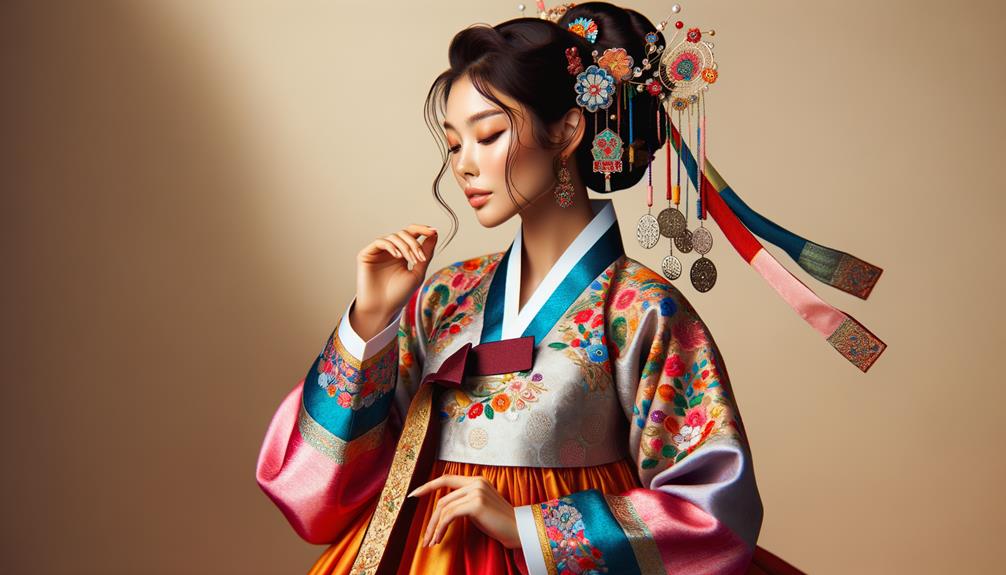
The intricate designs and vibrant hues of hanbok reward close study. Each piece, from the elegant jeogori to the sweeping chima for women, and the jeogori paired with baji for men, speaks to a cultural heritage that continues to evolve. In modern interpretations, the hanbok becomes a combination of tradition and innovation.
The incorporation of floral lace in modern hanbok designs gives the classic styles a new energy. The intricate embroidery and symbolic patterns, including the revered five cardinal colors, remain, but are often reimagined to suit contemporary taste.
Silk, satin, and hemp fabrics exude elegance and cultural reverence, their textures inviting touch and admiration. Norigae, the decorative tassels, and binyeo, the ornate hairpins, are essential elements that complete the hanbok’s narrative.
The modern hanbok, with its innovative touches and floral lace, preserves history while reinterpreting it. Each piece becomes a wearable work of art that honors the past while embracing the future.
Color Symbolism
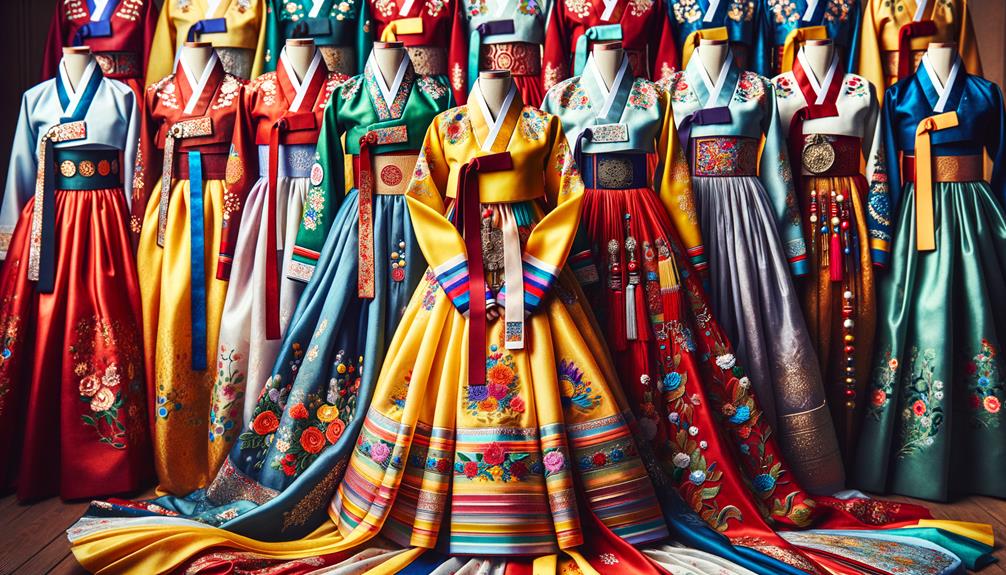
Among the vibrant hues of hanbok, each color tells a story and adds depth to the cultural narrative. In Korean culture, the colors chosen for hanbok are deliberate. They carry profound meanings that reveal the wearer’s intentions and status.
Red, often seen in wedding hanboks, symbolizes good fortune and happiness, radiating optimism and joy. Blue represents youth and fidelity, commonly worn by younger people to signify vitality and loyalty. Yellow, reserved for royalty, embodies power and divine mandate, visually proclaiming authority and grandeur. White, the most revered color, stands for purity and integrity, reflecting the moral fabric of Korean culture.
These color combinations carry subtle messages about social status, intentions, and occasion, and do more than please the eye. Each hanbok conveys meaning in its own way, carrying the traditions and identity of the wearer. Recognizing these color symbols adds a layer of depth and makes the intricate beauty of Korean traditional attire easier to appreciate. Hanbok is a narrative woven into fabric and dye.
Modern Adaptations
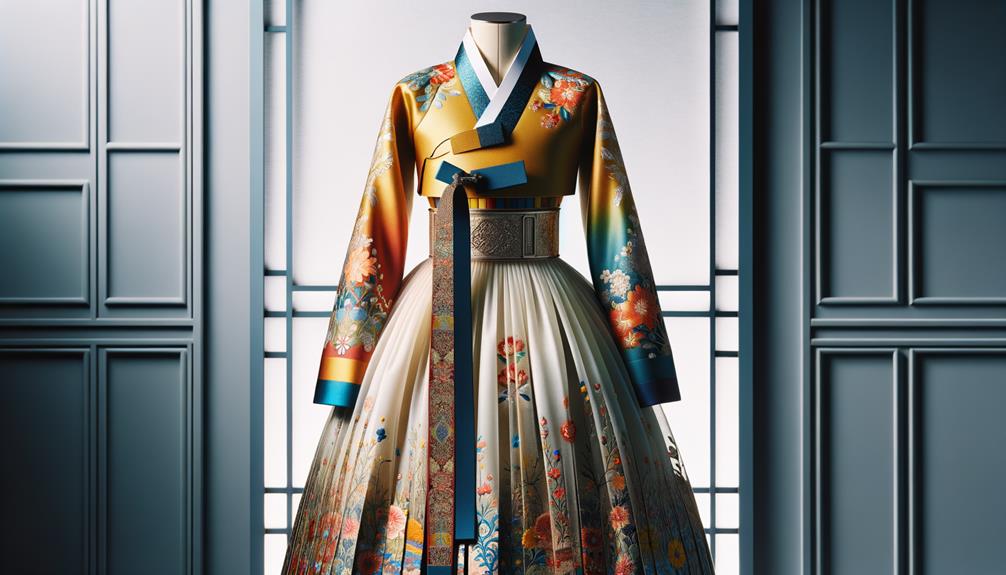
Embracing tradition while blending with modernity, the modern hanbok tells a story of timeless elegance merged with contemporary flair. Designers like Lee Young Hee have reimagined this attire, combining traditional hanbok elements with trendy styles and colors. The result is a fusion of past and present.
The innovative approaches to colors, patterns, and silhouettes have transformed the look and feel of the modern hanbok. The use of modern fabrics ensures comfort and durability while honoring the heritage of this iconic dress. Unique combinations of traditional hanbok details with modern design create fresh perspectives and new possibilities.
Every thread and fold of the modern hanbok seems to carry the past while stepping into the future. By reimagining the traditional hanbok, this attire resonates with the present and looks toward the future, combining history and innovation. The modern hanbok shows the enduring elegance and adaptability of Korean culture.
Wearing Hanbok
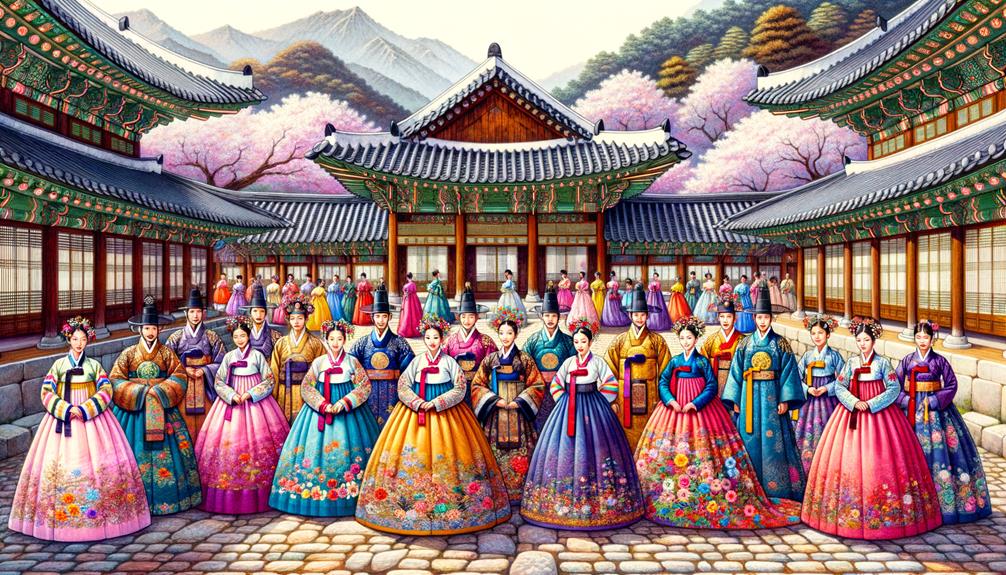
Wearing hanbok is a way of stepping into a long history of elegance. On traditional occasions it shines with grandeur, while modern twists give it fresh style. Accessorizing with hanbok has become an art form, and each piece carries its own meaning.
Traditional Hanbok Occasions
At South Korea’s most cherished celebrations, the elegant hanbok expresses a deep respect for tradition and family. Wearing a traditional hanbok forms a meaningful connection with cultural heritage. Each thread and pattern tells a story, a vibrant expression of history.
During weddings, the hanbok’s intricate designs and vibrant hues reflect the joy and significance of the union. It functions as a symbol of respect and continuity. At festivals like Seollal and Chuseok, wearing hanbok builds a sense of belonging and togetherness, bridging generations through shared customs.
Ancestral rites see the hanbok in its most solemn form, marking honor and remembrance. The choice of fabric, often dictated by the season, adds another layer of meaning. Silk for summer and wool for winter reflect practicality tied to tradition.
The hanbok’s colors and designs also convey the wearer’s social status and age, which makes it more than simple clothing. It is a record of identity and origin, captured in the folds of a traditional hanbok.
Modern Hanbok Trends
Modern hanbok trends merge the past with contemporary style. The evolution of the modern hanbok dress shows Korean fashion’s creativity, transforming age-old designs with trendy cuts and innovative fabrics. This blend of tradition and modernity creates a visual effect that lets wearers express their cultural pride in a fresh way.
Modern hanbok collections do more than preserve history; they celebrate individuality. The versatility of these pieces is considerable, moving easily from casual outings to formal events. A chic hanbok blouse can be paired with stylish trousers, or a flowing hanbok skirt can carry an elegant look at a dinner party. These are not plain garments; they tell a story that bridges the past and present.
The contemporary color palettes and stylish designs give the hanbok new life and make it accessible to a wider audience. For those who value both tradition and innovation, the modern hanbok dress is a canvas where heritage meets the future.
Accessorizing With Hanbok
Accessorizing with hanbok allows a personal touch to be added to a timeless tradition. Each accessory enriches the hanbok top and hanbok skirt, turning the outfit into a statement of individuality. The Gwidorae Knot Tassel Belts add a touch of whimsy and tradition, while the Leesle Flower Daenggis lend an air of delicate beauty.
Juxtaposing modern and classic elements creates its own effect. Simple Durumagi Mufflers drape gracefully over the shoulders, contrasting the vibrant patterns of a hanbok skirt. The Maejukdo Girdle Waist Skirts and Willow Mother-of-pearl Girdle Waist Skirts accentuate the waist, creating a silhouette that is both timeless and contemporary.
Accessories such as the King Taejo Eojin Ribbonpins and Goryeo Celadon Scrunchies bring a regal touch, evoking historical grandeur. For a playful variation, Artificial Leather Tops and Phoenix Trackpants Shorts bridge the gap between old and new. The Rope Chrysanthemum Knot Keyring Norigaes, hanging from a hanbok top, carry stories of tradition with every sway.
Accessories make it possible to honor tradition while expressing a personal style.
Where to Buy
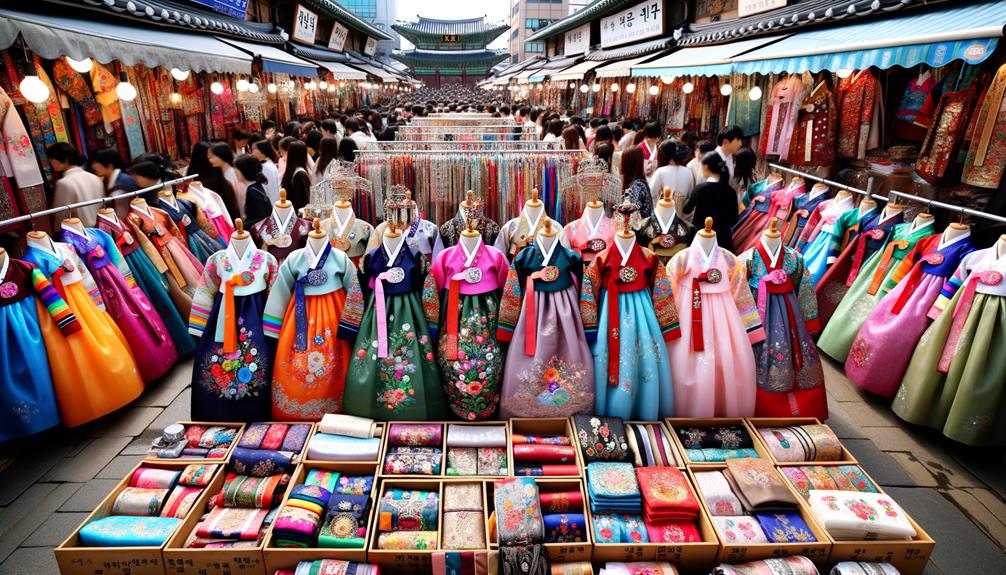
Vibrant hanbok is available from Seoul’s lively shopping streets as well as online. Authentic Korean boutiques and modern brands like Joteta offer striking pieces, while Etsy brings a handmade touch. For those seeking a temporary experience, Seoul’s rental services provide a practical option.
Authentic Korean Boutiques
In the heart of Jeonju, Joteta is a boutique that embodies the essence of Korean culture through its hanbok dresses. The shop offers a kaleidoscope of colors and intricate patterns, with each piece telling a story of Korea’s long heritage. Joteta’s modern hanbok designs blend traditional aesthetics with contemporary flair, offering a fresh take on the classic attire.
The boutique’s collection is visually striking, featuring elegant and eye-catching pieces suitable for various occasions. Whether attending a festival, a wedding, or simply exploring Korean culture, these hanbok dresses are made to make an impression. The attention to detail in each garment is remarkable, from the delicate embroidery to the vibrant hues that bring the fabric to life.
Each dress has a story to tell, weaving together threads of tradition and innovation. For those seeking a shopping experience that honors the past while embracing the present, authentic Korean boutiques like Joteta are worth discovering.
Online Retail Platforms
The hanbok is available to anyone with an internet connection, as online retail platforms like Etsy sell these colorful Korean dresses. A simple search turns up modern hanbok dresses with elegant lines and a contemporary flair that suit a wardrobe wanting a touch of Korean heritage.
The wrap skirts that move gracefully with every step, together with the vibrant hues of a modern hanbok dress, show how closely the past and present remain joined. Etsy offers clothing that is also a connection to a culture rich in history and artistry.
Rental Services Available
Seoul’s historic districts draw visitors to traditional Korean dress, known as hanbok. The vibrant hues and graceful folds offer an introduction to the elegance of Korea’s long cultural heritage. Hanbok rental services near Seoul’s historical sites make it possible to explore landmarks while wearing the clothing of the period.
Each rental package includes a hanbok dress, a jacket, and accessories, providing a complete ensemble. The shops cater to diverse body types, offering a range of sizes for both men and women. Renting a hanbok is more than dressing up. It is a way of experiencing a piece of Korean culture, of feeling the fabric move around the legs and seeing the world through a historical lens.
Here is a comparison of popular hanbok rental services:
| Rental Service | Location | Features |
|---|---|---|
| Hanboknam | Bukchon Hanok Village | Wide size range, group discounts |
| Oneday Hanbok | Gyeongbokgung Palace | Traditional and modern styles |
| Seohwa Hanbok | Changdeokgung Palace | Personalized fitting, premium fabrics |
| Hanbok Sarang | Insadong | Couple packages, free hair accessories |
| Coreano Hanbok | Namsangol Hanok Village | Full-day rentals, custom photo shoots |
This immersive experience weaves visitors into the very fabric of Korean tradition.
Frequently Asked Questions
Do the Colors on a Hanbok Mean Anything?
The colors on a hanbok do hold meaning. Red symbolizes passion, blue represents serenity, yellow is a sign of royalty, and white conveys purity. In modern designs, innovation has led to a broader palette of colors.
Is It Okay for Foreigners to Wear Hanbok?
Wearing a hanbok is a respectful way to engage with Korea’s long cultural heritage. Wearers are generally welcomed, and the experience connects them to the stories and history behind the garments.
Can Tourists Wear Hanbok in Korea?
Tourists can wear hanbok in Korea. Renting a hanbok and walking through historical sites combines tradition with personal exploration.
What Does Hanbok Symbolize?
Hanbok embodies the essence of Korean heritage, combining tradition and artistry with quiet elegance. Each color tells a story, every stitch reflects tradition, and the overall design captures the soul of Korean identity.