The Scottish kilt is a rich cultural symbol, intertwining centuries of history, identity, and pride. Emerging in the 17th century, it evolved from the féile-breacan, featuring tartan patterns that tell stories of ancient clans. Each kilt carries the essence of its ancestors, resilient through prohibitions and revivals. Accessories like the sporran and sgian dubh add depth to its narrative, while modern kilts blend age-old traditions with contemporary style. Whether at weddings or Highland Games, the kilt stands as a bold statement of belonging and elegance.
Historical Origins
In 17th-century Scotland, the kilt emerged as a vibrant symbol of heritage, woven from wool and tartan patterns. Its evolution made it more than fabric. It became a representation of identity deeply rooted in history. The shift from the long linen tunics and animal furs of the Lìne era to the more refined tartan kilt marks a significant transformation in Scottish attire.

The kilt, knee-length and sturdy, originated from the féile-breacan, a full-body garment that provided warmth and cultural significance. The accompanying plaid, draped over the left shoulder, added a layer of distinction and practicality. Highlanders clad in both kilt and plaid moved through misty glens in attire suited to the rugged Highland landscape.
This traditional Scottish garb, both functional and symbolic, became more than clothing. It was a badge of honor, a statement, and a connection to the land. Today, the kilt remains an integral part of Scottish identity and a timeless tradition.
Tartan Patterns
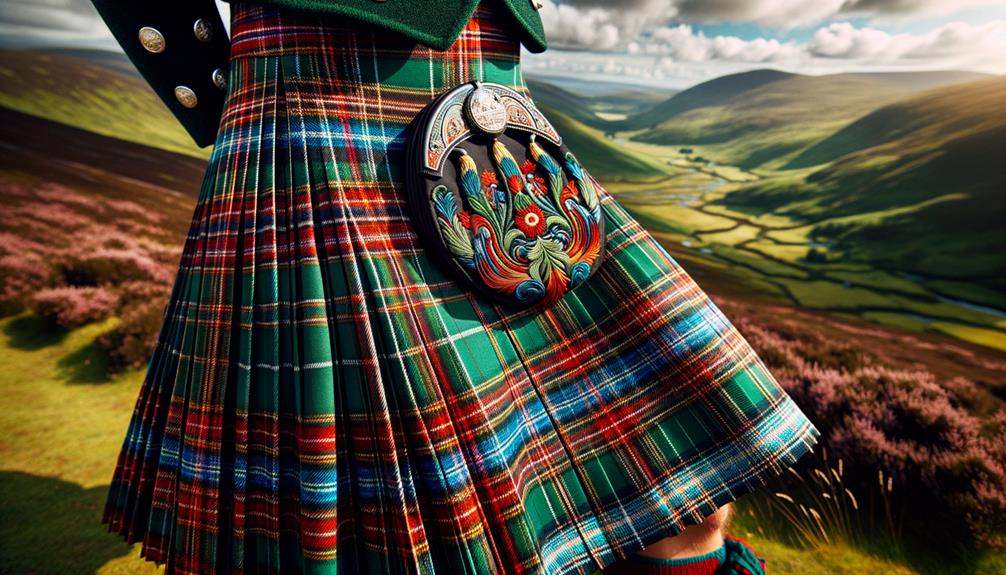
Tartan patterns weave intersecting colors into a story of ancestry and pride. Each stripe and each intersection speaks to Scottish heritage, transcending mere fabric to become a living symbol of tradition and kinship. With over 7,000 unique tartans recorded, these patterns bind families, clans, and organizations, fostering a sense of belonging and heritage.
In traditional Scottish great kilts, tartans were celebrated and each pattern served as a badge of honor. Tartan is attested in Scotland from the 16th century, and its use included a period of prohibition after Culloden. Tartan saw a grand revival in the mid-1800s, flourishing anew in high fashion and military uniforms as a symbol of unwavering identity.
These tartan patterns have shown remarkable resilience and adaptability. They have endured through the ages, adjusting to contemporary aesthetics while remaining rooted in a storied past. In every weave and weft there is more than color and line. There is the enduring character of Scotland.
Kilt Accessories
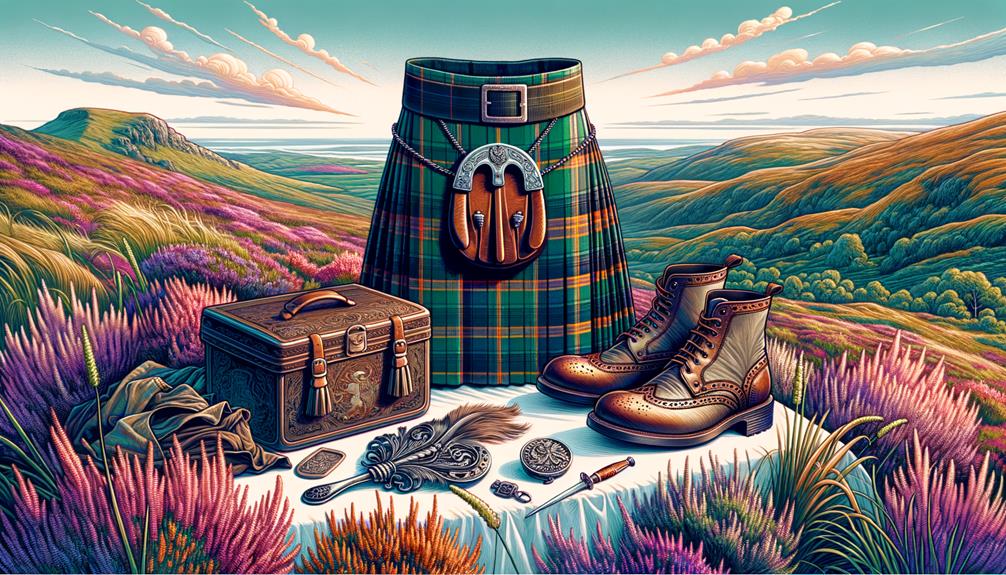
Kilt accessories supply the intricate details that bring the outfit to life. The sporran, ghillie brogues, and sgian dubh each tell their own story, adding form and function to the overall look. Flashes and plaid add a touch of elegance, making the attire traditional and sophisticated at once.
Essential Kilt Accessories
Every kilt tells a story, and its accessories, each with a history of their own, complete the narrative. Sporrans, ghillie brogues, sgian dubh, and flashes transform this simple garment into an expression of tradition and innovation.
The sporran, a decorative pouch, makes up for the kilt’s lack of pockets. It swings with each step, a symbol of practicality and charm. Ghillie brogues, with their unique laces and holes, were designed to navigate Scotland’s wet terrains, yet they now tread modern streets effortlessly. The sgian dubh, once a functional knife, now tucks into kilt hose, a nod to history and a mark of elegance. Flashes, the colorful bands, secure the kilt hose and keep them in place.
| Accessory | Purpose | Modern Significance |
|---|---|---|
| Sporran | Holds essentials | Decorative and practical |
| Ghillie brogues | Waterproof footwear | Traditional yet trendy |
| Sgian dubh | Historical knife | Decorative |
| Flashes | Holds up kilt hose | Adds flair and function |
These accessories complete the outfit and weave tales of heritage into every part of it, making each kilt an expression of Scottish tradition.
Traditional Kilt Add-ons
Among the traditional kilt add-ons, each piece carries a measure of Scottish heritage and charm. The sporran, a humble yet essential pouch, takes center stage. In the absence of pockets in kilts, the sporran becomes a practical and heritage-rich repository. Its leather or fur exterior, adorned with intricate designs, showcases the craftsman’s skill.
Ghillie brogues, with their distinctive holes and long laces, were designed for Scotland’s rugged landscapes rather than fashion alone. Made to let water escape, they balance form and function, combining resilience with elegance.
The sgian dubh rests in the kilt hose. Once a small dagger essential for protection, it is now a symbol of honor and tradition. Its handle, often carved with Celtic motifs, recalls a warrior’s tradition.
The plaid completes the outfit. Draped over the shoulder, it is more than fabric. It is a tangible link to the great kilt, layering the wearer’s clothing with history. Each accessory tells a story, weaving Scotland’s storied past into the present.
Cultural Significance

The kilt carries the essence of Scottish heritage and pride. This highland dress, more than fabric, weaves together threads of Scottish national identity and cultural significance. Its associations reach back to the Jacobite rebellion, the fierce battles fought in the Highlands, and the enduring spirit of the ancestors who wore it.
The kilt is an article of clothing and a symbol of history and tradition at the same time. It communicates a great deal without a word being spoken. Three aspects of that meaning stand out:
- Historical Legacy: The kilt represents defiance and resilience from the Jacobite rebellion to World War II.
- Clan Identity: Each tartan pattern tells a story and a lineage, linking the wearer to their roots and clan.
- Cultural Pride: Wearing a kilt at formal events or in daily life reflects the durability of its cultural significance.
The kilt’s global recognition is a reminder that Scotland holds a rich set of traditions worth preserving. Wearing one is not simply putting on cloth. It is taking up a legacy that inspires pride in a cultural heritage.
Modern Usage
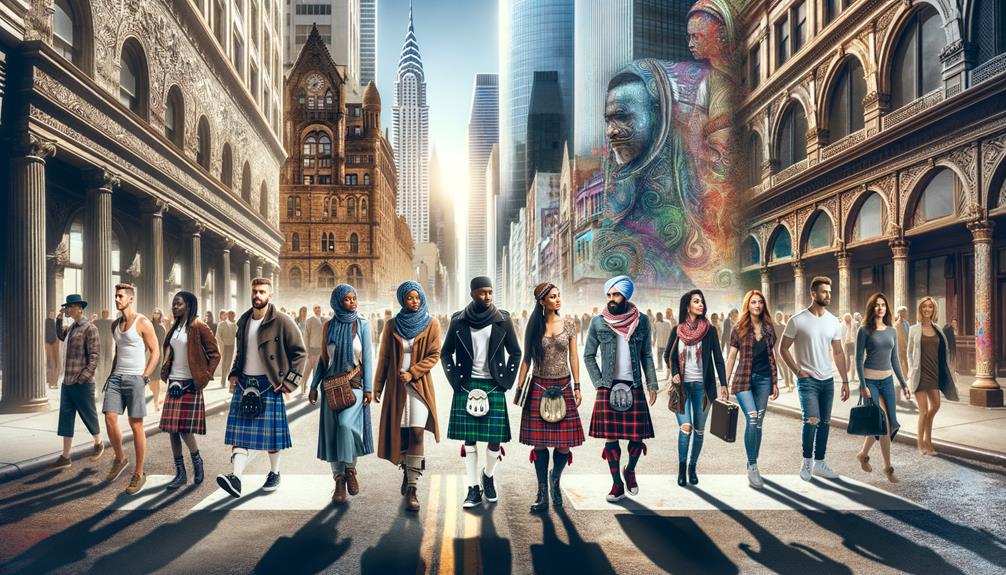
Kilts seen at weddings and festivals show that they are not relics of the past but a vibrant part of contemporary style. They combine tradition with modern flair, turning heads and inspiring pride. Each kilt has a story to tell, weaving history into the fabric of today’s cultural landscape.
Contemporary Fashion Trends
In today’s fashion landscape, the kilt is an evolving garment that combines tradition with contemporary style. The modern kilt moves easily between special occasions and everyday life, carrying its Scottish character into modern fashion.
- Weddings and Ceremonies: The kilt remains a staple, exuding elegance and heritage.
- Highland Games: It stands as a symbol, worn by athletes as they compete, merging strength with tradition.
- Daily Wear: Kilts appear in urban settings, styled with modern touches that make them versatile and current.
These modern kilts transcend simple clothing. They are living affirmations of a culture that refuses to fade. They are not only for those tracing Scottish roots but for anyone drawn to their blend of tradition and innovation. In every pleat and pattern, the kilt tells a story that continues to evolve and holds wide appeal.
Cultural Significance Today
Today’s kilts, with their intricate patterns and long history, are vibrant symbols of a living culture that continues to thrive. There is more to them than wool and pleats. There are the threads of tradition woven into Scottish culture, combining past and present. Whether worn at weddings, formal events, or by Scottish regiments in the British army, the kilt stands as a demonstration of enduring pride and identity.
In contemporary times, kilts have evolved, balancing tradition and innovation. Designs and lengths may vary, but the essence remains unchanged. Each kilt tells a story of heritage and personal expression. Wearing one is a nod to history and a bold statement of belonging and individuality.
For many, donning a kilt during ceremonies or special occasions is a genuine connection to roots and a celebration of cultural legacy. This garment, with its unmistakable character, continues to be a distinguished symbol of Scottish pride, recognized and revered worldwide.
Event and Festival Wear
The kilt, with its patterns and traditional character, brings a touch of heritage to modern festivals and events. At weddings, Highland games, and cultural ceremonies, the kilt becomes a living representation of history and pride. Each pleat and fold speaks of the past while embracing the present.
Contemporary kilts adapt to modern tastes, offering variations in design and length. They have evolved while remaining quintessentially Scottish. Whether at a formal gathering or a casual celebration, the kilt’s presence is unmistakable, combining past and present.
The kilt continues to stand out at events such as these:
- Weddings: The kilt adds regality and tradition, connecting the ceremony to Scottish roots.
- Highland Games: A symbol of endurance and strength, the kilt is worn by athletes showcasing their skills and heritage.
- Cultural Festivals: From parades to community events, the kilt stands as a symbol of identity and unity.
The kilt’s presence at these events shows a balance between innovation and tradition that continues to draw people in.
Kilt Variations
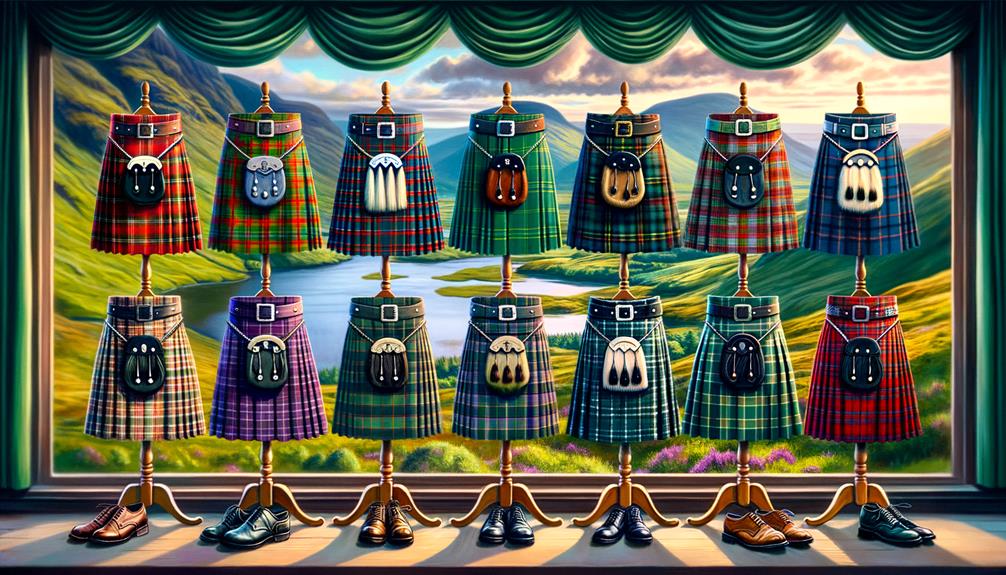
The world of kilts includes a range of styles suited to different tastes and occasions. The great kilt, with its deep roots in the Scottish Highlands, carries a strong sense of historical resilience, having once defied the constraints of the Dress Act. Each pleat and fold speaks of battles fought and traditions preserved.
Casual kilt outfits, often paired with accessories like sporrans and kilt pins, project a relaxed yet dignified character. They are expressions of individuality, suited to a wearer’s own style. With prices starting at $95, this Scottish icon is accessible to many.
At the other end of the spectrum, Prince Charlie kilt outfits embody sophistication and elegance. Deluxe packages, which require 7-8 weeks for careful crafting, can reach up to $1,225. These ensembles, complete with Fly Plaid and high-quality materials, are investments in heritage and quality.
Whether choosing a casual, ready-to-wear kilt or a bespoke luxury ensemble, the kilt’s variations offer a range of options rooted in time and tradition.
Frequently Asked Questions
What Does the Scottish Kilt Symbolize?
The Scottish kilt is a powerful symbol of heritage and national pride. It serves as a connection between past and present, weaving threads of history with modern style. At its core, the kilt represents a strong sense of tradition and cultural identity.
What Is a Scottish Kilt Outfit Called?
A Scottish kilt outfit, often referred to as Highland Dress, is a blend of heritage and modern style. Each piece tells a story, making it both traditional and forward-looking.
Why Do Scottish Guys Wear Kilts?
Scottish men wear kilts as a way to connect with their heritage, to honor their ancestors, and to display a unique cultural identity.
What Do Scots Traditionally Wear Under Their Kilts?
Underneath the kilt there is a personal choice. Some Scots opt for breeks for modesty, while others go regimental for a more daring sense of freedom. Each choice reflects a mix of tradition and personal style within an ancient custom.