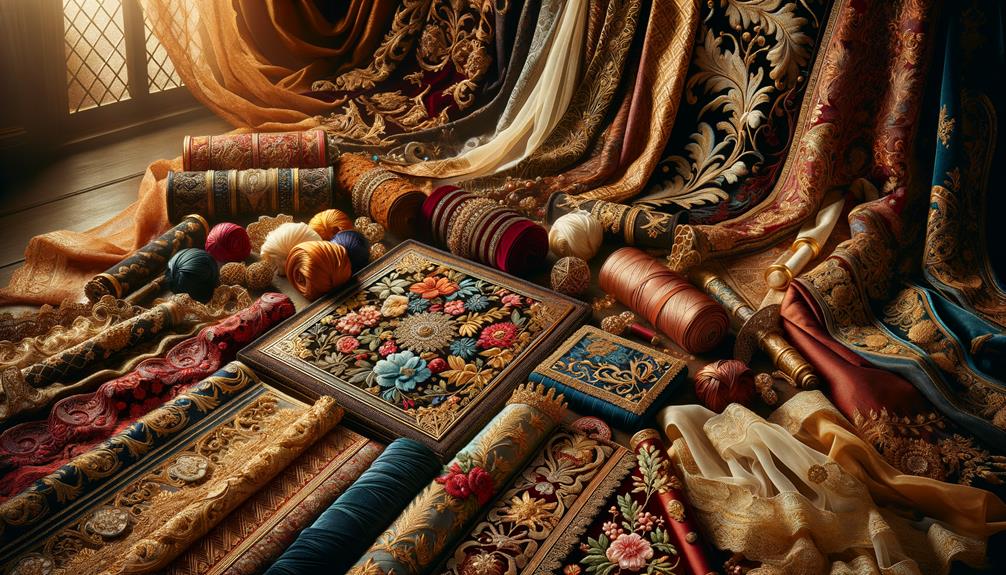
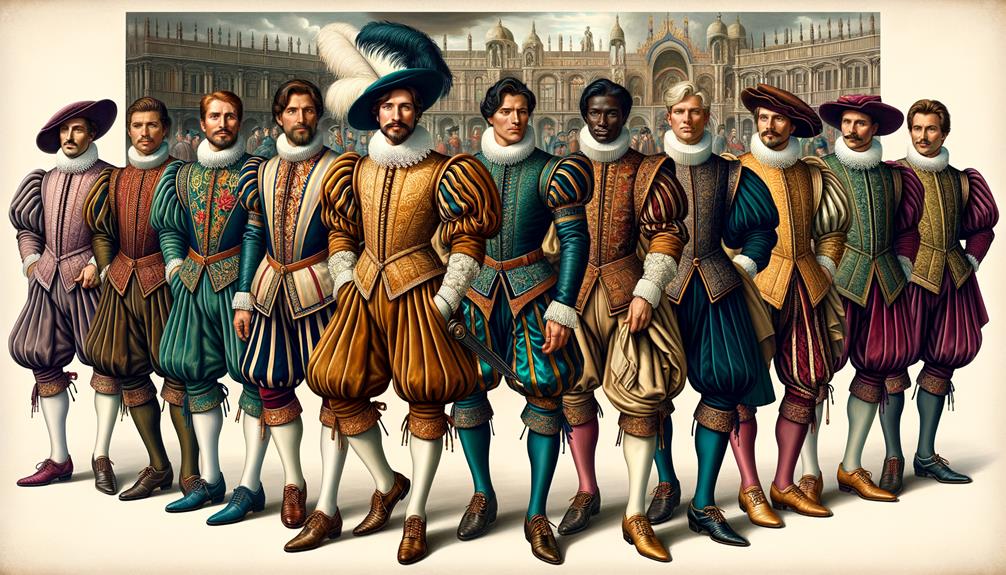
Renaissance fashion in Spain is defined by the opulence and structured elegance of the era. Women’s gowns were made of rich fabrics like silk, velvet, and brocade, and were adorned with intricate lace, embroidery, and pearls. The farthingale, a type of underskirt, created a striking silhouette. Men’s fashion was characterized by padded doublets and breeches, showcasing luxurious fabrics and decorated codpieces. Children’s clothing mirrored adult fashions, with intricate decorations and ornate details. The nobility used lavish materials to display their status, and accessories like ruffs and blackwork embroidery added a touch of refinement. Influential figures like Queen Isabella I and King Philip II set high standards of elegance and luxury, shaping an era of distinguished fashion that still influences style today.
Women’s Fashion
Spanish women’s fashion during the Renaissance was characterized by the iconic farthingale, a cone-shaped hoop skirt that defined elegance and sophistication. The structured silhouette it created was a symbol of status and refinement in Spanish dress, conveying power and sophistication.

Gowns were elaborate, often made from rich materials like silk, velvet, and brocade, chosen for their texture and sheen, reflecting the wearer’s wealth. Spanish fashion was more than clothing; it was an art form. Women adorned their gowns with intricate lace, embroidery, and pearls, each detail meticulously crafted.
Accessories played a significant role, with standing collars, jeweled partlets, and elaborate sleeves adding layers of complexity to the attire. These elements were more than decorative; they were statements of identity and culture. Hairstyles were intricate, with braids and curls adorned with embellished hairpieces.
Every element of Spanish dress, from the farthingale to the smallest embroidered detail, spoke of an era that valued opulence and precision. It was a time when fashion was both a personal expression and a societal expectation, where every aspect of one’s attire conveyed a sense of refinement and status.
Men’s Attire
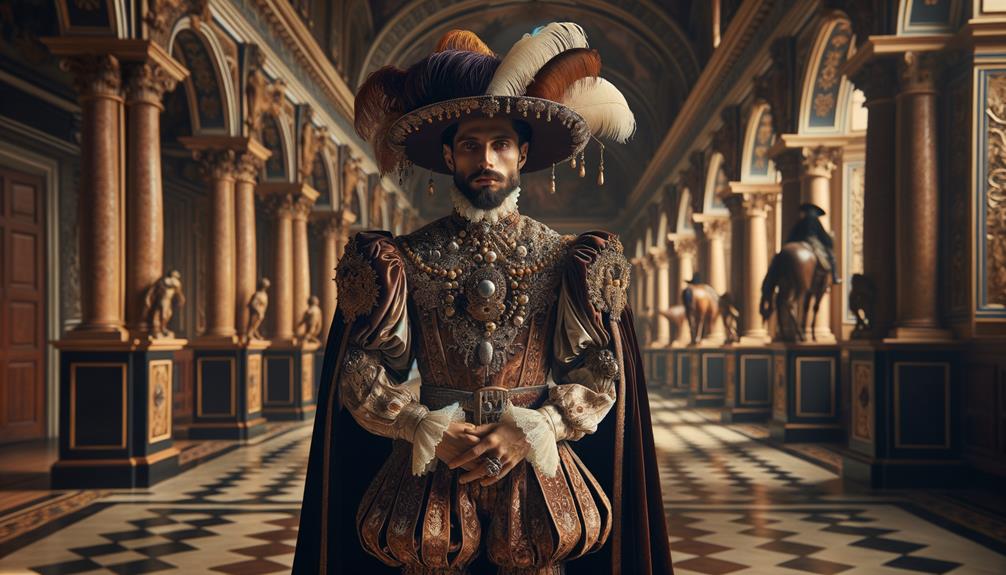
Men’s fashion in Renaissance Spain was a vibrant display of opulence and structure, characterized by padded doublets, breeches, and intricate hose. The doublet, a meticulously stitched jacket, was the cornerstone of male attire, creating a rigid silhouette with exaggerated sleeves and peascod bellies that added to its grandeur. Breeches, fastened at the knee, complemented the doublet, contributing to the overall aesthetic.
Hose, which covered the legs, were a staple in men’s fashion. Made from luxurious fabrics like silk, velvet, and brocade, they often featured intricate embroidery. These stockings were functional while also serving as a means to showcase wealth and status.
The codpiece, a striking and provocative element, drew attention to the male genitalia. This ornate pouch symbolized virility and was often lavishly decorated. Although it may seem extravagant by today’s standards, the codpiece played a vital role in the masculine attire of the time.
In Renaissance Spain, men’s clothing was about more than covering the body; it was a statement of power and prestige. Rich fabrics and intricate details reflected both personal and political influence, capturing the era’s innovative spirit.
Children’s Clothing
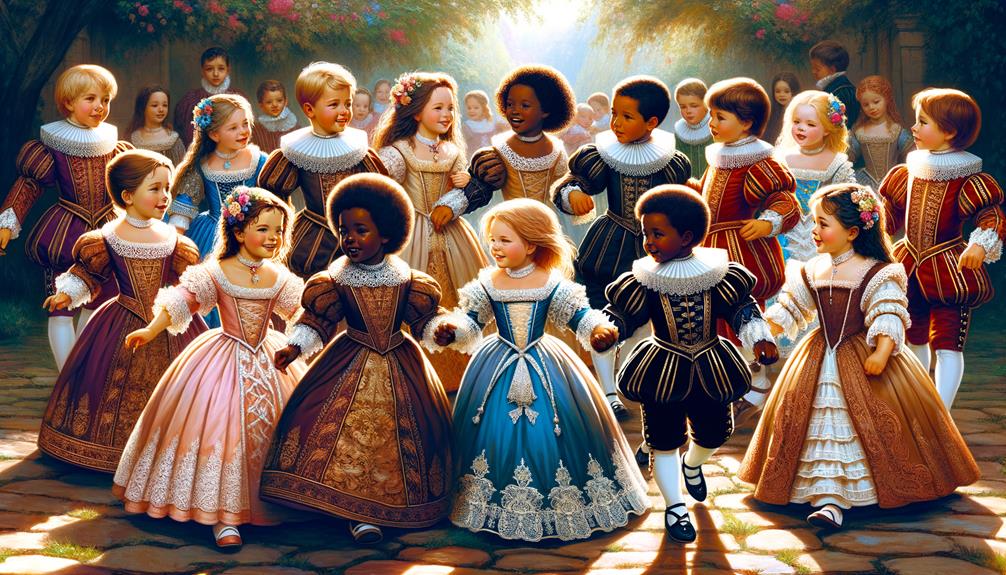
During the Spanish Renaissance, children’s clothing mirrored the opulent attire of adults, emphasizing the importance of social status from a young age. Boys wore intricately decorated leather jerkins, echoing the attention to detail found in adult garments. These miniature versions underscored the significance of appearance and social standing, even in youth.
In this period, children’s clothing featured rich fabrics and intricate embellishments, showcasing the era’s exceptional craftsmanship. The replication of adult fashion trends in children’s clothing reflected societal values and also introduced children to the roles and expectations they were expected to fulfill. Tailoring was precise, ensuring that even the smallest garments exuded the grandeur of the Spanish Renaissance.
| Category | Description |
|---|---|
| Boys’ Attire | Leather jerkins with intricate details |
| Girls’ Attire | Miniature gowns mirroring adult styles |
| Fabrics | Rich, luxurious materials |
| Embellishments | Intricate decorations, high craftsmanship |
The attention to detail in children’s clothing highlights the pervasive influence of societal norms on every age group during the Spanish Renaissance.
Key Fashion Trends
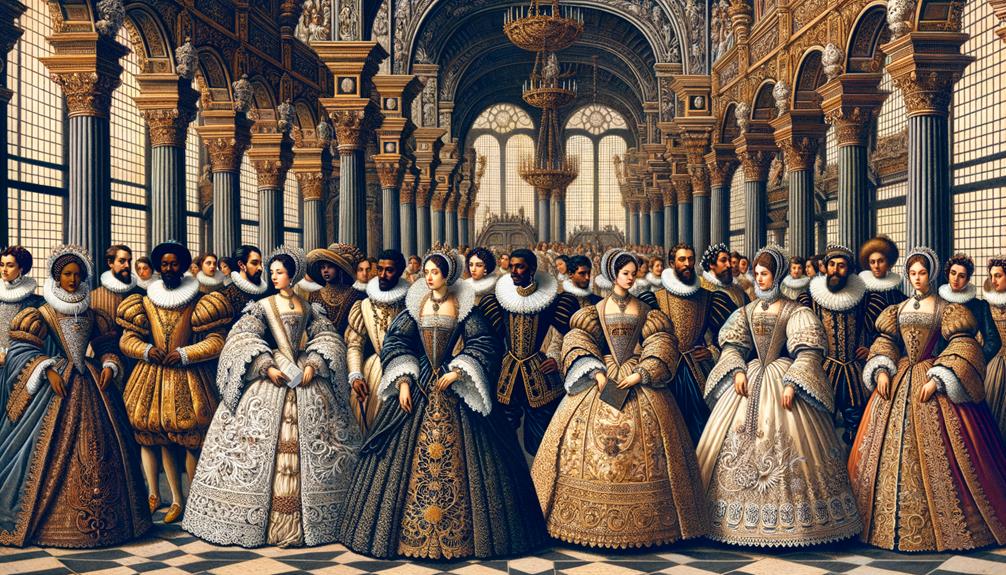
The grandeur of 16th-century Spanish fashion trends closely reflected the societal values of the Spanish Renaissance. The opulent clothing worn by the nobility spoke directly to their wealth and social standing. Luxurious fabrics like silk, velvet, and brocade were the hallmark of their attire.
The Spanish farthingale, a cone-shaped hoop skirt, became a defining feature of the era’s fashion. Its structure was pleasing to the eye; it also symbolized the rigid social hierarchy of the time. The architectural quality of the hoop skirt underscored the grandeur and formality that Spanish influence brought to the fashion scene.
Intricate accessories added to the overall sophistication. Ruffs, adorned with delicate lace and blackwork embroidery, framed faces with elegance and authority. These meticulous details spoke volumes about the wearer’s status and the value placed on artisanal skill. Blackwork embroidery, in particular, showcased the intersection of art and fashion, as delicate patterns were stitched into fine fabrics, telling a visual story of Spanish nobility.
This style, marked by exclusivity and a distinctive aesthetic, influenced fashion trends across Europe. The grandeur of Spanish Renaissance fashion was about more than clothing; it was a reflection of an era that cherished luxury and sophistication.
Influential Figures
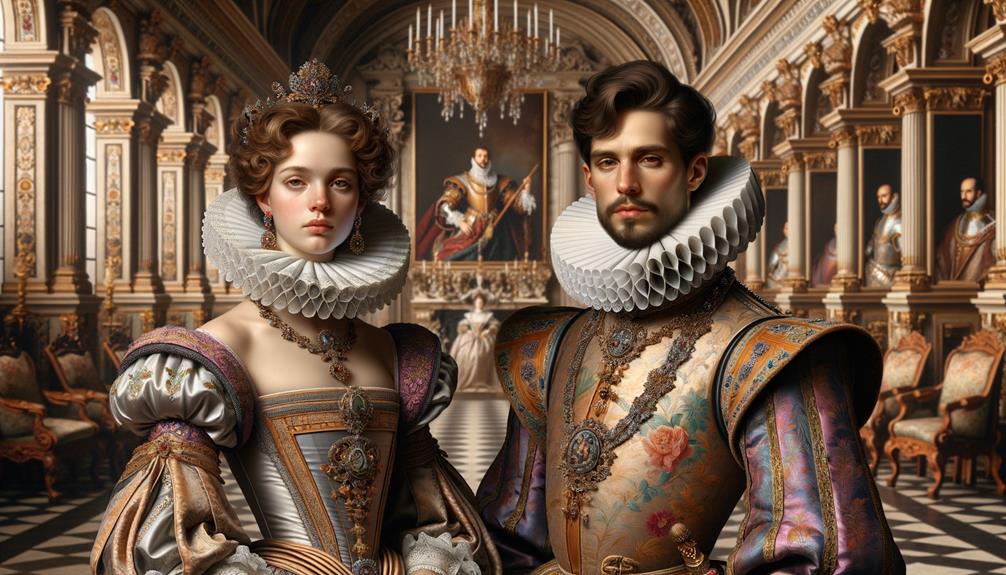
Amid the opulence of Spanish Renaissance fashion, several influential figures made lasting impressions on the sartorial landscape. Queen Isabella I of Castile, with her penchant for luxurious fabrics like silk and velvet, set a standard for opulence that was emulated across Europe. Her attire often featured intricate details, showcasing the exceptional craftsmanship of Spanish artisans.
King Philip II of Spain, in contrast, became a fashion icon through his understated palette of black, white, and gold. His simplicity didn’t diminish his influence; rather, it defined an era of elegance and refinement that transcended borders. The stark contrast of his wardrobe against the vibrant backdrop of the Renaissance made a profound statement.
The Spanish farthingale, or verdugado, is a stiffened hoop skirt that created a distinctive silhouette. It is generally traced to the 15th century and credited to Queen Joan of Portugal, and became synonymous with Spanish fashion. Her influence extended beyond her immediate circle, impacting European fashion trends.
In summary, these figures shaped Spanish Renaissance fashion through their unique contributions:
- Queen Isabella I: Luxurious fabrics and intricate details.
- King Philip II: Understated palette of black, white, and gold.
- Queen Joan of Portugal: Introduction of the hooped Spanish farthingale.
Their legacies persist, inspiring modern interpretations of historical elegance.
Frequently Asked Questions
Was There a Renaissance in Spain?
Spain experienced its own Renaissance, known as the Siglo de Oro. This cultural flourishing wasn’t limited to art and literature; it was a rich fusion of influences that drove significant advancements. Under the rule of influential leaders, innovation thrived.
What Did the Spanish Wear in the 1500s?
The 1500s called for opulent attire made of silk, satin, and velvet, adorned with intricate embroidery, pearls, and gold thread. A farthingale would create a striking silhouette, exuding elegance and refinement.
What Is the Fashion Style in Spain?
Fashion in Spain today is a fusion of traditional and modern influences. There is a mix of sleek, minimalist designs and vibrant patterns. There’s a focus on sustainability and innovation, with designers reimagining classic styles to fit contemporary tastes.
What Was the Clothing Style in the Renaissance?
During the Renaissance, clothing was all about luxury and intricate design. Rich fabrics like silk and velvet were the norm. The era’s fashion was sophisticated, featuring standout elements like the Spanish farthingale that added to the grandeur of the time.