Medieval boots and shoes hold secrets whispered down the centuries, each stitch and seam a quiet echo from the past. There is a tangible connection between the cobblestone streets and the soles that once trod them, from the luxurious ankle-buckle turn shoes of the nobility to the sturdy Baltic Viking boots that braved harsh climates. Crafted from leather, linen, and wood, these pieces of footwear were intimate expressions of identity and status, not simply functional. The intricate balance between elegance and necessity defined their creation.
Types of Medieval Footwear
Among the varied forms of medieval life, footwear offers a clear glimpse into the era’s diverse cultures and classes. The array of medieval shoes and high boots whispers stories of nobility, soldiers, and common folk.

The nobility wore ankle buckle turn shoes, their intricate designs and fine craftsmanship reflecting their high status. The cavalier Renaissance boots, sturdy and elegant, were worn by those who strode with confidence. The Baltic Viking boots, with their rugged charm, speak of practicality and resilience, essential for those braving harsh northern climates.
High turn shoes, a marvel of the 14th century, blend style and function, their form hugging the foot with a quiet elegance. Turnshoes, with a low cut that left the toes free, are the footwear most often associated with medieval elites. Each type of footwear, from the humble Hedeby Viking shoes to the elaborate high boots, encapsulates the essence of medieval life, showing human ingenuity and the delicate balance between form and function.
Materials and Construction
Crafting medieval footwear was an intricate process that involved selecting and preparing materials with care. Each material was chosen for its unique properties, contributing to the shoe’s functionality and aesthetic appeal. The craftsmanship is striking, where sturdy leather became the foundation for both practicality and artistry. Leather, with its durability and flexibility, formed the core of medieval footwear, shielding feet from harsh elements while molding to their shape over time.
In constructing these shoes, skilled artisans would line the interiors with linen and wool, creating a comfortable environment for the foot. This thoughtful layering shows real innovation, where each material plays a vital role in the overall functionality and elegance of the shoe.
Metal buckles and fastenings served both practical and decorative purposes, adding a touch of luxury to the shoe. Wooden soles, often overlooked, provided essential support and resilience against the unforgiving terrain. The intricate embroideries and embellishments woven into the shoes told stories of status and whispers of the past. Medieval footwear was a masterful blend of materials and meticulous craftsmanship.
Social Significance
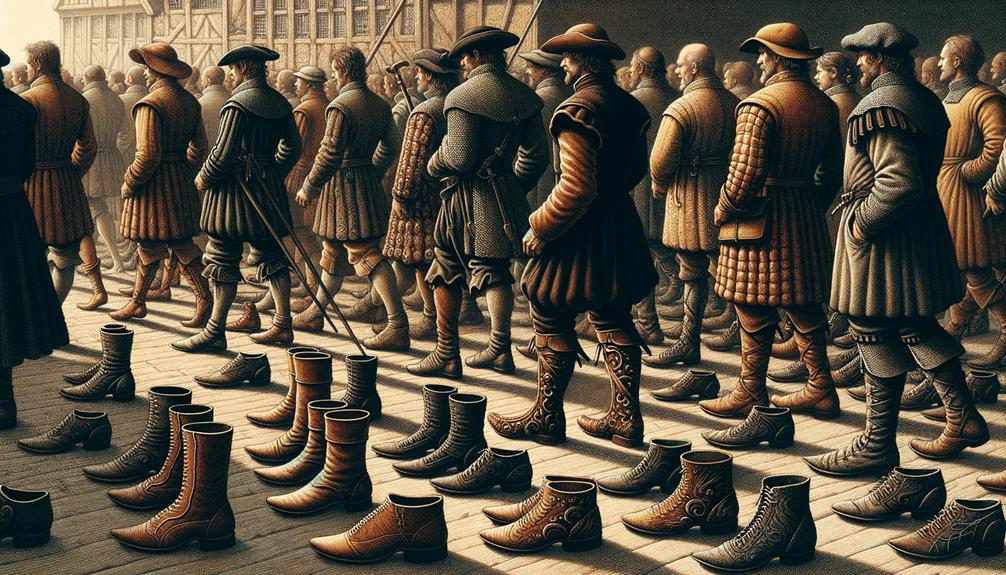
The craftsmanship behind each stitch and buckle shows that medieval footwear was a vivid reflection of social identity and status, not merely functional. The boots and shoes of the Middle Ages told stories of nobility and commoners alike. For the nobility, footwear was a canvas of opulence, adorned with intricate designs and costly materials. These elaborate creations signified their high social standing, conveying wealth and influence with every step.
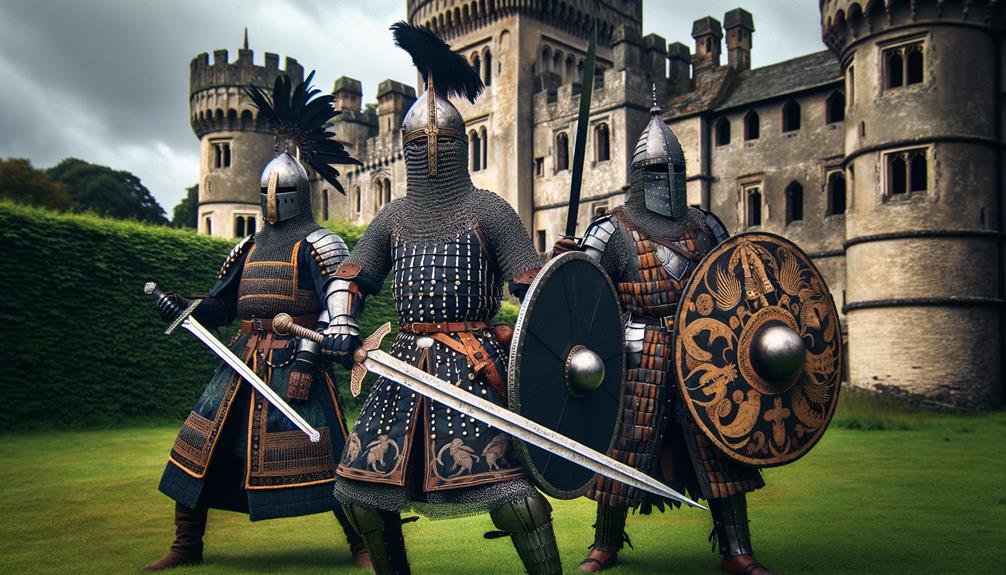
In contrast, the commoners’ shoes were a reflection of practicality and resilience. Made from durable leather, their simple designs bore the marks of everyday toil and survival. Yet, even in their simplicity, these shoes held a quiet dignity, reflecting the steadfast spirit of those who wore them. Soldiers and knights, with their sturdy boots, embodied the essence of protection and endurance, their footwear designed for the rigors of battle and long marches.
Regional traditions and cultural practices further enriched the diversity of medieval footwear, making each pair a unique blend of function and form. In this intricate mix of leather and lace, we find the footprints of history, each pair a step in the journey of social significance.
Daily Practicality
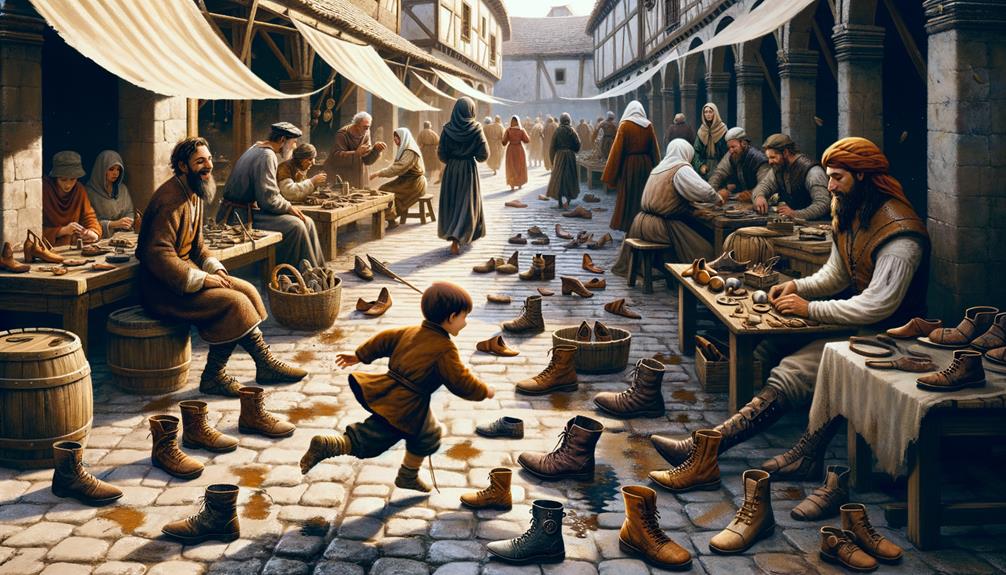
In daily life, medieval footwear exemplified the delicate balance between endurance and comfort. These humble shoes, crafted from natural materials like leather, linen, and wool, were remarkably resilient, withstanding the rigors of everyday medieval existence. Each step showed the artisans’ skill, ensuring breathability and support, which was crucial for the long hours of walking on cobblestone streets and rugged paths.
The metal buckles served a dual purpose beyond functional fastenings. They provided an adjustable fit that kept the shoe snug while adding an element of elegance. These small pieces of metal transformed simple footwear into a personalized piece of art, reflecting the wearer’s status and identity.
Wooden soles, with their sturdy foundations, offered protection and stability, grounding the wearer on uneven surfaces. They silently cushioned each step against the harshness of the terrain. In these shoes, practicality merged with poetry, a combination of function and form, where the ordinary became extraordinary. Medieval footwear, in its daily practicality, was a lasting tribute to human ingenuity.
Footwear for Men
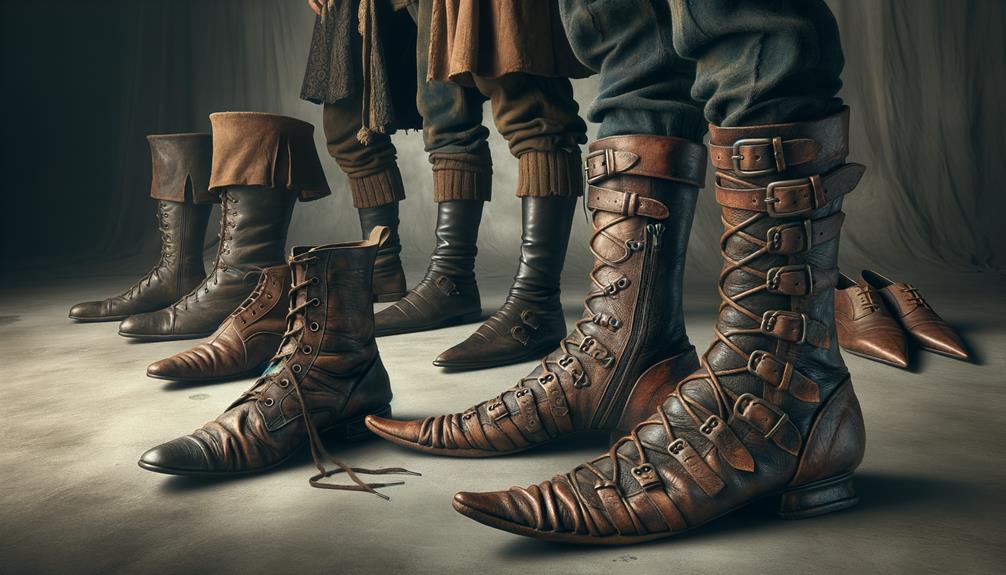
The boots and shoes of medieval men speak to a rugged practicality in their materials. Leather and suede, carefully stitched, tell stories of social standing and everyday needs. Each pair silently attests to the wearer’s place in the world and the paths they’ve walked.
Common Materials Used
Medieval men’s footwear was crafted from sturdy leather, lined with soft linen or wool, telling tales of resilience and comfort woven into every step. These materials were chosen deliberately; they reflected the ingenuity and resourcefulness of our ancestors. Renaissance footwear was a masterpiece of practicality and elegance, made to cradle the medieval ankle with care.
Leather boots were an art form, not just a necessity. The leather, treated and tanned to perfection, protected feet from harsh elements and rugged terrain. Inside, the touch of linen or wool provided a sanctuary of softness, turning every stride into a whisper of comfort.
Wooden soles, a hallmark of the era, offered unparalleled support and durability, grounding each step with the solid promise of endurance.
The essence of medieval men’s footwear comes down to these elements:
- Leather: For durability and protection.
- Linen and wool linings: For comfort.
- Metal buckles: Both decorative and functional.
- Wooden soles: For support and longevity.
- Embroidery and embellishments: Reflecting social status and aesthetic appeal.
Meticulous craftsmanship is a reminder of how innovation and tradition can harmonize, crafting stories in every sole.
Functional Design Features
The functional design features of men’s medieval footwear blended practicality and artistry in ways that echo a bygone era. The Renaissance man’s feet were clad in sturdy leather turn shoes, with soft, flexible soles that curve inward for snug comfort. These shoes, crafted with meticulous care, often featured custom size options, ensuring a perfect fit that reflected a time when personal craftsmanship was paramount.
The duckbill shoe, with its wide, flat toe, showcases a design that balances form and function. The unusual shape went beyond being an aesthetic statement; it provided ample room for the toes, marrying comfort with a touch of elegance. Metal buckles and fastenings served a dual purpose, not just as decorative elements but also as integral components of the secure fit and longevity of the footwear.
Boots, often fortified with wooden soles, offered the durability needed for rugged terrains. They were protective and also a canvas for intricate embroidery and embellishments, merging hard-wearing utility with artistic expression. In every stitch and seam, men’s medieval footwear tells a story of innovation, where each design choice served a distinct, functional purpose.
Social Status Indicators
In medieval society, footwear was an unspoken indicator of social status. The shoes worn by nobles and knights showed their wealth and power, adorned with intricate designs and high-quality materials. These boots and shoes were declarations of prestige, not merely protective gear.
By contrast, commoners and soldiers wore simple turn shoes, practical and durable, without the ornate designs seen on noble footwear. The materials used, such as sturdy leather, metal buckles, and wooden soles, varied significantly with social class, marking a clear distinction between the privileged and the ordinary.
High boots, often intricately designed, were worn by the elite, while turn shoes, simple and functional, were favored by commoners. The materials used in medieval footwear, such as leather, metal, and wood, indicated class differences. Embellishments on the shoes reflected regional traditions and cultural norms. In medieval society, the choice between durability and decoration in footwear reflected the social standing of the wearer.
In every step, medieval footwear silently chronicled one’s social standing, blending function with the art of societal distinction.
Footwear for Women
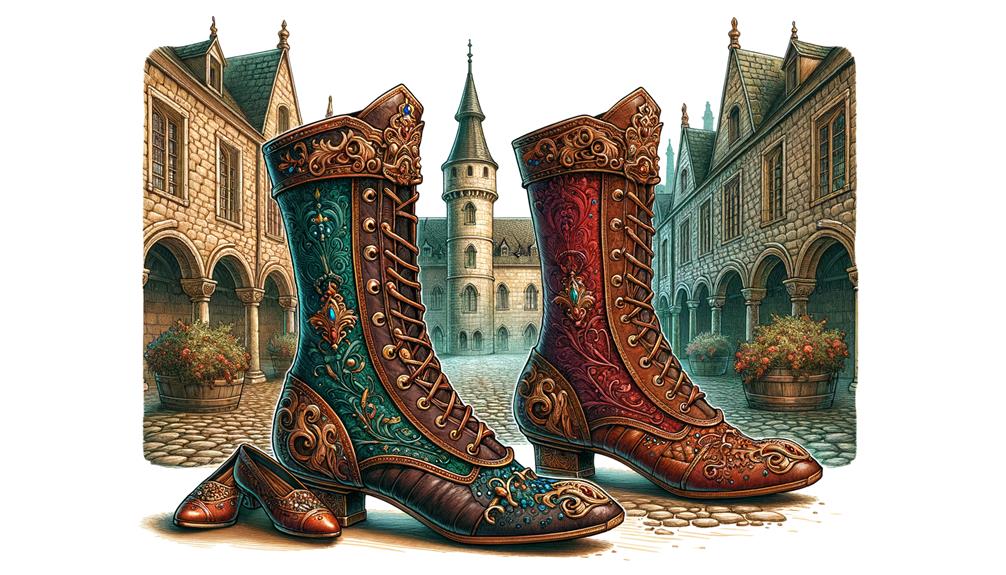
Medieval women’s footwear included elegant shoes crafted from natural leather and suede, adorned with intricate lacing and delicate engravings. Each pair tells a story of social status, where the simplicity or extravagance of design reflects the wearer’s standing in society. From high boots to delicate sandals, these shoes reflect the artistry and prestige of their owners, going beyond mere function.
Styles and Materials Used
The appeal of medieval women’s footwear lies in its varied styles, such as ankle buckle turn shoes and high turn shoes, and in the rich mix of materials like leather, suede, and linen that bring both beauty and durability to each step. The interplay of these materials, carefully woven and stitched, creates a timeless harmony.
In the medieval and Renaissance periods, shoes showed craftsmanship, culture, and social standing, going beyond simple foot protection. Whether made from supple leather or delicate linen, each pair reflected the skill and innovation of its creator.
Materials played a significant role in shaping the character of these shoes:
Leather provided durability and a classic look.
Suede added a luxurious touch, raising the elegance of the shoe.
Linen was used for lighter, breathable designs, ideal for warmer seasons.
Wool kept feet warm and cozy during the colder months.
Wooden soles added a rustic charm to certain designs, making them more durable.
Custom-made shoes ensured that every woman, regardless of her role or status, could walk with confidence and poise. These intricately embroidered and delicately clasped shoes whispered stories of a time when every step was a dance of history and art.
Social Class Distinctions
In medieval times, footwear served as a subtle yet powerful indicator of a woman’s social standing. Every stitch and embellishment told a story of wealth or modesty. Noblewomen adorned their feet with shoes crafted from luxurious materials like silk or velvet, each pair an extension of their fancy dress. These shoes often featured intricate designs, reflecting both the artistry of the period and the wearer’s high status.
In contrast, common women walked a different path, one marked by practicality. Their footwear, such as turn shoes or low boots, was made from durable materials like leather or wool. These simpler designs spoke of necessity rather than opulence, embodying a life rooted in the everyday. Yet, even in their modesty, these shoes held their own beauty, showing resilience and functionality.
These distinctions show how something as simple as footwear could encapsulate the essence of a woman’s life in that era. The interplay between luxury and utility in medieval women’s footwear offers a clear glimpse into a world where every step was steeped in societal narrative.
Influence on Modern Fashion
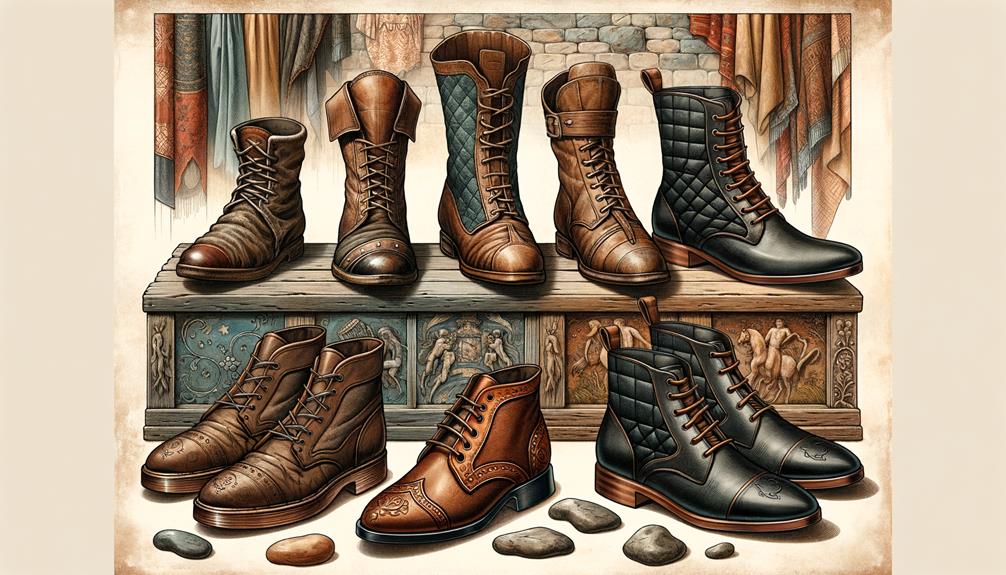
Medieval elements continue to influence modern fashion, blending form and function in a timeless mix. Today’s footwear showcases the echoes of medieval shoes, integrating historical accuracy into contemporary styles. High boots and intricate embellishments recall an era where every detail mattered, yet they fit perfectly into modern outfits, adding a unique flair.
Designers often prioritize functionality alongside style, drawing inspiration from the durability and practicality of medieval footwear. This blend of old-world craftsmanship and modern techniques has created a unique aesthetic. The allure of ancient designs persists, attracting collectors and enthusiasts who cherish historical accuracy and artistry.
- Straps that secure and adorn, a nod to medieval resilience.
- Buckles that speak of both utility and elegance.
- Laces weaving stories of days gone by into today’s trends.
- High boots reminiscent of knights and nobility.
- Intricate embellishments that turn shoes into wearable art.
In this fusion of epochs, we find a beautiful balance, showing how the past continually shapes our present.
Frequently Asked Questions
What Kind of Shoes Did People Wear in Medieval Times?
The medieval soul was adorned in worn leather, wooden clogs, and rustic buckles. Shoes back then told a story of social standing, heritage, and connection to the natural world, with each step revealing a piece of history, rather than simply covering the feet.
What Were Medieval Shoes Called?
In medieval times, footwear played a significant role in social identity. Shoes like turn shoes, latchet turn shoes, and high turn shoes told stories of elegance and survival, blending form and function with remarkable craftsmanship.
What Kind of Shoes Did Medieval Soldiers Wear?
Medieval soldiers wore ankle-high turn shoes with buckles or laces that fit snugly around the feet, or perhaps high boots with reinforced soles that provided stability with each step. This footwear offered the agility and strength of an extension of the body.
Did They Have Boots in the Middle Ages?
Boots were indeed a part of medieval attire, serving both practical and fashionable purposes. Leather boots and shoes, for instance, would echo loudly on cobblestone streets, reflecting status and resilience in a harsh world that demanded both.