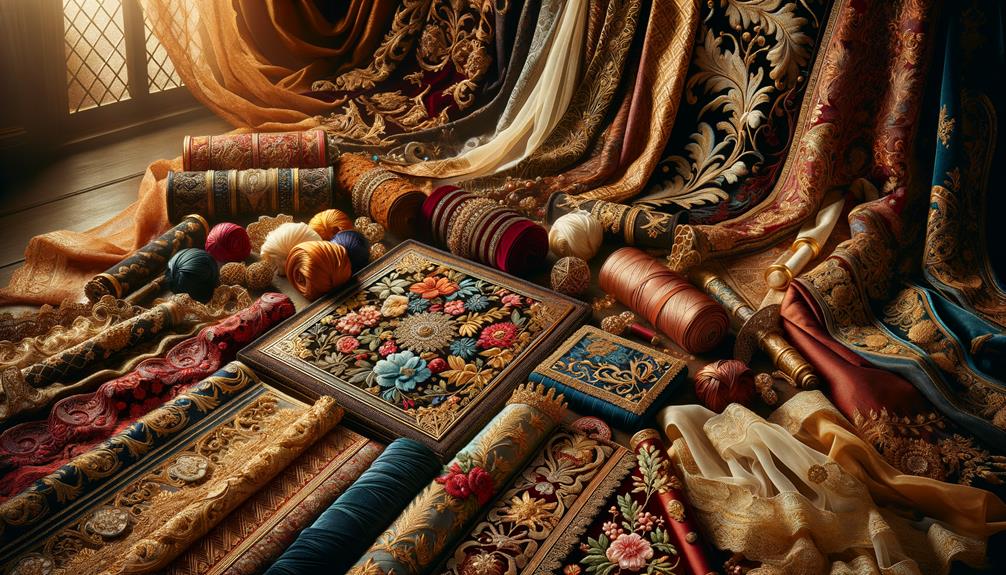
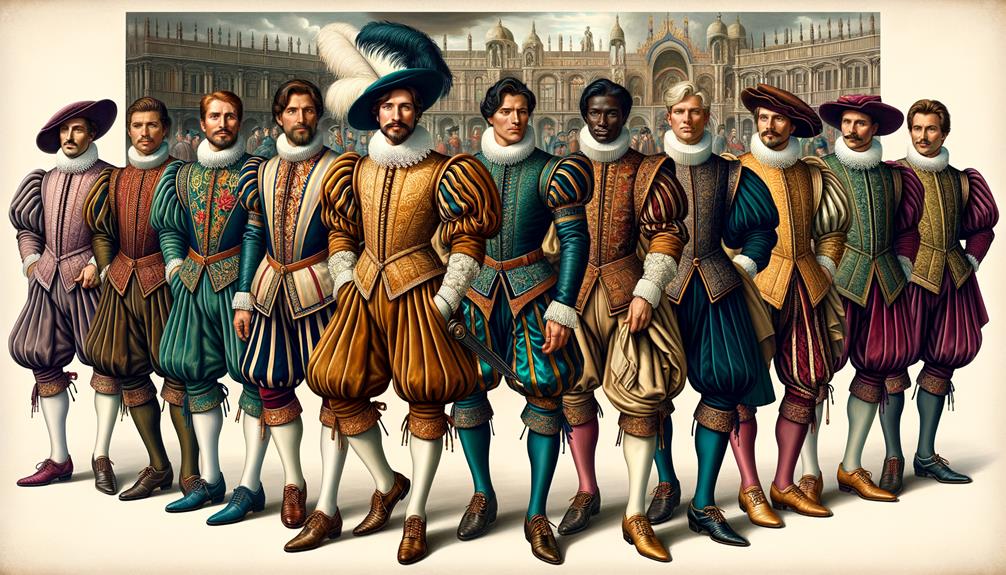
Renaissance fashion and portraiture together show how clothing reflected social status and cultural norms. Luxurious fabrics like velvet and silk denoted wealth, while colors like crimson and gold signified nobility. Accessories like gloves and headdresses showcased power and elegance. Artists like Leonardo da Vinci masterfully captured the intricate details and sumptuous fabrics. Clothing evolved from practicality to elaborate self-expression, enriched by advances in dyeing and tailoring. This era’s fashion reveals a lot about how people defined themselves and their roles in society.
Societal Impact of Fashion
Fashion in the Renaissance was not just a personal choice; it was a clear indicator of one’s social standing and wealth. Clothing choices during this era were deeply intertwined with societal norms and values. Elaborate garments, adorned with intricate designs and luxurious fabrics, signaled high social standing and adherence to cultural expectations. The way individuals dressed communicated their place in the social hierarchy.

Wealth and status were visibly etched into the fabric of society through fashion. The impact of clothing in the Renaissance was profound, influencing not just perceptions but relationships and opportunities. Interpersonal interactions were often shaped by one’s attire, establishing clear boundaries within social circles. A person’s outfit could determine the level of respect they received and the doors that opened for them.
Renaissance fashion was more than an aesthetic choice; it was a powerful tool for managing social dynamics. The impact extended beyond the individual, affecting the wider structure of social interaction. Fashion, then, was a dynamic force, weaving together the threads of social status, wealth, and societal norms.
Symbolism in Fabrics and Colors
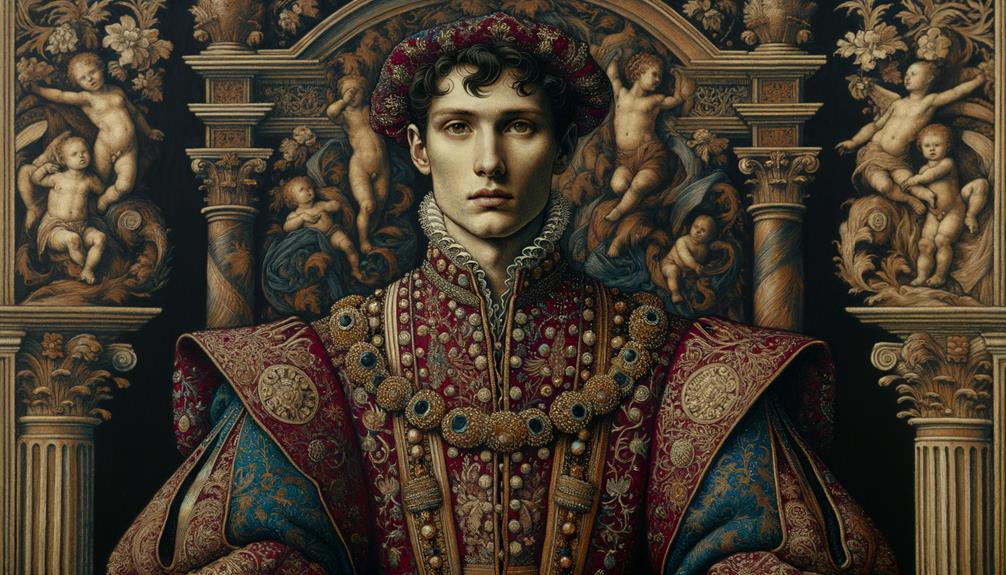
In Renaissance fashion, the choice of fabrics and colors was a deliberate statement loaded with meaning. Velvet and silk were more than luxurious materials; they were visual declarations of wealth and power. Crimson or gold garments evoked nobility, their attire explicitly showing elevated status.
Women in this era used fashion not just for aesthetics but as a form of silent communication. They wore blue to exhibit loyalty or red to convey passion, each color imbued with layers of meaning. This was about more than personal preference; it was about making a statement in a society where every detail mattered.
Walking through the Metropolitan Museum in New York, you can see how intricate patterns and designs on textiles reflected one’s sophistication and social standing. These were not random designs but carefully chosen motifs that spoke volumes about the wearer’s identity.
Art played a significant role in preserving and conveying these symbols. Portraits from the Renaissance era often highlight these fabric choices, offering us a glimpse into the societal norms and values of the time. Renaissance fashion was a new, inventive language, full of symbolism, that transcended mere clothing.
Accessories and Their Meanings
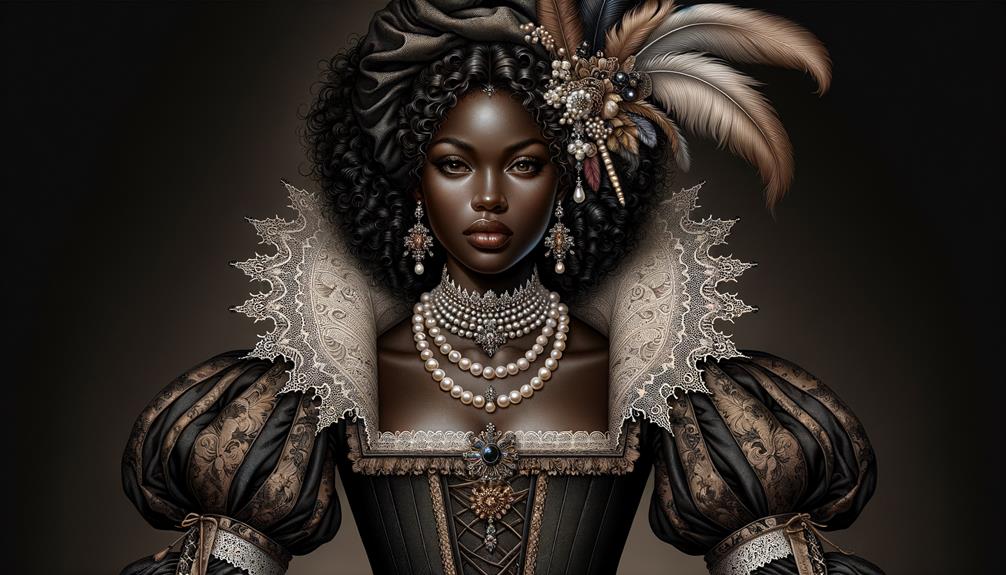
During the Renaissance, accessories served as powerful symbols of status and elegance, revealing much about the wearer’s societal position and personal values. In the fifteenth century, these accessories were about more than fashion; they were steeped in symbolic meanings that aligned with social norms and conveyed wealth and refinement. Gloves, headdresses, and jewelry adorned with gemstones were statements of power, virtue, and social standing.
In Renaissance portraiture, accessories were meticulously chosen to offer a glimpse into the wearer’s personal style and societal role. Each detail was a calculated expression of one’s identity and values. For example, the inclusion of a jeweled brooch might indicate nobility, while an elaborate headdress could signify marital status or regional origin.
Consider the following table for a clearer picture:
| Accessory | Symbolic Meaning | Social Implication |
|---|---|---|
| Gloves | Refinement, elegance | High social standing |
| Headdresses | Marital status, origin | Adherence to social norms |
| Gemstone Jewelry | Power, virtue | Wealth and nobility |
These accessories were essential elements of Renaissance portraiture, reflecting the interplay between fashion, wealth, and social norms. Observing these details helps us appreciate the depth of personal style in this period.
Artists and Their Techniques
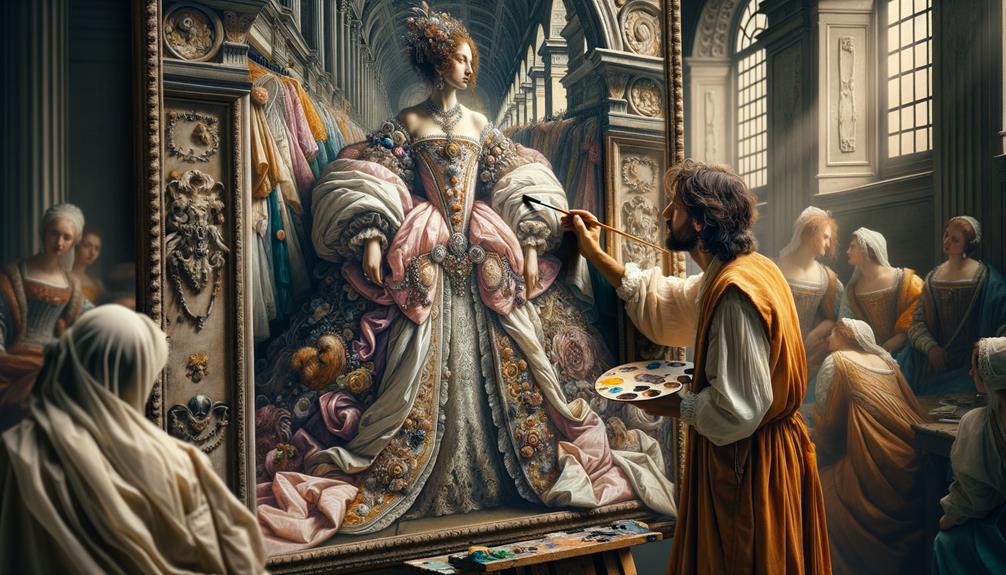
Renaissance artists mastered the art of capturing the intricate details of clothing in their portraits. Leonardo da Vinci and Raphael, in particular, employed meticulous techniques to bring fabric folds and textures to life. Their skillful use of light and shadow added depth and dimension, making the clothing seem almost tangible.
The opulence of Renaissance attire is evident in their works. Patterns, lace, and embroidery were rendered with remarkable precision, highlighting the craftsmanship involved in creating these intricate pieces. Jewelry and accessories were not just added elements, but integral parts of the overall portrait, conveying the grandeur of the era.
These artists did not simply paint; they documented the essence of Renaissance fashion. By capturing every detail, from intricate patterns to the subtle play of light on fabric, they created a visual record of the elite’s elaborate clothing styles. This attention to detail offers a unique glimpse into the opulent world of Renaissance attire, making their portraits timeless masterpieces.
Evolution of Renaissance Attire
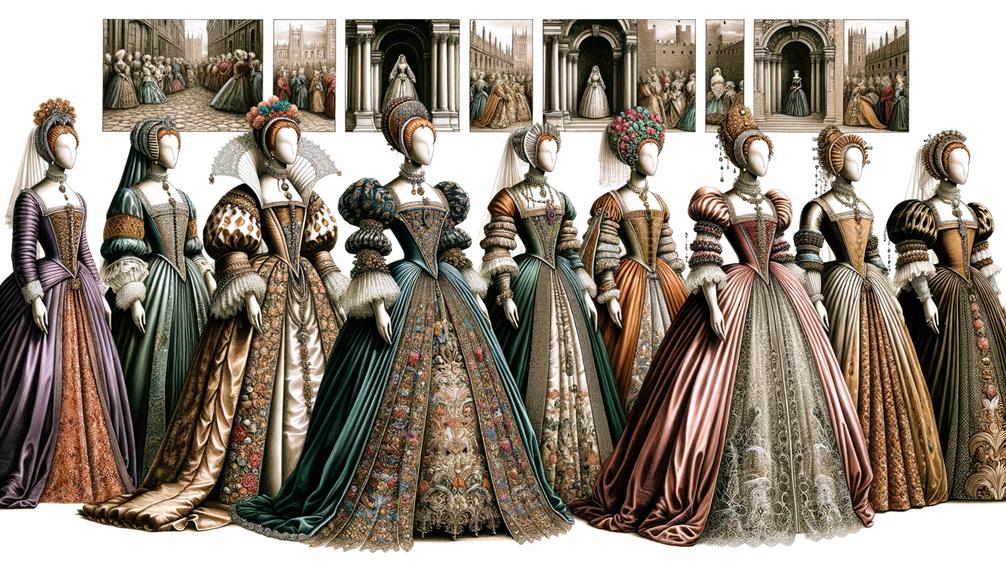
The Renaissance period saw a remarkable transformation in clothing, shifting from practicality to elaborate self-expression. In 15th-century Italy, the Renaissance brought about a significant evolution in material culture. Luxurious fabrics like silk and velvet became popular, raising the opulence of Renaissance attire. Tailored garments and intricate embroidery dominated, showcasing exceptional craftsmanship and attention to detail.
Advances in dyeing techniques led to the use of vibrant colors, signaling wealth and social status. This shift was vividly captured in portraits of the time, such as the iconic ‘Portrait of a Woman,’ where clothing and jewelry were meticulously depicted, reflecting the wearer’s social standing.
| Feature | Early Renaissance | Late Renaissance |
|---|---|---|
| Fabrics | Wool, Linen | Silk, Velvet |
| Colors | Muted, Earthy | Vibrant, Rich |
| Garment Fit | Loose, Utilitarian | Fitted, Tailored |
| Embellishments | Minimal | Intricate, Embroidered |
Sumptuary laws, which regulated clothing and jewelry, highlight the importance placed on appearance in Renaissance Italy. Fitted garments, carefully tailored to accentuate natural body contours, emphasized a balanced and symmetrical silhouette, becoming central to Renaissance fashion. This transformation reveals how Renaissance attire evolved into a medium of personal and social expression, mirroring the broader cultural shifts of the era.
Frequently Asked Questions
What Is Renaissance Portraiture?
Renaissance portraiture captures individual identity and societal roles, blending intricate details and symbolism to tell personal stories and convey virtues. The large majority of Renaissance portraits depicted the elite, offering a glimpse into their lives and status.
What Were the Characteristics of the Renaissance Fashion?
Renaissance fashion was marked by opulent clothing made from costly fabrics like silk and velvet. The intricate embroidery, lace, and vibrant colors added a level of sophistication. Fitted silhouettes, pleats, and ruffs created volume and texture, showcasing the wearer’s wealth and status.
Why Does Portraiture Become More Popular During the Renaissance?
Portraiture became more popular during the Renaissance as society’s values shifted. It thrived due to the growing middle class, a focus on individuality, and the desire for eternal legacy through art, driven by advanced techniques and status symbols.
What Impact Did the Renaissance Have on Fashion?
The Renaissance revolutionized fashion by introducing luxurious fabrics and intricate embroidery, reflecting a newfound emphasis on individuality and self-expression. Fitted garments and opulent details transformed style while also mirroring cultural and artistic shifts, as people sought to express their unique identities through their clothing.