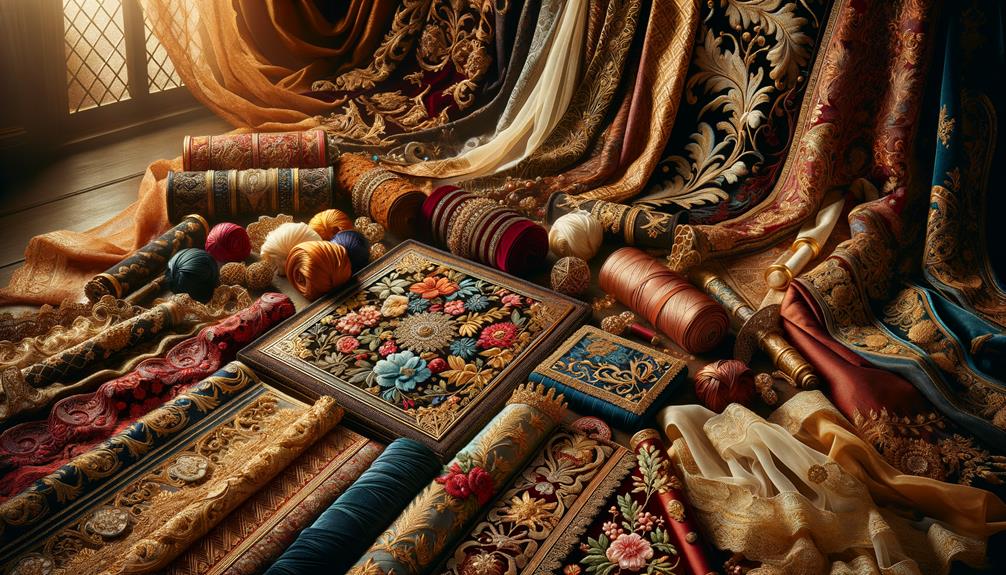
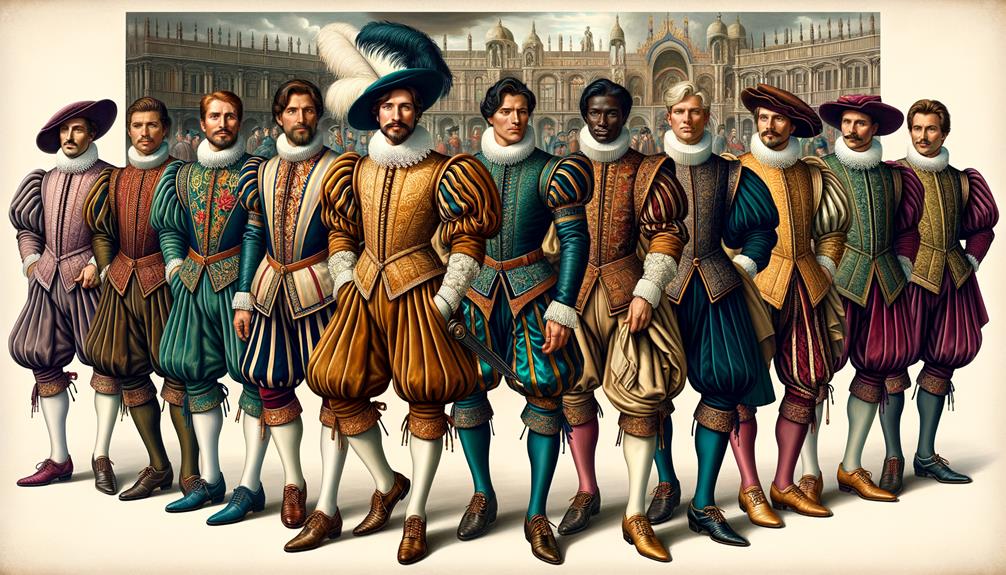
Renaissance fashion in England was a vibrant display of wealth and social standing. Women’s fitted bodices and layered gowns, adorned with intricate embroidery, showcased luxury. Men’s rich doublets and hose created a distinctive silhouette, reflecting their rank. The influence of Spanish fashion introduced a wide range of colors and elaborate embellishments. Fashion was more than clothing; it was an art form, a reflection of identity, and a status symbol. Sumptuary laws governed what people wore, and Queen Elizabeth I’s extravagant outfits set the standard. Accessories like blackwork embroidery and bobbin lace added sophistication, raising garments to masterpieces.
Women’s Gowns and Bodices
In Renaissance England, women’s gowns with fitted bodices showcased luxury and social status through their use of rich fabrics and intricate details. These gowns, often crafted from silk, velvet, and brocade, embodied the era’s opulence. The luxurious fabrics were not simply decorative. They conveyed the wearer’s rank and wealth unmistakably. Each gown’s bodice was boned and stiffened, creating a structured silhouette that accentuated the waist and bust, a clear reflection of the fashion sensibilities of the time.

The complexity of their construction is striking. The bodices, often adorned with intricate embroidery and decorative elements, reflected meticulous craftsmanship. The variation in necklines, from high collars to low, revealing décolletage, showed personal style within the constraints of social norms.
The layered nature of these gowns added to their grandeur. Multiple underskirts, petticoats, and overdresses contributed to the ensemble’s volume and richness. Each layer reflected the wearer’s affluence and attention to detail, giving the wearer a palpable sense of prestige and elegance.
Men’s Doublets and Hose
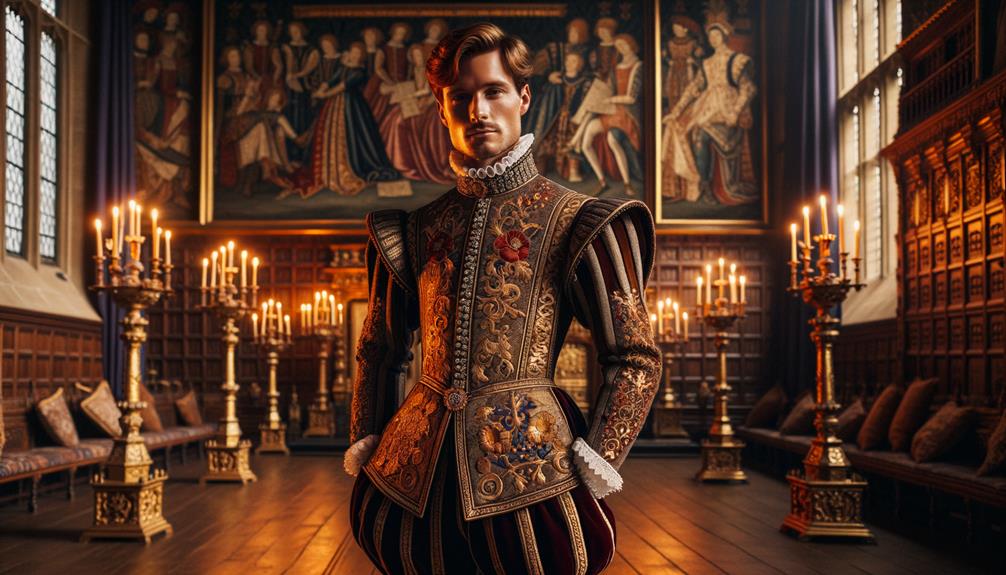
Men’s doublets and hose reflected luxurious tastes and social standing. During the Renaissance, men’s fashion was about making a bold statement as well as serving practical needs. Doublets, which were close-fitting jackets, were often padded and adorned with intricate embroidery or slashes. Made from rich fabrics like velvet, silk, or brocade, these doublets clearly indicated a man’s wealth and position.
Hose, the tight-fitting breeches that completed the outfit, were equally significant. Crafted from materials such as wool, silk, or linen, they came in a variety of colors and patterns, allowing for personal expression. Some hose featured panes or contrasting fabrics, while others were embellished with embroidery, adding a layer of sophistication.
The combination of doublets and hose created a distinctive silhouette that was both fashionable and expressive. This pairing emphasized a man’s status and attention to detail. In an era where clothing marked identity, men’s fashion in the Renaissance was an elaborate art form.
Headwear and Headdresses
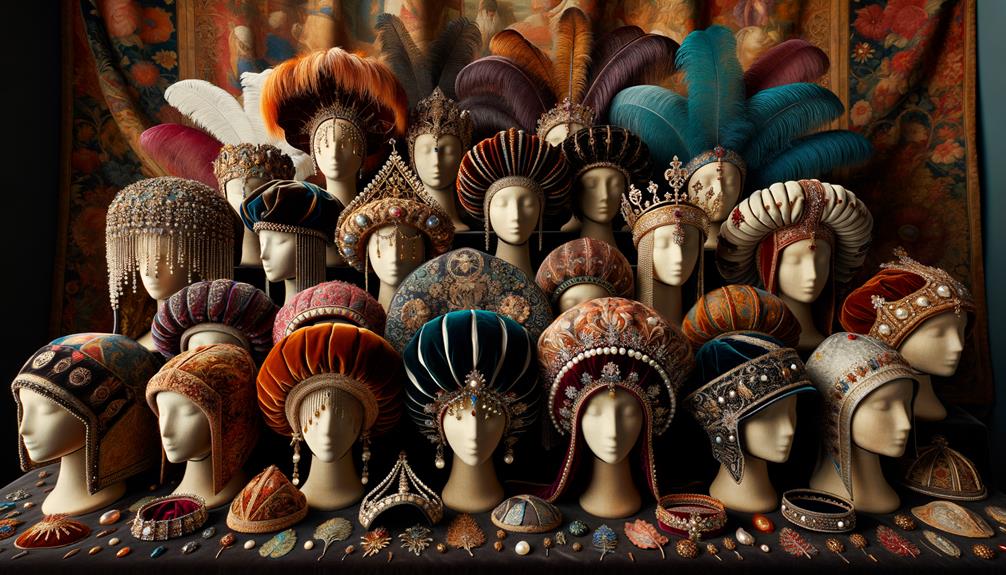
Elizabethan headwear was a striking symbol of social status and personal taste, with diverse styles and lavish embellishments. The intricate designs of the era show the ingenuity and artistry of the time. Women wore headdresses like French hoods, gable hoods, and English hoods, each a statement of elegance and rank.
Men’s choices were just as varied, ranging from simple flat caps and berets to the imposing, tall-crowned capotain. The capotain, with its distinct high crown, projected authority and sophistication. These headpieces were powerful symbols in their own right rather than simple accessories.
Consider the following:
- French hoods were semi-circular and often adorned with pearls and jewels, blending sophistication and grace.
- Gable hoods were structured and angular, conveying modesty and conservatism.
- Capotain hats were tall and narrow, favored by Puritans, and conveyed a stern, austere demeanor.
The variety in Elizabethan headwear shows the range of fashion and societal norms in the period.
Decorative Elements and Accessories
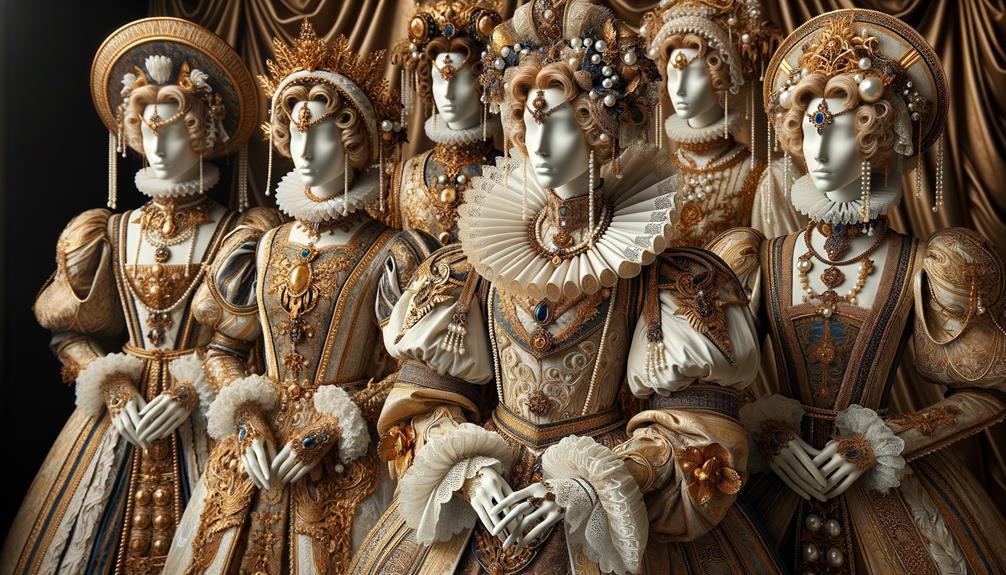
Among the most striking aspects of Renaissance fashion in England are the decorative elements and accessories that transformed simple garments into finished works of art. Blackwork embroidery, with its delicate, monochromatic designs, adorned cuffs, collars, and bodices, raising the aesthetic of everyday attire. This meticulous craft reflected skill and the wearer’s social standing.
Bobbin lace, another hallmark of the era, served as elegant edging and trim, adding layers of texture and sophistication to even simple garments and making them look luxurious.
Jewelry played a vital role, with gold chains, carcanets, and large brooches being common. These pieces were statements of wealth and taste rather than mere adornments, complementing elaborate headwear like gable hoods, which varied regionally but consistently added a distinctive flair to outfits.
Beauty standards of the time also dictated hairstyles, with braids, ribbons, and curls frequently adorned with orange blossom wreaths. These elements were expressions of identity and social standing, deeply intertwined with the culture of Renaissance England.
Influence of Spanish Fashion
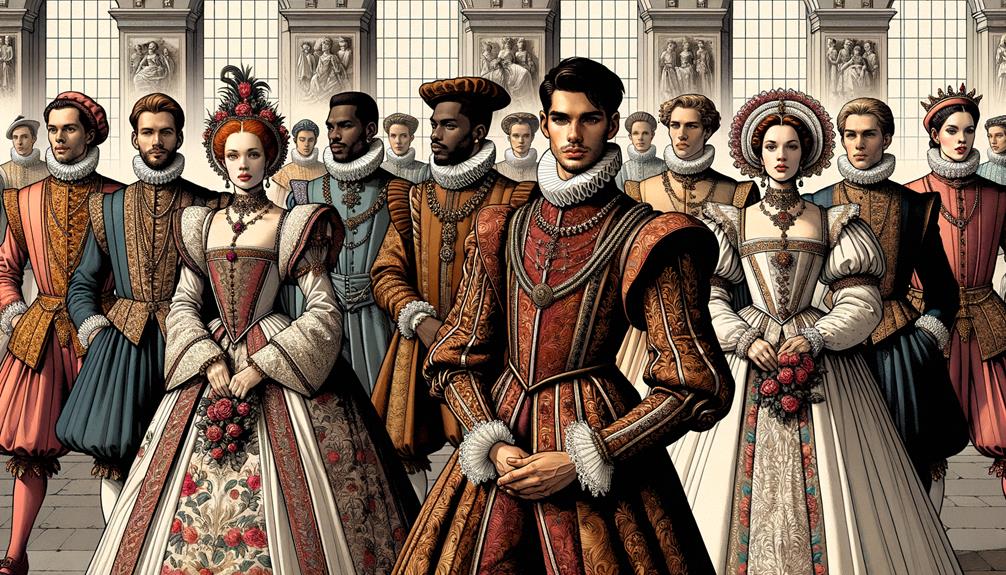
The influence of Spanish fashion on English Renaissance clothing is evident in the adoption of garments like the farthingale and ruffs by the English nobility. The court attire of Renaissance England shows how Spanish fashion permeated the upper echelons of society. The farthingale, a hooped petticoat, created a voluminous silhouette that became synonymous with elegance and status. Similarly, ruffs, with their intricate pleating, framed the face with an aura of sophistication and grandeur.
This influence went beyond structure alone. Spanish fashion brought rich fabrics, vibrant colors, and intricate embellishments, turning English attire into a canvas of opulence. Slashed sleeves, for instance, exposed contrasting fabrics beneath, adding depth and visual interest. Elaborate embroidery adorned garments with intricate patterns, showcasing exceptional craftsmanship. Vibrant colors were introduced, featuring a bold and regal palette.
During the Renaissance, European styles intermingled, allowing these Spanish elements to blend with English traditions. The result was a distinctive fashion landscape that still holds the attention of historians and designers. Spanish fashion not only shaped court attire but also left a lasting impact on Renaissance England.
Aristocratic Vs. Commoner Clothing
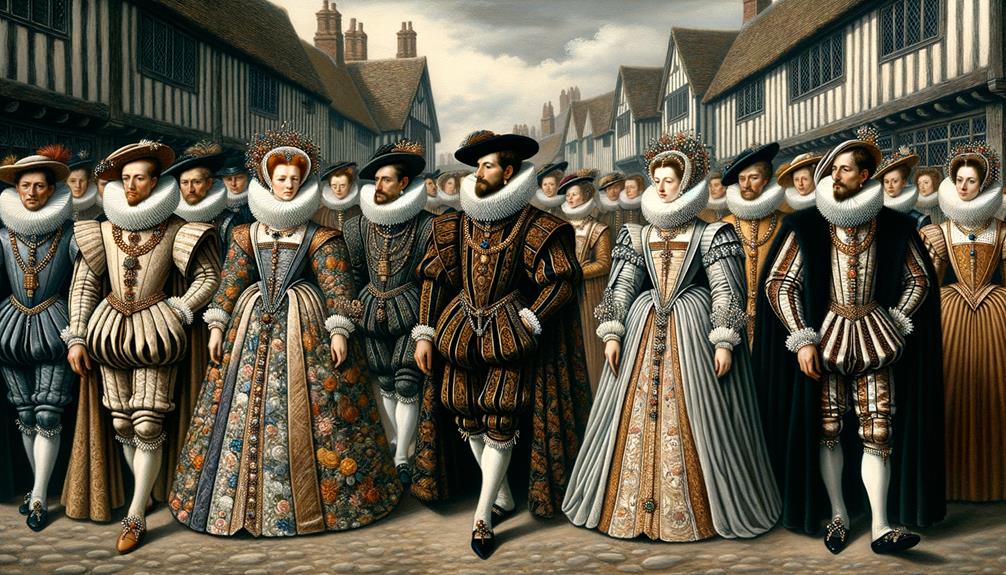
The contrast between aristocratic and commoner clothing in Renaissance fashion in England is stark. Aristocrats showcased their wealth with luxurious fabrics and elaborate ornamentation, while commoners made do with simpler, more practical attire. This disparity highlighted social status and reinforced the rigid class structure of the time.
Fabric and Material Choices
In Elizabethan England, a stark social divide was reflected in fabric and material choices. Aristocrats displayed their wealth and status by wearing luxurious fabrics like silk, velvet, and brocade. These opulent materials were a symbol of wealth as well as a display of power and prestige.
By contrast, commoners used more practical materials like linen, hemp, and canvas. These fabrics were durable and suited to daily life. Even within these limitations there were hints of aspiration. Satin, an affordable luxury, allowed commoners to echo the grandeur of the upper classes on special occasions.
The contrast in fabric choices highlights the rigid social hierarchies and the aspirational nature of fashion during the Renaissance.
To illustrate this further:
- Silk and velvet were reserved for the wealthy elite, synonymous with elegance and sophistication.
- Linen and hemp were everyday fabrics for common folk, prioritizing functionality over aesthetics.
- Brocade was a fabric of the elite, while satin was a more affordable option for aspiring commoners.
This contrast in fabric choices underscores the social chasm between the aristocracy and commoners in Renaissance England.
Ornamentation and Accessories
Aristocratic attire in Elizabethan England was a spectacle, with intricate ornamentation that reflected their elevated status. The aristocracy adorned themselves with meticulously crafted ruffs and lace collars, which symbolized their power and privilege as much as their appearance.
Adorned with jewels, their belts shone at their waists, often embroidered with gold thread, adding an air of opulence. Feathered hats, chosen to complement their ensembles, made a bold statement about social standing. Commoners, by contrast, prioritized practicality. Simple leather belts held their garments together, and their hats lacked the flamboyant feathers but served a functional purpose.
The disparity in ornamentation between these two classes is striking. While the aristocracy used luxurious details, commoners embraced utility. This clear distinction in fashion accessories highlighted social divides and reflected the broader cultural and economic landscapes of the era. Even a belt or hat said a great deal about a person’s place in society.
Social Status Indicators
Despite efforts to emulate the elite, commoners’ clothing unmistakably reflected their lower social standing through the use of humble materials and simpler designs. The upper classes, dressed in luxurious fabrics like velvet, damask, and silk, stood in stark contrast to the linen, hemp, and canvas worn by commoners. Aristocratic clothing was a vivid display of wealth and social power, marked by intricate doublets with unique features.
Sumptuary laws played a crucial role in maintaining these social status indicators. Queen Elizabeth I’s regulations ensured that only the elite could afford and legally wear luxurious materials, thereby preserving the visual hierarchy. Commoners often resorted to cheaper alternatives like satin for special occasions, highlighting the divide in fashion.
Materials made a significant difference: aristocrats wore velvet and silk, while commoners made do with linen and hemp. Designs also marked status, with upper classes displaying intricate doublets. Lastly, sumptuary laws restricted certain materials to maintain social order.
Leather, a common material for outer garments and accessories, further distinguished the upper echelons from the common populace. While commoners could imitate designs, the quality and richness of aristocratic clothing remained unattainable, reinforcing the societal divisions of the Renaissance era.
Colors and Fabrics
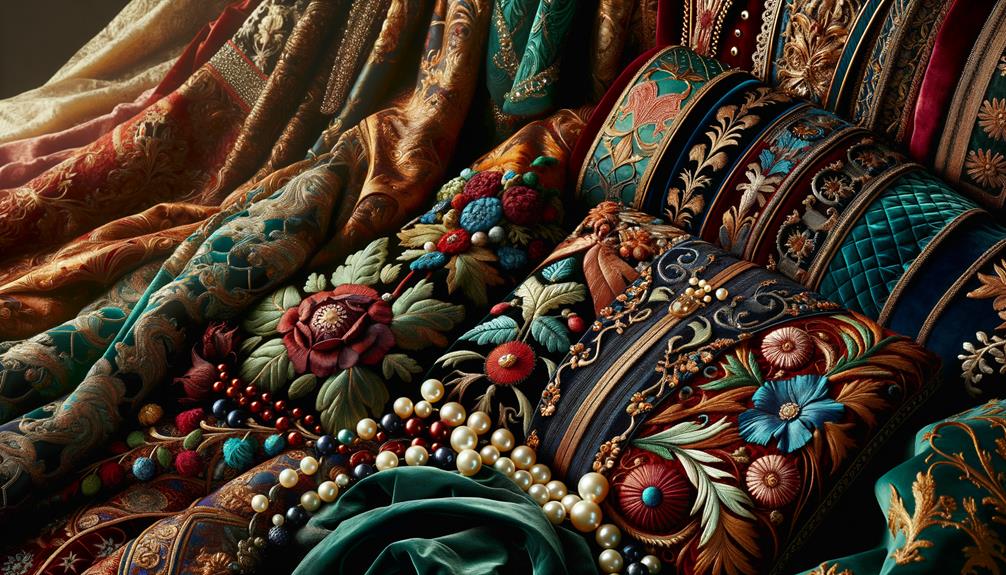
Renaissance fashion is defined by vibrant colors and luxurious fabrics. Rich hues like red, purple, and gold were status symbols, reflecting wealth and power. By contrast, the common folk wore simpler fabrics like wool and linen, far removed from the opulent silk and velvet worn by the elite.
Vibrant Color Trends
In Renaissance England, vibrant color trends in fashion served as a striking indicator of social status and wealth. These vivid hues, ranging from rich reds to brilliant yellows, opulent purples, and lush greens, conveyed a clear message about a person’s place in the social hierarchy. The upper echelons of society draped themselves in these colors, often using rich fabrics like silk, satin, and velvet to emphasize their distinction.
At a bustling market or a grand feast, the display of colors and textures was unmistakable. Garments were statements of power and prestige rather than plain clothing. The interplay of vibrant colors and luxurious fabrics created a visual experience that was both striking and informative.
Red symbolized power and was often worn by royalty and high-ranking nobles.
Purple denoted wealth and was traditionally reserved for the upper class due to the expense of the dye.
Green represented fertility and renewal, frequently seen in the attire of the affluent.
The opulence and creativity of the period is what defined Renaissance fashion.
Luxurious Fabric Choices
Luxurious fabrics played a significant role in Renaissance England, reflecting social standing and sophistication. The aristocracy favored velvet, damask, silk, and brocade, which symbolized power and prestige rather than serving only as fabric. These materials boasted intricate designs and sumptuous textures that set them apart from common cloths.
In bustling markets, commoners attempted to replicate these luxurious fabrics with cheaper alternatives, but the difference was stark. The sheen of silk, the patterns of damask, and the feel of velvet and brocade were unmistakable. These textiles were about making a statement.
Queen Elizabeth I’s sumptuary laws regulated the use of specific colors and fabrics, ensuring that only the elite could wear the most extravagant garments. This preserved the exclusivity of luxurious fabrics and reinforced social boundaries.
While vibrant dyes were costly, leading to the common use of gray and brown, the upper echelons of society reveled in their rich, colorful attire. Leather, though popular for outer garments and accessories, could not rival the appeal of these luxurious fabrics.
Social and Cultural Impact
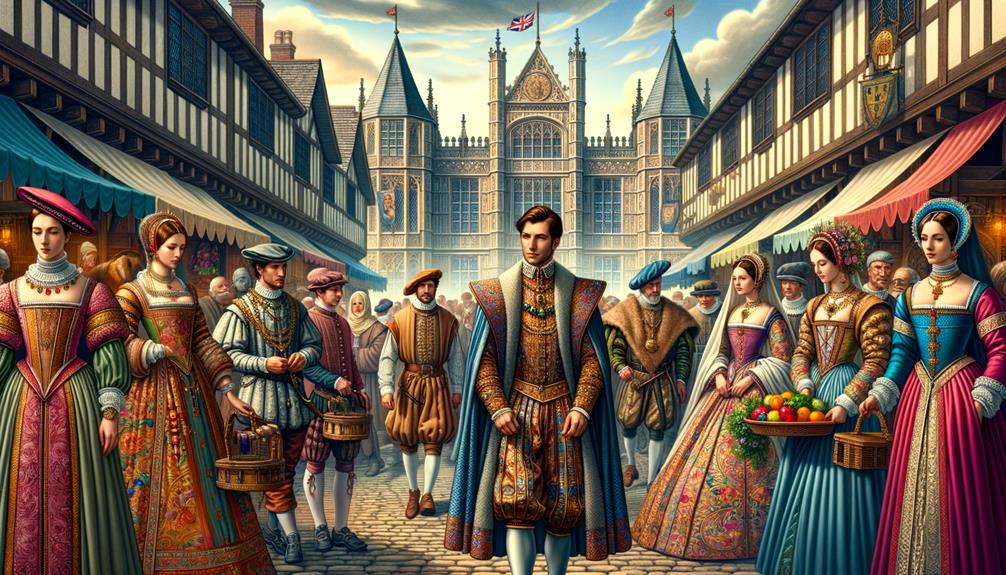
Renaissance fashion in England was a powerful social tool that reinforced class distinctions and showcased individual wealth, rather than simply a matter of appearance. Clothing was a clear indicator of social status for both women and men. The wealthy displayed their position with garments made from rich fabrics like silk and velvet, which symbolized power and influence.
Sumptuary laws controlled expenditure on clothing to maintain hierarchical order. These laws dictated who could wear what, ensuring that commoners could not mimic the elite. Despite this, commoners tried to imitate aristocratic styles, using simpler, more durable materials like linen and hemp.
Key points to consider:
Queen Elizabeth I’s elaborate outfits set trends and shaped public perception, reinforcing her regal authority.
The demand for luxury fabrics stimulated trade and economic activity, enriching merchants and craftspeople.
Renaissance fashion mirrored the era’s cultural shifts, reflecting the broader European influences of the time.
Renaissance fashion was therefore a combination of social norms and personal expression, deeply entwined with the era’s cultural and economic life.
Frequently Asked Questions
What Were the Fashion Styles of the Renaissance?
Renaissance fashion was a vibrant and intricate affair. People wore luxurious fabrics like brocade, paired with stockings, doublets, and elaborate dresses. The choice of materials and colors directly reflected social status. While commoners attempted to emulate these styles, they used cheaper fabrics and risked fines if they overstepped their social bounds.
What Was Fashion Like in the 1500S England?
Fashion in 1500s England was extravagant, with vibrant colors and luxurious fabrics like velvet and silk dominating. Sumptuary laws were put in place to ensure only the elite could afford the latest trends.
What Were the Popular Fashions of Elizabethan England?
Elizabethan fashion was a vibrant and luxurious reflection of wealth and status. People favored rich fabrics like brocade, colorful doublets, and dresses with elaborate collars. Leather accessories and wool garments were staples in many wardrobes, although sumptuary laws restricted extravagant displays to maintain social hierarchy.
What Is Fashion Like in England?
Fashion in England today is a vibrant and eclectic mix, with the UK fashion industry valued at £66 billion. Streetwear and sustainability trends are blending together, reflecting changing attitudes towards style and environmental responsibility.