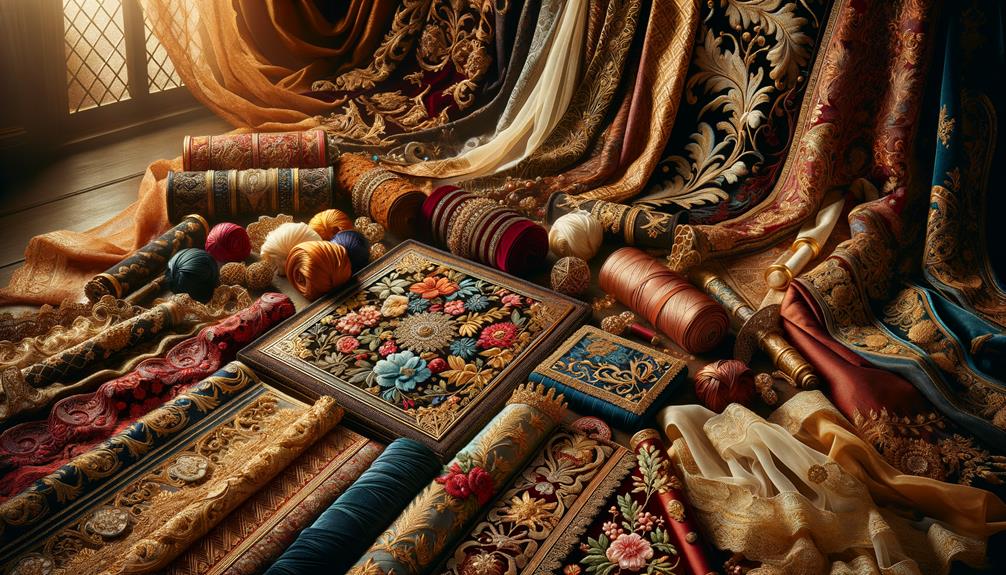
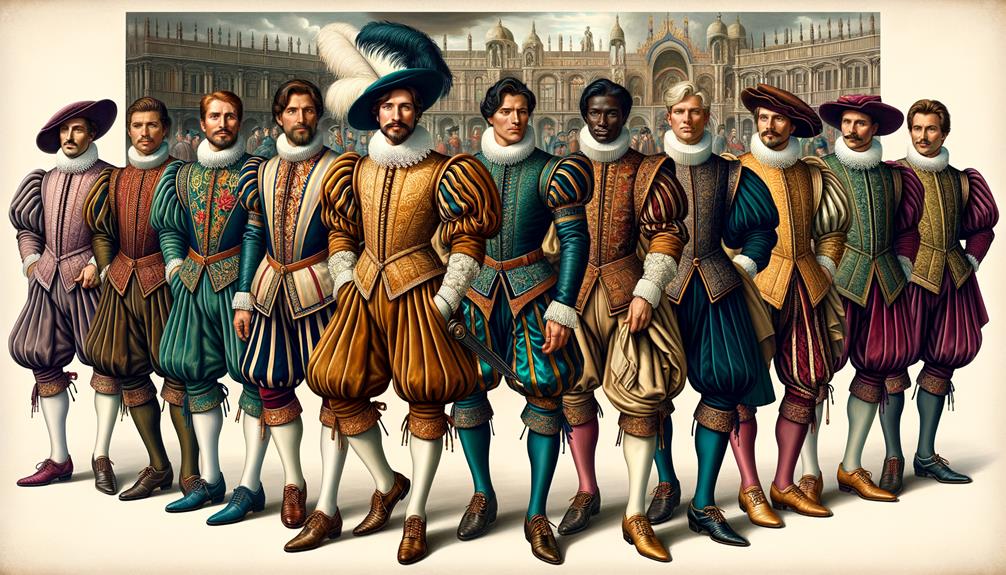
Renaissance fashion brings a level of authenticity to theatre productions. The luxurious fabrics like velvet and brocade, paired with silk and linen undergarments, create a vivid representation of social hierarchy and elegance. The meticulous craftsmanship in gowns and doublets, combined with symbolic color palettes, helps bring characters to life. Accessories such as elaborate hats, gloves, and jewelry complete the look and also tell their own stories. The close combination of historical accuracy and innovative detailing in costumes deeply enriches the theatrical experience. This intricate craftsmanship continues to influence period productions even today, setting the stage for a more immersive world.
Historical Context of Renaissance Fashion
Exploring Renaissance fashion in theatre means understanding how the era’s rich colors and luxurious fabrics set the stage for authentic costume design. The Renaissance drew inspiration from ancient Greek ideals of beauty and proportion, combining them with contemporary influences. This historical context shows how the era’s approach to fashion was both a nod to the past and a move into innovation.

Tailoring techniques played a vital role in crafting the elaborate designs that defined Renaissance theatre costumes. These techniques ensured that garments looked the part and also conveyed the wearer’s individuality and social status. The attention to detail in these costumes was remarkable, from the precise cuts to the incorporation of accessories like hats, gloves, and jewelry, all of which played significant roles in completing the look.
Historical accuracy was paramount, and designers often conducted extensive research to guarantee their creations were true to the period. The Renaissance’s fascination with Greek aesthetics is evident in the flowing lines and harmonious proportions of the clothing, which aimed to capture the essence of human beauty and elegance. This blend of historical reverence and innovative design continues to inspire modern theatre costume design today.
Fabrics and Materials Used
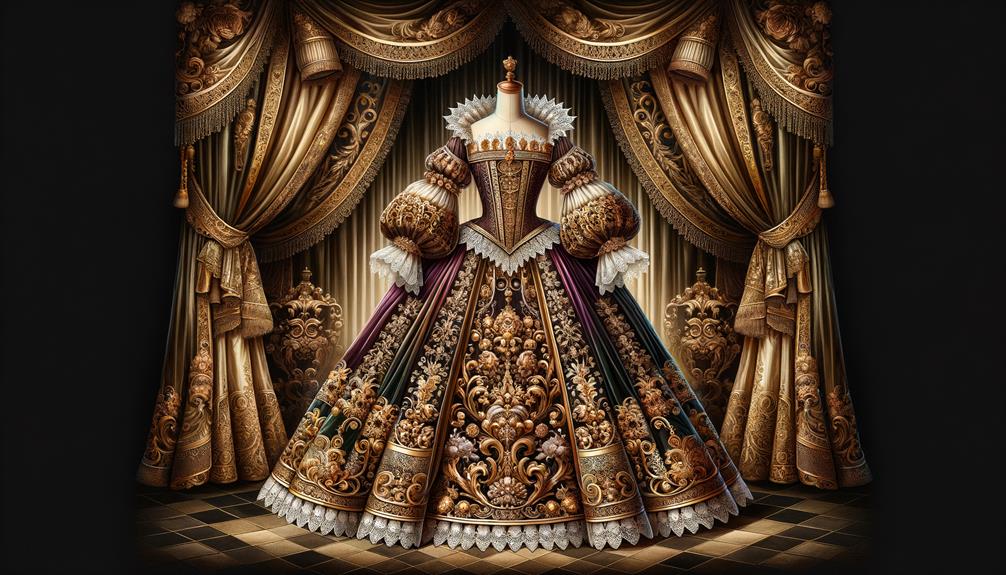
Renaissance theatre costumes used opulent fabrics that brought characters to life. The choice of materials like velvet, silk, and brocade went beyond aesthetics. It was a deliberate effort to reflect the characters’ social standing and importance on stage. These luxurious materials added depth and authenticity to theatrical productions, making each performance a visual treat.
The attention to detail in fabric selection was meticulous. Costume designers of the Renaissance era had to balance historical accuracy with visual impact. The rich textures and vibrant colors of these fabrics enhanced the drama unfolding on stage.
Here’s a breakdown of the most commonly used fabrics and their significance:
| Fabric | Significance |
|---|---|
| Velvet | Symbolized nobility and wealth |
| Silk | Added elegance and fluidity to movements |
| Brocade | Represented opulence with intricate patterns |
| Linen | Used for undergarments, reflecting practicality |
| Wool | Provided warmth, often used for commoners’ costumes |
Each material was chosen with precision, ensuring the costumes didn’t just tell a story but also immersed the audience in the Renaissance world. The use of these fine textiles was a masterclass in costume design.
Styles and Silhouettes
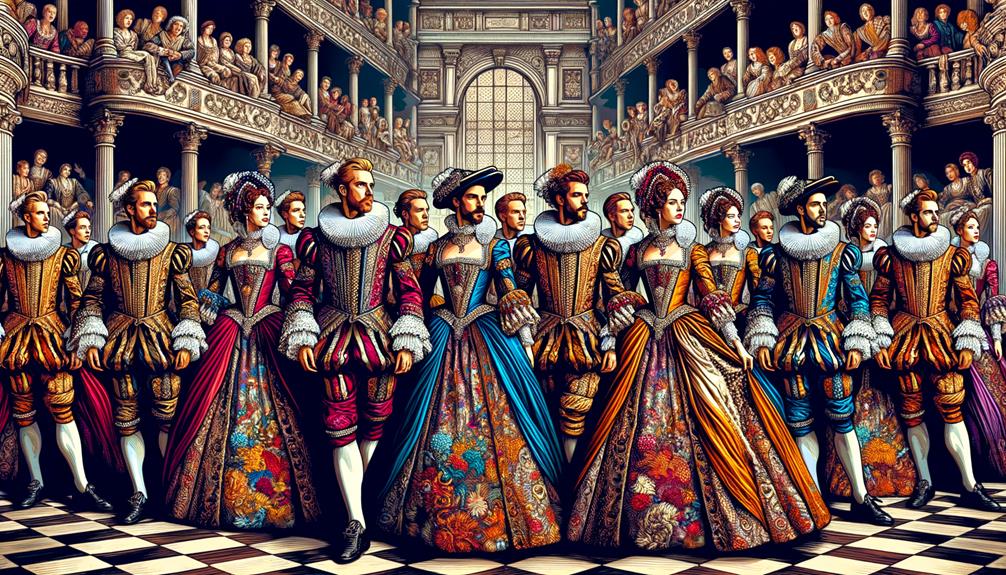
The meticulous craftsmanship of Renaissance theatre’s styles and silhouettes transported audiences to another era. The intricate designs of gowns with fitted bodices and full skirts, made from luxurious fabrics like velvet and silk, showed fashion and the character’s essence. Men’s doublets and hose, and women’s farthingales and ruffs were more than items of costume; they were storytellers in their own right.
Renaissance costume design was a meticulous endeavor that reflected characters’ social status and personalities through various elements.
Embroidery played a significant role, as detailed stitching emphasized wealth and position. Colors were also symbolic, with each hue representing different emotions and traits. Silhouettes distinguished nobility from commoners, while tailoring techniques ensured historical accuracy and authenticity.
Every item of costume was crafted with a purpose. Farthingales gave women an exaggerated silhouette, symbolizing their societal roles and constraints. Similarly, ruffs added a dramatic flair, framing the face with elegance and authority.
Accessories and Embellishments
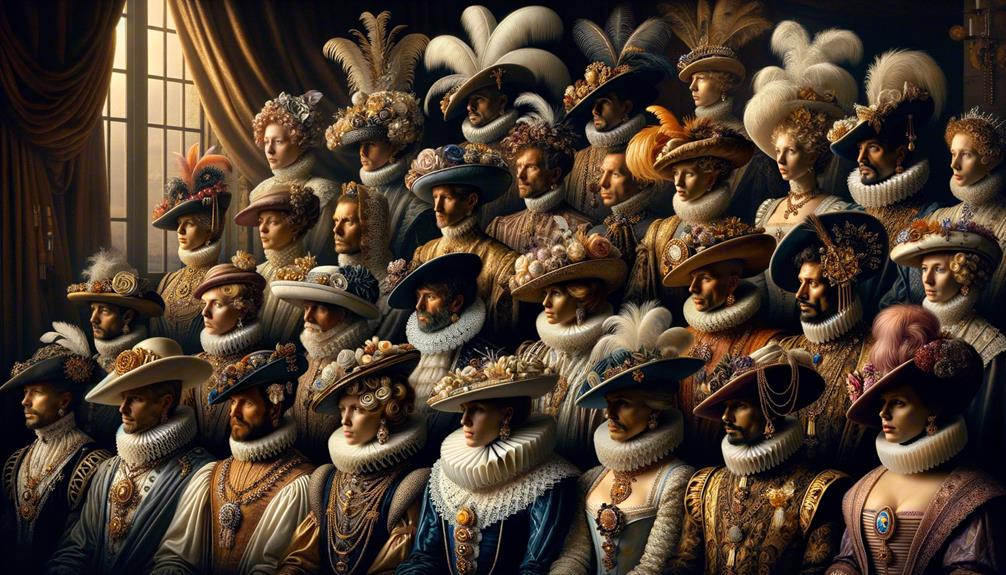
Accessories and embellishments in Renaissance theatre costumes were more than decorative additions; they played a crucial role in storytelling, adding depth and authenticity to every character. The intricate details of hats, gloves, and jewelry shaped the costume’s narrative power. Each accessory was chosen to reflect the character’s role and personality, offering the audience visual cues about their status, profession, or even hidden traits.
Intricate embroidery and embellishments were essential in creating opulent and historically accurate costumes. The delicate stitches and ornate patterns often conveyed their own subtle narratives, drawing the audience’s attention and sparking their imagination. Jewelry, such as brooches, rings, and necklaces, didn’t merely add a touch of luxury; it provided a tangible sense of authenticity. When a character wore a richly adorned necklace, it wasn’t just about wealth; it was about the life story that piece of jewelry silently conveyed.
In the skilled hands of costumers, these accessories became transformative tools, turning actors into believable Renaissance figures. This attention to detail in costume design wasn’t just a nod to historical accuracy; it was a thoughtful approach to theatrical storytelling, making every performance visually striking and deeply immersive.
Influence on Modern Theatre
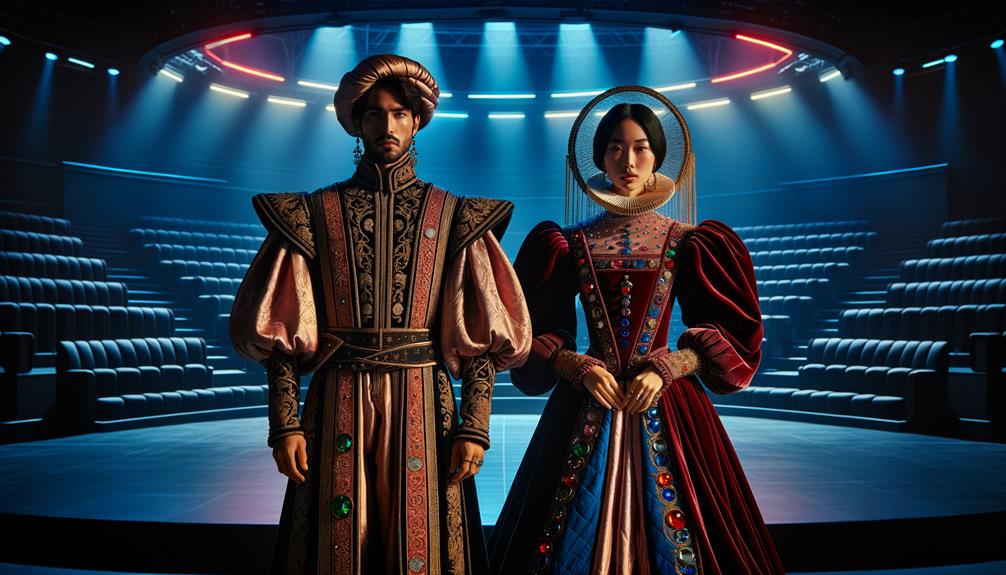
Renaissance fashion has a profound influence on modern theatre, bringing a touch of historical authenticity and visual grandeur to contemporary productions. Designers often draw inspiration from Renaissance clothing styles, crafting costumes that are both authentic and visually stunning. The intricate embroidery, rich fabrics, and symbolic colors from the Renaissance era continue to inspire modern theatrical productions.
In contemporary theatre, the legacy of Renaissance fashion is evident in several ways:
- Period Productions: Designers meticulously recreate Renaissance-era costumes to enhance the historical accuracy of period plays.
- Historical Dramas: Rich and detailed costumes bring historical figures to life on stage, allowing audiences to connect with the past.
- Classic Reimaginings: Renaissance elements are often reinterpreted in new adaptations of classic plays, blending traditional and modern elements.
- Visual Spectacles: Modern productions utilize the opulence of Renaissance fashion to create visually stunning performances that leave a lasting impression.
Just as ancient Greek theatre laid the foundation for dramatic storytelling, Renaissance fashion provides a timeless source of inspiration for costume designers today. By looking to the past, designers find innovative ways to push the boundaries of modern theatre, ensuring it remains a dynamic and visually captivating art form. The intricate details and historical depth of Renaissance fashion continue to captivate audiences and inspire designers alike.
Frequently Asked Questions
What Was the Design of the Theatre in the Renaissance?
Theatre design in the Renaissance was akin to stepping into a living, breathing work of art. With the thrust stage, actors were inches from the audience, while clever trapdoors and elaborate backdrops added an air of enchantment. The minimal lighting created an intimate atmosphere, with each scene unfolding like a delicate dance with shadows.
What Was Fashion Used to Show During the Renaissance?
Fashion during the Renaissance was a status symbol that showcased wealth and social standing. Only the affluent could afford luxurious fabrics and intricate designs, which clearly indicated one’s position in society. Clothing went well beyond functionality; it was a bold statement of identity and power.
What Did Renaissance Theaters Look Like?
Renaissance theaters were grand affairs, commonly seating on the order of a couple of thousand spectators, though capacity varied by city and building. The stage design varied, with some featuring a thrust stage and others a proscenium arch. Elaborate backdrops, often painted with intricate details, formed the visual centerpiece. Set pieces were minimal, but trap doors added an element of surprise to performances. Warm candlelight and chandeliers created an intimate atmosphere, drawing the audience into the performance.
What Were the Features of Renaissance Fashion?
Renaissance fashion was characterized by its opulent style, featuring rich colors, luxurious fabrics like velvet and silk, and intricate embroidery. Men typically wore doublets paired with hose, while women wore fitted bodice gowns. Accessories played a vital role in Renaissance fashion, serving as a reflection of an individual’s social status and emotions.